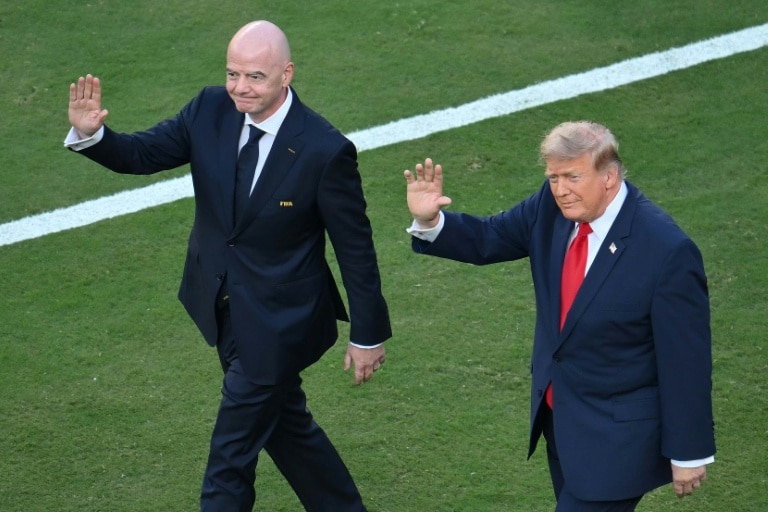
Global football’s governing body FIFA has ignited a fierce debate across the sport after officially confirming plans to offload a minority stake in the commercial operations of its flagship competitions, including the World Cup, through a newly created semi-private subsidiary. The announcement, made Tuesday, came just hours after details of the confidential proposal were leaked to British newspaper *The Times* by two anonymous sources, forcing FIFA to break its silence on the initiative early.
Under the plan, FIFA will retain a majority controlling share in the new entity, named FIFA Forward Enterprise (FFE). The organization aims to raise $4.2 billion by the end of 2021 by selling non-controlling minority stakes to pre-vetted long-term investors, with an projected initial equity valuation of $20 billion for FFE, per FIFA’s internal estimates. In an effort to build buy-in across its global membership, each of FIFA’s 211 national member associations will be offered the opportunity to purchase a $20 million one-off stake. While that holding amounts to just 0.1% of FFE’s total equity, FIFA notes the sum could represent a transformative financial opportunity for leaders of smaller or lower-income member federations. The governing body added that the proceeds from the stake sale, when combined with existing development programs, would push its total planned global football development funding past $10 billion over the next four years.
FIFA has moved quickly to address concerns over loss of governance control, emphasizing in its official statement that it will “retain sole control of FFE and exclusive authority over football governance, competitions, match calendar, and all regulatory and sporting decisions.”
The leak published by *The Times* painted a far more controversial picture of the plan, however. The report alleged that FIFA president Gianni Infantino, 56, stands to personally benefit from the scheme after his current expected term ends in 2031, when he could take on a leadership role as FFE commissioner. The newspaper also named early parties that have already held preliminary discussions with FIFA, including Joshua Kushner — brother of Jared Kushner, former U.S. President Donald Trump’s son-in-law — and an investment division of JPMorgan Chase, the American bank that infamously tried to finance the collapsed 2021 European Super League breakaway. *The Times* quoted one unnamed senior football industry figure calling the FFE plan “potentially much worse than the European Super League,” arguing it would reshape the foundation of football at every level globally. A second anonymous source added that the structure creates “unacceptable” conflicts of interest for both FIFA and Infantino personally.
UEFA, European football’s governing body and a longstanding critic of Infantino’s leadership, was among the first to issue a sharp rebuke of the plan following the report’s publication. “This crosses a line that football’s governing institutions should never cross. UEFA takes it extremely seriously,” the organization said in a statement. “The soul and governance of football are not assets to trade — especially with zero transparency as to who gains financially. None of us are the owners of football. It is not FIFA’s to sell.”
The FFE proposal is not Infantino’s first attempt to bring large-scale private capital into FIFA’s top competitions. In 2019, a FIFA stakeholder committee rejected an Infantino-supported plan to secure $25 billion in private investment for an expanded Club World Cup, with reported backers including Japan’s SoftBank Group and Saudi Arabia’s sovereign wealth fund. Despite that rejection, FIFA still moved forward with expanding the Club World Cup from 7 to 32 teams, set to launch in 2025. *The Times* speculates that the creation of FFE could open the door to further expansion of both the World Cup and Club World Cup, as well as pressure to hold the tournaments more frequently than the current four-year cycle.
FIFA, a not-for-profit organization formally owned by its member associations and holds tax-exempt status in its home base of Switzerland, has a history of past complications with spinning off commercial rights to private partners. In 2001, the collapse of International Sports Licensing (ISL), the firm that negotiated World Cup broadcast rights deals for FIFA, left the governing body with losses estimated between $30 million and $115 million.
In recent months, FIFA has already signaled soaring expected revenues amid ongoing World Cup expansion: earlier this June, ahead of the 2026 men’s tournament — the first to feature 48 teams, up from 32 — Infantino announced that FIFA projected 2026 full-year revenues would surpass a record €7 billion ($8 billion), and confirmed early discussions have already begun about expanding the 2030 World Cup field to 64 teams.