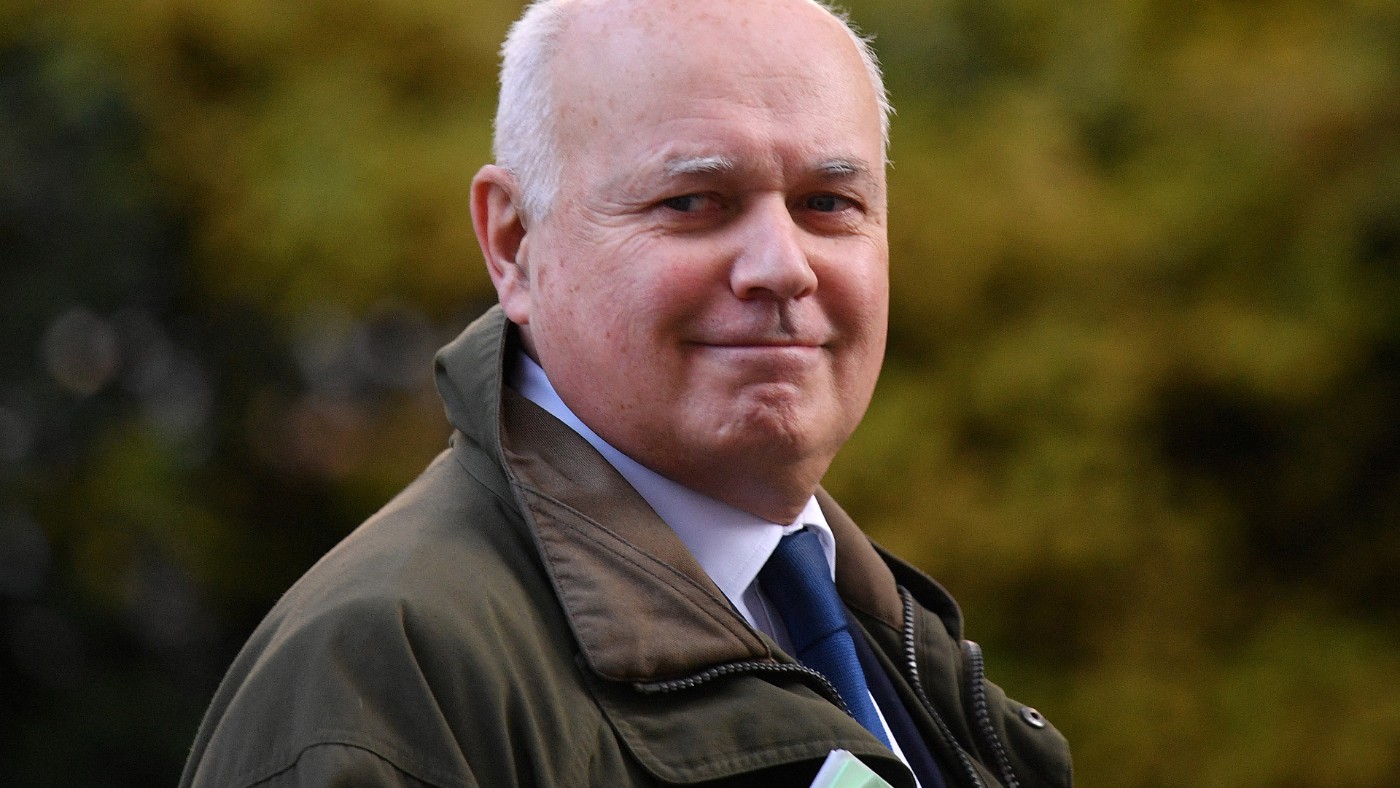
Exclusive reporting from Middle East Eye reveals that high-profile Emirati diplomat Lana Nusseibeh made a private visit to the office of former UK Conservative Party leader Iain Duncan Smith in the Houses of Parliament just over two weeks ago, in a bid to secure support for her ongoing candidacy to succeed Antonio Guterres as United Nations Secretary-General, whose 10-year tenure concludes at the end of 2024. The meeting came immediately after Duncan Smith had delivered a public address in parliamentary chambers accusing the United Arab Emirates of “sponsoring massive terrorism in Sudan” and urging the UK government, as a permanent member of the UN Security Council, to wield its veto power to block Nusseibeh’s nomination. During their face-to-face discussion, Duncan Smith — a former UK work and pensions secretary who resigned from cabinet in 2016 over proposed cuts to disability benefits — reiterated his public condemnation of documented Emirati involvement in Sudan’s ongoing civil conflict, a charge Abu Dhabi has consistently and categorically denied. He explicitly demanded that Nusseibeh push her home government to immediately cease all material support for the Rapid Support Forces (RSF), the Sudanese paramilitary group that both the United Nations and United States have formally found responsible for perpetrating genocide in Darfur, and to secure the release of two British nationals, Ryan Cornelius and Charles Ridley, who have been detained in Dubai for nearly 20 years on fraud-related charges that the UN has classified as arbitrary detentions. According to Duncan Smith’s account of the meeting, Nusseibeh, who served as the UAE’s permanent representative to the UN for 11 years between 2013 and 2024, never attempted to refute the UAE’s active involvement in Sudan’s war. Instead, she emphasized her desire to operate as an independent leader if selected for the top UN post, a claim the veteran British politician flatly rejected. “She didn’t really say very much. She didn’t try and pretend they weren’t involved,” Duncan Smith told MEE. “Instead, she said she wanted to be independent. I said you are not seen as independent. You are party to this barbarity.” When pressed on whether she would distance herself from Emirati state policy, Nusseibeh confirmed she remained an employee of the Emirati foreign ministry, prompting Duncan Smith to note that impartiality for a UN Secretary-General candidate could not coexist with active service to a national government — a principle he demonstrated himself by resigning from his cabinet post when he opposed his own government’s policy. Despite the sharp disagreements, Duncan Smith described the conversation as polite, adding that he was impressed Nusseibeh had taken the time to meet him directly. A spokesperson for Nusseibeh’s campaign later issued a statement confirming that the former ambassador had taken a formal leave of absence from her ministerial role upon submitting her nomination, framing the move as a demonstration of her genuine commitment to running an independent campaign, while declining to comment on details of private stakeholder meetings. Nusseibeh, who was born in Abu Dhabi to a prominent Palestinian family, educated at a UK boarding school and the University of Cambridge, is widely praised by former diplomatic peers as a sharp, eloquent, and highly effective representative of Emirati foreign policy. But her bid for the UN’s top post has been overshadowed by persistent controversy over her government’s actions in Sudan: official UN Panel of Experts reports have verified that the UAE is supplying the RSF with weapons and mercenary fighters, and Nusseibeh herself previously dismissed these panel findings and lobbied European Parliament members to remove explicit references to the UAE from a formal resolution condemning the Sudan war. The race to replace Guterres currently features eight total candidates, with the first informal Security Council straw poll — an anonymous vote where 15 council members mark candidates as encouraged, discouraged, or no opinion — rescheduled to take place on Friday after a one-day delay. To secure the nomination, a candidate needs at least nine positive votes, and crucially, no vetoes from any of the five permanent P5 members: the UK, US, Russia, France, and China. Diplomatic sources previously told MEE that China, which has supplied drones to the UAE that have been deployed in Sudan, was seen as the most likely P5 member to veto Nusseibeh’s candidacy, even as she continues to hold high-level meetings with global stakeholders including China’s ambassador to the UAE Zeng Jixin, and US Arab and African affairs adviser Massad Boulos, the latter of whom she told that ending the Sudan war would be her top priority on day one of a potential tenure, with a 100-day action plan focused on civilian protection, unimpeded humanitarian access, and advancing a formal peace process. Duncan Smith warned that the UK Treasury’s heavy reliance on Emirati investment — including a $30 billion bilateral sovereign investment partnership running from 2021 to 2026, plus high-profile assets ranging from Manchester City Football Club to major London and Manchester real estate holdings — is creating a conflict of interest that could prevent the UK government from taking a principled stance on the candidacy. He noted that the Treasury, the most powerful department in the UK government, is “panic-stricken that this wealthy country will not invest in the UK,” and called directly on newly appointed UK Foreign Secretary Ed Miliband, who has already met with the families of detained British citizens Cornelius and Ridley, to take a firm public stand against Nusseibeh’s nomination to uphold UK values rather than prioritize short-term investment ties. A former British official who previously worked to secure Emirati inward investment confirmed that the UAE’s primary leverage over London comes from its vast oil and gas-derived wealth, even as he noted that the UAE is less strategically critical to UK foreign policy than neighboring Oman or Saudi Arabia. Duncan Smith, who has campaigned for years for the release of Cornelius and Ridley, went so far as to describe the UAE as “corrupt, and they are corrupting,” while recent unconfirmed reports state that Mohammed al-Shaibani, the close confidante of Dubai’s ruler long accused of orchestrating Cornelius’s extended imprisonment, has been stripped of all official duties in the emirate after stepping down from his post as chairman of Dubai Islamic Bank.