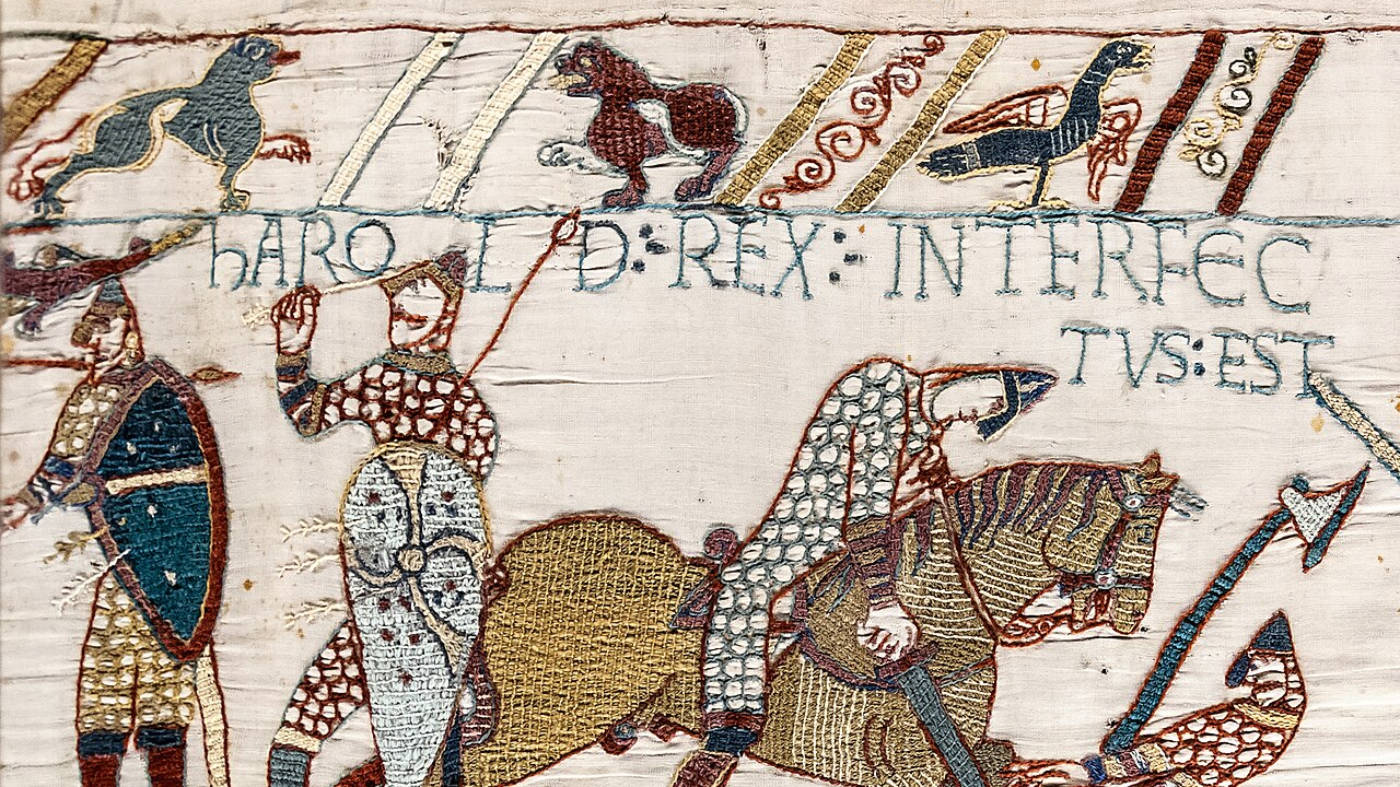
When the British Museum opened its doors to the public on Thursday morning, it launched what has been billed as the most anticipated exhibition in its 273-year history: the first display of the Bayeux Tapestry on English soil in almost a century. The 70-meter medieval embroidery, which chronicles the 1066 Norman Conquest of England, has been housed in France since the Middle Ages, and British negotiators have worked to secure a temporary loan of the fragile artifact since 1931. After nearly 100 years of diplomatic efforts, the tapestry finally arrived in London this summer under heavy security, with an 11-month exhibition run planned.
Demand for tickets has been unprecedented: all allocations for the exhibition’s first four months sold out within hours on the single busiest sales day in the museum’s history, drawing projections that hundreds of thousands of visitors will view the work before it returns to France. This landmark cultural event would not have been possible without a £5 million ($6.75 million) sponsorship from Igor Tulchinsky, founder, CEO and chair of U.S.-based investment firm WorldQuant, who was named the exhibition’s official sponsor in February. Tulchinsky, who maintains a low public profile, stood alongside senior dignitaries including King Charles III, French President Emmanuel Macron and UK Prime Minister Andy Burnham at the exhibition’s official opening reception last week, where the leaders viewed the tapestry through its protective security casing. A fundraising gala in Tulchinsky’s honor is scheduled to take place at the museum next month to recognize his support.
But new revelations about Tulchinsky’s lesser-known business interests have sparked fierce backlash and renewed ethical scrutiny of the British Museum, which has already faced intense criticism in recent years over its removal of Palestinian heritage references from its galleries and its history of controversial corporate partnerships. In April, two months after Tulchinsky signed on to sponsor the tapestry exhibition, he launched WorldQuant Genesis, a Tel Aviv-based venture capital fund focused on early-stage defense technology startups. The fund is led by retired Israeli Major General Saar Tzur, who stepped down from his senior command posts leading the Israeli military’s Northern Corps and Manoeuvre Array in October 2024, just one year into Israel’s ongoing military campaign in Gaza that has been accused of genocide by multiple human rights and legal bodies.
Following his retirement from the military, Tzur joined the advisory board of Ottopia, an Israeli technology startup that provides remote control technology for unmanned military vehicles deployed by the Israeli army in Gaza. In public statements on Ottopia’s website, Tzur has described these teleoperated vehicles as critical “force multipliers” for Israeli operations in Gaza, noting that the technology allows soldiers to carry out combat operations without putting troops at risk. Ottopia markets its technology as “battle proven” in direct combat and target engagement, counting remote-controlled bulldozers and explosive-laden armored personnel carriers (APCs) among its products. Company founder Amit Rosenzweig has confirmed that these explosive APCs have been supplied to Israeli forces operating in Gaza, explaining that operators can control the vehicles from a safe location using a joystick.
Human rights groups have directly linked the widespread use of these remote-controlled explosive vehicles to widespread civilian casualties, mass displacement, and systematic destruction of civilian and cultural infrastructure in Gaza. According to Euro-Med Human Rights Monitor, Israel first deployed these vehicles in densely populated residential areas of Gaza in May 2024, with use intensifying that October as part of the Israeli military’s “Generals’ Plan” to depopulate and forcibly displace all residents from northern Gaza. Between August and October 2025, the group recorded that Israeli forces deployed an average of 15 explosive remote vehicles per day, dropping an estimated 100 tonnes of explosives on residential neighborhoods monthly and destroying roughly 300 residential units every day. Gaza residents describe the blasts from these vehicles as far more destructive than conventional airstrikes, with entire multi-story buildings reduced to fine rubble in seconds, forcing mass panic and displacement.
While an October 2025 ceasefire agreement paused large-scale use of the vehicles, Euro-Med Monitor has documented a renewed escalation in their deployment across northern and eastern Gaza over the past two months. While the group has not been able to independently confirm that the vehicles it has documented use Ottopia technology, it notes that the vehicles match the description of systems marketed by the firm and Tzur. Beyond civilian harm, the widespread use of these weapons in populated areas has put Gaza’s millennia-old cultural heritage at severe risk. While no direct hits to heritage sites from these vehicles have yet been recorded, multiple iconic heritage sites—including the Old al-Omari Mosque, the Byzantine Church of Jabalia, and al-Sheikh Saad Mosque—are located in areas where large-scale vehicle operations have taken place, and have sustained damage from adjacent attacks. Euro-Med Monitor estimates that more than 70% of Gaza’s total documented cultural heritage sites have already been destroyed or damaged during the current conflict, a pattern the group says matches the definition of cultural genocide laid out in a recent UN report.
Tulchinsky has publicly confirmed his longstanding support for Israel and the Israeli military, noting that he has provided direct financial donations to the Israeli military since the start of the war in October 2023, and that WorldQuant has maintained an office in Israel since 2009. “Even against the backdrop of the complex reality, my commitment to Israel and its future remains intact,” he said in a statement following the launch of WorldQuant Genesis, which has already invested in Israeli defense tech startup NavAiro, which develops counter-drone technology for the military. There is no proven direct link between Tulchinsky’s fund and Ottopia, but campaigners say Tulchinsky’s clear ties to the Israeli defense industry that has overseen the destruction in Gaza make his sponsorship of a major cultural institution deeply unethical.
Artists for Palestine UK, a leading network of cultural workers and artists, has called the British Museum’s decision to accept Tulchinsky’s sponsorship “outrageous” and “shameful.” “How can the museum’s trustees possibly have come to the conclusion that Tulchinsky, with his links to the ongoing erasure of Gaza and parts of Lebanon, was a suitable sponsor?” the group said in a statement. “And, more fundamentally, how are basic ethical standards, human rights and international law not guiding factors in such decisions, even before considerations of reputational damage?”
This is not the first time the British Museum has faced criticism over its sponsorship choices: the institution previously drew widespread protests for accepting a £50 million 10-year sponsorship deal from fossil fuel giant BP to fund its major masterplan redevelopment. It also faces ongoing calls from UK Members of Parliament for an investigation into its removal of multiple references to Palestine from its public galleries. The Guardian also recently revealed that the museum hosted a private preview of the Bayeux Tapestry for Peter Thiel, the billionaire founder of Palantir, a U.S. tech firm that provides advanced AI and data analysis tools to the Israeli military. Neither the British Museum, WorldQuant nor Ottopia have responded to multiple requests for comment from Middle East Eye on the revelations.