One of the most historic and widely anticipated cultural events in recent British history opened its doors to the public at London’s British Museum on Thursday morning: the first display of the Bayeux Tapestry on English soil in almost a century. The 70-metre fragile medieval embroidery, which chronicles the 1066 Norman Conquest of England, is set to draw hundreds of thousands of visitors over its 11-month run, after decades of diplomatic efforts to secure the loan from France finally bore fruit this summer. The artefact arrived in the UK under heavy security, and tickets for the first four months of the “once-in-a-generation” exhibition sold out within hours on the busiest single sales day in the museum’s 273-year history.
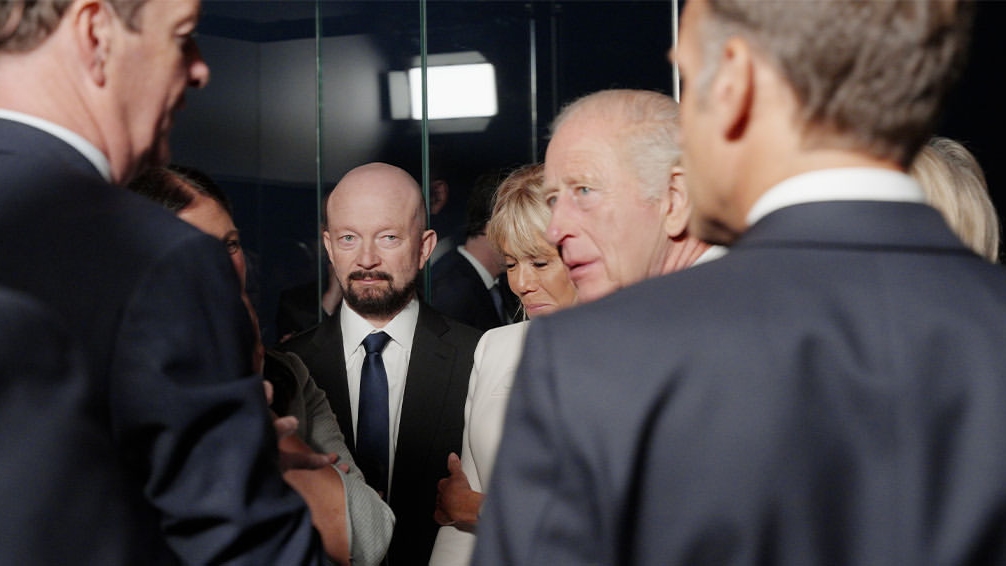
The landmark exhibition would not have been possible without a £5 million ($6.75 million) sponsorship deal with Igor Tulchinsky, founder, CEO and chair of U.S.-based investment firm WorldQuant, who was named as the official sponsor in February. While Tulchinsky maintained a low profile at the exhibition’s official opening reception last week – where he stood alongside senior dignitaries including King Charles III, French President Emmanuel Macron and UK Prime Minister Andy Burnham – new reporting has revealed troubling connections between Tulchinsky’s newer business ventures and controversial Israeli military operations in Gaza and Lebanon that have drawn widespread human rights criticism.
In April, two months after Tulchinsky’s sponsorship of the Bayeux Tapestry was announced, he launched WorldQuant Genesis, a Tel Aviv-based venture capital fund focused on early-stage defence technology startups. The fund is led by retired Israeli Major General Saar Tzur, who stepped down from his senior military posts leading the IDF’s Northern Corps and Manoeuvre Array in October 2024, retiring shortly after. During his tenure, Tzur oversaw Israeli military operations during the first year of the Gaza war, where Israel faces allegations of genocide against Palestinian civilians, as well as operations against Hezbollah in southern Lebanon.
Following his retirement, Tzur joined the advisory board of Ottopia, an Israeli tech startup that develops remote control technology for Israeli military unmanned ground vehicles. On the company’s website, Tzur has described the technology as a critical “force multiplier” for IDF operations in Gaza, noting that “teleoperation is essential for unmanned operations, enhancing ground superiority by reducing casualties, improving maneuver resilience, and boosting combat effectiveness.” Ottopia frames its technology as “battle proven” for direct combat and target engagement, and founder Amit Rosenzweig has confirmed the company has supplied the IDF with remote-controlled explosive-laden armoured personnel carriers for use in Gaza. Rosenzweig explained that operators can control military vehicles, tanks and APCs from a safe distance using just a joystick.
Human rights groups have linked the widespread deployment of these remote-controlled vehicles in Gaza to indiscriminate attacks on civilian residential areas and the systematic demolition of entire neighbourhoods. According to Euro-Med Human Rights Monitor, the IDF first began using explosive-laden remote-controlled vehicles in densely populated Gaza residential areas in May 2024, with use intensifying that October as part of Israel’s “Generals’ Plan” to depopulate and forcibly displace residents from northern Gaza. Between August and October 2025, the rights group recorded an average of 300 residential units destroyed daily, with the IDF deploying roughly 15 explosive remote-controlled vehicles each day, dropping an estimated 100 tonnes of explosives on residential areas monthly. Gazan residents described the blasts from these vehicles as far more destructive than standard airstrikes, reducing entire multi-story buildings to unrecognizable rubble and forcing mass panic displacement. While a ceasefire agreement reached in October 2025 paused most large-scale operations, Euro-Med Monitor has recorded a resurgence in the use of these explosive vehicles in northern and eastern Gaza over the past two months.
Beyond civilian casualties and residential destruction, the widespread use of these weapons has also put Gaza’s cultural heritage at severe risk. While the group has not directly linked vehicle deployments to the destruction of specific heritage sites, multiple culturally significant locations – including Gaza City’s Old al-Omari Mosque, the Byzantine Church of Jabalia, and multiple historic Palestinian homes – lie in areas where these vehicles have been heavily deployed. “What is clear is that the use of these weapons has taken place in and around densely populated areas containing homes, religious sites, and other elements of Gaza’s historic and cultural fabric,” said Euro-Med Monitor’s Anas Jerjawi. “Their large-scale use has therefore posed a serious threat not only to civilian lives and residential structures, but also to the cultural heritage embedded within these communities.”
While Euro-Med cannot independently confirm that the vehicles documented in Gaza use Ottopia technology, the vehicles observed match the description and features of the systems marketed by the company and Tzur. In southern Lebanon, the IDF has intentionally destroyed entire border towns and villages including multiple heritage sites, following a similar model of destruction to that used in Gaza, according to Israeli Defence Minister Israel Katz. While remote-controlled vehicles have been spotted in southern Lebanon, they have not been directly linked to demolitions there to date. No direct connection between Tulchinsky and Ottopia has been established, and neither Ottopia, the British Museum nor WorldQuant have responded to multiple requests for comment from Middle East Eye.
WorldQuant Genesis has already publicly invested in NavAiro, an Israeli defence tech startup developing counter-drone technology, and Tulchinsky has been open about his longstanding financial and personal support for the IDF since the start of the 2023 Gaza war. In a March 2026 interview with the *Jerusalem Post*, Tulchinsky confirmed he has provided direct financial donations to the Israeli military, saying “First I was helping the army financially. I gave them money and they did whatever.” Born in Soviet-era Belarus, Tulchinsky emigrated to the U.S. as a child and has maintained business operations in Israel since 2009, and has publicly reaffirmed his commitment to investing in the country amid the ongoing conflict.
These revelations have sparked fierce criticism from pro-Palestinian cultural advocates, who have called out the British Museum’s decision to accept Tulchinsky’s sponsorship as unethical. Artists for Palestine UK, a network of artists and cultural workers, notes that the destruction caused by remote-controlled military vehicles has contributed to the damage or destruction of more than 70% of Gaza’s documented cultural heritage sites, including a UNESCO World Heritage Endangered Site. Centuries of cultural history built by Palestinians and earlier civilizations across the region have been lost to rubble, in what a UN report has suggested may amount to cultural genocide.
The group described Tulchinsky’s sponsorship as “shameful”, noting the billionaire appears set to profit from ongoing Israeli military operations that are erasing Palestinian communities and cultural heritage in Gaza and southern Lebanon. “How can the museum’s trustees possibly have come to the conclusion that Tulchinsky, with his links to the ongoing erasure of Gaza and parts of Lebanon, was a suitable sponsor? And, more fundamentally, how are basic ethical standards, human rights and international law not guiding factors in such decisions, even before considerations of reputational damage?” the group said.
This is not the first time the British Museum has faced public backlash over controversial corporate sponsorships. The institution previously faced widespread protests and criticism over a 10-year, £50 million ($67.5 million) sponsorship deal with oil giant BP to fund its major Masterplan redevelopment project. It has also previously faced calls from UK Members of Parliament to launch an investigation into the museum’s removal of multiple references to Palestine from its public galleries, adding to ongoing scrutiny of the institution’s ethical decision-making around funding and content.