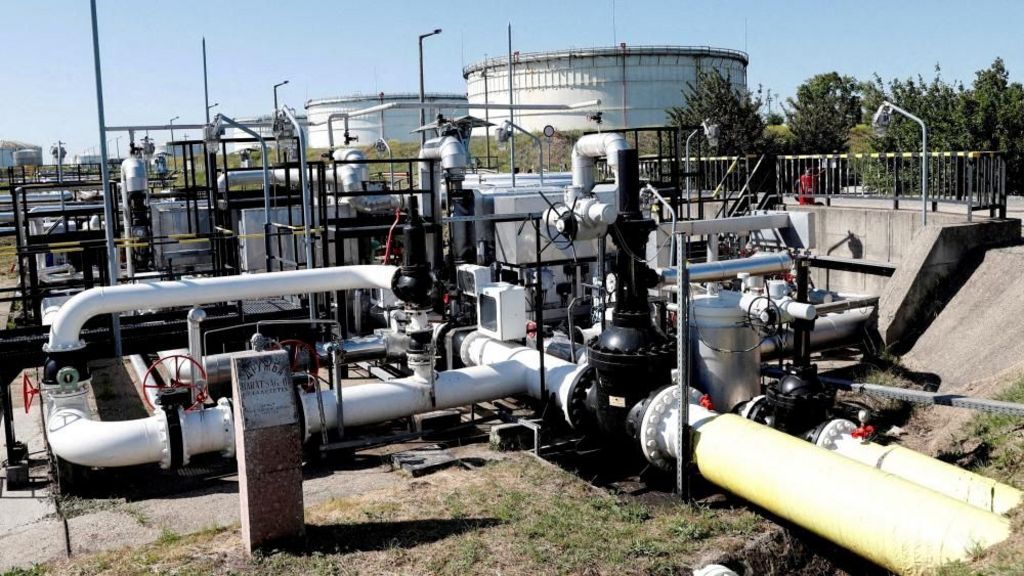
After months of political gridlock that left Ukraine waiting for critically needed financial support, European Union ambassadors are convening in Cyprus this week with widespread optimism that a stalled €90 billion ($78 billion) emergency loan for Kyiv will finally receive final approval. The landmark funding package was first agreed to by all 27 EU member states back in December 2024, but Hungarian Prime Minister Viktor Orbán placed a veto on disbursement in February 2025, tying the release of the loan directly to the restoration of Russian oil supplies through the Druzhba pipeline, which stopped flowing at the end of January.
The disruption to Druzhba, one of Europe’s longest-running oil supply routes, originated after Russian missile strikes targeted a key Ukrainian oil hub along the pipeline in late January. Ukrainian officials confirmed the attack caused substantial damage to infrastructure at the Brody hub, with emergency services releasing photos of smoke rising from the facility after the bombardment. Satellite imagery of the site later corroborated the extent of the damage, and Kyiv noted that repair efforts were slowed by ongoing Russian threats to engineering teams working in the combat zone. Orbán, however, dismissed Ukraine’s explanation and framed the disruption as a deliberate “oil blockade” against Hungary and neighboring Slovakia, demanding full resumption of flows before lifting his veto.
Two key developments have now cleared the path to ending the deadlock, EU diplomats say. First, Ukrainian authorities confirmed last week that all repairs to the Druzhba hub have been completed, and Hungarian energy giant Mol announced Tuesday that Ukrainian pipeline operators notified it that oil supplies would restart Wednesday for both Hungary and Slovakia — marking the first resumption of flows in nearly three months. Second, Orbán’s 16-year consecutive tenure as Hungarian prime minister came to an end after his ruling party lost a bitterly contested national election on 13 April 2025. Hungary’s incoming prime minister, Péter Magyar, has made resetting Budapest’s strained relations with Brussels a central policy priority, removing a long-standing barrier to EU consensus on Ukraine support.
Ahead of the ambassadorial meeting, EU High Representative for Foreign Affairs and Security Policy Kaja Kallas voiced strong confidence that a positive outcome would be reached. “We expect some positive decisions… on the €90bn loan,” Kallas told reporters. “Ukraine really needs this loan and it’s also a sign that Russia cannot outlast Ukraine.” For Kyiv, the funding is not just politically symbolic — it is an urgent matter of survival, according to Ukrainian Deputy Prime Minister Taras Kachka, who described the package as “a matter of life and death” for the country. Under the original agreement, two-thirds of the €90 billion will be allocated to reinforcing Ukraine’s defense capabilities against Russia’s full-scale invasion, while the remaining third will go toward general financial stabilization and supporting core public services.
Orbán, who remains in office as a caretaker prime minister until Magyar’s government is formed in early May, confirmed his position over the weekend, stating that once oil flows through Druzhba were restored, “we will no longer stand in the way of approving the loan.” The former prime minister’s decision to backtrack on the December 2024 agreement had sparked deep anger among other EU leaders, who had already granted Hungary, Slovakia and the Czech Republic an opt-out from the EU’s broader Russian oil sanctions to accommodate their energy dependence on Druzhba supplies.
Long viewed as the European Union’s most Kremlin-aligned leader, Orbán centered his failed re-election campaign on open hostility to both Ukrainian President Volodymyr Zelenskyy and EU institutional leadership. Campaign posters distributed across Hungary depicted Zelenskyy alongside opposition candidate Péter Magyar with the slogan: “They are dangerous!” In recent days, Zelenskyy has held urgent talks with senior EU leaders to push for the loan’s unblocking, including conversations with European Commission President Ursula von der Leyen and European Council President António Costa on Tuesday.
“There can be no grounds for blocking it any more,” Zelenskyy said after the calls. “The EU asked Ukraine to repair the Druzhba oil pipeline, which had been destroyed by Russia. We have repaired it. We hope the EU will also deliver on the agreed commitments.” Even if the ambassadors formally approve the disbursement this week, Ukrainian media outlets report that administrative and financial processing will likely take several more weeks before the funds actually arrive in Kyiv. In a parallel development that underscores the ongoing disruption to energy infrastructure tied to the conflict, Ukrainian forces have also targeted Russian oil facilities linked to the Druzhba pipeline this week, including a pumping station in Russia’s Samara region.