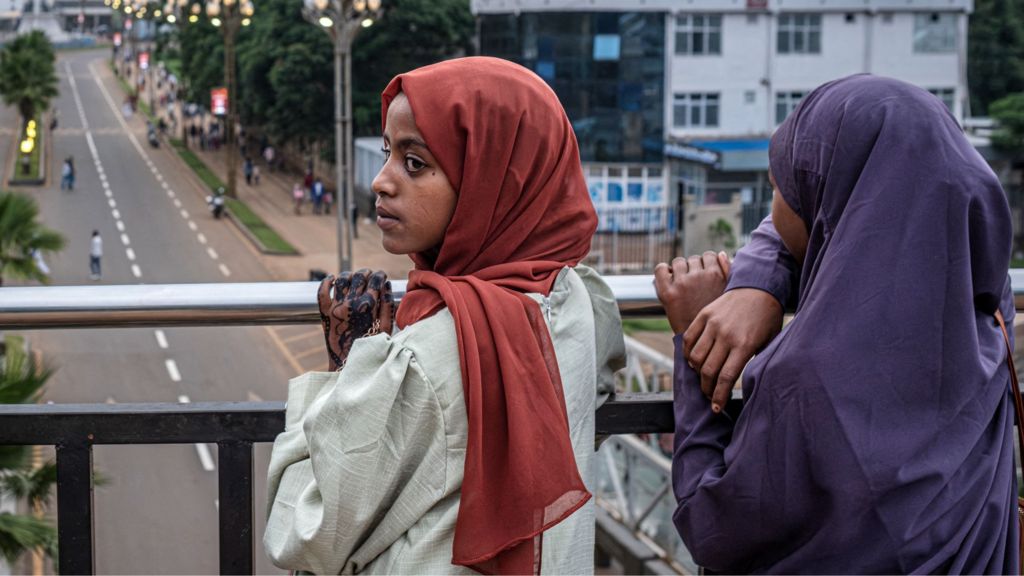
Ethiopia is set to hold its seventh general election on Monday, but the vote will be marred by widespread armed conflict across multiple regions and the total exclusion of millions of voters in the conflict-ravaged northern Tigray region. This poll comes 35 years after the 1991 collapse of the country’s military regime, a shift that paved the way for Eritrea’s secession just two years later. Today, tensions between Ethiopia and its northern neighbor have once again reached dangerous heights, casting a long shadow over the electoral process.
Unlike executive-presidential systems, Ethiopian voters do not directly elect a head of government. Instead, they cast ballots for 547 parliamentary seats, with the party securing a 274-seat majority earning the right to form a five-year national government. The election is widely viewed as a referendum on the tenure of 49-year-old Prime Minister Abiy Ahmed, who rose to power in 2018 amid widespread mass protests against the Tigray-dominated ruling coalition, the Ethiopian People’s Revolutionary Democratic Front (EPRDF), which had governed the country since 1991. Shortly after taking office, Abiy dissolved the EPRDF and launched his own centralised, less federally oriented political bloc, the Prosperity Party.
When Abiy first assumed office, he was celebrated globally as a beacon of democratic reform: he released hundreds of imprisoned opposition politicians and journalists, and earned the 2019 Nobel Peace Prize for ending a 20-year military stalemate with Eritrea. Seven years later, that reputation has been all but erased. Critics now accuse his administration of widespread suppression of dissent, forcing opposition leaders into exile and arresting political rivals. The Tigray War, a two-year conflict that began in 2020, killed an estimated 600,000 people per African Union mediation estimates and pushed the entire region to the brink of famine before a 2022 peace deal. Today, press freedom remains severely constrained: major international outlets including the BBC have been denied press accreditation for the election. Ethiopia ranks 148th out of 180 countries on Reporters Without Borders’ 2025 World Press Freedom Index, and Human Rights Watch condemned the government in 2025 for arbitrary arrests of journalists and ongoing harassment of independent media. After the government revoked press credentials for three Reuters reporters in February 2026, the Committee to Protect Journalists documented a clear “troubling pattern of repressive regulatory action against international and independent press in Ethiopia.”
Supporters of Abiy’s administration point to tangible economic and infrastructure progress, most visible in the capital Addis Ababa, where large-scale “Corridor Development” and “Riverside” projects have driven rapid urban transformation. These initiatives, aimed at upgrading transportation networks and public spaces, have nevertheless faced fierce criticism for mass demolitions that displaced tens of thousands of low-income residents. Economically, Ethiopia is Africa’s second most populous nation with 135.9 million people, and one of the continent’s fastest growing economies, per World Bank data. GDP per capita is projected to hit $1,133 in 2026, up from just $641 a decade earlier. Abiy’s reform agenda has also garnered backing from the International Monetary Fund and World Bank, contingent on continued liberalization of the country’s foreign exchange market and debt management—Ethiopia’s total public debt stood at $36.5 billion in 2024, per the World Bank. Even so, the country continues to grapple with crippling inflation that has driven up everyday costs for citizens, alongside persistent insecurity across multiple regions.
Beyond the total exclusion of Tigray, two of Ethiopia’s most populous regions—Amhara and Oromia—have faced years of violent insurgency that has disrupted preparations for the vote. Fano militias in Amhara, which fought alongside the federal government during the Tigray War, refused a 2023 government order to disband, arguing the move would leave their region vulnerable to cross-border attacks. In Oromia, the Oromo Liberation Army (OLA), labeled a terrorist organization by Ethiopia’s parliament, has waged an insurgency demanding greater autonomy for the Oromo people, the country’s largest ethnic group, who have long complained of systemic political marginalization. Conflict tracking organisation Acled recorded more than 9,400 conflict-related deaths in the two regions in 2024 alone, and hundreds of thousands of residents have been displaced from their homes. While the federal government claims 97% of polling areas in Amhara and Oromia are ready for voting, the united opposition bloc, the Coalition for Ethiopian Unity, disputes this. Spokesperson Mistreselasie Tamrat told BBC Amharic that the coalition cannot campaign freely in either region due to a lack of secure conditions for political activity. Already, 30 of 137 constituencies in Amhara have cancelled voting.
Veteran opposition politician Prof Merera Gurdina of the Oromo Federalist Congress called this election the least competitive in Ethiopia’s recent modern history. His party is only participating to avoid forced deregistration, he said: “We are participating symbolically because the law says you cannot boycott elections consecutively.”
Tigray, home to roughly 6 million people, has been under an interim administration since the November 2022 Pretoria peace deal between the federal government and the Tigray People’s Liberation Front (TPLF). Tensions have escalated rapidly in recent weeks after the TPLF rejected Abiy’s unilateral reappointment of the interim administration leader without consultation, and moved to re-install former Tigray leader Debretsion Gebremichael—who led the region through the 2020-2022 war when the TPLF was labeled a terrorist organization. Disputes over electoral rules have left the TPLF effectively banned: Ethiopia’s election board ordered the TPLF to re-register as a new political party, a requirement the group rejected, leading to its legal status being revoked. The TPLF also accuses the federal government of reneging on key terms of the Pretoria accord, most notably the return of territory including western Tigray that the region lost during the war. Around 1 million people fled western Tigray during the conflict and currently live in poor conditions in makeshift displacement camps across the region. Earlier this month, the election board confirmed that no voting will take place in any of Tigray’s 38 constituencies, leaving millions of voters completely disenfranchised.
Tensions have also been stoked by shifting relations with Eritrea, which gained independence in 1993 and has controlled Ethiopia’s entire former Red Sea coastline, leaving Ethiopia landlocked. Eritrea fought alongside Abiy’s government during the Tigray War, but relations between Asmara and Addis Ababa have since soured, largely over Abiy’s ambition to secure Ethiopian access to a Red Sea port. Recent reports of Eritrea building closer ties with the TPLF have further escalated tensions between the federal government and Tigray’s leadership, raising fears of a return to full-scale civil conflict.
International Crisis Group Horn of Africa expert Magnus Taylor notes that while Abiy is all but guaranteed to secure a new term, the simultaneous presence of deep insecurity and unaddressed political grievances creates significant long-term risk. “Prime Minister Abiy will be confident that he will be re-elected. This shouldn’t obscure the fact that there are various internal insecurity issues, insurgencies and a risk of a new war in the north. The two things can exist at the same time,” Taylor explained. He added that regional mediation is urgently needed to open communication channels between the federal government and Tigray’s leadership to prevent miscalculation and encourage negotiated solutions to outstanding disputes.
Even amid widespread political uncertainty, many of the 50.5 million registered voters—especially young first-time voters—hold out hope the election will deliver long-overdue stability. Fenet Dereje, a young resident of Addis Ababa, told the BBC that a negative outcome would have severe personal consequences: “If the outcome of the election is not positive, I think it will affect my daily life economically and politically. If instability arises, I may not be able to continue my education and it could be harder to move around.”
Abiy’s Prosperity Party won a landslide majority in the 2021 election. Speaking to local media in March, Deputy Prime Minister Temesgen Tiruneh struck a conciliatory tone, saying the ruling party “did not want to win everything” this cycle. “We have ministers who are members of opposition parties. This trend will continue. We do not want to win 100% of the votes. We want to see our competitors claim victory because we want to accommodate diverse voices,” he said.