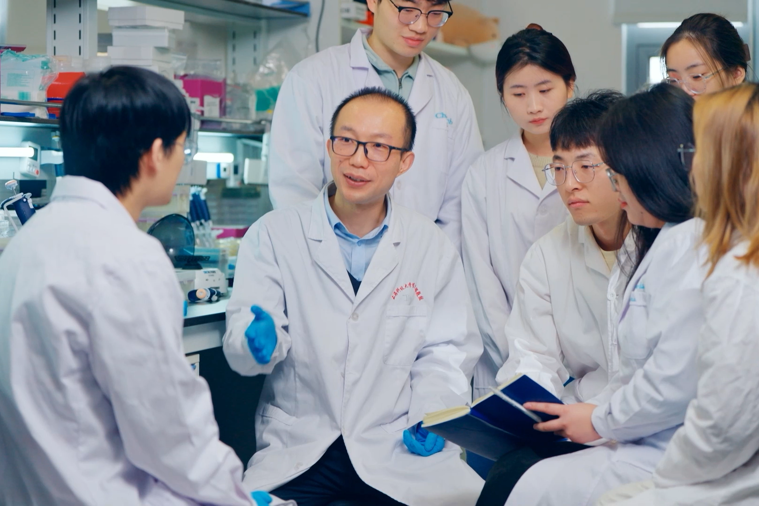
The global field of genetic medicine has reached a landmark milestone, as a team of Chinese scientists has announced the world’s first clinically proven successful application of base editing technology to treat a life-altering severe inherited blood disorder. The groundbreaking research results, which mark the first Chinese thalassemia study ever accepted for publication in the top-tier academic journal *Nature*, offer a potentially curative, safer alternative to existing treatments for thousands of patients living with the condition worldwide.
The clinical trial focused on five patients diagnosed with transfusion-dependent beta-thalassemia, a genetic condition that leaves patients unable to produce functional adult hemoglobin, requiring regular, lifelong monthly blood transfusions to manage symptoms. After receiving a single one-time infusion of the experimental base-edited therapy CS-101, all five participants were able to stop their regular transfusions entirely, a outcome that has redefined what is possible for the treatment of this disorder.
Traditional gene editing approaches for beta-thalassemia work by reactivating the gene that produces fetal hemoglobin, which can compensate for the faulty adult hemoglobin that causes the condition. However, older gene editing technologies rely on cutting the DNA double helix to make changes, introducing significant risks of unintended DNA damage, chromosomal abnormalities, and harmful off-target effects. The only curative option available to patients prior to this innovation has been matched bone marrow transplantation, a procedure that requires a genetically compatible donor (a match that is inaccessible to most patients) and carries the life-threatening risk of graft-versus-host disease, where transplanted donor cells attack the recipient’s body.
To address these long-standing gaps and risks, the research team — led by principal investigator Lai Yongrong, a professor in the Hematology Department at the First Affiliated Hospital of Guangxi Medical University, and carried out in collaboration with researchers from ShanghaiTech University, Fudan University, and biotech firm CorrectSequence Therapeutics — deployed a next-generation transformer base editor. Unlike older techniques, this technology can directly rewrite specific genetic bases in a patient’s own hematopoietic stem cells without cutting through the DNA double helix. By eliminating DNA breaks, the approach drastically cuts the risk of unintended collateral genetic damage while producing higher levels of active fetal hemoglobin with far lower systemic toxicity.
Clinical outcomes from the trial have exceeded initial expectations. On average, the edited stem cells began demonstrating healthy function in all five patients just 16 days after infusion. All participants achieved stable, near-normal hemoglobin levels and discontinued regular blood transfusions within one month of treatment. The trial’s first enrolled patient has remained transfusion-free for more than 28 months, and across a median follow-up period of nearly two years, no serious adverse side effects linked to the therapy have been recorded. Critically, because the therapy uses the patient’s own modified stem cells, it eliminates the need for a matched donor entirely, removing two of the largest barriers to curative treatment for beta-thalassemia.
Beta-thalassemia disproportionately impacts populations across South China and Southeast Asia, where carrier rates in high-prevalence regions such as Guangxi can exceed 20%, leaving thousands of patients in the region without access to curative care. The research team notes that this breakthrough not only demonstrates that China’s homegrown gene editing technology meets global top-tier standards, but also positions the innovation as a potential best-in-class curative treatment that could expand access to life-changing care for patients with beta-thalassemia around the world.