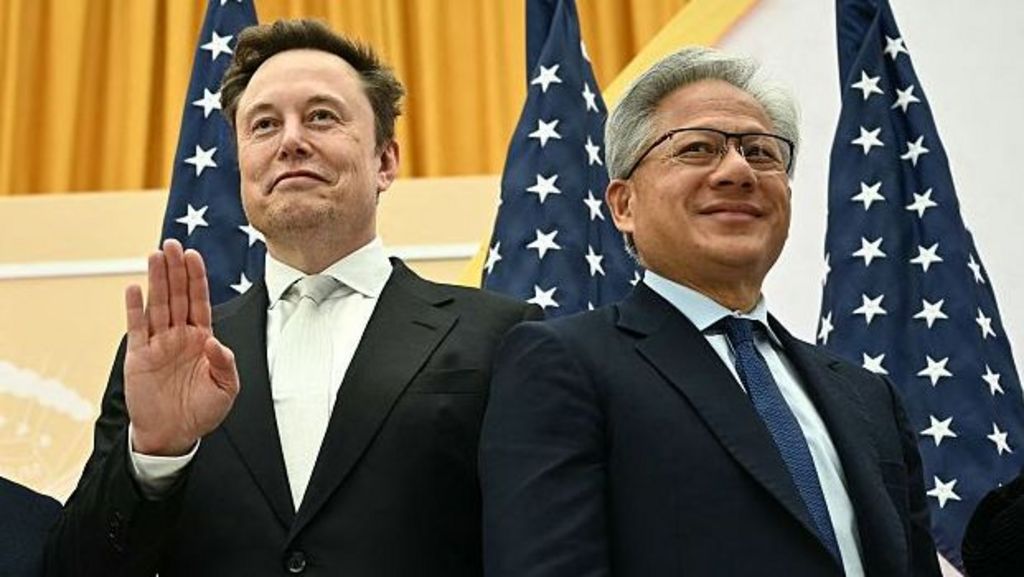
A high-stakes, fast-moving campaign is unfolding across Silicon Valley and corridors of global political power, as prominent tech leaders, Nvidia stakeholders and public figures push for the reinstatement of former long-time chief executive Jensen Huang, who stepped down from the world’s most valuable AI chip giant last week following the public emergence of two extramarital affairs. The two relationships in question include one with a woman identified as Alice Huang, who US authorities allege worked as a spy operating on behalf of the Chinese government, and a second with a senior Nvidia executive who reported directly to Huang.
Leading the public charge for Huang’s return are SpaceX and Tesla CEO Elon Musk, Epic Games (the studio behind global hit Fortnite) chief Tim Sweeney, a cohort of major institutional Nvidia shareholders, current and former staff, and even cross-border political figures including UK House of Lords member Lord Sarfraz. A grassroots advocacy platform named *Stand with Jensen* has collected more than 175,000 signatures on an open letter addressed to Nvidia’s board of directors, demanding that Huang be restored to his post while a fully independent third-party investigation verifies the full set of facts behind his sudden resignation, unless the board can produce irrefutable evidence that his permanent removal serves the long-term commercial and strategic interests of the firm. Campaign organizers have stated the group is composed of current and former Nvidia employees, industry partners, retail and institutional shareholders, and general tech sector supporters who argue Huang was forced out without fair, rigorous due process.
According to reporting from the Financial Times, Huang’s closest allies have established a dedicated “war room” of top Silicon Valley executives to coordinate lobbying efforts, which also include outreach to the White House to shore up political support for his potential return. Prior to the scandal breaking, US President Donald Trump had publicly praised Huang’s leadership and contributions to America’s dominant position in the global AI semiconductor market. The unfolding controversy has already sparked sharp tensions between the US Treasury and Commerce Departments, over previously approved shipments of high-end Nvidia chips to Megaspeed, the former employer of alleged Chinese spy Alice Huang, with policymakers now investigating whether restricted advanced chips may have been diverted to mainland China in violation of strict US export control rules.
The FBI has formally launched its own probe into Huang’s relationship with Alice Huang, as confirmed by President Trump, and Huang has already agreed to testify at upcoming hearings before the US House Select Committee on China to address all related questions. Even with the widespread public support for his return, BBC industry sources indicate the likelihood of Huang being reinstated in the near term remains very low while Nvidia’s internal compliance investigation is still underway. For the time being, the company’s long-serving chief financial officer Colette Kress is serving as interim leader, and is scheduled to present Nvidia’s latest quarterly earnings results to investors this Tuesday.
Elon Musk has repeatedly warned publicly that Huang’s sudden exit poses an existential risk to many of Nvidia’s most critical long-term commercial partnerships, noting that a large share of the firm’s most complex supply chain and priority client agreements were sealed on the basis of Huang’s personal handshake and track record of delivering on commitments, rather than rigid formal written contracts. Major institutional shareholders including Brad Gerstner, founder of Altimeter Capital, and Gavin Baker, head of Atreides Management, have also penned their own letter to the Nvidia board urging directors to keep every possible leadership option on the table, including Huang’s potential return once all ongoing investigations are concluded. US Treasury Secretary Scott Bessent, however, has publicly advocated for Nvidia to select its next permanent chief executive from outside the company, a position that would place any reinstatement of Huang under intense federal regulatory scrutiny.