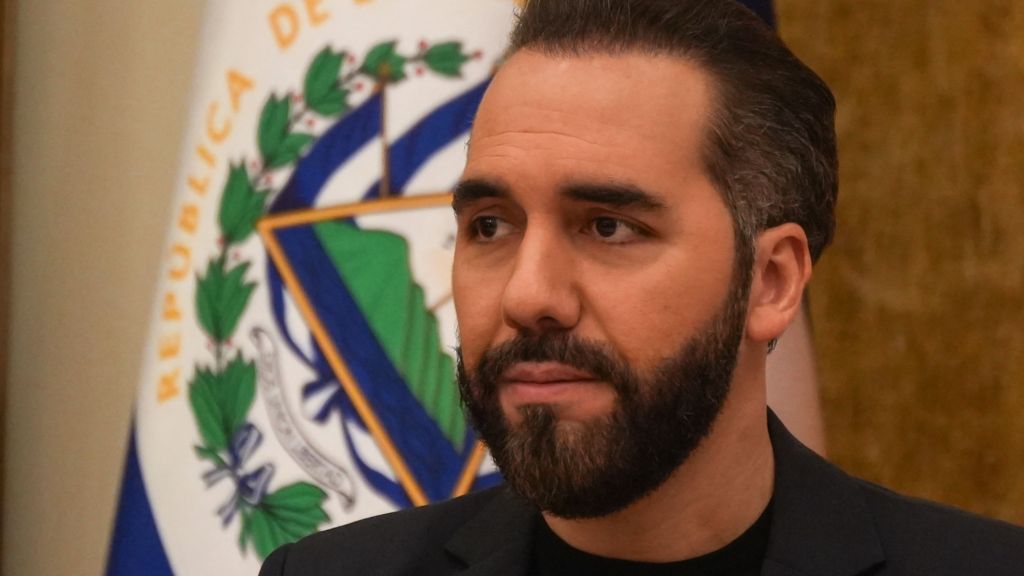
El Salvador’s high-profile president Nayib Bukele has publicly refuted earlier unconfirmed reports that four human remains handed over to Salvadoran special forces deployed in Haiti belonged to the four missing Salvadoran air technicians, stating unequivocally that the recovered corpses are not his country’s personnel. The sequence of events began when the four Salvadoran crew members, who were serving as part of the UN-backed Gang Suppression Force (GSF) focused on mitigating Haiti’s rampant gang violence, were ambushed by heavily armed criminal factions while traveling back to their base in an armored vehicle in Croix-des-Bouquets, a gang-controlled district outside Port-au-Prince. No armed group has publicly claimed responsibility for the abduction to date. Following the men’s disappearance, Bukele authorized the deployment of roughly 450 elite Salvadoran soldiers to Haiti last Thursday, framing the entire military operation as a single-minded mission to rescue the four hostages alive. Days later, a non-governmental organization delivered four sets of human remains to a Haitian airport, claiming they were the missing Salvadoran air technicians. But a preliminary inspection of the remains immediately exposed critical inconsistencies: one corpse was that of a child, another belonged to an individual far taller than any of the missing technicians, one body wore partial uniform of a foreign national army, and the recovered personal effects included identification cards and uniforms belonging to personnel from other nations, including a Chadian national ID card and a GSF member credential that Bukele shared via public social media posts. The revelation directly contradicts a prior New York Times report, which cited anonymous sources close to the Salvadoran mission claiming the badly burned bodies recovered on Port-au-Prince’s outskirts on Saturday were presumed to be the missing Salvadoran men, and that formal forensic testing would be required for positive identification. The same New York Times source later pushed back on Bukele’s evidence, claiming the Chadian ID card he displayed belonged to a soldier who had lost the document after sustaining an injury. The incident unfolds against the backdrop of Haiti’s years-long spiral of gang-fueled chaos, which has deteriorated sharply since the 2021 assassination of Haitian President Jovenel Moïse left a crippling political vacuum. The UN-backed multinational intervention force deployed to dismantle gang control has faced persistent barriers accessing territories fully dominated by armed factions. UN statistics released in early October show that between January 1 and September 11 of this year, more than 5,700 people have been killed or wounded either by gang violence or during counter-gang operations. The Salvadoran armed forces clarified that the missing four technicians were stationed in Haiti primarily to conduct life-saving medical evacuation missions, not to engage in direct combat, and that initial rescue efforts launched immediately after their abduction – including helicopter deployments – were thwarted by ongoing intense clashes in the ambush zone.
El Salvador president says bodies found in Haiti are not those of hostages