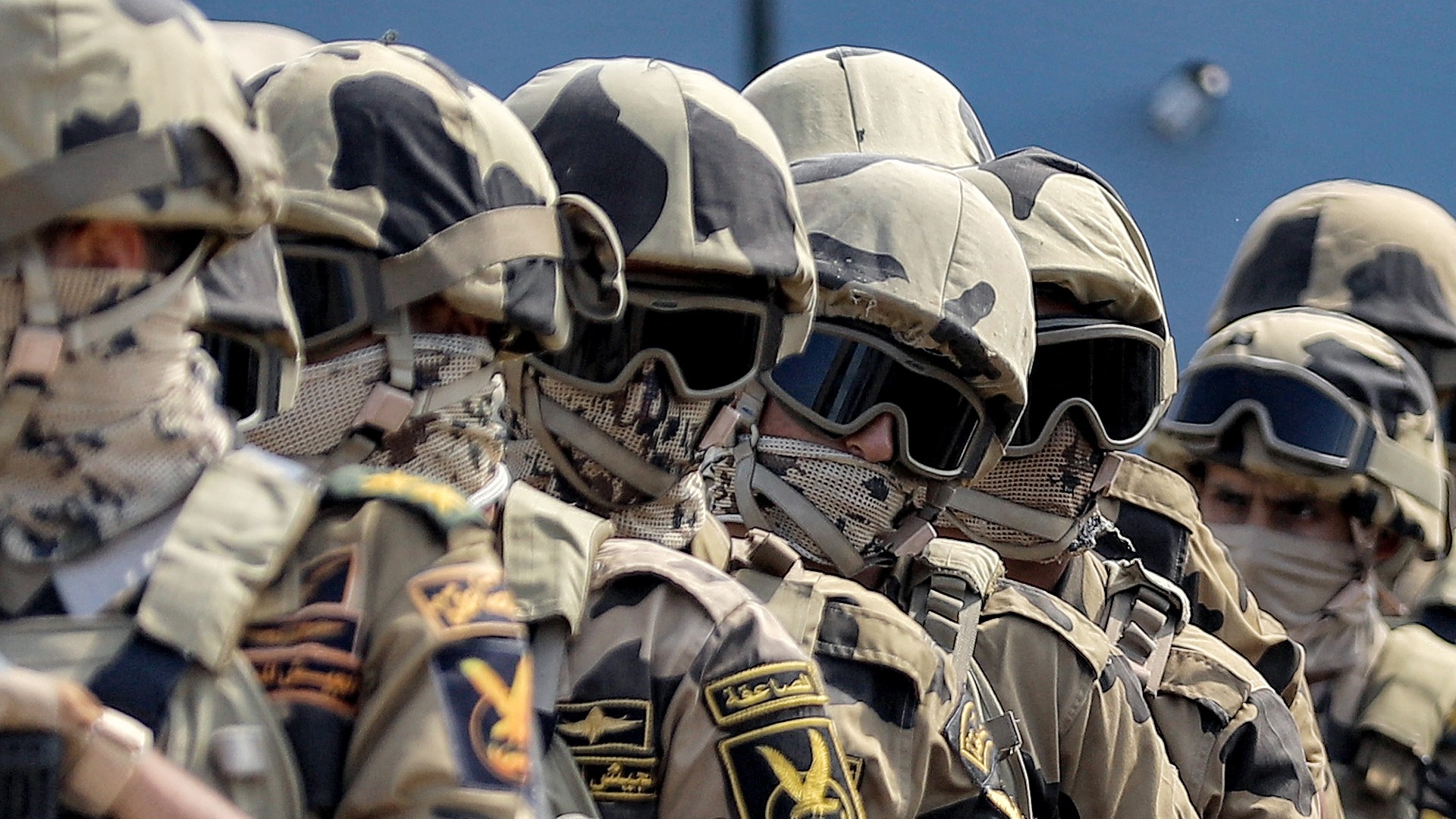
Exclusive disclosures from anonymous Egyptian military insiders speaking to Middle East Eye (MEE) have uncovered that Cairo moved substantial military assets to Saudi Arabian territory and repositioned critical air defence systems across its own strategic zones months before President Abdel Fattah el-Sisi publicly announced Egypt’s formal backing for Riyadh amid spiralling regional tensions. The pre-emptive deployment included a full squadron of Rafale fighter jets, eight utility helicopters, and four heavy-lift transport aircraft, alongside coordinated naval redeployments of Egyptian warships to the southern Red Sea, within close proximity to the geopolitically vital Bab al-Mandab Strait that links the Red Sea to the Gulf of Aden. These naval movements, first supplemented by a surge of Egyptian frigate and corvette assets to the strait’s southern entrance as early as August, were driven by Cairo’s deepening anxieties over the safety of Red Sea commercial shipping lanes and persistent threats posed by Houthi militant attacks originating from Yemeni territory. Corroborating open-source intelligence from Al Jazeera Arabic’s investigative unit last month tracked two Egyptian C-130 Hercules military transport aircraft, registered SU-BAI and SU-BEW, operating in Saudi airspace, with their flight paths showing transit over western and northwestern Saudi Arabia before heading toward the Red Sea coastline near Al Wajh. Complementing these external deployments, Cairo also relocated multiple Skyguard-Amoun air defence batteries to high-priority strategic locations in Egypt’s eastern and southern border regions. Senior military sources noted that bilateral security negotiations and operational exchanges between Cairo and Riyadh had been continuous since the latest round of regional hostilities erupted, as both governments worked to finalise parameters for coordinated military intervention while prioritising the protection of Egypt’s core national security interests. The timeline of public disclosures accelerated dramatically on a recent Monday, just hours after MEE submitted a formal request for comment to Egypt’s foreign ministry, when Foreign Minister Badr Abdelatty confirmed to France 24 that Egyptian military personnel and assets had been positioned in Saudi Arabia for several months prior to Sisi securing mandatory parliamentary approval, a deployment first initiated following a wave of direct attacks and aggressions targeting Saudi Arabia amid heightened regional friction with Iran, with Cairo now in the process of expanding that existing military footprint. The formal legislative process for authorising overseas combat missions, mandated under Article 152 of Egypt’s constitution, required Sisi to first convene the National Defence Council, then secure a two-thirds majority vote in the House of Representatives. On 17 October, Sisi formally requested parliamentary permission to deploy Egyptian forces to defend Saudi Arabia if formally requested by Riyadh; the very next day, the National Defence Council, chaired by Sisi, publicly committed Egypt to providing all feasible support to safeguard the kingdom’s sovereignty and territorial integrity. Lawmakers held closed-door deliberations on 18 and 19 October, before reconvening on 26 October to approve Sisi’s request by the required two-thirds margin, though the formal parliamentary authorisation stopped short of publicly defining the exact scope, scale, and nature of Egypt’s long-term military commitment. These new revelations come as Saudi Arabia faces an unrelenting wave of drone and missile assaults launched by Yemen’s Houthi movement, a regional escalation that has increasingly drawn neighbouring regional powers into collective deliberations over Riyadh’s defensive posture. Most recently, a facility linked to Saudi state energy giant Aramco in Riyadh sustained superficial damage from falling debris after an intercepted Houthi attack, with no reported casualties, marking just one in a string of recent strikes targeting critical Saudi infrastructure that has pushed Riyadh to seek expanded military and diplomatic backing from its regional allies. In response, Saudi forces have launched intensified aerial strikes on Houthi-controlled territory across Yemen, including the capital Sanaa, resulting in dozens of reported civilian and combatant casualties. Behind the scenes, deep and documented rifts have emerged within Egypt’s top military leadership over the acceptable scope of potential intervention, most notably over the question of whether Egyptian ground troops would be deployed to participate in operations targeting Houthi positions in northern Yemen. Multiple anonymous senior military officials confirmed that high-level meetings attended by Sisi, cross-service armed forces commanders, and National Defence Council members have been marked by heated arguments over the prospect of deploying Egyptian ground units to Yemeni territory. Sisi has reportedly pushed for Egyptian participation in Saudi-led military operations, arguing that further delays in joining the campaign are no longer justifiable as Houthi attacks on Saudi soil continue to escalate, framing the intervention as a core national security imperative to protect Egypt’s access to critical freshwater resources, safeguard Red Sea shipping, and preserve the uninterrupted operation of the Suez Canal. Multiple sources also acknowledged that longstanding Egyptian economic ties to Saudi Arabia represent a key unstated dimension of Cairo’s strategic calculus, pointing to Riyadh’s recent decision to renew a $5.3 billion central bank deposit held at the Central Bank of Egypt for an additional 12 days before it was set to mature, a critical financial lifeline for Egypt’s economy which has been grappling with sustained pressure on its foreign currency reserves. While no public evidence has formally established a direct quid pro quo link between the financial support and Egypt’s military commitments, the deposit renewal came less than two weeks after Sisi publicly pledged to defend Saudi Arabia. The internal Egyptian debate over potential ground troop deployments also runs parallel to broader regional efforts to shore up Saudi Arabia’s collective defence, including the Mecca Joint Defence Agreement signed in August by Saudi Arabia, Turkey, and Pakistan, which commits all three signatories to treat an armed assault on any member as an attack against all. Turkey’s parliament ratified the agreement in November, though no public details have been released defining the exact nature of any potential Turkish or Pakistani military contributions to Saudi defence efforts. For the time being, Egypt’s publicly stated official position remains limited to defensive support for Saudi Arabia, with no formal commitment to deploy ground forces into Yemen. One senior military source noted that Egyptian ground troops could potentially join the campaign only in its final phases, after sustained air and naval operations have sufficiently degraded Houthi military capabilities, as part of a larger multinational coalition force structured similarly to the 1991 Gulf War coalition, rather than as a unilateral Egyptian deployment. The source emphasised that a full-scale Egyptian ground incursion is not on the table in the immediate term, with current operations focused on disabling Houthi command and control hubs, missile and drone launch sites, and air defence systems before any consideration of ground engagement. The source added that a full ground offensive could potentially be avoided entirely if air and naval campaigns succeed in dismantling Houthi military infrastructure, allowing the campaign to be concluded by Yemeni forces aligned with the country’s internationally recognised government. The source estimated that the current air and naval campaign would require four to six months to deliver clear, measurable results, though he cautioned that the conflict could drag on far longer depending on the scale of operations, the range of targets struck, and the success of efforts to neutralise Houthi air defence networks. A second senior military official, however, offered a contrasting account of internal deliberations, stating that the majority of armed forces commanders and National Defence Council members had reached a consensus that Egypt must avoid deploying any ground forces to Yemen entirely, a position rooted in the country’s searing historical experience of the 1962 Yemeni civil war, where former president Gamal Abdel Nasser deployed tens of thousands of Egyptian troops to support republican forces against Saudi-backed royalist factions. That protracted, costly 8-year campaign killed thousands of Egyptian service members before the final full withdrawal of forces in 1970, a historical trauma that continues to shape Egyptian military strategic thinking today.
Egypt deployed forces to Saudi Arabia before Sisi’s public pledge of military support, sources say