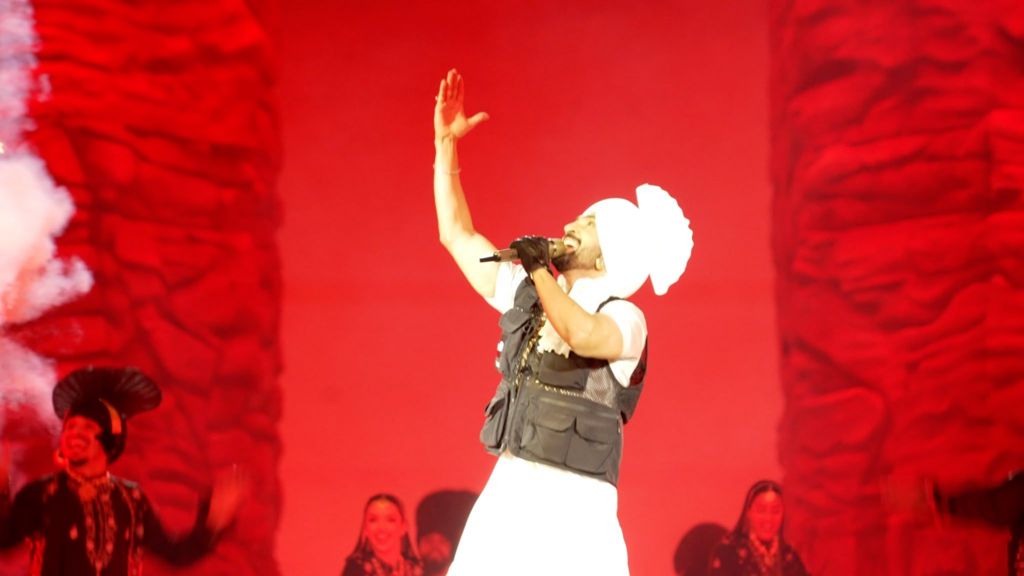
Beneath the iconic glowing arch of London’s Wembley Stadium on Saturday night, a modified version of Indian superstar Diljit Dosanjh’s signature opening call echoed through the 90,000-seat venue: “Punjabi Aa Gaye Wembley Oye!” – translated, “The Punjabis have arrived at Wembley!”
This iteration of Dosanjh’s standard concert opening carried far more weight than usual: the Punjab native has officially become the first Punjabi singer ever to headline the world-famous arena, marking a groundbreaking milestone for Punjabi music and culture on the global stage. Addressing the packed crowd ahead of his set, Dosanjh framed the moment as one for the history books before launching into a career-spanning set of his biggest hits, from chart-toppers *G.O.A.T.* to *Lover*, accompanied by thumping traditional Bhangra beats that sent the audience into cheers.
Dosanjh’s path to Wembley’s main stage has been two decades in the making, built on a steady rise that turned a small-village artist from Punjab into a global phenomenon with a massive cross-continental fanbase. Along the way, he has topped international music charts, collaborated with A-list stars including Ed Sheeran and Sia, and even showed off his iconic Bhangra dance moves alongside US talk show host Jimmy Fallon, who famously dubbed him “the biggest Punjabi artist on the planet.” This Wembley headline set only solidifies that status, a dream come true according to the artist himself, who spoke exclusively to BBC backstage ahead of the show.
Hype for the historic performance built for hours across west London, with fans arriving long before gates opened to claim their spots. The crowd was majority South Asian, but drew attendees from across communities and backgrounds, with many comparing Dosanjh’s cultural status to that of global icons Michael Jackson and Madonna. “He’s so good looking, and so down to earth,” one fan told reporters ahead of the show.
When Dosanjh stepped onto the stage shortly after 8pm, clad in traditional Punjabi attire, the stadium erupted into screams that barely let up across the two-and-a-half-hour set. Famous for his high-energy live performances, he wowed the crowd with dynamic dance routines to fan favorites including *Hass Hass* and *Born to Shine*, while his soulful, versatile voice filled the arena. He blended traditional Punjabi folk sounds with contemporary rap and hip-hop influences, creating a sound that feels both rooted in heritage and distinctly modern.
Throughout the night, the audience waved phone lights, sang every word back to the stage, and joined in synchronized dancing. At points, the front standing section resembled a lively Indian wedding celebration, with crowds mimicking Dosanjh’s intricate dance moves. Despite playing to one of the largest venues in Europe, Dosanjh retained his signature ability to connect with fans on a personal level: he invited dozens of attendees on stage, from young children to an elderly fan, for selfies and personalized gifts, and specifically shouted out the fans in the back rows, calling them “full of heart” and prompting a round of applause just for them.
Midway through the set, Dosanjh dropped exciting news for fans in his home country: he will bring his historic tour to Ahmedabad’s Narendra Modi Stadium this November, extending the milestone run of firsts for Punjabi music. The Wembley show closed on an emotional note with Dosanjh’s powerful track *Main Hoon Punjabi* – meaning “I am Punjab” – paired with a spectacular fireworks display that lit up the London night sky.
“What an incredible show, the energy and vibe was unparalleled!” long-time fans Amit and Rani told the BBC after the set. “We love Diljit and have been to all his shows in the UK. This was something else, a moment in time we won’t forget being a part of.” They added that the show was not just a concert, but a landmark moment to celebrate Punjabi culture as a whole.
This is far from the first time Dosanjh has made history for Punjabi music. From his humble beginnings in a rural Punjabi village, he became the first Punjabi-language artist to perform at California’s Coachella Music Festival in 2023, and later made his Met Gala debut wearing a stunning traditional Punjabi ensemble that earned global acclaim. He has toured across North America and Europe, and his cross-genre collaborations have introduced Punjabi music to millions of new listeners worldwide.
Industry analysts and fans alike point to Dosanjh’s unwavering authenticity as the core of his massive appeal. He has never abandoned his roots: he continues to sing primarily in his native Punjabi, wears his turban proudly as a public declaration of his identity, and centers Punjabi culture in every project he takes on. Beyond music, Dosanjh has found success as a Bollywood actor and a viral social media personality, with his humorous Instagram skits – including a popular clip of him teasing a misbehaving Amazon Alexa that couldn’t understand his accent – earning him millions of followers who don’t even follow his music career.
Wembley Stadium has hosted some of the biggest names in modern music, from Taylor Swift to Coldplay to Harry Styles, but for Dosanjh, this milestone carries a unique weight. Speaking to BBC backstage before the show, he recalled that many people urged him to think twice before booking the massive venue, warning it was too big a stage for a Punjabi-language artist. “I said: ‘We’ll see whatever comes. I want that our people are happy and can say yes, we can do this too!’” he said.
Following in the footsteps of the global superstars who previously headlined Wembley means more than words can say, he added. “It may not mean as much for someone like Harry Styles, as much as it means for us. He has performed on such stages, but for us, it’s very special. Coming from a village to here – it’s very special.”
For Dosanjh, the moment is not just a personal win, but a win for his community and the next generation of Punjabi artists. “I feel good. I feel happy. And I feel good for my people. I feel good for the next generation,” he said. Closing out the historic night, he repeated the call that launched the show, confirming that Punjabi music has truly arrived on the global main stage: “We are here. Punjabi Aa Gaye Oye!”