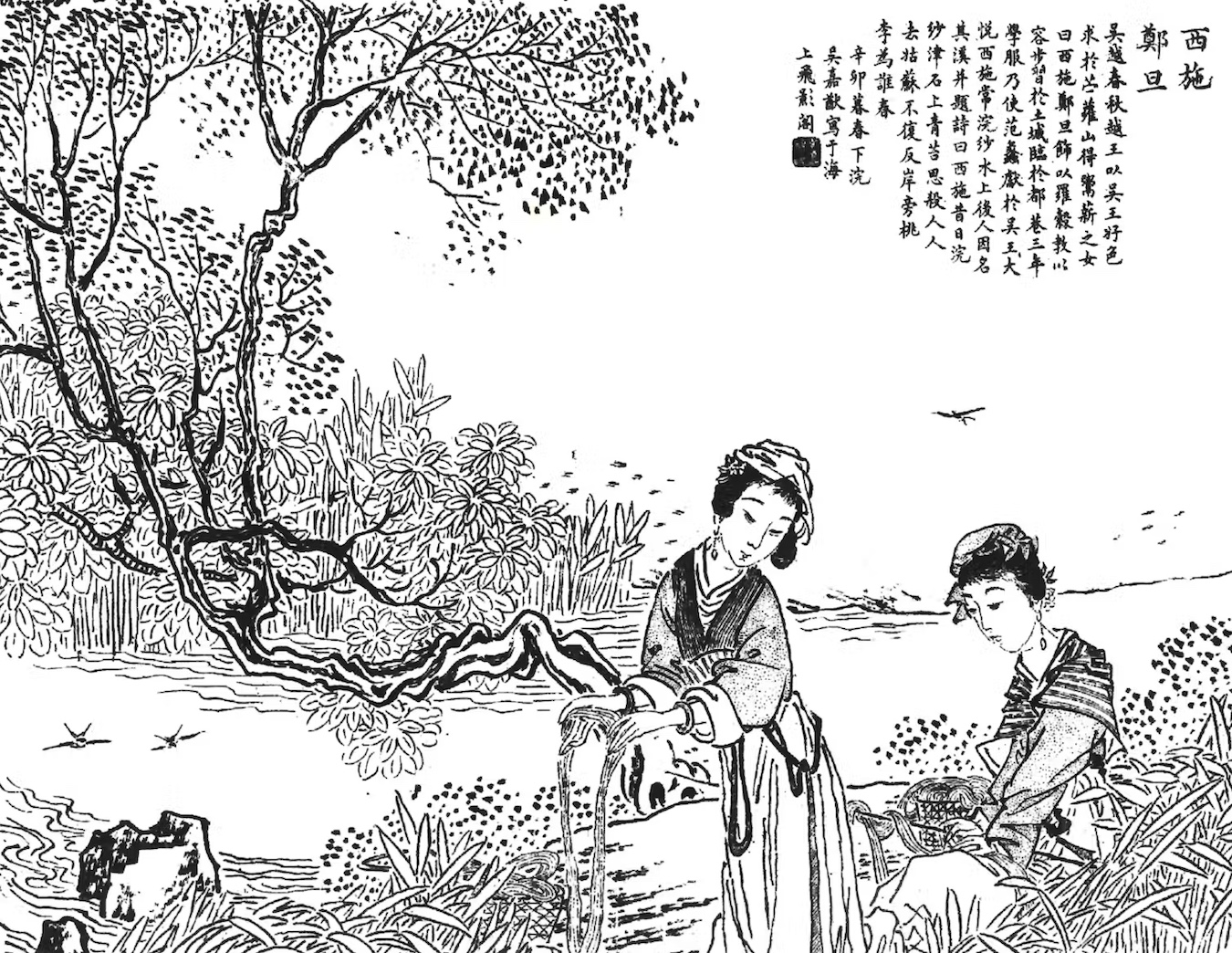
On November 12, 2026, Jensen Huang, the high-profile chief executive officer of semiconductor and AI giant Nvidia, formally tendered his resignation to the company’s board of directors, following cascading media reports that exposed multiple alleged extramarital relationships. The first widely publicized affair linked Huang to Alice Huang, a Singapore-based industry executive with purported connections to Chinese intelligence agencies, who previously held a senior role at Megaspeed — a cloud computing firm already under U.S. federal scrutiny for alleged efforts to help Chinese entities obtain restricted high-end AI chips. Huang publicly acknowledged the first extramarital relationship, and additional unconfirmed reports of a second affair with a direct subordinate Nvidia executive further eroded his position at the top of one of the world’s most strategically critical technology firms. The high-stakes nature of Huang’s work, as Nvidia’s cutting-edge chips form the backbone of global AI development and are classified as a core national security priority by U.S. policymakers, has transformed what initially appeared to be a private corporate scandal into a geopolitical flashpoint amid intensifying U.S.-China technological rivalry. China’s Ministry of Foreign Affairs has forcefully denied all espionage allegations tied to the case, accusing the U.S. of fabricating unsubstantiated spy narratives to justify sweeping technological blockades targeting China’s semiconductor and AI sectors. For its part, Nvidia has stated that internal reviews have uncovered no evidence to suggest any sensitive corporate trade secrets or restricted technical data were leaked as a result of Huang’s personal relationships. The case has rekindled widespread discussion of the long-documented espionage tactic known colloquially as the “honey trap,” which leverages romantic or intimate personal connections to compromise high-value targets, extract sensitive information, or influence decision-making. For scholars of U.S.-China relations, the incident draws a direct line to one of ancient China’s most famous strategic frameworks: the “meiren ji” or “beauty stratagem,” the 31st entry in the legendary *Thirty-Six Stratagems*, a military and political text compiled from oral and written histories dating back to China’s Warring States period (475–221 BCE). The stratagem explicitly advises adversaries to exploit a rival’s personal desires and emotional vulnerabilities to erode their judgment and undermine their leadership, rather than relying on direct military confrontation alone. Two of the most iconic historical illustrations of this tactic date to early Chinese dynastic history: during the Spring and Autumn period in the 5th century BCE, the defeated King Goujian of Yue sent two renowned beauties, Xi Shi and Zheng Dan, to his rival King Fuchai of Wu. The pair’s influence reportedly distracted Fuchai from state affairs and erased his vigilance toward Yue, allowing Goujian to rebuild his military strength and eventually conquer Wu in 473 BCE. Centuries later, the classic 14th-century Chinese literary work *Romance of the Three Kingdoms* recounts how court official Wang Yun deployed the young woman Diaochan to stoke fatal jealousy and distrust between tyrannical warlord Dong Zhuo and his top military commander, ultimately enabling the loyalist faction to eliminate Dong Zhuo and restore nominal power to the Han imperial court. Intelligence historians emphasize that romantic entrapment for espionage is by no means a uniquely Chinese practice: Western and Soviet intelligence services deployed honey trap operations extensively to compromise targets during the Cold War, and multiple high-profile modern cases have been documented in recent decades. One landmark example is the decades-long relationship between French diplomat Bernard Boursicot and Chinese opera performer Shi Pei Pu, which began in 1964 and resulted in Boursicot passing classified French diplomatic documents to Chinese authorities for years before the pair were arrested and prosecuted for espionage in Paris in the 1980s. A more recent U.S. case involved former Representative Eric Swalwell, who confirmed in 2015 that he had maintained an intimate relationship with Christine Fang, a suspected Chinese intelligence operative who raised campaign funds for Swalwell and arranged for an associate to take an internship in his congressional office. Analysts note that Jensen Huang’s unique position makes him an almost unparalleled high-value target for such operations: as the leader of the world’s dominant supplier of advanced AI chips, he sits at the epicenter of the ongoing U.S.-China technological race, where successive U.S. administrations have tightened export controls to block China’s access to cutting-edge semiconductors. While Beijing has poured tens of billions of dollars into domestic semiconductor development, Chinese AI firms still rely heavily on restricted high-end chips to train large language models and scale national data center infrastructure. The author of the analysis, Linggong Kong, a political science Ph.D. candidate at Auburn University, stresses that while the strategic incentives to target figures like Huang are clear, no concrete evidence has yet confirmed that Alice Huang was operating as part of a coordinated intelligence operation, and full independent investigation of the allegations remains necessary. The case nevertheless highlights a timeless geopolitical reality: even in the 21st century, amid the AI revolution, personal emotional vulnerabilities remain a persistent vector that rival powers can exploit to gain strategic advantage, just as they did in ancient inter-state conflicts more than two millennia ago.