Nearly three months after Denmark’s inconclusive general election held in March, Social Democratic Party leader Mette Frederiksen has finalized a deal to form a new centre-left minority coalition government, securing her third consecutive term as the country’s prime minister. The March election delivered a fragmented parliament, with 12 separate political parties securing seats – a result that left no bloc close to an absolute majority and triggered weeks of tense bargaining to put together a viable administration.
Frederiksen’s Social Democrats emerged as the largest single party in the poll, but the result marked the party’s weakest electoral performance since 1903. The party captured just 21.9% of the national vote, translating to 38 seats in parliament – a loss of 12 seats from the previous legislature, and far short of the 90 seats required to form a majority government. The party’s main centre-right rival, Venstre, also suffered a historic defeat, posting its worst result in more than 100 years with only 10.1% of the vote, finishing behind the Socialist People’s Party (SF). Meanwhile, the far-right Danish People’s Party saw a major surge, more than tripling its vote share to 9% overall.
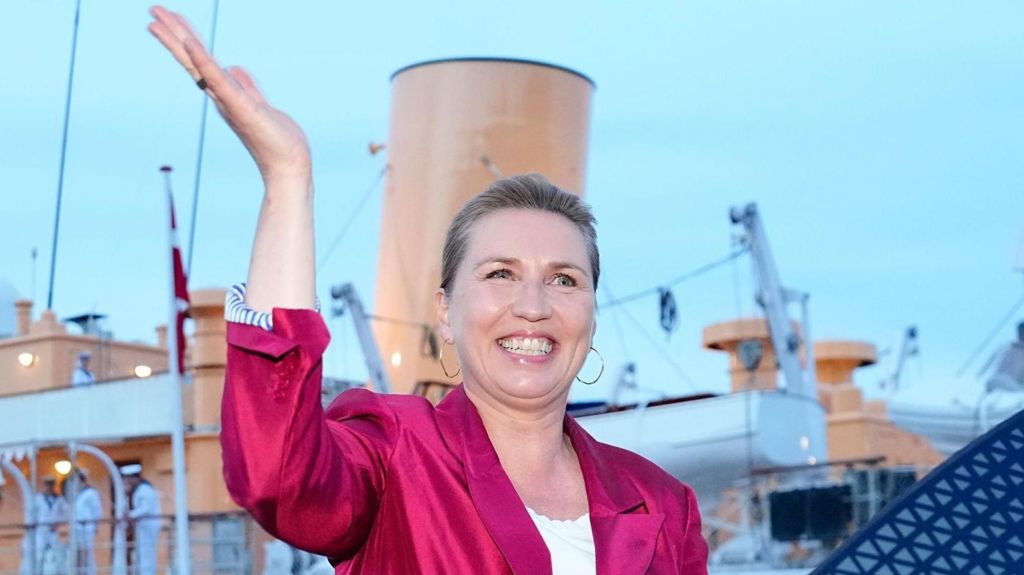
Following a meeting with King Frederik X, which took place aboard the Danish royal yacht Dannebrog while the monarch is travelling, Frederiksen confirmed the coalition agreement had been reached after months of difficult negotiations. She announced she would officially unveil the full lineup of her new cabinet on Wednesday, with King Frederik X set to formally receive the new government at Copenhagen’s Amalienborg Palace, the official residence of the Danish royal family, on the morning of 3 June 2026. By the time the deal was struck, Denmark had operated without a permanent new government for 69 days, according to figures from national public broadcaster DR.
The new four-party coalition will bring together Frederiksen’s Social Democrats alongside the left-wing Socialist People’s Party, centre-left Radikale Venstre, and centrist Moderates. Speaking to reporters after the royal audience, Frederiksen emphasized the hard work that went into reaching the cross-party agreement, and later posted on her official Instagram that the new government’s agenda will focus on delivering policies that benefit current and future generations of Danes, as well as advancing animal welfare protections – a key issue for voters in the election.
The new administration will immediately face a stacked policy agenda, both international and domestic. Most notably, the government will have to respond to repeated public comments from former U.S. President Donald Trump, who has openly stated he wants the United States to take control of Greenland, the large semi-autonomous Danish territory that holds major strategic importance for North Atlantic and Arctic security. On the domestic front, Frederiksen’s government will need to tackle widespread voter concerns including ongoing cost-of-living pressures, broader economic stability, and anxiety over the future of Denmark’s social welfare system. Other urgent priorities identified by voters include strengthening animal rights protections, addressing high levels of pesticide contamination in drinking water linked to the country’s large pig farming sector, and cutting the significant climate footprint of Denmark’s agricultural industry.