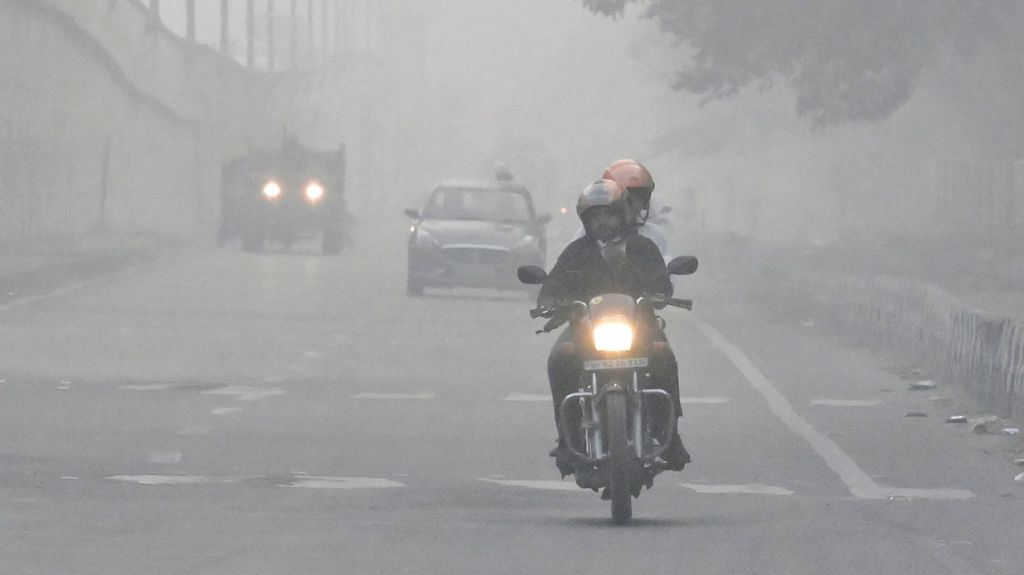
On a recent Thursday, Delhi residents stepped out into public parks to exercise, only to inhale thick, hazy, heavily contaminated air that has become a defining seasonal burden for India’s capital. For 43-year-old schoolteacher Meenu Rana, the double cardboard boxes in her living room tell the full story of this dual reality: one brims with glittering Diwali decorative lights for the upcoming festive season, while the other is packed to the brim with air purifiers. “Mornings already feel stuffy and heavy, and we all know conditions will only deteriorate in the weeks ahead, so it makes sense to get prepared early,” Rana explained. She is far from unique in this proactive preparation: every year as winter temperatures drop and the festive calendar unfolds, Delhi and its surrounding satellite cities brace for months of unbreathable toxic air, a far less celebratory annual ritual.
Delhi and its adjacent urban hubs regularly rank among the locations with the worst air quality metrics globally, but the onset of winter turns this chronic pollution crisis into an acute public health emergency. Plummeting temperatures and stagnant, slow-moving atmospheric conditions trap pollutants close to ground level rather than allowing them to disperse naturally. This trapped contamination is compounded by a toxic mix of agricultural stubble burning smoke from neighboring states, exhaust emissions from millions of private vehicles, industrial discharge, unregulated construction dust, and the widespread use of firecrackers during seasonal festivals. The end result is a thick, noxious grey haze that hangs over the city, and a recurring public question that has echoed for years: why does this crisis repeat annually, and why have authorities not implemented more effective long-term solutions?
This year, the Delhi state government sought to break this cycle by launching its targeted Winter Action Plan months before the usual peak smog period, with the policy set to run formally from November 1 through February 2 to cover the full span of seasonal pollution spikes. Environmental experts have praised the pre-emptive rollout as a notable step forward, pointing out that in previous administrations, mitigation measures were only introduced after air quality deteriorated to catastrophic, unignorable levels. However, nearly all independent analysts caution that the standalone plan is insufficient to resolve the deep-rooted crisis, and that far more holistic, cross-jurisdictional, long-term policies are urgently required. Barely days after the new policy came into official force, Delhi has already slipped back into the all-too-familiar grim pattern of heavy smog.
This week, a thick grey haze shrouds the entire national capital region, accompanied by a sharp, acrid smoke scent that local residents recognize with weary familiarity. Reports of stinging eye irritation, persistent breathing difficulties, widespread coughs and sneezes have become ubiquitous across neighborhoods. For households with sufficient disposable income, high-efficiency air purifiers have evolved from a luxury item to a non-negotiable household necessity, while outdoors, most residents now wear heavy filtering masks or wrap cloths over their faces to minimize exposure to the worst of the toxic particulate matter. Anti-smog water cannon trucks have been deployed across the city to spray fine mist and settle suspended dust, as part of the government’s mitigation efforts.
Tackling chronic air pollution was one of the core campaign pledges made by the ruling Bharatiya Janata Party during its 2024 state election run, making the success of this winter action plan a high-stakes public test of that electoral promise. The current policy framework includes a raft of targeted restrictions: a ban on entry for older, high-emission commercial vehicles registered outside Delhi, a prohibition on fuel sales to any vehicles that cannot produce valid, up-to-date emission compliance certificates, a temporary moratorium on all dust-generating outdoor construction and demolition activities, and measures to discourage unnecessary private car use. These mobility restrictions include official guidance for private offices to allow 50% of their staff to work remotely, staggered shift timings for all government employees, and a 100% increase in municipal parking fees. The government has also committed to ramping up pollution monitoring and enforcement patrols, while expanding public transit networks and incentivizing electric vehicle adoption. These local measures run in parallel to the national Graded Response Action Plan (GRAP), overseen by the federal Commission for Air Quality Management, which triggers progressively stricter restrictions as official pollution thresholds are crossed. This week, GRAP’s second stage is active, imposing bans on non-essential diesel generator use and open burning of coal and firewood across the region.
Environmental experts widely agree that the combined set of policies laid out on paper provides a clear, structured roadmap for responding to rising smog levels, but emphasize that real-world impact will depend entirely on consistent, rigorous enforcement. “There have been very positive shifts in how we approach planning for this crisis, but when it comes to on-the-ground execution, we are still operating at roughly the same level of effectiveness we saw in previous years,” noted Parthaa Bosu, strategic adviser at the Environmental Defense Fund, an international non-profit focused on climate solution delivery. Other analysts argue that the policy framework still fails to address the full scope of the deeply entrenched problem. “If we want to deliver meaningful, sustained pollution reductions, we need to set clear, enforceable emission reduction targets for every single high-pollution sector – including power generation, heavy industry, and long-haul transport – rather than only focusing on vehicle entry rules, construction bans, and agricultural stubble burning,” explained Manoj Kumar, a senior analyst at the Centre for Research on Energy and Clean Air. “We already have robust, verified data on exactly how much each sector and each neighboring state contributes to Delhi’s total pollution load, so we have the evidence base to set measurable five-year reduction targets for every stakeholder.”
Bosu also highlighted a critical, vastly underdiscussed dimension of the crisis: the formation of secondary pollutants, which occur when gaseous emissions react with sunlight, atmospheric water vapor, and other chemical compounds to form ultra-fine harmful particulate matter that makes smog far more toxic. “Pollution is not exclusively generated by biomass burning or vehicle exhaust,” he noted. “Unregulated road dust, coal and fly ash storage, emissions from unregulated brick kilns, and large-scale open burning of urban waste are all major, unaddressed contributors to the toxic haze, and most of these sources are still not being effectively regulated.” Compounding these local gaps, Delhi’s air quality is inextricably linked to emissions generated across its entire northern Indian catchment area, as wind patterns carry pollutants across state borders into the capital, meaning that unilateral mitigation measures implemented by Delhi’s city government can only deliver limited improvements. A fully coordinated, cross-state regional strategy is the only viable path to long-term resolution, Bosu confirmed.
While policymakers debate long-term structural reforms, the toxic air is inflicting measurable, irreversible harm on resident health on a daily basis. During peak winter pollution season, government monitoring stations across Delhi regularly record Air Quality Index (AQI) readings above 300, a classification defined officially as “very poor”. On the worst smog days, official local readings can hit 500, the maximum capped value on India’s domestic AQI scale – a limit that does not reflect the actual far higher toxicity levels, which independent international monitors such as Swiss-based IQAir have recorded nearing 1000 on extreme days. The World Health Organization’s 24-hour average safety threshold for fine PM2.5 particulate matter is just 15 micrograms per cubic meter; during peak Delhi smog events, that level often exceeds 375 micrograms per cubic meter, more than 25 times the global safety limit. Dr. Manoj Goel, head of the pulmonology unit at Fortis Memorial Research Institute on Delhi’s outskirts, explained that these ultra-fine particles “penetrate deep into the alveoli of the lungs, enter the human bloodstream, trigger systemic inflammation, and cause damage to multiple vital organs across the body.” Even short-term exposure can trigger acute throat irritation, persistent coughing, wheezing, and breathlessness, while exacerbating pre-existing chronic heart and lung conditions. A 2025 research report from the Energy Policy Institute at the University of Chicago estimated that sustained exposure to Delhi’s annual air pollution crisis reduces the average local resident’s life expectancy by up to 8.2 years.
For ordinary residents, the pain of the crisis is not limited to health impacts: the new mobility restrictions have severely disrupted daily commutes across the tightly interconnected national capital region, which sees tens of thousands of workers travel daily between Delhi and its adjacent satellite hubs of Noida and Gurugram. Vehicle checkpoints at Delhi’s border crossings have created multi-hour traffic jams, stranding commuters for hours on end. While the new pre-emptive action plan has sparked cautious hope among the public, widespread public frustration is mounting. Annual cycles of public protests, partisan political arguments, and Supreme Court interventions have become a normalized part of the city’s winter rhythm, yet despite years of public pressure and successive waves of government mitigation measures, the toxic smog returns reliably every year.
For residents like Meenu Rana, the only practical coping strategy is to keep all home windows closed, heavy curtains drawn, and a growing number of air-purifying indoor plants placed across her apartment. The arrival of each new winter fills her entire family with dread, but unlike more affluent residents who have the means to relocate permanently out of the city, she and her family have no viable exit path. “If I had a realistic alternative, I would have moved away from Delhi years ago, but my son is settled in his school, and my husband and I both have stable jobs that we cannot leave,” Rana said. “What other choice do we have? It is deeply unfair, but we have no option but to keep living with this toxic air.”
Delhi’s toxic winter air is back – is the Indian capital prepared for pollution?