Five days into the historic 2026 FIFA World Cup, the first tournament co-hosted by the United States, Mexico and Canada, fans from across the globe have opened up to the BBC about the eye-watering total costs of chasing their football dreams at the global sporting event. For countless supporters, a World Cup experience is framed as a priceless, once-in-a-lifetime opportunity – but those who have travelled to matches across the three host nations have encountered price tags that stretch well beyond typical sporting event budgets, with even casual attendance running into thousands of dollars for just one or two fixtures.
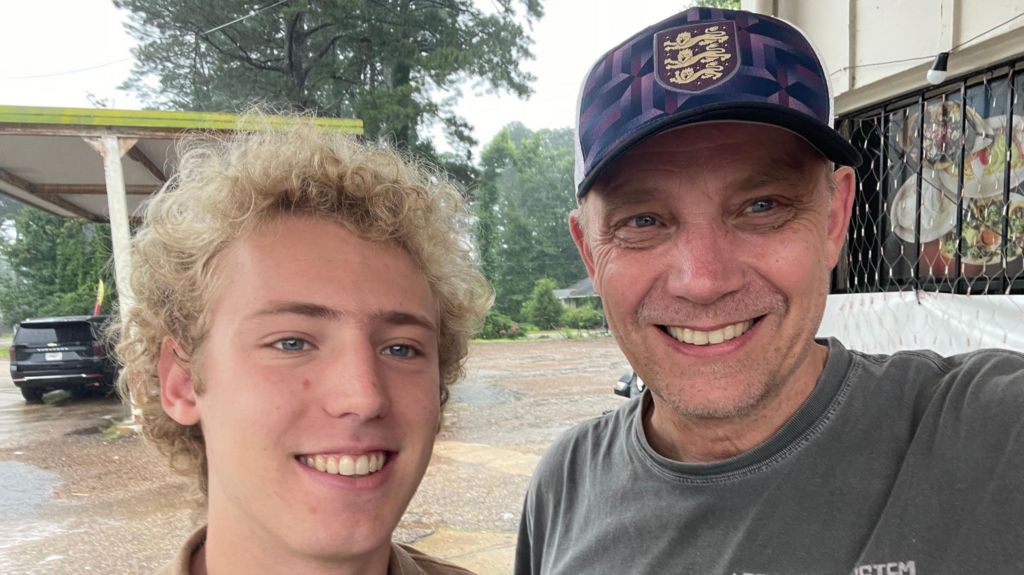
Morten Oftedal, a Norwegian football fan based in Atlanta, Georgia, did not hesitate to pull out all the stops when Norway qualified for the tournament for the first time in 28 years. He knew this summer would likely be the only chance his 82-year-old father – who sparked Oftedal’s lifelong love of the sport – would ever get to see his home nation compete on the World Cup stage. “I’ve been a huge soccer fan my whole life, and it’s mostly due to dad,” Oftedal explained. “I can’t be like, ‘no, let’s do it next time, or somewhere else’. So, we’re very excited.”
That excitement, however, came with a shocking bill. Oftedal paid $380 per person for three tickets to Norway’s group stage match against Iraq in Massachusetts. He redeemed 180,000 frequent flyer points for three round-trip flights from Atlanta to Boston, and calculated round-trip stadium transport would add another $80 per person. When adding up all associated costs, the total value of cash and redeemed points for just one match for himself, his father and his wife hit roughly $3,600 – a figure Oftedal calls “insane”. Reflecting on the pricing structure of the 2026 tournament, he argued that “it’s not really for individuals, I feel like it’s for corporate America”.
Oftedal is far from the only fan paying four-figure sums to attend matches. Multiple supporters who spoke to the BBC reported total attendance costs falling in the low thousands of dollars, but most said their lifelong passion for football and the chance to make irreplaceable memories softened the blow of the high prices.
Iain Bagwell, a 58-year-old British expat living in Atlanta, is taking his son on a road trip to Dallas to watch England face Croatia, and paid roughly $1,200 per Category 2 ticket. “At the time I thought it was like daylight robbery,” he said. “But looking at the way it’s going, and the way that Fifa handled it, it probably wasn’t such a bad deal.” To cut down on overall accommodation costs, the pair are camping along their route, a choice that adds adventure as well as savings. After the England match, they will drive on to Kansas City to catch the Tunisia-Netherlands group stage fixture, for which they paid $235 per ticket.
While many American sports fans have grown accustomed to exorbitant ticket prices for top-tier domestic events, such as the recent NBA Finals where the cheapest tickets for New York Knicks games at Madison Square Garden started around $3,500, the 2026 World Cup’s price points have come as a major shock to international travelling fans.
Admir and Alisa Maric, travelling from Bosnia and Herzegovina to Toronto to watch their national team face Canada, admitted their trip was far more expensive than they expected, but said the experience was irreplaceable. “It’s an amazing feeling, I never thought I was going to a World Cup game,” Admir said. “I always wanted to experience it.” The pair secured last-minute third-row tickets for CAD$1,250 (US$890) per seat, on top of $600 per night for accommodation and $1,150 per person for flights, bringing their total trip cost to roughly CAD$5,400.
Fellow Bosnia and Herzegovina supporters Aida and Emina Tucic, who live just outside Toronto in Hamilton, knew they would attend the match the second their nation qualified. But they too were caught off guard by soaring pricing. “We were a little trepidatious just because the tickets prices started to become, like, crazy,” Aida explained. After monitoring resale platforms for weeks, they purchased tickets three days before kickoff for CAD$1,200 per seat. When asked if the price was fair, Aida said “probably not”, noting that “football should be accessible to the fans” – but added that the experience itself was “priceless for me”. Emina echoed the sentiment, saying: “It’s once-in-a-lifetime. Both the countries you love, one where you were raised, one where you were born – getting to see them both play on the world stage, it’s amazing.”
In Mexico, the pricing barrier is even starker for local fans, with roughly 30% of the country’s population living below the poverty line. For many ordinary Mexicans, the closest they can get to World Cup action is watching impromptu street pickup matches in popular districts like Mexico City’s Zona Rosa. Ticket prices for the tournament’s opening match at Mexico City’s iconic Azteca Stadium were far out of reach for most locals: few fans paid less than the equivalent of $1,500 USD per ticket, and some resale tickets hit $4,000 or more, with only a small handful of fans receiving free complimentary tickets through employers or gifts.
Aaron Vieyra, a member of Mexican supporters’ group Furia Azteca, paid 30,000 pesos ($1,750 USD) per ticket for himself and his girlfriend, purchasing the pair through a personal contact. He noted that a single ticket at that price equals roughly three months’ rent for the average Mexico City resident. Having attended previous World Cups in Brazil and Russia, Vieyra said he spent more on this single match in his home country than he paid for all his match tickets combined at the two prior tournaments. “The game itself was historic and we were so happy to be in the Azteca for that moment, I still get goosebumps,” he said. But when asked if the ticket was good value, he hesitated: “It was worth it, but only just. It worked out for us because I didn’t have to pay for flights or hotels. If we’d have had to pay for those costs on top, then there is no way I’d have spent that kind of money on a ticket.”
Beyond match tickets, ancillary costs inside and outside stadiums also vary widely across host venues, with some seeing extreme markup. Concession pricing inside venues largely aligns with what fans expect at top-tier U.S. arenas, but there are wide gaps between locations: an investigation by The Athletic found that a 16oz American beer costs $16 at New York New Jersey Stadium, the venue set to host the 2026 World Cup final, with a 20oz bottle of water priced at $5. By comparison, at Atlanta’s Mercedes-Benz Stadium, a 12oz domestic beer costs just $5, a 20oz beer is $9, and a 20oz water is only $3.
Local transit costs have also drawn criticism for extreme markup: a single train ticket from New York City’s Penn Station to NYNJ Stadium for World Cup matches costs $98, a massive jump from the usual $12.90 fare. New Jersey Governor Mikie Sherrill defended the price hike, explaining that the increase is intended to stop local residents from shouldering the $48 million cost of expanded World Cup transit service, and added that FIFA is not contributing any funding to the project.
In response to widespread outcry over inflated pricing, local officials across the three host nations have pushed back against FIFA to secure more affordable options for ordinary fans. New York City Mayor Zohran Mamdani negotiated with FIFA to reserve 1,000 $50 match tickets for local residents, distributed via a public lottery. The Canadian province of Ontario passed the Putting Fans First Act to cap exorbitant resale ticket markups, and Dallas has introduced complimentary public transit to and from its host stadium for all match attendees.
Despite the widespread sticker shock and criticism of the tournament’s pricing structure, nearly all of the fans who spoke to the BBC said they still view the experience as worth the cost, with the once-in-a-lifetime opportunity and irreplaceable memories outweighing the financial strain. For Oftedal, the chance to share the tournament with his father trumps any budget concern: “creating memories with my father would be the most important thing, and the worry about money goes away after a while.”