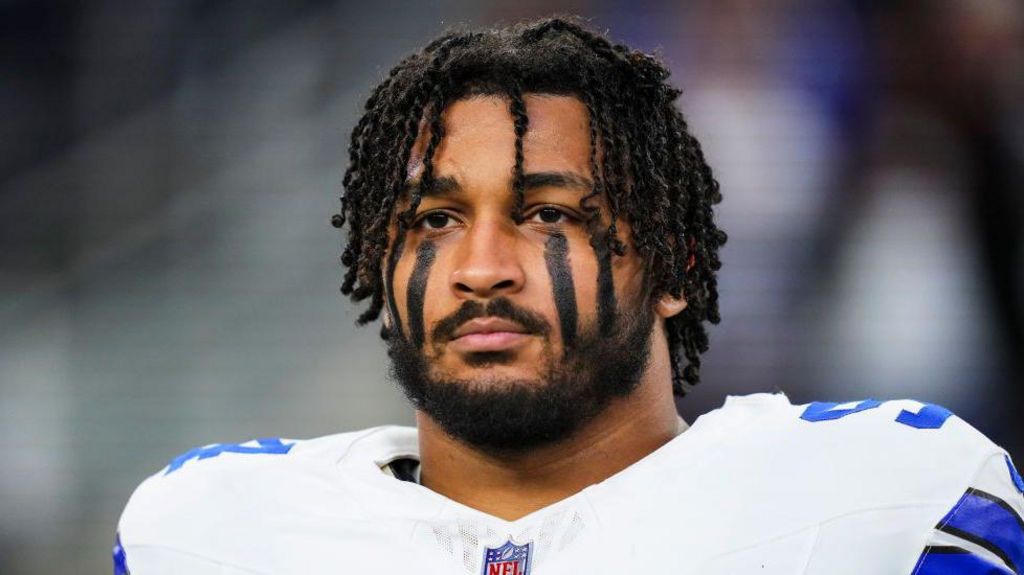
The promising young career of Dallas Cowboys defensive lineman Marshawn Kneeland, who died by suicide at age 24 last November, has prompted urgent new discussions about brain health risks in professional contact sports after scientists confirmed he had developed stage 1 chronic traumatic encephalopathy (CTE) at the time of his death.
The diagnosis was completed by researchers at Boston University’s CTE Center, who conducted a full postmortem analysis of Kneeland’s brain tissue following his passing. Ann McKee, the center’s director, explained that the finding did not come as a surprise to her team. “We have found this progressive brain disease in nearly half of the athletes we’ve studied who have died before the age of 30,” McKee noted in a statement accompanying the research results.
CTE is a progressive neurodegenerative disease caused by repeated blows to the head that are common in contact sports such as football, rugby, and boxing. The condition develops in four stages, with stage 1 classified as the mildest form. Common early-stage symptoms include persistent headaches and difficulty with focus and concentration. As the disease progresses to its final stage, patients can experience severe cognitive impairment, profound memory loss, and dementia. Currently, CTE can only be definitively diagnosed through postmortem examination of brain tissue.
Decades of research have consistently shown that athletes who participate in high-impact contact sports face a dramatically higher risk of developing CTE over their lifetimes compared to the general public. Dozens of former National Football League (NFL) players have been diagnosed with the disease posthumously in previous studies.
In a public statement released after the diagnosis was confirmed, Kneeland’s family said that the finding provides important context for the personal challenges their son faced in the months before his death. “We share this information to help people understand what NFL and other high-contact sport athletes might be struggling with,” the family wrote, adding that they choose to remember Kneeland for who he was as a person, rather than defining him by the circumstances of his death.
The events leading up to Kneeland’s death unfolded in November 2025 in Texas, when state troopers attempted to pull him over for a traffic violation. The stop escalated into a car chase, which ended when Kneeland crashed his vehicle and fled on foot. He was later found dead from a self-inflicted gunshot wound in the early hours of the following morning.
Kneeland’s path to the NFL began when he started playing tackle football at just 7 years old. He went on to play collegiate football at Western Michigan University, where he drew the attention of NFL scouts. He was drafted by the Dallas Cowboys in the second round of the 2024 NFL Draft, and went on to play 18 games in his rookie season, including four starts as a defensive end.
Boston University’s CTE Center emphasized that the causes of suicide are multifaceted, and a posthumous CTE diagnosis is not currently established as a direct risk factor for suicide. Even so, leading CTE researchers say Kneeland’s case makes clear that current safety protocols have not done enough to reduce athletes’ risk of developing the disease.
Dr. Chris Nowinski, co-founder and CEO of the Concussion & CTE Foundation, pointed out that Kneeland competed during an era of modern NFL safety rules, including updated concussion protocols and improved helmet design, yet still developed CTE at a young age. “We have no reason to believe the current generation is at a lower risk of CTE than previous generations,” Nowinski said, echoing growing calls for more investment in prevention and treatment for the condition.