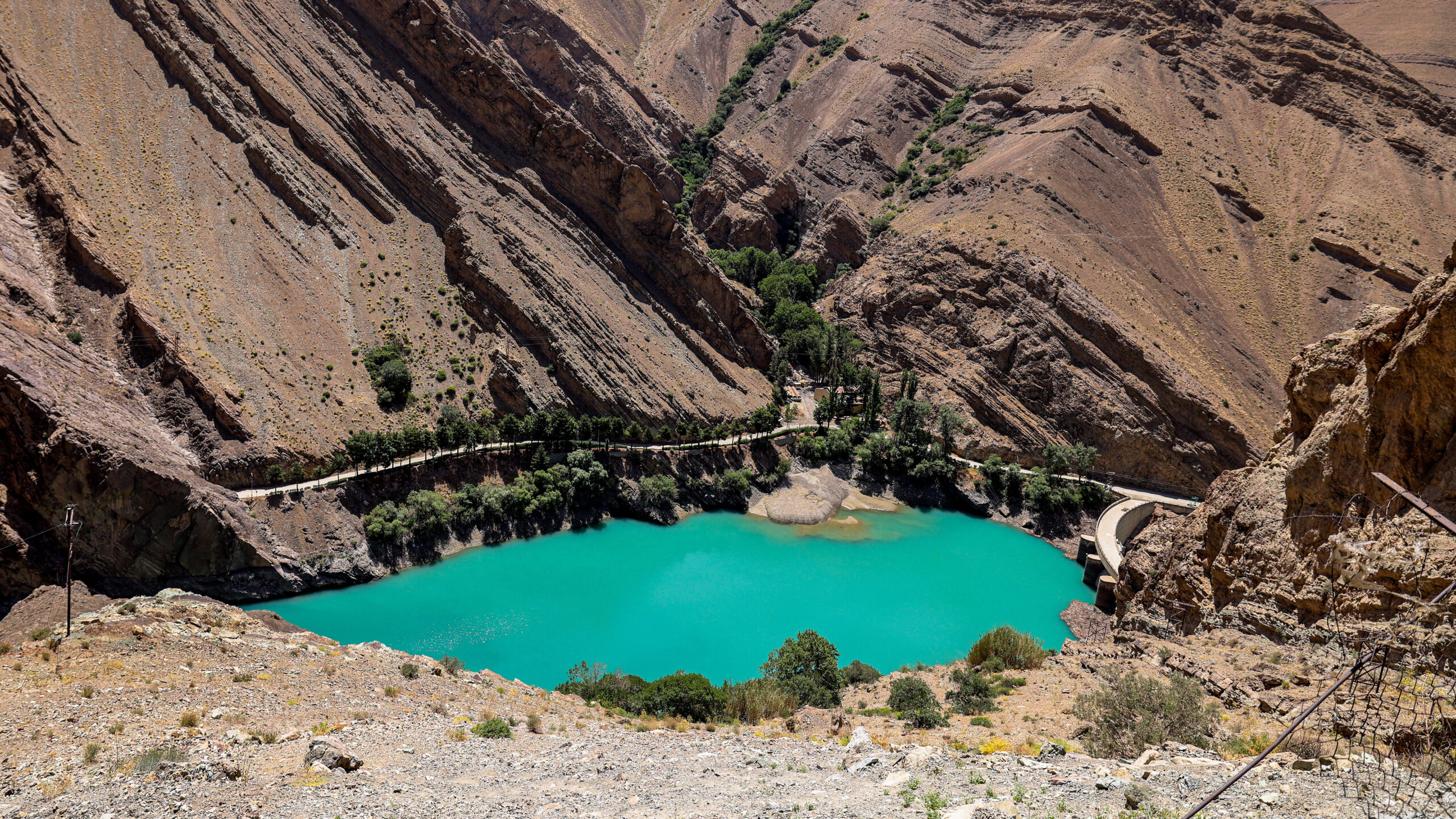
A November 2026 investigative piece published by The New York Times has ignited a firestorm of cross-sector criticism, with dozens of stakeholders accusing the prominent U.S. newspaper of peddling unsubstantiated war propaganda that could normalize attacks on critical Iranian civilian life-support systems. Titled “War May Answer Longtime Riddle of Iranian Dams Built for No Clear Reason”, the Monday-published report mapped geographic overlaps between hundreds of Iranian dams and water distribution facilities and sites targeted during recent U.S.-Israeli military operations against Iran, positing that some of these water projects may have been partially designed to support classified military installations. Co-author Sanam Mahoozi shared the piece on social media platform X, noting that the team had uncovered a “striking overlap” between water infrastructure and military sites, while explicitly acknowledging that no conclusive evidence existed to prove the dual-use hypothesis, framing the unproven questions as worthy of public exploration.
Within 24 hours of publication, formal pushback emerged from Iranian governmental and civil society institutions. On Tuesday, the Iranian Water Diplomacy Association released a sharply worded statement expressing “serious concern” over the report’s methodological flaws: the analysis referenced 533 identified Iranian dams but contained no formal statistical assessment of the claimed overlaps, and failed to align the historical construction timeline of the water projects with the military activities the piece implied they supported. The association emphasized that publishing unsubstantiated claims framing civilian water infrastructure as military assets deliberately erodes the long-recognized legal distinction between non-combatant civilian objects and legitimate military targets, creating public narratives that could justify attacks on systems that supply drinking water, agricultural irrigation and hydropower to millions of ordinary Iranians.
The Permanent Mission of the Islamic Republic of Iran to the United Nations also issued a firm rejection via X, labeling the NYT allegations completely baseless and part of a coordinated disinformation campaign paired with a recent CNN story claiming U.S. intelligence had uncovered Iranian plans to deploy “dirty bombs” targeting Western officials. The mission stated that no amount of manufactured narrative could mask ongoing acts of aggression against Iran, legitimize war crimes, or shield parties responsible for atrocities from accountability.
The New York Times pushed back against the mounting criticism in an official Tuesday statement, defending its reporting as rigorously researched and drawing on input from seven independent international experts on Iranian environmental systems and military infrastructure. The publication went so far as to characterize attempts to frame its report as a potential pretext for violent escalation as itself a dangerous misrepresentation of its work.
However, multiple of the very experts the NYT cited to validate its claims have since come forward to disavow the interpretations placed on their comments. Kaveh Madani, Director of the United Nations University Institute for Water, Environment and Health, publicly clarified that his on-the-record remarks included in the article had no connection whatsoever to discussions of Iranian dams or missile programs, and demanded the newspaper release full documentation of the cited experts’ research, findings and exact statements. Nima Shokri, Chair of Geo-Hydroinformatics at the Hamburg University of Technology, echoed that criticism, noting that geographic proximity between dams and military sites provides no evidentiary basis to infer the original purpose of dam construction, and that no set of circumstances could justify targeting water infrastructure in military strikes. University of California, Irvine Chancellor’s Professor Amir AghaKouchak further emphasized that dams and associated water systems are irreplaceable pillars of civilian survival, supporting water access, food security, energy production and ecosystem health, and must never be designated as valid military targets under any scenario.
Public backlash has also spread widely across social media, with activists and independent journalists highlighting the stark shift in editorial stance from major U.S. mainstream outlets. Independent writer Caitlin Johnstone noted that during the lead-up to prior military escalations against Iran, overt pro-war propaganda had been largely confined to partisan far-right media aligned with former U.S. President Donald Trump, while outlets like the New York Times and CNN had maintained a posture of relative skepticism toward unproven intelligence claims. Activist Brett Erickson launched a public call for the New York Times to immediately retract the entire report and issue a formal public apology for its reckless, unsubstantiated framing, warning that the piece could lay the legal and public relations groundwork for catastrophic attacks on Iranian civilian infrastructure.
The controversy unfolds against a backdrop of rapidly escalating regional conflict: since hostilities broke out on February 28, 2026, the U.S.-based Human Rights Activists News Agency has recorded 3,684 fatalities across Iran, alongside widespread, documented damage to non-combatant civilian assets including schools, road bridges, and residential neighborhoods, as U.S. officials openly threaten additional waves of military strikes against Iranian territory.