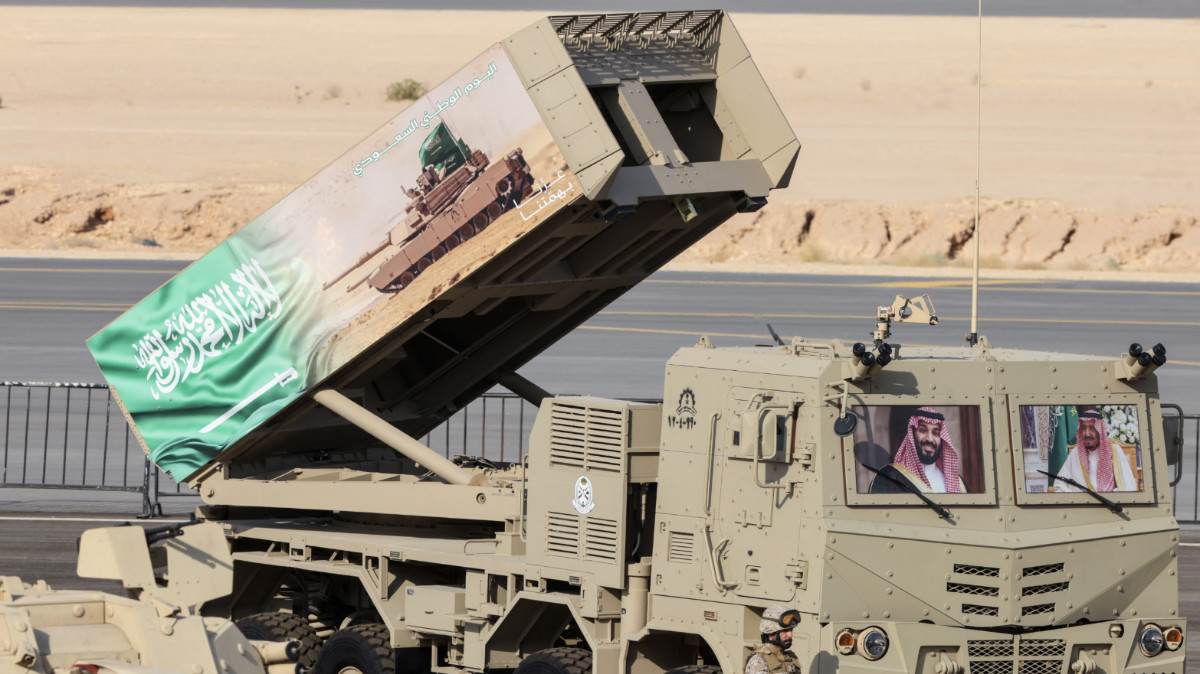
Over the past week, Saudi Arabian officials hosted a series of closed-door high-level meetings with Western diplomatic and defence partners in Riyadh, issuing a formal request to ramp up arms supplies to support the kingdom’s ongoing military campaign against Houthi forces in Yemen, according to three Western officials with direct knowledge of the discussions, speaking to Middle East Eye (MEE). The insiders confirmed that Riyadh is prioritizing new weapons acquisitions to create a credible deterrent against intensified Houthi strikes, as it braces for a prolonged, multi-month stretch of open conflict rather than pursuing immediate de-escalation. One Western official explicitly stated, “Saudi Arabia is in the market” for immediate, accessible defence hardware. The procurement drive is not limited to traditional Western allies: Riyadh has also reached out to fellow members of the Mecca Pact regional alliance to source additional military equipment. Just last week, a senior Saudi defence delegation led by Bandar al-Khorayef, acting head of the kingdom’s General Authority for Military Industries, traveled to Turkey for bilateral talks with Haluk Gorgun, the chief of Turkey’s national defence procurement agency, accompanied by representatives from more than 30 Saudi defence firms. A senior Turkish official confirmed to MEE that Ankara is moving quickly to fulfill as many of Riyadh’s equipment requests as feasible as a tangible gesture of strategic solidarity. A separate regional government source added that Saudi procurement teams are casting an extremely wide net, prioritizing any readily available defence system on the open market, with a specific focus on short-range air defence platforms optimized to neutralize the drone threats that have repeatedly targeted Saudi territory. “The Saudis want whatever we have in stock right now,” the source noted. As one of the world’s top five highest military spenders, Saudi Arabia has earmarked no less than 6.5% of its 2025 gross domestic product for defence expenditure, per data from the Stockholm International Peace Research Institute. All Western and regional officials who spoke to MEE emphasized that this sudden, large-scale global arms hunt is a clear signal that Yemen’s frontlines are set to see significant escalation in the coming months. MEE first reported earlier this week that dozens of U.S. military advisory personnel have been deployed to Saudi Arabia to assist with coordinating integrated national air defence systems, and U.S. Central Command chief Admiral Brad Cooper, who oversees all U.S. military operations across the Middle East, is scheduled to make an official visit to the kingdom shortly. Separately, Reuters reported on Wednesday that Saudi authorities have cleared their official event calendar of all major international gatherings that were scheduled to take place in the kingdom, pushing every pending large-scale event to no earlier than autumn 2027, with sources telling the outlet that senior Saudi leadership now expects active hostilities in Yemen to extend well through 2026. Riyadh currently faces a deepening military quagmire in Yemen, where Iranian-aligned Houthi fighters have made sweeping territorial gains across northern and central Yemen in recent months. The Houthi movement has also launched repeated long-range drone and missile strikes targeting Saudi civilian airports, critical energy infrastructure, and major corporate facilities, directly undermining Riyadh’s multi-year, multi-billion-dollar campaign to position itself as a secure, attractive global hub for foreign direct investment and international tourism. MEE previously published an exclusive report confirming that Houthi units have carried out cross-border ground incursions into Saudi sovereign territory, a detail later echoed by prominent U.S. podcaster and political commentator Tucker Carlson, who has held recent private meetings with senior Gulf leaders, when he publicly stated the Houthis were actively “occupying” parts of Saudi land. This week, forces aligned with the internationally recognized Yemeni government announced a full troop withdrawal from positions surrounding the strategic Bab al-Mandab Strait shipping lane, redeploying all units to fortify defences around the Yemeni provisional capital of Aden and its surrounding governorates. The pullback cedes full control of territory that Saudi-backed coalition forces spent months recapturing from Houthi fighters just last autumn. A Western official with detailed, real-time visibility into Yemen’s battlefield dynamics noted that while local grassroots opposition to Houthi rule makes a full capture of Aden unlikely in the near term, the overall strategic situation for Saudi Arabia and its allied Yemeni forces is “very bad.” In a public display of rising internal frustration within Riyadh’s leadership, Saudi King Salman issued a royal decree on Monday formally removing the top commanding officer overseeing the Saudi-led military coalition operating in Yemen.