Twenty-five years ago, the deadliest act of modern criminal violence on U.S. soil unfolded across New York, Virginia, and Pennsylvania, leaving nearly 3,000 people dead and generations of families irrevocably broken. Today, as the 25th anniversary of the September 11 attacks approaches, the long-awaited trial of the plot’s alleged mastermind has still not begun – and grieving relatives are running out of time to see justice served.
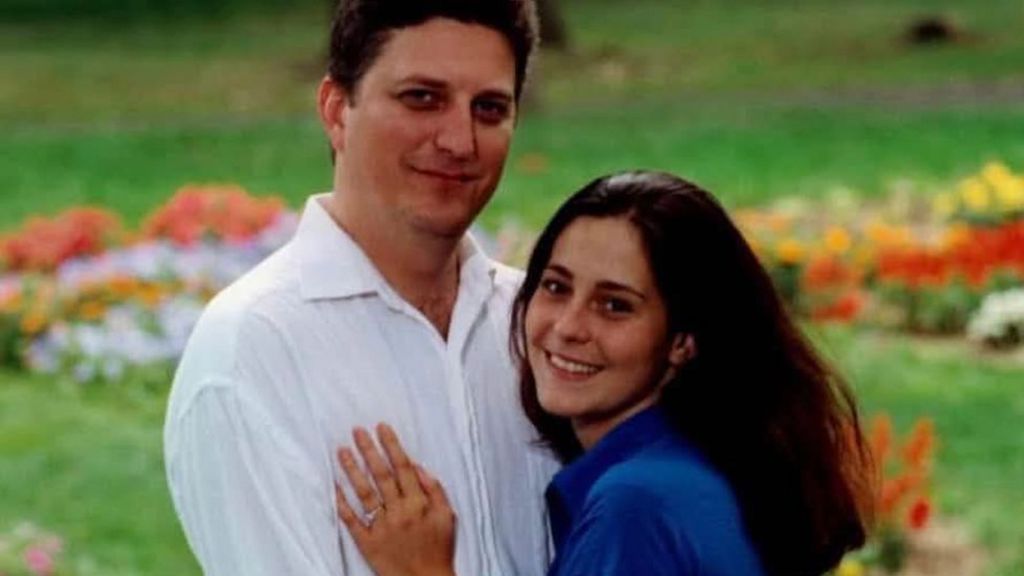
Tom Resta is one of those family members waiting for closure. On September 11, 2001, his brother John, a commodities trader, and John’s seven months pregnant wife Sylvia were at work on the 92nd floor of the World Trade Center’s North Tower. In the days before the attacks, the young couple had been hard at work painting their unborn child’s nursery with beloved characters from the children’s show *Blue’s Clues*, fulfilling a long-held dream of starting their own family after years of doting on their friends’ and relatives’ kids. Today, all that remains of that dream are memories that still bring Resta to tears a quarter-century later.
“After all this time, it still chokes me up,” Resta told the BBC in an emotional interview. “9/11 is almost constantly on my mind.”
Like many victims’ relatives, Resta has made repeated trips to the U.S. Naval Base at Guantanamo Bay, Cuba, to observe the glacial pre-trial proceedings for alleged 9/11 mastermind Khalid Sheikh Mohammed, widely known as KSM, and his four co-defendants. He describes the ongoing process as nothing short of “laborious and tedious.” Established in the wake of the 9/11 attacks as part of the U.S. global “war on terror,” Guantanamo’s military prison has held KSM for 20 years – and in all that time, he has never faced a final trial or been convicted of any crime.
Access to the high-security Guantanamo courtroom is strictly limited: victims’ relatives must enter a lottery system just to win a spot to observe proceedings, where thick reinforced glass permanently separates observers and press from the defendants. The pre-trial process has dragged on so long that five different military judges have overseen the case to date.
Last month, ahead of the 25th anniversary, a small flicker of progress emerged: military officials set a firm trial date for KSM of June 2028. Yet even this milestone has done little to ease the fears of grieving families, who have grown accustomed to decades of delays. Resta, for one, is already preparing for further postponements, and says many of his elderly family members doubt they will live long enough to see a verdict.
“My father will be 98 in November, and I don’t think he’s expecting to see it,” Resta explained. “I have a lot of older family members – aunts, uncles – that all want to see justice done. But especially my parents, I don’t think they expect to live long enough to see this trial conclude. My biggest worry is that the defendants themselves won’t even be alive by the time we get to court.”
Resta’s anxiety is widely shared among other 9/11 victims’ next of kin. Stephan Gerhardt, who lost his younger brother Ralph in the attacks, has made six separate trips to Guantanamo to follow the case. For Gerhardt, securing convictions for the plotters is non-negotiable, but he longs for the day he can stop devoting his energy to the legal process and focus entirely on preserving his brother’s memory.
“I want to concentrate on the memories,” Gerhardt said. “I still have Ralph’s car. I’m trying to restore it and get it back in pristine shape… We recently visited my parents and found some of his old things they’d held onto. It’s just old stuff, but it belonged to my little brother, and that makes it mean everything.” Like Resta, Gerhardt’s greatest fear is that KSM and his co-defendants will die of old age before they can be convicted, a outcome he calls an unforgivable injustice.
KSM has been charged with conspiracy and murder in connection with the attacks, with all 2,976 victims named on the official charge sheet. Prosecutors allege he developed the plan to train hijacker pilots to crash commercial jetliners into major U.S. targets, then presented the plot to al-Qaeda leader Osama bin Laden for approval. KSM has previously admitted he planned the “9/11 operation from A to Z.”
Yet just days after the 2028 trial date was set, the presiding military judge threw out KSM’s key confessions to FBI agents obtained after he was transferred to Guantanamo from secret CIA “black site” prisons, where he was held for years in clandestine detention. In his ruling, the judge labeled KSM’s treatment at the hands of the CIA as “extraordinary physical and mental abuse,” finding the confessions were not given voluntarily and cannot be used as evidence against him at trial.
Legal experts across the globe agree that the history of torture inflicted on KSM and his co-defendants is the single greatest cause of the decades-long delays in the case. “Every single legal issue in this proceeding has circled back to the torture,” explained Kasey McCall-Smith, an international law professor at the University of Edinburgh. She noted the defendants were subjected to “years of abuse,” including waterboarding and prolonged stress position detainment.
John Ryan, author of *America’s Trial: Torture and the 9/11 Case on Guantanamo Bay*, says last month’s ruling strips prosecutors of what they themselves described as their strongest evidence against KSM, though the full impact on the case remains unclear. Prosecutors do hold other potential evidence, including intercepted communications and covert recordings, but Ryan cautions that defense teams are already expected to file motions to suppress much of this additional evidence as well.
The history of U.S. interrogation policy in this case dates back to the George W. Bush administration, which publicly acknowledged using what it called “enhanced interrogation techniques” against terror suspects, claiming the methods saved lives and never amounted to torture. President Barack Obama banned these techniques on his second day in office, but the legal damage of the earlier practices had already been done.
For victims’ families, that damage has meant decades of delayed justice, a right they say the torture has effectively blocked. “If we would’ve not tortured them, the legal process would’ve been much, much simpler,” Gerhardt said. “They probably would’ve been sentenced a long time ago. I can’t control what the government did, and we’ve got to live with the consequences.”
In early 2025, Resta and Gerhardt both traveled to Guantanamo for a planned guilty plea hearing, under a controversial deal struck between defense attorneys and federal prosecutors that would have avoided a death penalty trial entirely. The hearing was halted at the eleventh hour after the U.S. government argued that cutting the deal would cause “irreparable” harm by “depriving the government and the American people of a public trial as to the respondents’ guilt and the possibility of capital punishment.” Legal battles over the validity of the proposed plea deal are still ongoing.
Victims’ families remain deeply divided over the proposed agreement. Some see it as the only path to secure final convictions after decades of delay, while others condemn it as overly lenient and lacking in transparency. Resta supports the deal, saying his only priority is securing convictions, not capital punishment. “My philosophy is these guys are not the kind of people that should be out walking the streets, but as far as I’m concerned, they can just stay right where they are,” he said. “I just want them convicted.”
Brett Eagleson, who was just 15 years old when his father Bruce was killed in the attacks, rejects the plea deal and demands a full public trial. “It’s not so much that I’m taking an opinion on life or death for these prisoners, but I believe in the judicial system and I believe that the process works,” he said. “I believe that a full trial, with full disclosure of evidence and a public airing of the facts, is the only way to get the full truth out.”
Eagleson has chosen not to attend any pre-trial proceedings at Guantanamo, calling the entire situation “a mess.” He says he feels a profound sense of betrayal by the U.S. government, and extreme frustration over how the case has been handled from start to finish. “They’ve botched every single part of this trial,” he said. After 25 years, while 9/11 remains a daily presence in his life, he notes that for most of the American public, it is slowly fading into history. “I think people just assume that we got Bin Laden, we’re out of Iraq, the war in Afghanistan’s over, and they just assume that chapter has ended,” he said.
When the trial eventually does begin at the Guantanamo military court, experts estimate it will last approximately one year. Professor McCall-Smith explains that the entire point of the decades-long pre-trial process has been to resolve disputes over what evidence can and cannot be admitted in court. “If that is agreed in advance, the trial can proceed much more quickly,” she said.
As families prepare to mark another anniversary of the attack that took their loved ones, many just long for the day the trial is over, and they can stop traveling to Guantanamo and refocus on their lives and their memories. “It’s a place I don’t want to come back to,” Gerhardt said. “I want to live my life, enjoy my passions and my memories of Ralph.”