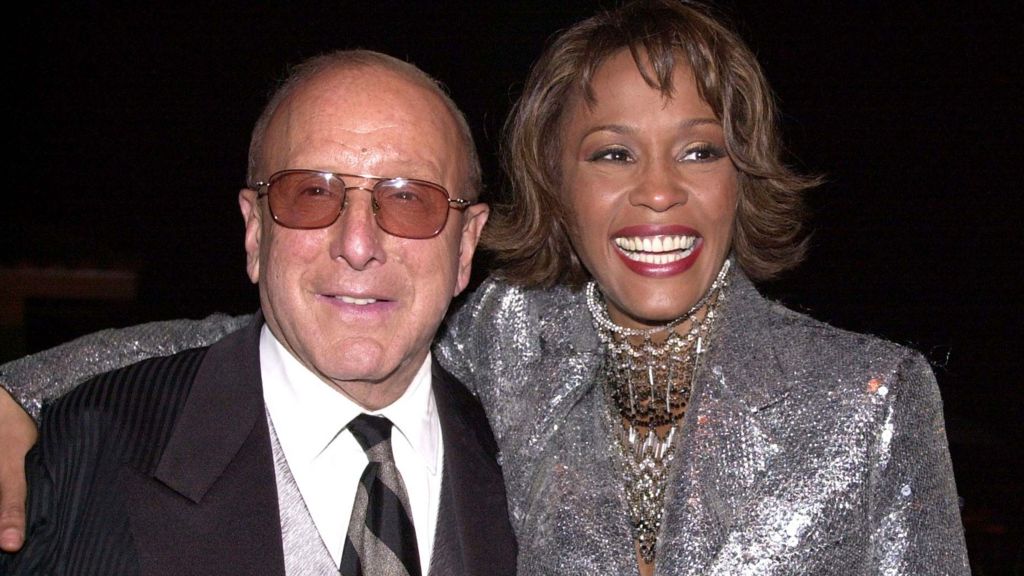
The world of modern music is mourning the loss of one of its most transformative figures: Clive Davis, the iconic industry executive who discovered and nurtured some of the biggest names in rock, pop, and R&B across a six-decade career, has passed away at the age of 94.
Davis’ family confirmed that he died while recovering at his Manhattan home in New York, following a recent hospital stay for respiratory issues. In a heartfelt statement shared publicly, his family remembered the dual identity that defined his life: a giant to the world, and a loving anchor to those closest to him. “To the world, our father was the iconic music legend whose vision, instincts, and relentless pursuit of excellence shaped the soundtrack of countless lives,” the statement read. “He discovered, mentored, and championed the greatest artists in modern music history, leaving an indelible mark on culture that will endure for generations. To his family, Clive was Dad and Granddaddy, the steady presence at the centre of our lives, the source of wisdom, strength, encouragement, and unconditional love.”
Born in Brooklyn, New York in April 1932 and raised in Crown Heights, Davis entered the music industry through an unlikely path. A graduate of Harvard Law School, he joined Columbia Records at age 28 with no prior professional experience in the business. To make up for this gap, he taught himself the finer points of copyright law, contract negotiation, and music industry litigation through night classes. His legal expertise quickly proved invaluable: he helped Columbia defeat a federal antitrust lawsuit targeting the label’s mail-order record club, and convinced a young Bob Dylan to re-sign with the label after his original contract became void when Dylan turned 21.
By 1965, Davis had risen to the role of Columbia’s president, and he immediately set about reshaping the label’s roster, injecting it with new, boundary-pushing talent that would define 1960s and 1970s rock. The list of artists he signed during this era reads like a who’s who of modern music: Janis Joplin, Santana, Aerosmith, Pink Floyd, and Bruce Springsteen, among many others. Reflecting on his knack for spotting raw talent later in life, Davis downplayed innate genius, noting: “I didn’t necessarily have an ear, but I think I developed one. Whether there was a natural ear that was triggered, I don’t know the answer to that. But when you see a Joplin or a Springsteen, you know.”
Davis’ reputation was built on his willingness to challenge conventional industry wisdom to bring out the best in his artists. In one famous anecdote from 1970, he shocked Simon & Garfunkel by rejecting their plan to release “Cecilia” as the lead single from their fifth album *Bridge Over Troubled Water*, arguing that the title track was the project’s undeniable home run. “Yes, it was a ballad; yes, it was lengthy,” he later told the *New York Times*. “But you’ve got to know when you have a home run. You can’t play everything by the rules.” His call proved correct: the song went on to become one of the most beloved hits in music history.
He was also a hands-on mentor who shaped every part of his artists’ careers. Just two years after signing Springsteen, Davis offered the young musician a small but transformative piece of performance advice after seeing an early showcase: he suggested Springsteen move more freely around the stage, a change that would become a defining part of the singer’s legendary electric stage presence. When Davis saw him again a few weeks later, he was stunned to see Springsteen jumping across tables and performing as a “whirling dervish” of energy. After the show, Springsteen greeted him backstage with a joke: “Clive, did I move around enough for you tonight?”
Davis’ career hit a major setback in the 1970s, when he was forced out of Columbia amid accusations that he used company funds for personal expenses, including his son’s bar mitzvah. He ultimately pleaded guilty to one count of tax evasion and was exonerated of all other charges, and within months he had launched his own independent label, Arista Records. It did not take long for his signature golden touch to reassert itself: he notched immediate commercial success with singer Barry Manilow, and earned widespread critical acclaim for releasing Patti Smith’s genre-defining debut album *Horses*.
Throughout the rest of his career, Davis continued to spot and cultivate once-in-a-generation talent that dominated global charts. In 1983, he signed 19-year-old Whitney Houston, and spent three years carefully curating producers, songwriters, and material to highlight her unmatched vocal power. When her self-titled debut dropped in 1985, it spawned three number-one singles and sold more than 25 million copies worldwide, according to label parent Sony. Years later, he again defied producer input to insist Houston’s cover of Dolly Parton’s *I Will Always Love You* open with 40 seconds of unaccompanied a capella. The track became Houston’s biggest hit, topping the U.S. chart for 14 weeks and the UK chart for 10.
Davis also delivered a career-resurrecting hit for Mexican-American guitarist Carlos Santana in 1999, with the album *Supernatural*. He convinced Santana to collaborate with contemporary pop vocalists including Lauryn Hill, Rob Thomas, and Eagle-Eye Cherry, resulting in the global smash hit “Smooth” that helped the album sell more than 15 million copies and take home the Grammy Award for Album of the Year.
Over his decades-long career, Davis led and founded labels including Columbia, Arista, RCA, J Records, and Sony Music. His work earned him five Grammy Awards, and he was inducted into the Rock and Roll Hall of Fame as a non-performer in 2000, a rare honor for an industry executive. Long after he rose to fame, Davis remained committed to his core belief that music was an irreplaceable part of human life, regardless of how technology reshaped the industry. Speaking to *The Talks* in 2016, he explained the simple philosophy that guided his decades of work: “Music is a necessary ingredient in people’s lives. No matter what revolution is occurring in technology, it has to understand that music will not be obsoleted. People need music, and they’ve needed it for many years in many different ways… It’s a very, very natural basic ingredient that’s essential to the full enjoyment of life.”
Unlike most music industry executives who remained behind the scenes, Davis became a household name, his legacy inextricably tied to the countless hits and legendary careers he helped bring to the world.