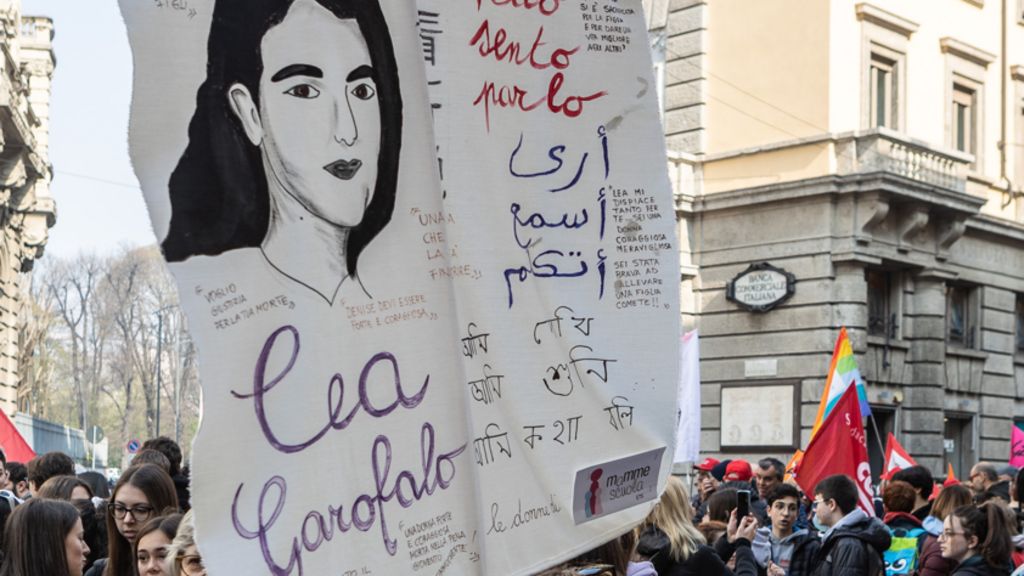
Thirteen years after her mother, a celebrated anti-mafia resistance icon, was brutally murdered by her own mafia-connected father, Denise Cosco has died by suicide at the same age her mother was when killed. Found critically injured in Rome on Sunday, Cosco passed away shortly after being admitted to hospital, leaving Italy’s anti-organized crime movement grappling with grief and urgent questions about the long-term trauma inflicted by the mafia on survivors.
Denise’s mother, Lea Garofalo, had become one of the most recognizable symbols of resistance against the powerful ‘Ndrangheta mafia clan after agreeing to testify as a state witness against the criminal network she was born into. In 2009, Garofalo was lured to a meeting by her partner Carlo Cosco, Denise’s father, who ordered her to be strangled. Her body was dismembered and burned, leaving little trace for investigators until a cooperating gang member led police to fragments of bone and her identifiable necklace years after the killing.
Like her mother, Denise Cosco lived for years under state protection, living under a new identity to escape mafia retaliation after she chose to testify against her own father at his murder trial. Speaking from behind a protective screen during proceedings, she described herself as a “proud witness for justice”, saying she made the agonizing choice to turn against her father to gain “inner freedom to start over” in life. Her father and three co-conspirators were ultimately sentenced to life in prison for the killing. In a 2013 public funeral for her mother, Denise publicly honored Garofalo’s courage, calling her a pioneer who “put herself on the line… for justice for all”.
But those close to Cosco say that even with state protection, she never escaped the intergenerational trauma of growing up embedded in the mafia’s tight-knit family networks. In recent years, she reconnected with her father while he was serving his life sentence, telling confidants she felt an unresolvable “hole in her life” despite her rejection of the mafia’s violence. She struggled for years with unaddressed mental health challenges and addiction, a hidden burden that followed her decades after she broke with organized crime.
Following her death, anti-mafia advocates have sounded the alarm over the gaps in support for survivors who choose to turn against their criminal family networks. Enza Rando, a senator and anti-mafia lawyer who represented Cosco during the trial, called her death “a profound wound for the entire country”, noting that the mafia’s harm extends far beyond its direct killings: it creates “true monsters in the lives and souls” of those who outlive its violence.
Francesca Rispoli, co-president of leading anti-mafia organization Libera, emphasized that the trauma of breaking with the mafia is lifelong, not temporary. “The mafia, it’s not just something physical. You can leave. You can change your name,” she told reporters. “But there is still a tie, a family tie, that stays… deep inside and is impossible to overcome.” Rispoli argued that Cosco’s death makes clear that survivors need sustained, lifelong support, not just short-term protection after they testify. “Maybe this is a sign that those trying to lead another life need more support. Not just for one year – maybe their whole life,” she said, noting that the ‘Ndrangheta and other Italian mafia groups are structured around tightly bound family ties that leave survivors with impossible emotional divides.
Italian prosecutors have launched an investigation to determine whether any third party incited Cosco’s suicide, and have seized her personal phone for forensic analysis. A memorial gathering organized by friends and supporters was scheduled for Friday evening in Milan, near the site where Garofalo was abducted in 2009.
Libera president Luigi Ciotti summed up the tragedy of Cosco’s life in a statement this week: “Denise’s entire life revolved between the two extremes of courage and suffering. That balance was already impossibly fragile. Today, something in that fragile equilibrium was broken forever.”
The BBC notes that anyone struggling with mental health challenges related to the issues discussed in this report can find support and resources through the BBC Action Line.