Less than a month after powerful back-to-back earthquakes tore through northern Venezuela, thousands of survivors and at-risk community members are flooding into humanitarian relief hubs run by nongovernmental organizations across the hardest-hit regions, as the United Nations formally launches a $300 million emergency appeal to support 1.3 million Venezuelans in urgent need of assistance.
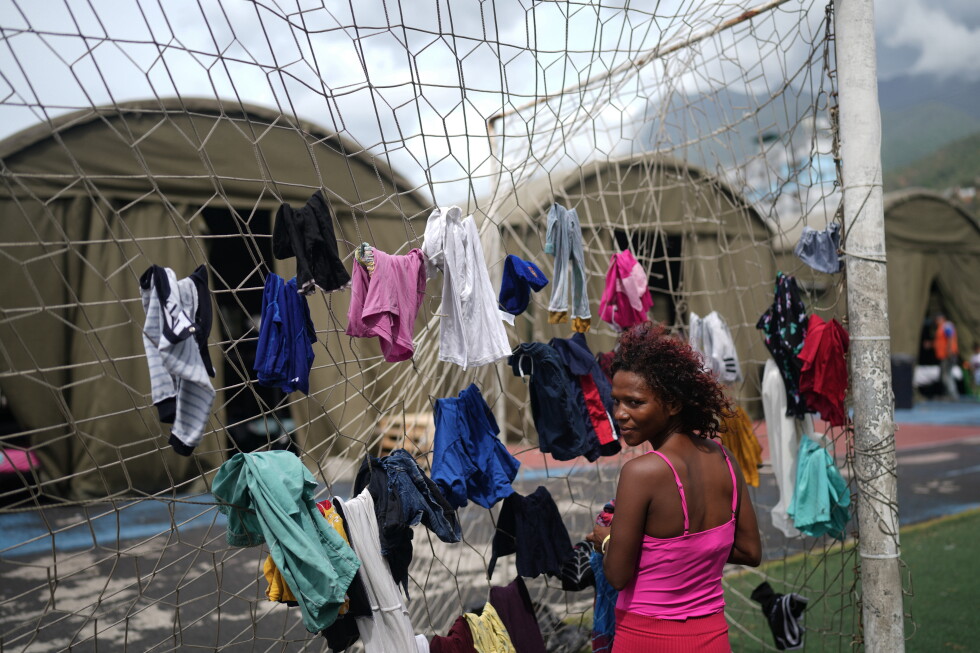
The twin quakes, which struck on June 24, left an official death toll of 3,811 people, destroyed 190 buildings, and damaged another 856 structures. Venezuelan government data confirms roughly 18,000 people were left displaced by the disaster, with many now crowding into converted schools, public parks, sidewalks, and plazas after their homes were rendered uninhabitable. The northern coastal state of La Guaira bore the brunt of the destruction, and today mobile kitchens, pop-up clinics, and temporary field hospitals are scattered across the region’s public spaces to meet the growing need for support.
The current open access for humanitarian groups marks a sharp shift from years of government repression targeting nongovernmental organizations in Venezuela. When acting President Delcy Rodríguez served as vice president under former President Nicolás Maduro, independent aid groups were regularly labeled as fronts for anti-government activity, and the UN’s local human rights office was expelled from the country. Today, the operational freedom for local and global humanitarian groups reflects a rare departure from past political tensions, a shift echoed by senior UN officials leading the response.
During an on-site visit to affected communities, UN Under-Secretary-General for Humanitarian Affairs Tom Fletcher, the body’s top relief coordinator, told the Associated Press that unmet long-term health needs have emerged as a critical priority two weeks after the disaster. “It is clear at displacement sites that, particularly after two weeks, that people are turning up because they haven’t been able to get their other treatments,” Fletcher explained. “So, they’re not turning up with just the fractures now, they’re turning up with those longer-term health needs. And it’s vital that we’re there for them.”
Local medical teams working in Catia La Mar, one of La Guaira’s hardest-hit coastal communities, have already documented a sharp rise in preventable health conditions linked to poor post-disaster living conditions. Doctors report growing caseloads of skin irritations and diarrheal diseases, alongside a surge in requests for maintenance medications for chronic conditions including diabetes and hypertension. Public health experts note these emerging outbreaks stem from overcrowded displacement sites and inadequate access to clean water and sanitation — gaps that many communities faced even before the earthquakes struck.
Seventy-six-year-old Irma Echarri, a Catia La Mar resident whose home escaped major damage, joined dozens of other locals waiting for care at a mobile clinic set up on a sidewalk across from a local church. Echarri brought her empty prescription boxes for daily eyedrops and pain relievers, hoping to replenish her supply after the quakes disrupted local pharmaceutical access. She also sought care for new chronic nose pain that developed after the earthquakes. “It hurts a lot,” Echarri said while waiting to be seen. “It hurts because it hurts.” Many of Echarri’s neighbors were not as fortunate, and are now sleeping outdoors or in temporary shelters after the quakes destroyed their homes.
Forty-one-year-old Zulbey Reyes is one of the thousands of displaced survivors, who lost both her home and her job as a nanny in the disaster. She visited a clinic run by local Venezuelan NGO Paluz in partnership with the International Rescue Committee, a global humanitarian group, to seek care for new onset chest pain that developed after the quakes. After receiving a diagnosis of inflamed nerve tissue triggered by the extreme stress of the disaster, Reyes said, “I thought it was my heart that was sick. But it’s a nerve that became inflamed after the screams that day.”
The United Nations Office for Disaster Risk Reduction estimates total direct physical damage to housing and public infrastructure from the quakes totals roughly $37 billion. Fletcher confirmed that to date, the United States has contributed the largest share of funding for the earthquake response effort, with most on-the-ground aid delivery led by local Venezuelan NGOs partnered with global humanitarian organizations.
Fletcher emphasized that the unprecedented scale of the disaster has pushed political differences to the background to prioritize saving lives. “When you have a crisis of this magnitude, people put the politics to one side and are able to focus on saving as many lives as possible, and that’s what I’m seeing so far in this response,” he said.