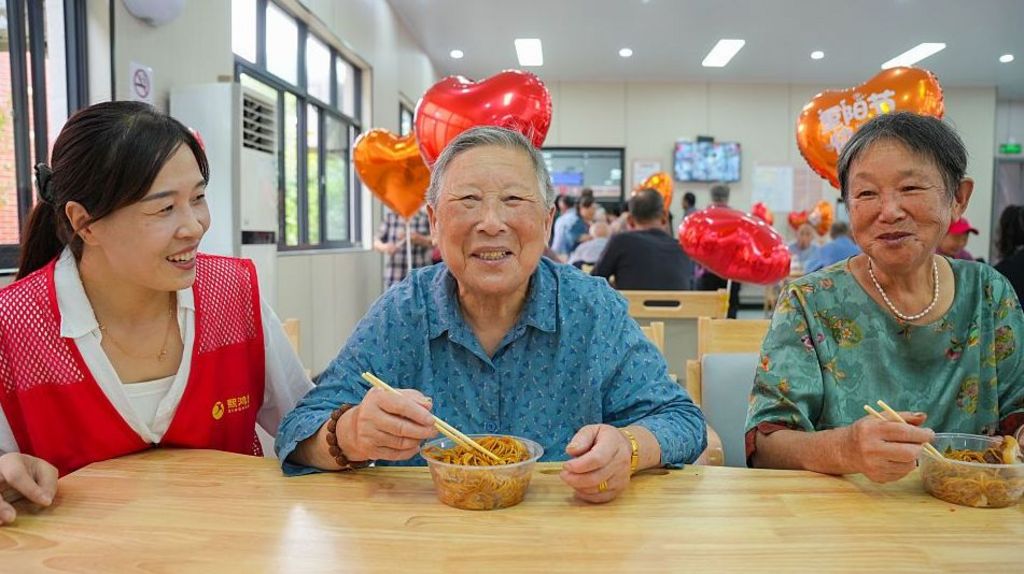
Newly released official data from China’s National Bureau of Statistics has confirmed a historic demographic turning point: for the first time ever, Chinese households now bear greater responsibility for caring for elderly relatives than minor children. Last year, the ratio of dependent seniors relative to the working-age population climbed to 23%, edging past the 22% ratio for children aged 14 and under. The latest headcounts show 223 million people in the country are 65 or older, making up nearly 16% of the total national population, while the under-14 demographic stands at 213 million. This widely anticipated shift has drawn intense scrutiny from economists and global market analysts, who warn that China’s steadily shrinking labor force carries far-reaching implications for the world’s second-largest economy and broader global growth trajectories. For decades, China has been rolling out targeted policies to adapt to its rapidly ageing population landscape, from rolling back the decades-old one-child policy in 2016 to introducing successive incentives to encourage young adults to marry earlier and raise larger families. State-run media outlet Global Times framed the transition to a moderately ageing society as a natural outcome of long-term demographic trends, citing larger past birth cohorts, steadily rising life expectancy, and structural socioeconomic shifts rather than a sudden short-term disruption. The report also noted that while the demographic shift will undoubtedly add mounting pressure on public pension systems, public healthcare networks, and long-term senior care infrastructure, it will simultaneously unlock massive untapped potential for the fast-growing “silver economy” that serves the consumption needs of older adults, many of whom belong to relatively affluent generations born between the 1950s and 1970s with stronger purchasing power and better overall health than previous cohorts of seniors. Leading demography experts offered nuanced perspectives on the milestone: Professor Stuart Gietel-Basten from the Hong Kong University of Science and Technology described the shift as a highly symbolic marker that will likely drive a gradual reallocation of public fiscal resources away from family support and education funding toward senior pensions and elderly healthcare services. Mu Zheng, a sociology lecturer at the National University of Singapore, cautioned that the ageing trend could act as a drag on China’s long-term economic growth targets while eroding overall household spending power. Analysts trace the root of China’s demographic transformation to a confluence of factors: the 35-year one-child policy implemented from 1980 to 2015, which the Chinese government estimates prevented roughly 400 million births, rapid nationwide urbanization, shifting social norms around gender and career trajectories, skyrocketing cost of living in major urban centers, and rising average education levels for women, all of which have combined to push national birth rates to persistent historic lows, even after the government eliminated family size restrictions. Beijing has already integrated enhanced senior support systems into its latest five-year economic development blueprint, and official figures show that more than 53 million elderly residents were already receiving targeted senior allowances and financial subsidies by the end of 2025. A subset of researchers has also raised critical questions about the limitations of the traditional dependency ratio metric, arguing that it often erases the active social and economic contributions of many older adults rather than framing them as passive dependents, and fails to account for dramatic improvements in public healthcare that have kept far more seniors active and productive later in life.