A surge of lethal violence targeting United Nations peacekeeping forces in southern Lebanon has spurred an emergency UN Security Council meeting, with China formally denouncing the attacks and calling for urgent global action to head off a full-scale regional conflict. The emergency session, held Tuesday, was convened after two separate attacks within a 24-hour window left two UN Interim Force in Lebanon (UNIFIL) peacekeepers dead and two more injured, one critically. The first assault, a projectile strike on a UN position, killed an Indonesian service member deployed with the mission, while a second blast — widely assessed to be an improvised explosive device — detonated beside a UNIFIL vehicle near the southern Lebanese town of Bani Hayyan a day later, killing another peacekeeper.
In remarks delivered to the Security Council, China’s deputy permanent representative to the United Nations Sun Lei emphasized that deliberate attacks against UN peacekeepers represent a blatant and severe breach of both international humanitarian law and Security Council Resolution 1701, the 2006 measure that established the framework for UNIFIL’s mandate along the Lebanon-Israel border. “These attacks are absolutely unacceptable and must immediately stop,” Sun stated.
The Chinese envoy extended sincere condolences on behalf of Beijing to the family of the fallen Indonesian peacekeeper and expressed deep sympathy for those wounded in the violence. He went on to warn that rapidly escalating tensions across the Middle East are already generating alarming spillover effects that threaten broader regional stability, stressing that the international community must act swiftly to hit the brakes on further escalation.
Sun reiterated China’s longstanding position that Israel must implement an immediate and full withdrawal of its military forces from Lebanese territory and respect Lebanon’s inviolable sovereignty, security and territorial integrity. “Lebanon cannot become another Gaza, and the international community must under no circumstances allow the tragedy of Gaza to be repeated,” he said. He added that China calls on all involved parties to immediately halt all hostilities and prioritize diplomatic efforts to de-escalate the crisis.
In the wake of the attacks, conflicting claims of responsibility have emerged, with Israel’s UN ambassador Danny Danon publicly asserting that Hezbollah was behind the strikes. No independent verification of Danon’s claim has been released to date, and UN spokesperson Stephane Dujarric confirmed Tuesday that official investigations into the incidents are still ongoing. “As soon as we can share the findings, we will do so,” Dujarric told reporters during the UN’s daily briefing, confirming one attack was a projectile strike on an Indonesian contingent position and the second was a roadside IED attack.
According to UN Special Coordinator for Lebanon Jeanine Hennis-Plasschaert, more than 1,200 people in Lebanon have been killed since the latest round of hostilities between Israel and Hezbollah began eight months ago. Recent announcements from Israel that it plans to expand ground operations and widen its self-declared buffer zone in southern Lebanon have stoked widespread fears that the country could be facing a long-term Israeli military occupation and a further intensification of conflict.
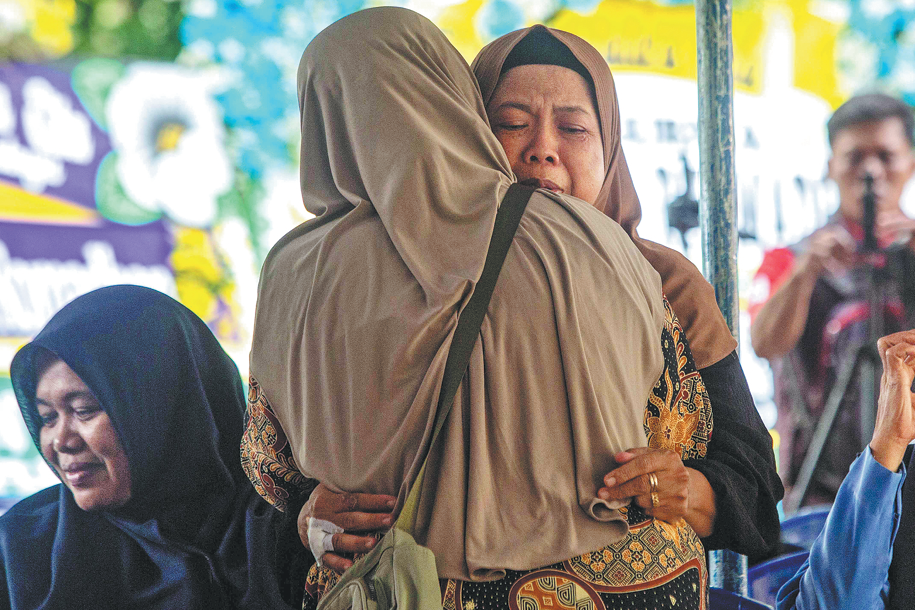
First established by the UN Security Council in 1978, UNIFIL currently deploys more than 8,000 uniformed peacekeepers drawn from nearly 50 countries around the world to monitor ceasefire violations and support stability along the Lebanon-Israel border. In the aftermath of the latest attacks, China has once again urged the international community to take urgent coordinated action to prevent the conflict from spiraling into an uncontrollable full-scale regional war. The killing of the Indonesian peacekeeper has already prompted mourning in his home country, where his mother was photographed receiving comfort from community members at her home in Yogyakarta’s Kulon Progo district a day after his death was confirmed.