分类: world

  • Israel bans MSF from Gaza after charity refuses to hand over staff list

    Israel bans MSF from Gaza after charity refuses to hand over staff list

    Israel has revoked the operating privileges of the international medical organization Médecins Sans Frontières (MSF), commonly known as Doctors Without Borders, within the Gaza Strip and the occupied West Bank. This decisive action follows a protracted dispute concerning the charity’s refusal to submit comprehensive staff rosters to Israeli authorities.

    The Israeli Foreign Ministry, in an official statement released on Sunday, characterized MSF’s reluctance as indicative of having ‘something to hide.’ The ministry framed its demand for staff lists as a fundamental issue of transparency and national security, essential for protecting all involved parties. The confrontation escalated through social media channels, with the ministry publicly criticizing the organization’s stance.

    Israeli officials further substantiated their position by alleging connections between two MSF employees and Palestinian militant factions, namely Hamas and Islamic Jihad—claims that MSF has vehemently and categorically denied.

    According to the Israeli Foreign Ministry, MSF had initially committed in early January to providing staff information as a component of a mandatory registration protocol. However, the ministry asserts that the organization subsequently reneged on this commitment, ultimately announcing its withdrawal from the registration process altogether. This reversal, deemed a contradiction to prior agreements, prompted the Israeli directive for MSF to completely cease its humanitarian operations and depart the Gaza Strip by February 28, 2026.

    In a counter-statement published on its website the preceding Friday, MSF presented a contrasting narrative. The medical charity confirmed it had, as an ‘exceptional measure,’ agreed in principle to share names of its Palestinian and international personnel. However, the organization stated it was unable to secure fundamental guarantees from Israeli authorities regarding the safeguarding and permissible use of this highly sensitive data.

    MSF detailed its efforts to engage with Israeli officials to obtain concrete assurances that staff details would be utilized strictly for administrative purposes and would not jeopardize the safety or security of its employees. These efforts, according to MSF, proved futile. Facing a lack of adequate protections, the organization concluded it could not in good conscience share staff information under the prevailing circumstances.

    This internal decision to initially comply had already generated significant controversy within the global medical community. Prominent figures, including world-renowned Palestinian surgeon Dr. Ghassan Abu Sittah, condemned the potential compliance, warning it would further endanger aid workers.

    This expulsion occurs against a backdrop of increasing Israeli restrictions on humanitarian entities operating in Gaza. In December, authorities unveiled intentions to block 37 aid groups from working in the enclave starting March 1, citing similar failures to submit detailed information on Palestinian staff members. Human rights organizations have consistently warned that such measures severely cripple humanitarian access in Gaza, where the healthcare infrastructure lies in ruins from ongoing military operations and the population faces extreme dependence on international aid for survival.

  • Israel partially reopens Gaza’s Rafah crossing for ‘limited passage of residents’

    Israel partially reopens Gaza’s Rafah crossing for ‘limited passage of residents’

    In a significant development following months of international pressure, Israeli authorities have partially reactivated the Rafah border crossing between Gaza and Egypt, though initial operations remain strictly limited to pedestrian transit. This cautiously orchestrated reopening occurs against a backdrop of persistent violence, with Gaza’s civil defence agency reporting numerous casualties from Israeli military actions just one day prior, despite an officially declared ceasefire.

    The Rafah crossing represents a critical humanitarian corridor for both civilian movement and aid distribution, yet had remained shuttered since Israeli forces assumed control in May 2024 during hostilities with Hamas, excepting a brief operational window in early 2025. COGAT, Israel’s defence coordination unit for Palestinian civilian affairs, characterized Sunday’s activation as “an initial pilot phase” conducted in coordination with European Union monitoring, emphasizing that full bidirectional passenger movement would commence upon completion of preliminary preparations.

    The reopening follows Israel’s recovery of Ran Gvili’s remains—the final Israeli hostage held in Gaza—whose repatriation had been stipulated as a precondition for border access. Meanwhile, approximately 200 medically vulnerable patients await evacuation authorization, with Gaza’s health ministry confirming their urgent need for overseas treatment. Concurrently, a 40-member Palestinian Authority contingent has positioned itself on the Egyptian border awaiting entry permission to initiate administrative functions.

    While a broader reopening is anticipated Monday, sources indicate no consensus has been reached regarding transit quotas. Egyptian officials have committed to admitting all Israel-approved departures. The crossing’s operationalization is expected to facilitate the entry of the newly established National Committee for the Administration of Gaza (NCAG)—a 15-member technocratic body tasked with governing the territory’s 2.2 million residents under US-supervised ceasefire provisions, though committee members confirm no immediate entry timeline has been established.

  • Twelve killed by Russian strike near bus in Ukraine, official says

    Twelve killed by Russian strike near bus in Ukraine, official says

    A Russian drone attack targeting a civilian shuttle bus in eastern Ukraine has resulted in the deaths of twelve mine workers and left seven others wounded, according to regional authorities. The assault occurred in the Pavlohrad district, where the vehicle was transporting employees of energy provider DTEK following their shift.

    Regional military administration chief Oleksandr Ganzha confirmed the casualties via Telegram, stating that investigation into the details is ongoing while air alerts continue throughout the region. DTEK, Ukraine’s largest private energy firm, denounced the incident as a deliberate attack on civilian workers, initially reporting fifteen fatalities in their official statement.

    This devastating strike follows a pattern of intensified attacks across Ukraine over the weekend. In a separate incident in Zaporizhzhia, a drone strike hit a maternity hospital, injuring six people including two women undergoing medical examinations. Regional head Ivan Fedorov described the hospital attack as further “proof of a war directed against life,” sharing visual evidence of extensive damage including blown-out windows and debris-strewn medical facilities.

    Additional violence claimed three lives in Kherson and Dnipro, according to local officials. These developments occur amidst Russia’s continued targeting of Ukraine’s energy infrastructure during an exceptionally cold winter, with temperatures forecast to drop below -20°C. The attacks on power grids have severely compromised heating and electricity supplies across the country.

    Contradictory statements have emerged regarding potential ceasefires, with US President Donald Trump claiming on Thursday that Russian President Putin had agreed to halt attacks on major Ukrainian cities during the cold snap. The Kremlin later indicated this pause would extend only until Sunday, leaving the humanitarian situation precarious.

  • Rafah border crossing reopens on limited, trial basis

    Rafah border crossing reopens on limited, trial basis

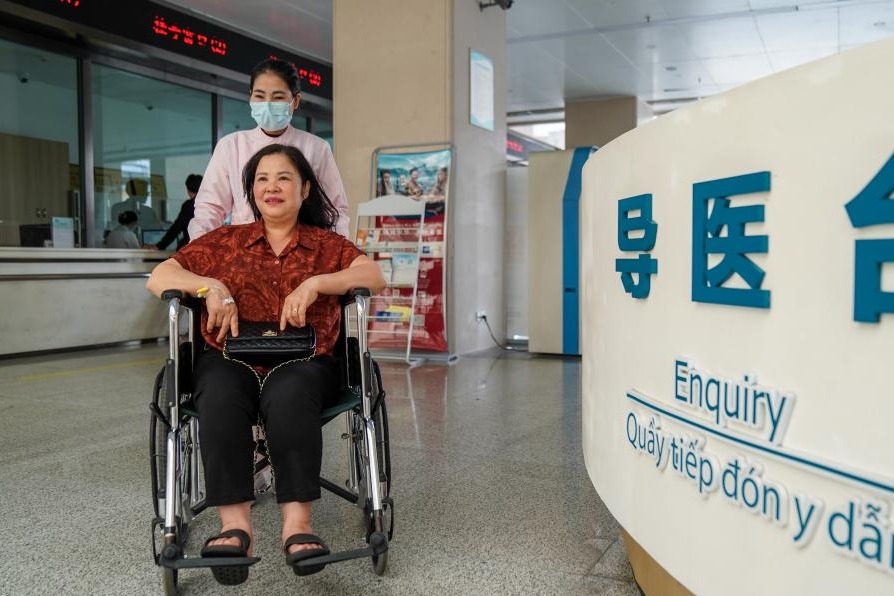
    The Rafah border crossing, Gaza’s primary connection to the external world, has initiated a preliminary reopening procedure on Sunday following an extensive 18-month closure period. This development emerges as a significant implementation measure subsequent to the Israel-Hamas ceasefire enacted on October 10, 2025.

    According to statements from Palestinian authorities conveyed to Xinhua, the present operation constitutes an experimental phase and does not presently impose restrictions on the transit of travelers or medical patients. The Israeli Coordinator of Government Activities in the Territories (COGAT), an agency operating under the Defense Ministry, confirmed the resumption of border operations exclusively for pedestrian movement, with comprehensive bidirectional transit anticipated to commence imminently.

    A collaborative delegation comprising Palestinian, Egyptian, and European representatives is presently stationed at the crossing facility to conduct operational simulations and assess procedural readiness. Shadi Othman, the European Union’s media officer based in Jerusalem, characterized the event as a ‘trial simulation’ designed to evaluate on-ground operational capabilities through coordinated efforts with all involved stakeholders, including the European mission and Egyptian authorities.

    Othman emphasized that the paramount objective during this preliminary stage remains ensuring the crossing’s operational capacity for seamless bidirectional civilian transit. Notwithstanding these developments, Gaza’s health authorities indicate that no formal notifications regarding specific movement schedules for patients or travelers have been disseminated, attributing this delay to pending finalization of official crossing registries and procedural arrangements.

  • Saudi-Pakistan mutual defence pact will not include Turkey: Sources

    Saudi-Pakistan mutual defence pact will not include Turkey: Sources

    Saudi Arabian military sources have definitively stated that the recently established mutual defense agreement with Pakistan will remain exclusively bilateral, dismissing speculation about Turkish inclusion. This clarification comes following earlier reports from Turkish officials suggesting potential trilateral negotiations.

    The defense pact, formally announced last year, has generated significant international attention due to its strategic implications in a region experiencing heightened tensions. These tensions escalated following Israeli airstrikes in Doha targeting Hamas officials and subsequent Iranian bombing of a US air base in Qatar.

    A source within Saudi military circles explicitly told AFP: ‘Turkey won’t join the defense pact with Pakistan. It’s a bilateral pact with Pakistan and will remain a bilateral pact.’ This position was corroborated by a Gulf official who emphasized: ‘We have common agreements with Turkey but the one with Pakistan will stay bilateral.’

    The agreement’s significance is magnified by Pakistan’s status as a nuclear power, raising questions about potential nuclear components to the arrangement. This development occurs against the backdrop of recent intensified conflict between Pakistan and India in May, which resulted in over 70 casualties through missile, drone, and artillery exchanges—the most severe clashes between these nuclear-armed neighbors since 1999.

    Saudi Arabia played a crucial mediating role in de-escalating the Pakistan-India conflict, demonstrating Riyadh’s growing influence in regional security matters. Notably, Saudi Arabia maintains strong diplomatic and economic ties with India, which relies heavily on Saudi petroleum imports, with the Kingdom ranking as India’s third-largest oil supplier according to Indian foreign ministry data.

  • Nigerian army said it killed a Boko Haram commander and 10 militants

    Nigerian army said it killed a Boko Haram commander and 10 militants

    ABUJA, Nigeria — In a significant counterterrorism operation, Nigerian military forces have eliminated a high-ranking Boko Haram commander along with ten militants during a nighttime assault in the northeastern region. The targeted strike occurred Saturday in Kodunga, Borno State, dealing a substantial blow to the extremist group’s operational capabilities.

    Army spokesman Sani Uba confirmed that Abu Khalid, a key figure within Boko Haram’s terrorist hierarchy, was killed in the operation. Khalid had been coordinating critical operations and logistical support from the Sambisa Forest stronghold in Borno state, making his elimination a strategic victory for Nigerian forces.

    The successful raid yielded substantial military gains, with troops recovering weapons caches, medical supplies, and food provisions from the militants. This operation represents part of Nigeria’s newly adopted proactive military strategy against insurgent groups, marking a departure from previous reactive approaches that often left military installations vulnerable to attacks.

    This development follows recent devastating attacks by Boko Haram militants that claimed dozens of lives at a construction site and military base earlier in the week. The insurgency, which began in 2009 as a movement opposing Western education and advocating for strict Islamic law, has evolved into a complex security crisis involving multiple extremist factions.

    The conflict now encompasses the Islamic State West Africa Province (ISWAP), an ISIS affiliate that has expanded operations beyond Nigeria’s borders into neighboring countries. According to United Nations estimates, the violence has resulted in approximately 35,000 civilian casualties and displaced over two million people across the region.

    Security analyst Taiwo Adebayo of the Institute for Security Studies noted that the Nigerian military’s offensive strategy, initiated last month, represents a fundamental shift in counterinsurgency tactics. The new approach involves preemptive movements into insurgent hideouts rather than responding to attacks after they occur.

    International support has bolstered these efforts, with the United States conducting intelligence-gathering flights over Borno since November 2020. This cooperation enabled more precise targeting of armed groups, culminating in December airstrikes against Islamic State fighters in northern Nigeria amid concerns about attacks on Christian communities.

    Nigeria continues to face multifaceted security challenges, with the northeastern insurgency accompanied by escalating ransom kidnappings across northwestern and north-central regions in recent months.

  • Magnitude 5.3 earthquake hits Southern Iran; was it felt in UAE?

    Magnitude 5.3 earthquake hits Southern Iran; was it felt in UAE?

    A significant seismic event measuring 5.3 magnitude occurred in Southern Iran on Sunday morning at precisely 9:11 AM UAE time. According to the National Centre of Meteorology’s National Seismic Network, the earthquake originated at a shallow depth of 10 kilometers beneath the Earth’s surface.

    The tremor represents the latest in a series of seismic activities affecting the region. Just one week prior, the same area experienced a 5.1 magnitude quake, while earlier this month on January 3, a milder 2.2 magnitude tremor was recorded south of Musandam.

    Despite geographical proximity to the epicenter, UAE authorities confirmed that the earthquake produced no detectable impact within Emirates territory. The Musandam region, which spans both Omani and UAE jurisdictions including parts of Ras Al Khaimah and Dibba, remains seismically active due to its position relative to the Strait of Hormuz.

    Seismological experts note that while the UAE itself doesn’t lie within a major earthquake zone, its closeness to the highly active Zagros mountain range—one of the world’s most seismically dynamic regions—makes occasional tremor sensations possible. Neighboring countries including Iran, Iraq, and Oman frequently experience earthquakes that can generate minor shaking detectable in the Emirates.

    Historical data indicates that similar events have occurred recently, including a December 2025 magnitude 2.9 earthquake in southern Musandam that produced faint tremors noticeable to some UAE residents without causing damage. Meteorological officials continue to monitor seismic activity across the region while assuring the public of existing safety measures.

  • Sudan’s war-torn capital sees second commercial flight land since conflict began

    Sudan’s war-torn capital sees second commercial flight land since conflict began

    In a significant development for Sudan’s war-torn capital, a domestic commercial flight operated by national carrier SUDANAIR successfully landed at Khartoum International Airport on Sunday. This marks only the second commercial arrival since devastating conflict erupted nearly three years ago in the northeastern African nation.

    The state-run SUNA news agency confirmed the aircraft departed from Port Sudan on the Red Sea coast, which had temporarily served as the government’s administrative headquarters until authorities relocated back to Khartoum earlier this year. The flight’s arrival represents a crucial milestone in governmental efforts to restore normalcy to the capital city, which has endured extensive destruction during prolonged hostilities between the national military and the paramilitary Rapid Support Forces (RSF).

    This event follows an October landing by privately-owned Badr Airlines, which was met with RSF drone attacks attempting to disrupt airport operations. The military subsequently regained control of Khartoum from the paramilitary group earlier last year.

    The conflict originated in April 2023 from a violent power struggle between the military and RSF that rapidly escalated into full-scale warfare. Khartoum International Airport sustained severe damage during the initial weeks of fighting, crippling the nation’s aviation infrastructure.

    According to United Nations estimates, the devastating war has claimed over 40,000 lives, though humanitarian organizations caution that actual fatalities likely far exceed this figure. The conflict has generated the world’s most severe humanitarian crisis, displacing more than 14 million people while triggering widespread disease outbreaks and pushing multiple regions toward famine conditions.

  • Earthquake of magnitude 3 strikes Bangladesh

    Earthquake of magnitude 3 strikes Bangladesh

    A minor seismic event measuring 3.0 magnitude occurred in Bangladesh early Sunday, according to official reports from the National Center of Seismology (NCS). The tremor was recorded at precisely 04:02:32 IST on February 1, 2026, with its epicenter located at coordinates 24.85°N latitude and 92.07°E longitude at a depth of 20 kilometers beneath the Earth’s surface.

    This latest seismic activity highlights Bangladesh’s precarious geological position at the convergence point of three major tectonic plates: the Indian, Eurasian, and Burma plates. The region experiences constant tectonic pressure as the Indian plate advances northeastward at approximately 6 centimeters annually while the Eurasian plate moves northward at about 2 centimeters per year.

    Seismologists have identified Bangladesh as lying within 13 earthquake-prone zones due to its proximity to multiple significant fault lines, including the Bogura fault, Tripura fault, Shillong Plateau, Dauki fault, and Assam fault. Particular concern exists for regions such as Chattogram, the Chattogram Hill Tracts, and Jaintiapur in Sylhet, which fall within the highest-risk categorization.

    The seismic vulnerability is especially alarming for Dhaka, which The Daily Star identifies as one of the world’s 20 most earthquake-vulnerable urban centers. With population density exceeding 30,000 people per square kilometer, the capital city faces catastrophic potential should a major seismic event occur.

    This tremor follows recent seismic activity in the region, including a 4.0 magnitude earthquake that struck Afghanistan on January 31, 2026, and a 4.1 magnitude event that affected Dhaka on December 4, 2025. Experts continue to emphasize that advanced preparedness measures, public awareness campaigns, and modern seismic monitoring technology remain crucial for minimizing potential casualties and structural damage in this seismically active region.

  • Pakistan says 92 militants killed after attacks in Balochistan

    Pakistan says 92 militants killed after attacks in Balochistan

    Pakistan’s military has reported a significant escalation in violence across the restive Balochistan province, culminating in the deaths of 92 militants during intense counter-terrorism operations on Saturday. The coordinated attacks, claimed by the banned Baloch Liberation Army (BLA), targeted multiple urban centers including Quetta, Mastung, and the strategic port city of Gwadar.

    According to military statements released through the ISPR media wing, 15 security personnel lost their lives during clearance operations against well-armed insurgents. The violence inflicted severe civilian casualties, with at least 18 non-combatants killed—including women and children—in what authorities describe as targeted attacks on civilian populations.

    The provincial capital Quetta witnessed armed militants blocking major thoroughfares and detonating explosives near high-security zones, though authorities subsequently restored order. In Gwadar, assailants stormed a migrant worker encampment, executing 11 laborers in what appeared to be ethnically motivated violence. Security forces responded by eliminating six attackers at the Gwadar site.

    A particularly alarming development emerged from Noshki district, where militants abducted the region’s senior civil administrator. The official appeared in a social media video confirming his captivity, though Reuters could not independently verify the footage’s authenticity.

    Pakistan’s Interior Minister Mohsin Naqvi condemned the assaults while praising security forces for preventing militants from seizing any urban centers or strategic installations. The military attributed the coordinated nature of the attacks to terrorist leadership operating from overseas, noting that ringleaders maintained direct communication with operatives throughout the 15-hour engagement.

    The violence follows Friday’s military operations that neutralized 41 militants in separate raids, underscoring the persistent instability in this resource-rich region bordering Iran and Afghanistan. Hospitals throughout the province were placed on emergency footing as security forces continued clearance operations into Sunday.