分类: world

  • UN warns 17 million risk food insecurity in Afghanistan

    UN warns 17 million risk food insecurity in Afghanistan

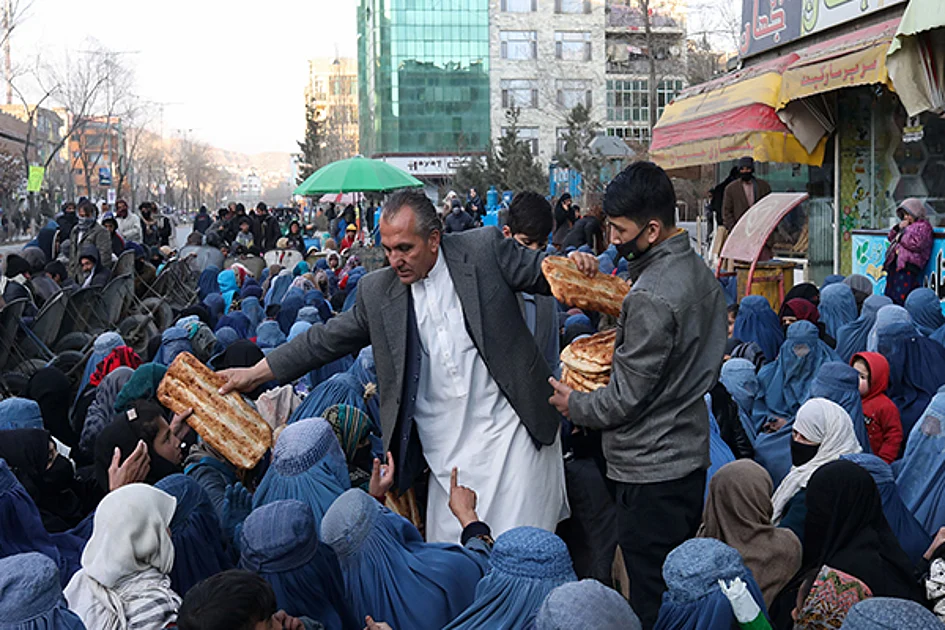
    The United Nations issued a dire warning on Tuesday that Afghanistan confronts an escalating humanitarian catastrophe, with over 17 million people experiencing acute food insecurity as winter approaches. This alarming figure represents a dramatic increase of three million compared to the previous year’s statistics.

    Jean-Martin Bauer, Director of Food Security and Nutrition Analysis at the UN’s World Food Programme, emphasized the critical nature of the situation during a Geneva press briefing. ‘The situation is deteriorating rapidly, and immediate intervention is crucial as Afghanistan enters the winter season when humanitarian needs peak,’ Bauer stated from WFP’s Rome headquarters.

    The crisis stems from multiple compounding factors including severe drought conditions that have devastated agricultural production and livestock, destructive earthquakes that have pushed countless families into poverty, and significant reductions in international aid. Further exacerbating the situation, the forced repatriation of more than 2.5 million Afghan refugees from Iran and Pakistan throughout 2025 has placed unprecedented strain on the nation’s already limited resources and infrastructure.

    Among the most vulnerable populations are nearly four million children suffering from acute malnutrition, creating a lost generation facing irreversible developmental impacts. The WFP anticipates similar refugee return rates in 2026, potentially worsening the crisis.

    Currently, the organization faces critical funding shortages, with only 12 percent of necessary financial resources secured for its Afghan operations. This financial deficit has prevented standard winter preparedness measures, including pre-positioning food supplies in high-risk communities.

    Bauer urgently appealed for international donor support, specifying that $570 million is required over the next six months to provide essential assistance to approximately six million vulnerable Afghans. He stressed the importance of maintaining global attention on Afghanistan’s plight to prevent the most extreme consequences of this growing emergency.

  • ‘Syria is proud of him’: Family of Bondi hero reacts

    ‘Syria is proud of him’: Family of Bondi hero reacts

    In a remarkable display of courage during Australia’s deadliest mass shooting in three decades, Syrian immigrant Ahmed al-Ahmed emerged as an international symbol of bravery after confronting an armed assailant at Sydney’s Bondi Beach. The 43-year-old shopowner, who left his war-torn hometown in Idlib nearly two decades ago, successfully wrestled a rifle from the attacker during a violent assault on a Jewish holiday gathering that claimed 15 lives.

    From his hospital bed in Sydney where he recuperates from gunshot wounds, al-Ahmed has received global recognition, including commendation from U.S. President Donald Trump. A grassroots fundraising initiative has generated over A$2.2 million in support of his recovery, demonstrating widespread admiration for his selfless actions.

    Halfway across the world in Syria, relatives recognized al-Ahmed in viral footage of the confrontation. His uncle, Mohammed al-Ahmed, expressed profound pride in his nephew’s heroic intervention, emphasizing that his actions transcended religious considerations. “He acted on pure instinct without considering the victims’ faith—whether Muslim, Christian, or Jewish,” the uncle stated in an interview with Reuters. “That innate moral compass propelled him to intervene and save countless innocent lives.”

    The family’s origins trace back to Nayrab, a town devastated by Syria’s prolonged civil conflict that concluded only last year with the ousting of long-time leader Bashar al-Assad. Their former family residence now lies in ruins, its concrete structure punctured by shelling and surrounded by debris—a stark reminder of the violence that prompted al-Ahmed’s departure in 2006 after completing his university education in Aleppo.

    Family members describe al-Ahmed as embodying a lifelong pattern of gallantry and compassion. His cousin, also named Mohammed al-Ahmed, highlighted the significance of his actions: “Through his courage, he demonstrates to the world that Muslims are instruments of peace rather than conflict.” Now an Australian citizen and father of two daughters, al-Ahmed’s spontaneous heroism has transformed him into an unexpected ambassador for cross-cultural understanding and human solidarity.

  • Roads or rice fields – Madagascar’s highway dilemma

    Roads or rice fields – Madagascar’s highway dilemma

    In the tranquil village of Ambohidava, Madagascar, a crimson wooden post symbolizes an impending transformation that threatens to dismantle generations of agricultural tradition. This marker designates the path of a controversial $1 billion highway project linking the capital Antananarivo to Toamasina, the nation’s primary port city.

    The proposed infrastructure promises to revolutionize Madagascar’s economy by slashing the current 16-hour journey between these key cities to merely three hours. Government projections indicate the highway could triple activity at Toamasina port, facilitate exports of premium commodities like vanilla, and generate substantial employment opportunities along its 260-kilometer corridor.

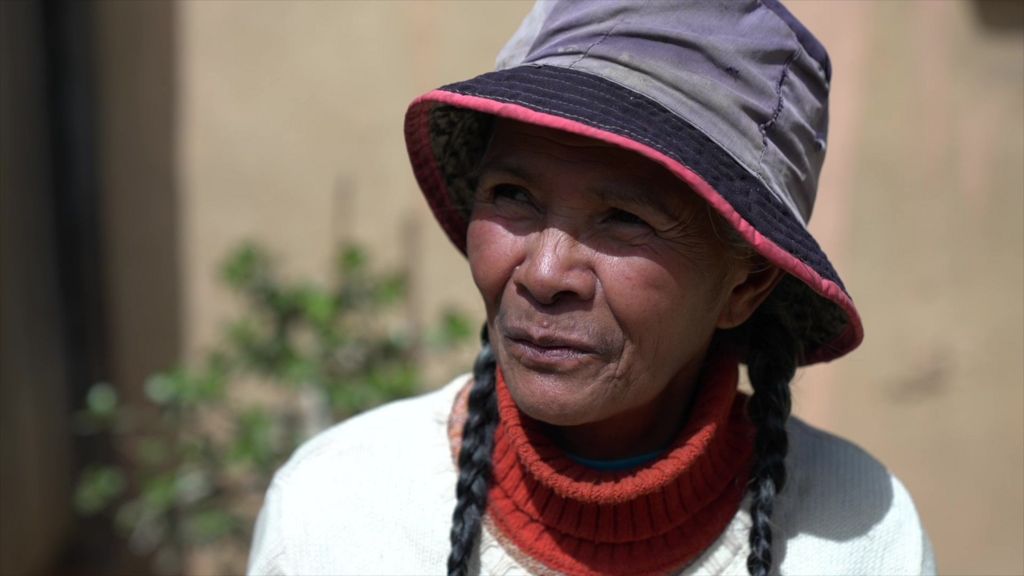
    However, this development exacts a profound human cost. Seventy-year-old Neny Fara, whose family has cultivated rice and pineapples in Ambohidava for generations, faces the potential destruction of her ancestral farmlands. “I feel stabbed in the back,” she expresses, highlighting the absence of official communication regarding compensation. Her concerns echo throughout the community, where multiple farmers report similar uncertainties despite governmental assurances of restitution within one year of the road’s completion.

    The project’s implementation continues despite recent political upheaval that deposed initial proponent President Andriy Rajoelina. The current administration maintains commitment to the venture, financed through a combination of state funds (20%) and international sources including the Arab Bank for Economic Development in Africa.

    Environmental considerations have undergone significant revision since the project’s inception. Originally feared to encroach upon pristine rainforests housing Madagascar’s unique biodiversity, the route now primarily traverses previously cleared agricultural zones. Egyptian construction firm Sancrete further claims the improved road could reduce transportation emissions by up to 30%.

    Yet cultural tensions persist. Villagers voice distress over potential desecration of ancestral burial grounds, considered sacred in Malagasy tradition. An impromptu community gathering, led by Neny Fara, revealed determined opposition to the current plans.

    Former Environment Minister Max Fontaine defended the balance between preservation and progress, emphasizing parallel initiatives to formalize land ownership and prevent corporate land grabs. “This highway will radically change the face of Madagascar,” he stated, acknowledging both the transformative potential and necessary safeguards for affected communities.

    As construction advances on the initial 8-kilometer segment, Ambohidava embodies the complex dilemma facing developing nations: reconciling economic advancement with environmental conservation and cultural heritage preservation.

  • US military build-up in Caribbean has shadows of the past – but differences are stark

    US military build-up in Caribbean has shadows of the past – but differences are stark

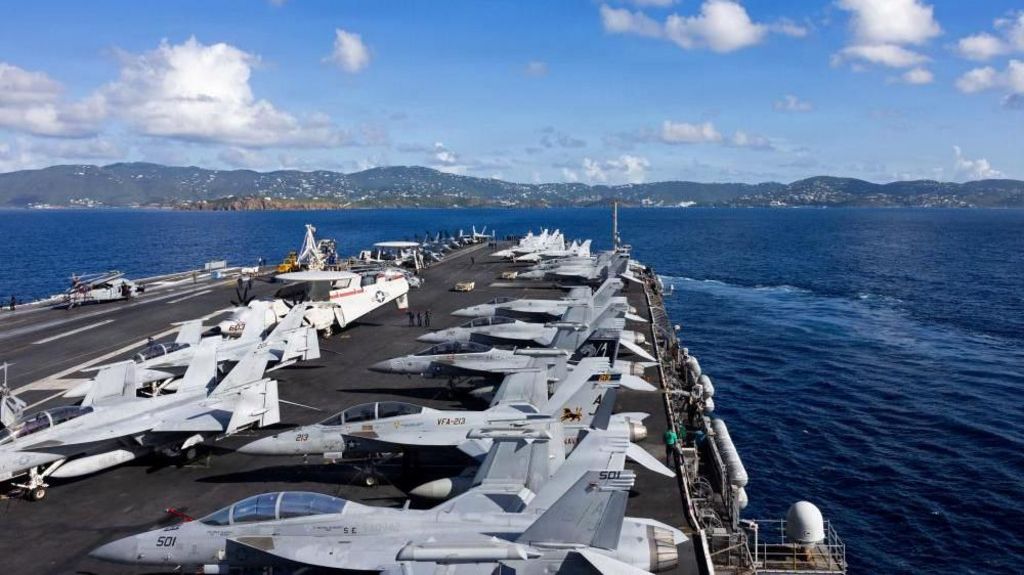
    The Caribbean Sea is witnessing its most significant US military deployment since the Cold War’s conclusion, with the nuclear-powered USS Gerald Ford aircraft carrier leading a formidable naval presence. This strategic mobilization responds to escalating tensions between Washington and Caracas, drawing inevitable comparisons to the 1989 US invasion of Panama that ousted President Manuel Noriega.

    The historical parallel emerges from strikingly similar circumstances: both episodes feature Latin American leaders accused by Washington of direct involvement in narcotics trafficking, both involve years of accumulated diplomatic enmity, and both concern nations possessing immense strategic value—Panama with its critical canal and Venezuela with its vast oil reserves.

    Yet the distinctions between these two moments reveal evolving geopolitical realities. The 1989 operation against Noriega occurred within a Cold War context, with concrete evidence presented through financial records and cartel testimonies. Current allegations against President Nicolás Maduro center on what US officials term the ‘Cartel of the Suns’—an alleged network of current and former Venezuelan military officials that some drug policy analysts question as a formally structured organization.

    The legal justification has similarly evolved. Where the Panama intervention followed the shooting death of US Marine Lieutenant Robert Paz at a checkpoint, the current administration employs the concept of ‘narco-terrorism’ to characterize its operations against drug-smuggling vessels in international waters. This approach has sparked controversy regarding international law interpretations, particularly after a September incident where a follow-up airstrike killed two survivors from an initial engagement.

    Adding complexity to the situation, the Trump administration has imposed fresh sanctions on three of Maduro’s nephews, including two previously convicted in the 2015 ‘narco-nephews’ cocaine smuggling case. Venezuelan officials vehemently deny all allegations, with Interior Minister Diosdado Cabello dismissing the Cartel of the Suns as ‘an imperialist invention.’

    With US forces having already seized a tanker carrying Venezuelan crude and controlling air and sea approaches to Venezuela, analysts note that the situation remains highly volatile. As demonstrated in Panama, such military buildups can be triggered into full-scale conflict by a single incident, making the current Caribbean standoff one of the most dangerously unpredictable geopolitical situations in recent decades.

  • Iran says dual national held since Israel war on spy charges is Swedish

    Iran says dual national held since Israel war on spy charges is Swedish

    Iran’s judiciary has formally identified a detained dual citizen, arrested during recent hostilities with Israel, as holding Swedish nationality. Judicial spokesman Asghar Jahangir disclosed through the Mizan Online news agency that the individual obtained Swedish citizenship in 2020 and had been residing there prior to their arrest.

    The defendant stands accused of conducting espionage operations for Israel’s Mossad intelligence service during the 12-day conflict that erupted in June. According to judicial authorities, the suspect was allegedly recruited by Israeli intelligence in 2023 and participated in training sessions across six European capitals before entering Iran approximately one month preceding the outbreak of hostilities.

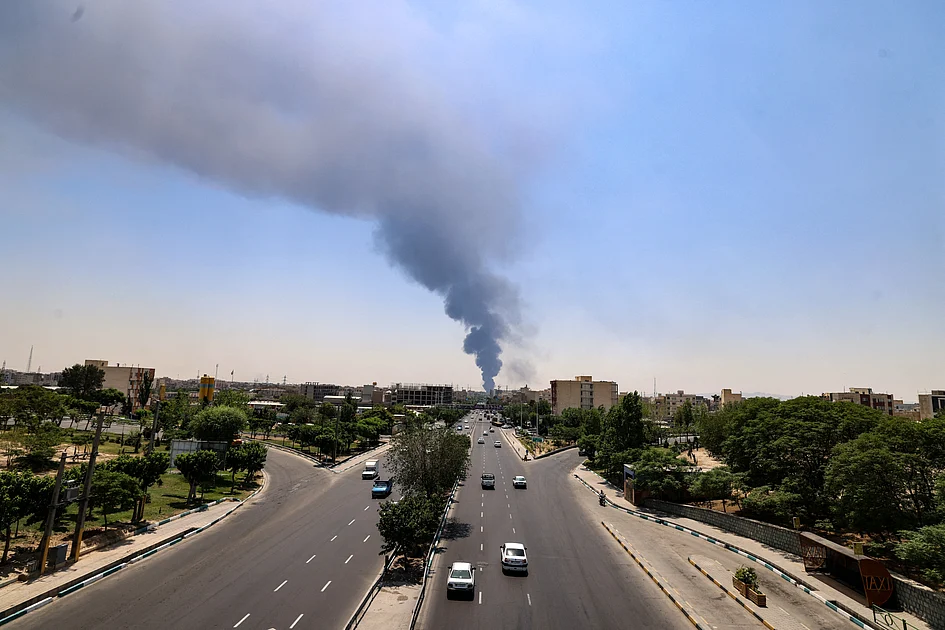
    Investigators reported discovering electronic surveillance equipment in the defendant’s possession upon arrest near Karaj, a provincial area adjacent to Tehran. Judicial officials state the individual has provided confessions regarding espionage activities, with a verdict expected imminently.

    This case emerges amid heightened tensions following Iran’s implementation of stricter espionage penalties in October, mandating capital punishment and asset confiscation for those convicted of spying for Israel or the United States. Since the June conflict, Iranian authorities have executed at least nine individuals convicted on similar charges, reflecting Tehran’s intensified crackdown on alleged foreign intelligence operations.

    The arrest occurs against the backdrop of complex diplomatic relations between Iran and Sweden, particularly following a June 2024 prisoner exchange that secured the release of two Swedish citizens in return for former Iranian official Hamid Noury.

  • Sudan’s RSF conducting campaign to cover up mass atrocities in el-Fasher

    Sudan’s RSF conducting campaign to cover up mass atrocities in el-Fasher

    A groundbreaking investigation by Yale University’s Humanitarian Research Lab (HRL) has uncovered systematic efforts by Sudan’s Rapid Support Forces (RSF) to conceal evidence of mass atrocities committed during their capture of el-Fasher in North Darfur. The paramilitary group, which seized full control of the city from Sudanese Armed Forces on October 26 after a 500-day siege, has engaged in what researchers describe as a coordinated campaign to dispose of human remains through mass burial, burning, and removal operations.

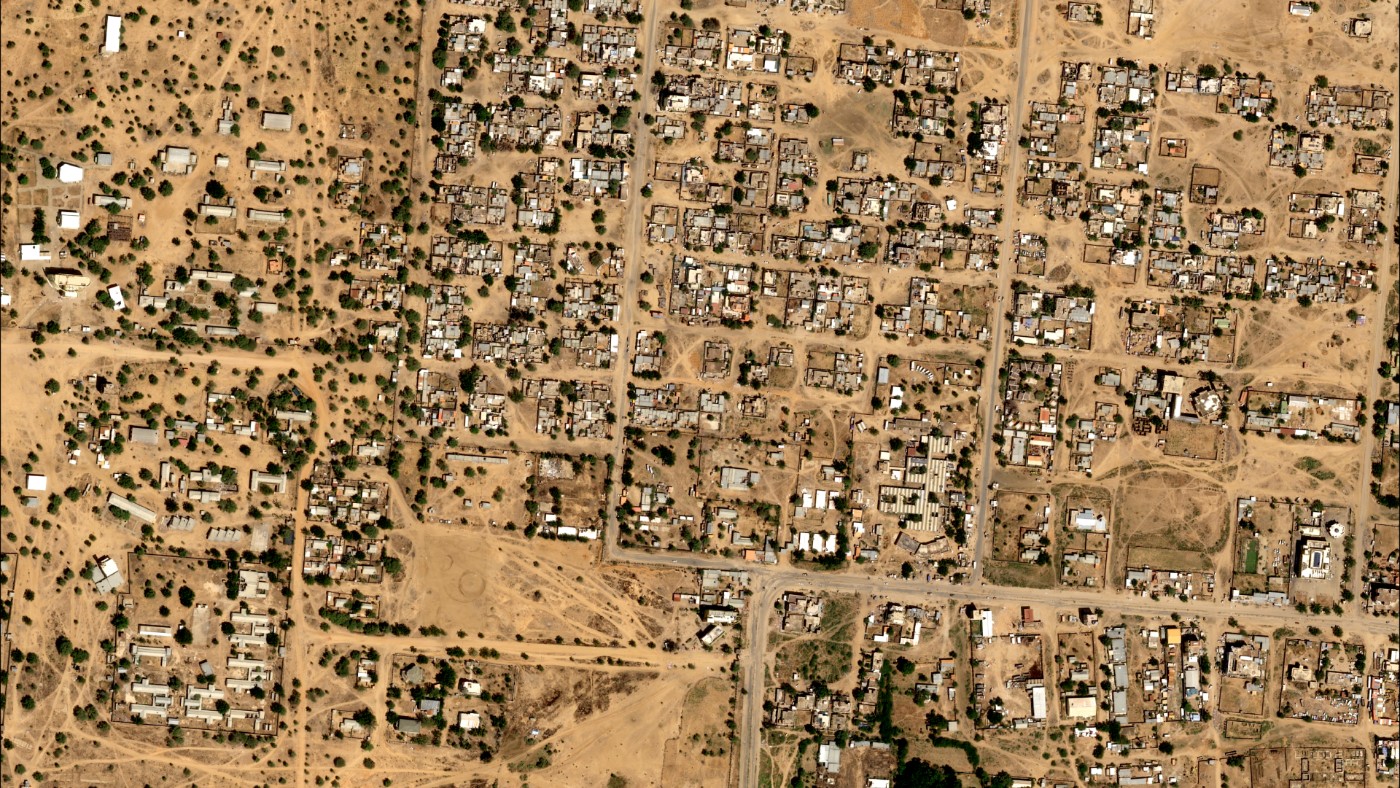
    Satellite imagery analysis covering approximately 700 square kilometers reveals disturbing patterns consistent with large-scale evidence destruction. Between October 26 and November 1, researchers identified 150 distinct locations containing clusters of objects matching the dimensions of human remains. Subsequent monitoring through November 28 showed significant alterations at 108 sites, with 57 clusters completely disappearing—indicating systematic body removal operations.

    The report documents horrific violence against civilians, including door-to-door executions and targeted killings of those attempting to flee. Satellite evidence shows 38 instances of reddish discoloration consistent with blood spills visible from space, particularly near the former children’s hospital which eyewitnesses identify as an RSF detention site.

    Mohamed Hassan, an el-Fasher resident, provided chilling testimony to Middle East Eye: ‘I have seen the bodies in Daraja Oula, the area where most civilians were securing themselves. The RSF entered the neighbourhood one by one and fired on everybody.’ He described systematic separation of men from women and children, followed by random executions of those suspected of military affiliations.

    The violence occurs within the broader context of Sudan’s devastating conflict, which began in April 2023 and has created what the UN calls the world’s largest humanitarian crisis. Over 14 million people have been displaced, with death estimates reaching hundreds of thousands. Both sides have committed atrocities, but the RSF faces particular scrutiny for genocidal actions targeting non-Arab groups in Darfur.

    The international community has responded with growing concern, focusing attention on the United Arab Emirates’ alleged support for the RSF—a charge Abu Dhabi continues to deny despite mounting evidence. The fallout from el-Fasher has prompted RSF commander General Mohamed Hamdan Dagalo (Hemedti) to announce an investigation into alleged violations by his forces, though skepticism remains regarding its credibility.

  • Goa nightclub owners arrested at Delhi airport after extradition from Thailand

    Goa nightclub owners arrested at Delhi airport after extradition from Thailand

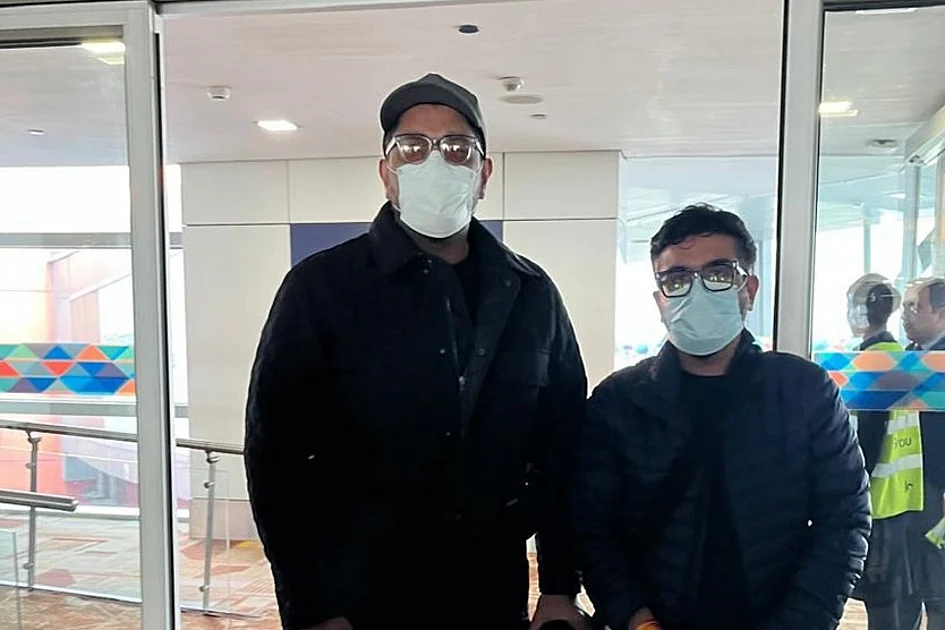
    Indian authorities have formally arrested Gaurav and Saurabh Luthra, the proprietors of a Goa nightclub where a catastrophic fire claimed 25 lives earlier this month. The brothers were taken into custody at New Delhi’s international airport on Tuesday following their deportation from Thailand.

    The dramatic extradition concludes an international manhunt that began after the December 6th tragedy at ‘Birch by Romeo Lane’ nightclub in North Goa. The siblings had fled to Phuket, Thailand, within hours of the devastating blaze that also left numerous patrons and staff members critically injured.

    Thai law enforcement officials detained the brothers at a Phuket resort after Indian authorities initiated passport suspension procedures and formally requested cooperation under the bilateral extradition treaty. The 2015 agreement between India and Thailand facilitated the swift transfer, with Thai officials confirming all legal protocols were meticulously followed throughout the deportation process.

    According to criminal charges filed by Goa Police on December 7th, the Luthra brothers organized a fire performance at their establishment without implementing essential safety measures. The First Information Report indicates they knowingly operated without emergency exits on both ground and deck levels while failing to provide basic fire safety equipment during the pyrotechnic display.

    The accused are scheduled to appear before Delhi’s Patiala House court before being transferred to Goa to face charges related to the fatal incident that predominantly affected tourists and employees. An Indian law enforcement team coordinated international logistics to ensure the brothers’ return, demonstrating strengthened judicial cooperation between the two nations.

  • First EU airline flight in 35 years lands in Baghdad today

    First EU airline flight in 35 years lands in Baghdad today

    In a landmark development for Iraqi aviation, Greece’s Aegean Airlines successfully landed at Baghdad International Airport on Tuesday, marking the first scheduled European carrier arrival in 35 years. The historic flight signifies a major step in Iraq’s reintegration into international air travel networks following decades of isolation due to security concerns.

    The newly established Baghdad-Athens route will initially operate with two weekly flights, with Iraqi transport officials indicating potential expansion based on passenger demand. This aviation breakthrough represents what the Iraqi Transport Ministry described as “Iraq’s return to the European aviation map” and heralds “a new phase of recovery for Iraq’s aviation sector.”

    European airlines ceased direct flights to Baghdad in the early 1990s following Saddam Hussein’s invasion of Kuwait and subsequent international sanctions. The security situation further deteriorated after the 2003 US-led invasion, which triggered extended periods of civil conflict, sectarian violence, and jihadist activity that made commercial aviation operations untenable.

    The Greek carrier had previously demonstrated confidence in Iraq’s northern region by initiating flights to Erbil, capital of the relatively stable autonomous Kurdistan region. This strategic expansion southward to Baghdad suggests growing international confidence in Iraq’s improving security conditions and economic potential.

    Aviation analysts note that restored European air connections could significantly boost business travel, diplomatic exchanges, and economic development opportunities for Iraq as it continues to rebuild infrastructure and international relationships after years of conflict and isolation.

  • Bondi beach mass shooting: What we know about the father-son gunmen

    Bondi beach mass shooting: What we know about the father-son gunmen

    Australian authorities have initiated a comprehensive nationwide investigation into Sunday’s devastating mass shooting at Bondi Beach during a Hanukkah celebration, which resulted in 15 fatalities and 42 injuries. The attack, Australia’s deadliest firearm incident in nearly thirty years, has prompted serious national security evaluations and international investigative cooperation.

    The alleged perpetrators have been identified as Sajid Akram, 50, and his 24-year-old son Naveed Akram, according to widespread media reports. Sajid Akram, originally from Hyderabad, India, emigrated to Australia in November 1998. He held Indian citizenship at the time of the attack, while his Australia-born children possessed Australian citizenship. Indian police officials confirmed that Akram maintained minimal contact with his Hyderabad relatives over the past 27 years, visiting only six times primarily for property matters.

    A significant development emerged from Philippine immigration authorities, revealing both suspects spent nearly all of November in the Philippines before returning to Australia just weeks before the attack. Australian police are actively investigating the purpose and activities of their Philippines visit.

    Prime Minister Anthony Albanese confirmed the attack appears motivated by extremist ideology targeting Jewish communities, with authorities discovering improvised explosive devices and homemade flags associated with Daesh in a vehicle registered to Naveed Akram. Intelligence agencies had previously noted Naveed in 2019 but didn’t classify him as an imminent threat, raising critical questions about preventive measures.

    The tactical execution involved both attackers firing long-barrelled weapons across the beach and adjacent park for approximately ten minutes before police intervention. Sajid Akram was fatally shot at the scene, while Naveed remains comatose under police guard. Investigation revealed Sajid legally held a firearms license since 2015 and owned six registered weapons.

    The international dimension continues to develop with Indian authorities emphasizing the radicalization appears unrelated to India or Telangana region, while Pakistani media reported unrelated individuals facing mistaken identity issues due to name similarities.

  • University hall symbol of China-Bangladesh cooperation: Ambassador Yao

    University hall symbol of China-Bangladesh cooperation: Ambassador Yao

    In a significant demonstration of bilateral cooperation, Chinese Ambassador to Bangladesh Yao Wen and University of Dhaka Vice-Chancellor Professor Niaz Ahmed Khan conducted a joint inspection of the proposed China-Bangladesh Friendship Residential Hall on December 15. The diplomatic and academic leaders were accompanied by a specialized team of Chinese experts during their assessment of the upcoming facility.

    Ambassador Yao announced during a press briefing that construction is scheduled to commence within the first half of the coming year, marking a tangible advancement in the educational collaboration between the two nations. The residential complex represents a strategic investment in Bangladesh’s educational infrastructure with particular focus on supporting women’s access to higher education.

    Professor Khan expressed profound appreciation for China’s sustained support within Bangladesh’s education sector, characterizing the project as a foundational platform for enhanced cooperation in talent development, scientific research partnerships, and cross-cultural youth exchanges. He emphasized the hall’s role in perpetuating Sino-Bangladeshi friendship across generations.

    Ambassador Yao highlighted educational collaboration as a cornerstone of the bilateral relationship, describing the student-centered initiative as part of a broader women-focused livelihood program. The project is envisioned as a model for future Sino-Bangladeshi educational partnerships.

    According to reports from Bangladesh’s Daily Star citing the university’s Public Relations Office, the completed facility will provide accommodation for approximately 1,500 female students, addressing critical infrastructure needs while strengthening people-to-people connections between China and Bangladesh.