分类: world

  • Surge in Ukrainian attacks on oil refineries sparks Russian fuel shortages

    Surge in Ukrainian attacks on oil refineries sparks Russian fuel shortages

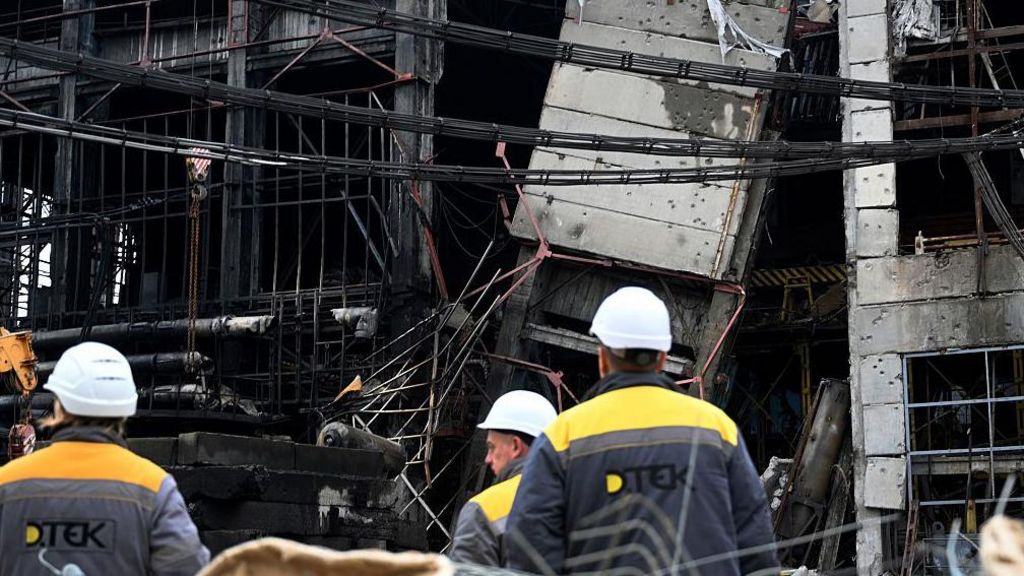
    Ukraine has significantly intensified its drone attacks on Russian oil refineries in recent months, leading to widespread fuel shortages and price hikes across parts of Russia, according to investigations by BBC Verify and BBC Russian. Since January, 21 of Russia’s 38 major refineries—facilities crucial for converting crude oil into petrol and diesel—have been targeted, marking a 48% increase in successful strikes compared to the entirety of 2024. The surge in attacks, particularly in August and September, has disrupted operations at key refineries, including those deep within Russian territory, such as the Gazprom Neftekhim Salavat refinery in Bashkortostan, over 1,100 kilometers from Ukraine’s border. Satellite imagery confirmed significant damage, with smoke billowing from the facility post-attack. The strikes have not only impacted civilian fuel supplies but also targeted refineries near the border that support military logistics. Verified footage shows long queues at petrol stations, with some independent stations in Siberia suspending operations to avoid losses. Ukrainian President Volodymyr Zelensky has emphasized the strategic importance of these strikes, stating that damaging Russia’s oil industry is a key tactic to force Moscow to negotiate. While the Kremlin insists the situation is under control, Deputy Prime Minister Alexander Novak extended a partial ban on petrol exports until the end of 2025, a move critics argue is insufficient to stabilize the domestic market. Analysts suggest that while the strikes alone may not cripple Russia’s war efforts, they are increasing the economic strain of the prolonged conflict.

  • Hurricane season brings financial fears in the Caribbean

    Hurricane season brings financial fears in the Caribbean

    For many residents of Barbuda, the scars of Hurricane Irma’s devastation in September 2017 remain fresh. Eight years later, thunderstorms still evoke harrowing memories of the night when the Category 5 storm obliterated homes and livelihoods. While the emotional toll persists, the financial burden of recovery has become increasingly insurmountable, as home insurance premiums across the Caribbean have surged by up to 40% in the past two years. Experts attribute this spike to a combination of escalating cyclone risks and the region’s small population, which limits the profitability of insurance policies. Dwight Benjamin, a Barbudan whose home survived Irma, has fortified his property with a concrete-roofed extension to serve as a shelter. Yet, like many in the region, he has never purchased insurance, citing its prohibitive cost and a belief in the resilience of his self-built home. Across the Caribbean, the majority of homes remain uninsured, with only 20% coverage in Jamaica and 50% in Barbados. The region’s vulnerability extends beyond hurricanes to earthquakes and volcanic activity, further complicating the insurance landscape. Peter Levy, CEO of Jamaican insurance firm BCIC, describes the Caribbean as a ‘unique market’ where natural disaster risks perpetually drive high premiums. For instance, Antiguan insurer Anjo charges between 1.3% and 1.7% of a home’s value, compared to less than 0.2% in the UK. As the Atlantic hurricane season peaks, residents like Mohammid Walbrook, who lost his home to Irma, brace for the psychological and physical toll of potential storms. International aid, such as the $25 million provided by the United Nations Development Programme (UNDP) in 2017, has been crucial in rebuilding efforts. The UNDP’s cash-for-work program not only restored over 800 buildings but also provided employment to hundreds of suddenly jobless residents. Training in resilient construction techniques has further equipped locals to withstand future disasters. Regional initiatives like the Caribbean Catastrophe Risk Insurance Facility, which disbursed a record $85 million after Hurricane Beryl, offer some relief. However, for deeply indebted nations like Antigua and Barbuda, preparedness remains a year-round challenge. Sherrod James, director of the country’s disaster services, emphasizes proactive measures, from shelter assessments to flood mitigation. Despite the ongoing risks, the resilience of Caribbean communities endures, as they navigate the dual challenges of climate change and economic constraints.

  • Irish citizens on intercepted Gaza flotilla boats

    Irish citizens on intercepted Gaza flotilla boats

    The Israeli navy has intercepted the Global Sumud Flotilla (GSF), a humanitarian mission comprising 44 vessels carrying aid to Gaza, detaining at least six Irish citizens among the participants. The flotilla, which included prominent Irish figures such as Senator Chris Andrews and activists Tara O’Grady and Louise Heaney, was reportedly 70 nautical miles from Gaza’s shoreline when the intervention occurred. Israel’s Foreign Ministry stated that the vessels were “safely stopped” and redirected to an Israeli port, citing their proximity to an “active combat zone.” The GSF condemned the interception as “illegal” and “a brazen act of desperation,” emphasizing the mission’s peaceful intent to address the humanitarian crisis in Gaza. Livestream footage from the Alma vessel, carrying Belfast man Fra Hughes, showed crew members awaiting the inevitable boarding by Israeli forces. The Irish government, including Tánaiste Simon Harris and President Michael D Higgins, expressed deep concern, urging Israel to uphold international law and ensure the safety of all participants. Sinn Féin president Mary Lou McDonald called for immediate action, describing the situation as a “moment of huge danger.” While Irish Prime Minister Micheál Martin acknowledged the mission’s humanitarian purpose, he cautioned against further progress toward Gaza, citing safety risks. The incident has reignited debates over international law and the blockade of Gaza, with Higgins questioning the global commitment to recognizing a Palestinian state amid such actions.

  • French troops board oil tanker linked to Russian ‘shadow fleet’

    French troops board oil tanker linked to Russian ‘shadow fleet’

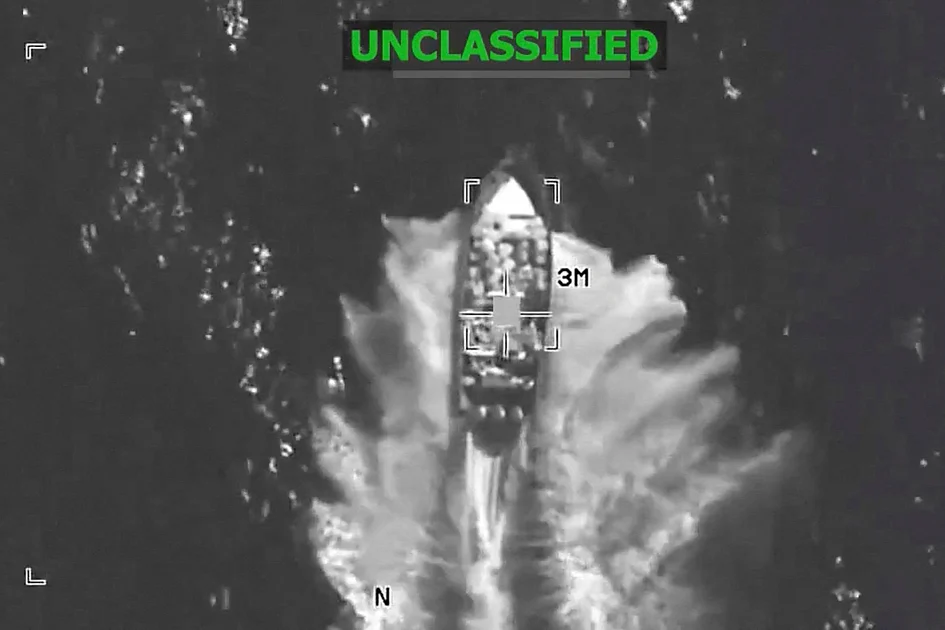
    French military personnel have boarded the oil tanker Boracay, suspected to be part of Russia’s ‘shadow fleet’ used to circumvent international sanctions imposed due to the Ukraine conflict. The vessel, which departed Russia last month, was anchored off the western coast of France after being involved in a series of drone-related disruptions near Denmark last week. President Emmanuel Macron, speaking at an EU leaders’ summit in Copenhagen, accused the crew of committing ‘serious offences’ but provided no further details. Kremlin spokesman Dmitry Peskov denied any knowledge of the vessel. French prosecutors in Brest have launched an investigation into the ship for refusing to stop and failing to justify its flag nationality. The Boracay, also known as Pushpa and Kiwala, is registered under Benin but is subject to UK and EU sanctions. It was previously detained by Estonian authorities for sailing without a valid flag. The incident highlights the ongoing tensions between Russia and Western nations, particularly in the context of energy sanctions and hybrid warfare tactics. EU leaders are under pressure to enhance European defense capabilities following a series of Russian incursions into EU airspace, including drone attacks on Danish airports. Danish Prime Minister Mette Frederiksen emphasized the need for a robust response to these threats, linking the drone disruptions to broader Russian hybrid warfare strategies. The EU is considering a multi-layered ‘drone wall’ to detect and neutralize such threats, particularly in Eastern European countries like Poland and Estonia.

  • Germany arrests suspected Hamas members over alleged attack plot

    Germany arrests suspected Hamas members over alleged attack plot

    German authorities have apprehended three individuals suspected of planning terrorist attacks on Israeli and Jewish institutions within Germany. The suspects, identified as Abed Al G, Wael F M, and Ahmad I, include two German citizens and one Lebanese-born individual. According to Germany’s federal prosecutor’s office, the trio had allegedly been procuring firearms and ammunition since the summer, intending to carry out the attacks. The arrests took place in Berlin on Tuesday, just one day before Yom Kippur, the most sacred day in the Jewish calendar. During the operation, law enforcement seized an AK-47 assault rifle, several pistols, and a substantial quantity of ammunition. The weapons were reportedly intended for use by Hamas, the Palestinian armed group that controls Gaza and is designated as a terrorist organization by the EU. German media revealed that the suspects were arrested during a weapons handover in the capital. Concurrent police searches were conducted in Leipzig and Oberhausen. The suspects face charges of preparing a serious act of violence threatening the German state and membership in a foreign terrorist organization. They are scheduled to appear before a federal judge on Thursday. This development follows the February trial of four Hamas members in Berlin, who were accused of plotting similar attacks on Jewish sites across Europe.

  • Pope Leo condemns climate change critics

    Pope Leo condemns climate change critics

    In a powerful address at the Raising Hope climate conference near Rome, Pope Leo XIV delivered his first major statement on climate change, condemning those who downplay the ‘increasingly evident’ impacts of global warming. Echoing the sentiments of his predecessor, Pope Francis, the new Pontiff criticized individuals who ‘ridicule those who speak of global warming,’ a remark widely interpreted as a veiled critique of U.S. President Donald Trump. The President recently dismissed climate change as a ‘con’ and labeled renewable energy efforts as misguided. Speaking at Castel Gondolfo, Pope Leo emphasized the urgent need for global citizens to take decisive action, warning against indifference and resignation. His speech marked the 10th anniversary of the publication of *Laudato Si’*, a landmark document by Pope Francis that positioned climate change as a central concern for the Catholic Church. The Pope expressed concern that climate change has become a divisive issue, with some mocking its undeniable signs and even blaming the poor for its consequences. He urged citizens to pressure politicians into prioritizing environmental action, stating that only through active engagement can the damage to the planet be mitigated. The conference, held ahead of COP30 in Belém, Brazil, also featured former California Governor Arnold Schwarzenegger, who praised the Pope as a real-world ‘action hero’ for his commitment to installing solar panels on Vatican buildings. Brazilian Environment Minister Marina Silva extended an invitation to Pope Leo to attend COP30, expressing confidence that his presence would ensure the summit’s success. The Pope’s remarks underscored the moral imperative of addressing climate change, reminding the audience that future generations will judge humanity’s stewardship of the Earth.

  • British man, 23, faces drug charges in Thailand

    British man, 23, faces drug charges in Thailand

    Thai authorities have apprehended a 23-year-old British man, George Wilson from Buckinghamshire, on charges of drug smuggling in Bangkok. The arrest took place at a hotel in the Sukhumvit area, where police discovered 9.1 kilograms (20 pounds) of crystal methamphetamine concealed in foil bags labeled as tea. The Metropolitan Police Bureau has confirmed that charges are being filed against Wilson for the possession and intended commercial sale of Category I controlled narcotics, specifically methamphetamine. The investigation was initiated following a tip-off about a planned narcotics handover involving foreign nationals at the hotel. Wilson has denied any knowledge of the suitcase’s contents in video footage captured during the arrest. The UK Foreign Office has acknowledged the incident, stating that it is in contact with Thai authorities. Thailand enforces stringent drug laws, with even minor possession offenses potentially resulting in severe penalties, including hefty fines and imprisonment. The case has drawn significant attention, with Thai police sharing images of the arrest on social media platforms.

  • UN approves larger force to combat Haiti gang violence

    UN approves larger force to combat Haiti gang violence

    The United Nations Security Council has greenlit a significant expansion of international security forces in Haiti to address the escalating gang violence that has ravaged the Caribbean nation. The newly established ‘Gang Suppression Force’ (GSF) will comprise up to 5,550 police and military personnel, equipped with the authority to detain suspected gang members. This move aims to bolster the Kenyan-led Multinational Security Support mission (MSS), which, despite its initial mandate for 2,500 members, has struggled with insufficient numbers and resources since its deployment in 2023. The MSS has been largely ineffective in curbing the violence, which claimed over 5,500 lives in 2024 alone. Armed gangs now control approximately 85% of Haiti’s capital, Port-au-Prince, exacerbating the country’s ongoing economic and political crises following the assassination of its president in 2021. The UN Security Council adopted a US-proposed resolution on Tuesday to establish the GSF, which will collaborate with Haitian authorities to enhance security and facilitate humanitarian access. The current MSS force, numbering fewer than 1,000 officers, has been overwhelmed by the well-armed gangs. US Ambassador to the UN Mike Waltz emphasized that the expanded mission, five times the size of its predecessor, is crucial to restoring stability. The resolution also includes the creation of a UN support office in Haiti to provide logistical and operational assistance. Haiti’s UN representative, Ericq Pierre, hailed the decision as a pivotal moment in the nation’s struggle against one of its most severe challenges. The GSF’s deployment timeline and contributing countries remain unclear, but the move comes as nearly 1.3 million Haitians have been internally displaced due to rampant violence. Gangs continue to expand their territories, committing human rights violations such as child exploitation, murder, and trafficking.

  • Sudanese city under siege: ‘My son’s whole body is full of shrapnel’

    Sudanese city under siege: ‘My son’s whole body is full of shrapnel’

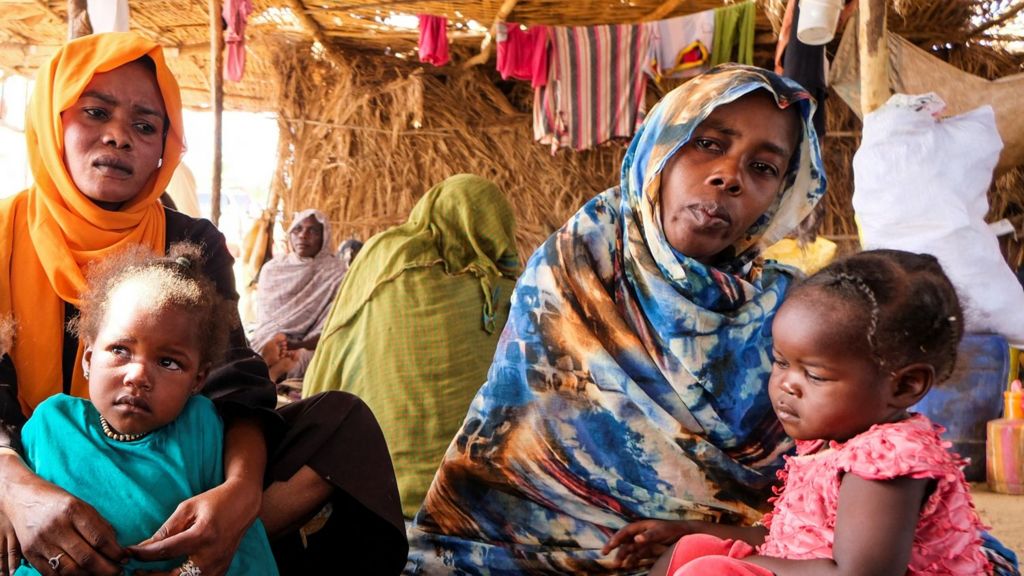
    The city of el-Fasher in Sudan’s Darfur region has become the epicenter of a brutal conflict as the paramilitary Rapid Support Forces (RSF) tighten their grip on the area. For 17 months, the RSF has besieged the city, which lies in their ethnic heartland, and recent weeks have seen significant advances toward key military sites. The conflict, which erupted in 2023 following a power struggle between the RSF and the Sudanese Armed Forces (SAF), has left tens of thousands of civilians trapped in a living nightmare.

  • State of calamity in Philippines province as earthquake kills 69

    State of calamity in Philippines province as earthquake kills 69

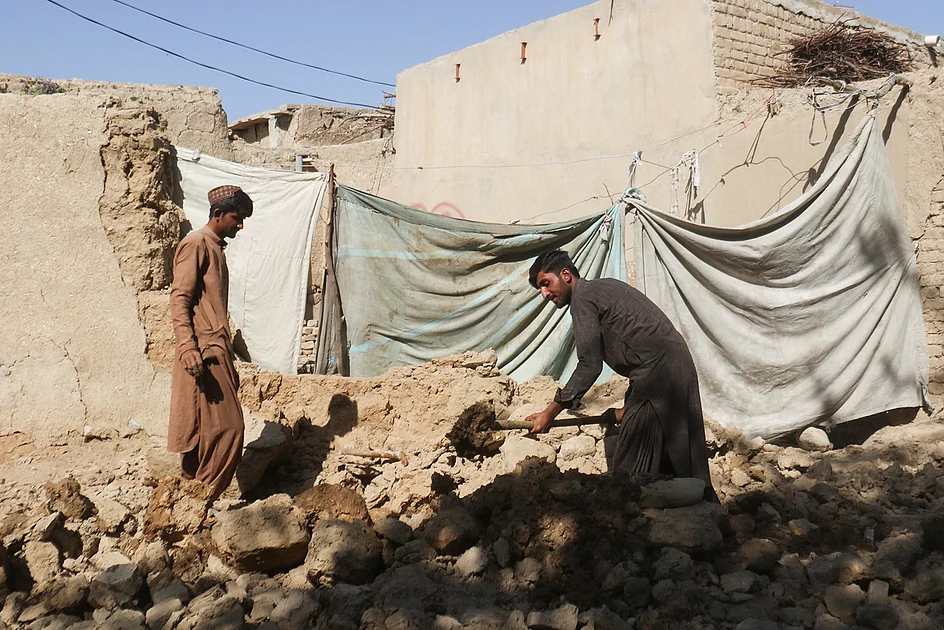
    A catastrophic 6.9 magnitude earthquake rocked the central Philippines on Tuesday night, claiming at least 69 lives and injuring dozens more. The province of Cebu bore the brunt of the destruction, prompting local authorities to declare a state of calamity early Wednesday. Thousands of residents spent the night outdoors, enduring repeated aftershocks and widespread power and water outages. One Cebu resident described the harrowing scene, with the cries of traumatized children echoing through the streets. This disaster follows closely on the heels of back-to-back typhoons that struck the region just over a week ago, leaving more than a dozen dead. Bogo City, located near the earthquake’s epicenter, suffered the most casualties. Images from the area show cadaver bags lining the streets and makeshift tent hospitals treating hundreds of injured. Local officials have reported extensive damage, including buckled roads, collapsed bridges, and downed power lines, severely hampering rescue efforts. Among the victims were seven individuals from a village built for survivors of Typhoon Haiyan, which devastated the region 12 years ago. In San Remigio, a basketball game was interrupted by the quake, sending nearly 20 people to the hospital, with one fatality. Emergency services are prioritizing search and rescue operations, restoring electricity, and delivering aid. A 4.7 magnitude aftershock struck Bogo on Wednesday evening, causing tremors in Cebu City and neighboring Leyte islands but no additional casualties. The Archbishop of Cebu has advised devotees to avoid churches until structural assessments are completed, highlighting the region’s rich historical heritage. The Philippines, situated on the geologically volatile ‘Ring of Fire,’ is highly susceptible to natural disasters. The national disaster agency in Manila is tasked with releasing official casualty figures, though the process is often slow due to rigorous verification. The death toll is expected to rise as rescue operations continue.