分类: world

  • Louvre heist suspects ‘partially admit’ involvement; stolen jewels still missing

    Louvre heist suspects ‘partially admit’ involvement; stolen jewels still missing

    Two individuals arrested in connection with the audacious theft of jewels from the Louvre Museum have partially admitted their involvement, according to Paris prosecutor Laure Beccuau. The stolen treasures, valued at an estimated $102 million, remain unaccounted for. The heist, which occurred on October 19, saw four hooded thieves break into the museum’s Apollo Gallery during opening hours, exploiting significant security lapses. The thieves used a stolen elevator truck to access an exterior balcony, smashed a window, and made their escape on motorbikes within six to seven minutes. The museum’s surveillance system failed to detect the intrusion promptly, raising concerns about its security measures. The two suspects, aged 34 and 39, were identified through DNA evidence and are currently in custody. One was apprehended while attempting to board a flight to Algeria, and the other was already under judicial supervision for a prior theft case. Both reside in Aubervilliers, a low-income suburb of Paris. Prosecutor Beccuau emphasized that there is no evidence suggesting the heist was an inside job but indicated the possibility of a larger group, including a potential commissioner of the theft. The Louvre has since transferred some of its most valuable jewels to the Bank of France under police escort. The incident has sparked global attention and introspection in France, with many viewing it as a national embarrassment.

  • ‘They slit my son’s throat’ says mother of teen killed in Rio police raid

    ‘They slit my son’s throat’ says mother of teen killed in Rio police raid

    A devastating police raid in Rio de Janeiro has left at least 119 people dead, exposing the violent underbelly of a city renowned for its picturesque beaches and vibrant culture. The operation, which targeted drug gangs entrenched in the city’s impoverished favelas, has drawn widespread condemnation from families of the victims and international observers. Among the dead were 115 suspected criminals and four police officers, according to provisional figures released by state authorities. The raid, described by officials as a success against organized crime, has been criticized for its excessive use of force, with families alleging that many victims were executed in cold blood. President Luiz Inacio Lula da Silva has called for a coordinated approach to combat drug trafficking without endangering civilians or police officers. The incident has cast a shadow over Brazil’s security challenges, just days before the country is set to host the COP30 UN climate talks in the Amazon. The United Nations has expressed deep concern over the high number of casualties, urging swift investigations into the matter. Meanwhile, residents of the affected communities continue to mourn their loved ones, with harrowing accounts of brutality emerging from the scene.

  • Hurricane leaves trail of destruction across Caribbean

    Hurricane leaves trail of destruction across Caribbean

    The Caribbean region is reeling from the catastrophic impact of Hurricane Melissa, a record-setting storm that has claimed at least 32 lives and caused widespread devastation across Jamaica, Haiti, and Cuba. Despite being downgraded from a Category 5 to a Category 1 hurricane, Melissa’s ferocity has left communities in ruins, with sustained winds reaching 298 km/h (185 mph) at its peak—surpassing even the destructive force of Hurricane Katrina in 2005. The storm’s path of destruction has been particularly severe in Jamaica’s southwestern parish of St Elizabeth, where knee-deep mud and washed-out bridges have isolated towns like Black River. In Cuba, Santiago de Cuba, the nation’s second-largest city, suffered extensive damage, with residents using machetes to clear debris-clogged streets. President Miguel Díaz-Canel described the hurricane’s impact as “considerable,” though no official casualty figures have been released. The Bahamas, while spared the worst of the storm, saw nearly 1,500 people evacuated in one of the largest operations in the country’s history. Despite flooding in some areas, major tourist destinations like Nassau and Freeport remain largely unaffected. Haiti, already grappling with gang violence and a humanitarian crisis, reported at least 23 deaths, including 10 children, primarily due to flooding from relentless rains. Communication and power networks in Jamaica’s hardest-hit regions remain severed, leaving families unable to contact loved ones. Amid the devastation, a glimmer of hope emerged as a baby was safely delivered under emergency conditions, earning the name “Baby Melissa.” The US National Hurricane Center (NHC) warns that hazardous conditions will persist in Cuba, Jamaica, and Hispaniola for several days, even as floodwaters in the Bahamas begin to recede.

  • China announces plans to have Pakistan astronaut on short-term missions

    China announces plans to have Pakistan astronaut on short-term missions

    In a significant development in space cooperation, China has announced plans to include a Pakistani astronaut in its upcoming short-term missions aboard the Chinese space station. According to a report by the state-run Xinhua News Agency on Thursday, October 30, 2025, the astronaut from Pakistan will undergo rigorous training alongside Chinese astronauts, marking a milestone in the bilateral space partnership between the two nations. This initiative underscores China’s commitment to fostering international collaboration in space exploration. The inclusion of a Pakistani astronaut not only strengthens the strategic ties between China and Pakistan but also highlights China’s growing influence in the global space arena. The training program is expected to enhance Pakistan’s space capabilities while contributing to the broader objectives of China’s space station missions. This announcement comes amid China’s ongoing efforts to expand its space program and engage with other countries in joint space endeavors.

  • Tracking an executioner in Sudan across social media

    Tracking an executioner in Sudan across social media

    Disturbing evidence has emerged on social media, revealing the execution of unarmed civilians by the Rapid Support Forces (RSF) in the Sudanese city of el-Fasher. The footage, meticulously analyzed by BBC Verify, captures the harrowing moments when RSF fighters carried out these brutal acts following their capture of the city. The RSF, a paramilitary group with a controversial history, has been accused of numerous human rights violations in the past. This latest incident underscores the escalating violence and lawlessness in Sudan, where armed groups operate with impunity. The videos have sparked international outrage, with calls for accountability and justice for the victims. The use of social media to document such atrocities highlights its dual role as both a tool for exposure and a platform for advocacy in conflict zones.

  • Aid workers fear for those missing from a city in Sudan’s Darfur region seized by paramilitary force

    Aid workers fear for those missing from a city in Sudan’s Darfur region seized by paramilitary force

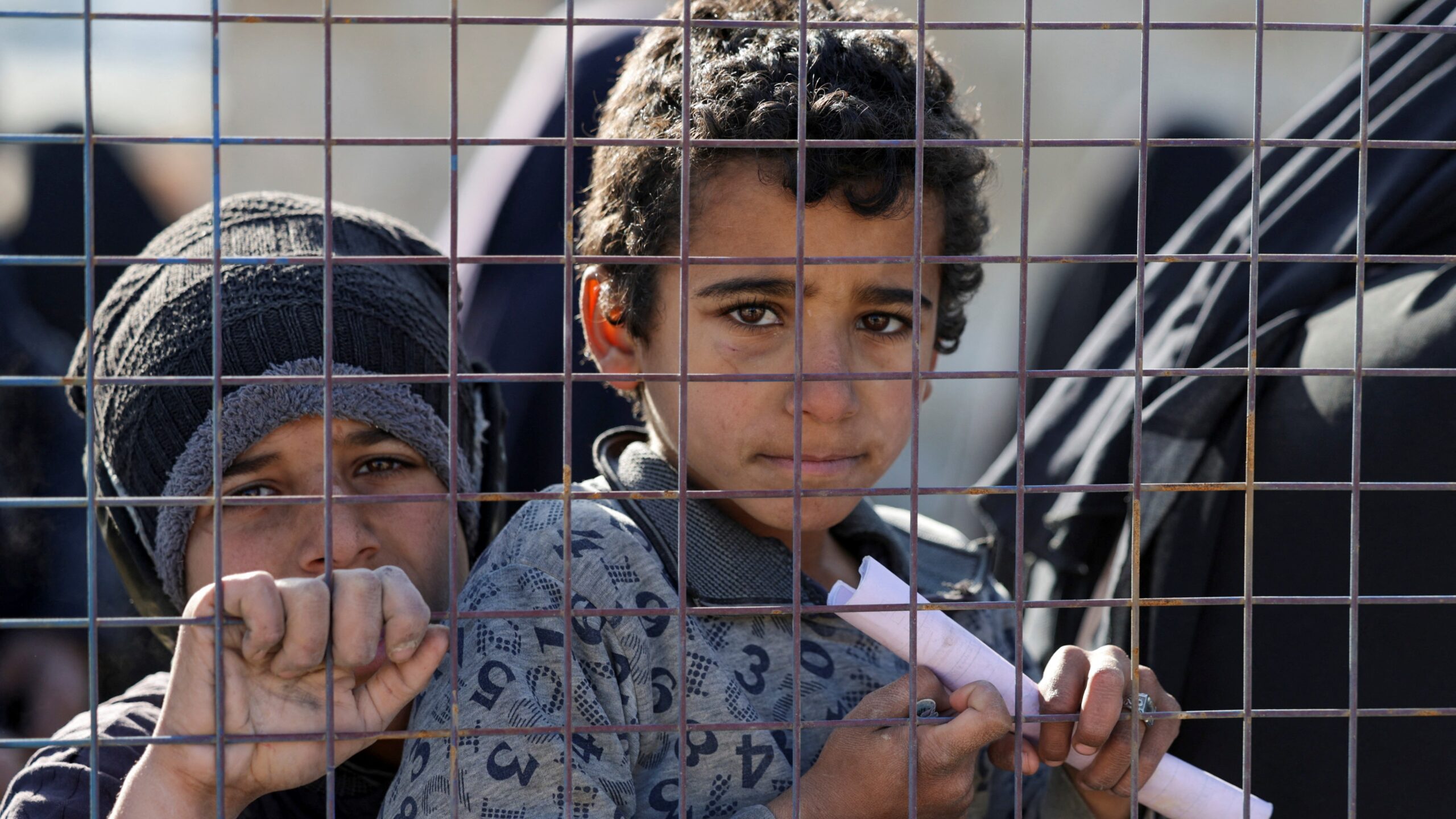
    In the wake of a brutal paramilitary assault on el-Fasher, Sudan’s Darfur region, aid workers have expressed grave concerns over the fate of thousands who fled the violence. The Rapid Support Forces (RSF), a group embroiled in conflict with Sudan’s military since 2023, reportedly killed hundreds during the attack and subsequent escape attempts. Witnesses described RSF fighters conducting house-to-house raids, targeting civilians, including women and children. The World Health Organization (WHO) has confirmed the deaths of 460 people at a hospital in el-Fasher, though the exact toll remains unverified due to disrupted communications. Satellite imagery has revealed bodies strewn across the city, corroborating reports of mass executions. Only a small number of displaced individuals have reached Tawila, a town 60 kilometers west of el-Fasher, raising fears for the safety of those still trapped. The International Rescue Committee (IRC) warned that hundreds of thousands remain in grave danger, with survivors recounting arbitrary killings during their escape. RSF commander Gen. Mohammed Hamdan Dagalo acknowledged “abuses” by his forces and announced an investigation, but the situation remains dire. The ongoing conflict, which has claimed over 40,000 lives and displaced 14 million, threatens to further destabilize Sudan, Africa’s third-largest nation, raising fears of a potential split akin to South Sudan’s independence in 2011.

  • Reports of mass killings in Sudan have echoes of its dark past

    Reports of mass killings in Sudan have echoes of its dark past

    The Sudanese city of el-Fasher has become the epicenter of a brutal conflict, with emerging evidence of systematic killings prompting human rights activists to draw parallels to the Darfur genocide of the early 2000s. The Rapid Support Forces (RSF), a paramilitary group with roots in the Janjaweed militias, has been accused of ethnic violence and atrocities since its power struggle with the Sudanese army erupted in April 2023. The fall of el-Fasher after an 18-month siege has brought to light the layers of Sudan’s ongoing civil war, marked by echoes of its dark past and present-day brutality. Survivors recount tales of terror, including summary executions, looting, and indiscriminate shootings, while satellite images suggest massacre sites. The RSF leadership, including Gen Mohamed Hamdan Dagalo, has denied accusations of ethnic cleansing but admitted to ‘violations’ in el-Fasher. Despite promises of investigations, observers remain skeptical, citing unfulfilled pledges from past atrocities. The conflict has a clear ethnic dimension, with the RSF targeting the Zaghawa tribe and other non-Arab communities. Aid groups warn that without international intervention, the pattern of violence could escalate, drawing comparisons to historical genocides like Srebrenica. The international community faces mounting pressure to act, with activists urging accountability for those fueling the conflict, including the United Arab Emirates, accused of supporting the RSF.

  • Russia blasts Ukraine’s power grid again, causing outages across the country and killing 2

    Russia blasts Ukraine’s power grid again, causing outages across the country and killing 2

    In a relentless escalation of its ongoing campaign, Russia launched a massive drone and missile assault on Ukraine’s energy infrastructure on Thursday, causing widespread power outages and restrictions across all regions of the country. Ukrainian Prime Minister Yuliia Svyrydenko condemned the attacks as ‘systematic energy terror,’ emphasizing Moscow’s intent to disrupt civilian life and morale as winter approaches. The strikes, part of Russia’s near-daily targeting of Ukraine’s power grid, resulted in at least two fatalities and left 17 injured, including children aged 2 to 16, according to Ukrainian authorities. President Volodymyr Zelenskyy reported that over 650 drones and 50 missiles of various types were deployed in the attack. Ukraine’s centralized public infrastructure, essential for water, sewage, and heating systems, has been severely compromised by the blackouts. These relentless assaults aim not only to cripple Ukraine’s war-related industries but also to undermine the resilience of its population nearly four years into Russia’s full-scale invasion. Svyrydenko called for increased international support, including enhanced air defense systems, stricter sanctions, and intensified diplomatic pressure on Russia to halt its aggression. Meanwhile, the southern Zaporizhzhia region witnessed 17 injuries, including a 2-year-old girl, and the death of a man rescued from rubble. In the western Lviv region, near Poland, two energy facilities were damaged. The Polish military responded by scrambling NATO aircraft and temporarily closing regional airports as a precautionary measure.

  • Gaza ceasefire challenged by strikes

    Gaza ceasefire challenged by strikes

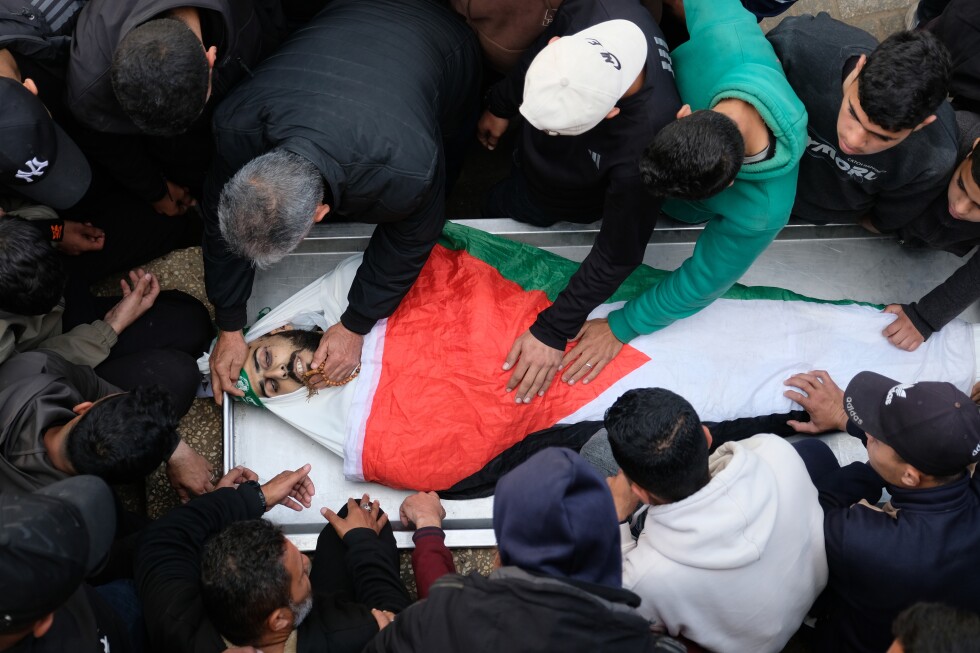
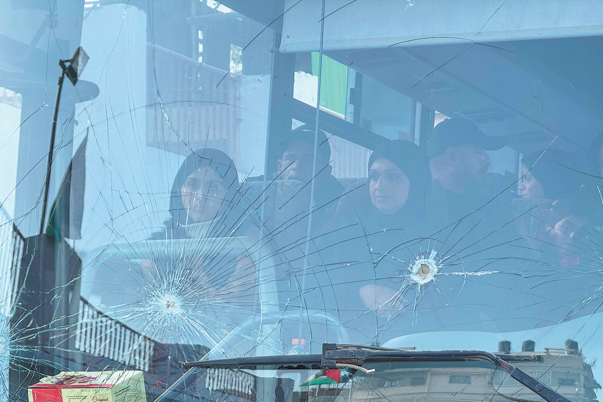
    The fragile ceasefire in Gaza faced its most severe test yet as overnight Israeli strikes resulted in the deaths of at least 100 people, including numerous children, according to local hospital officials. The violence, which erupted on Wednesday, marks a significant escalation in the conflict that has plagued the region for years. Mahmud Bassal, a spokesman for a rescue agency operating under Hamas authority, reported that 101 fatalities, including 35 children, were brought to hospitals within a span of less than 12 hours. The strikes targeted tents for displaced families, residential areas, and the vicinity of a hospital, described by Bassal as a ‘clear and flagrant violation of the ceasefire agreement.’ The Israeli military, however, defended its actions, stating that the strikes were aimed at ‘terror targets and terrorists’ and that the ceasefire remains intact. The military also confirmed the death of one of its soldiers during the latest attack. Both Israel and Hamas have accused each other of violating the ceasefire, with Hamas calling on mediators to pressure Israel to halt the strikes. The United States was notified prior to the Israeli operation, and President Donald Trump expressed confidence that the ceasefire, which began on October 10, would endure despite the recent violence. Meanwhile, hospitals in Gaza were overwhelmed with casualties, and survivors questioned the effectiveness of the ceasefire. International reactions included Turkey’s condemnation of the strikes as a violation of the truce and a call for global powers to push Israel to adhere to the agreement. The ceasefire, which halted two years of fighting following the deadly Hamas-led attacks on Israel in October 2023, remains a critical yet precarious step toward peace in the region.

  • Sudan RSF leader promises probe as anger mounts over el-Fasher atrocities

    Sudan RSF leader promises probe as anger mounts over el-Fasher atrocities

    The commander of Sudan’s Rapid Support Forces (RSF), General Mohamed Hamdan Dagalo, commonly known as Hemedti, has initiated an investigation into alleged violations committed by his troops during the capture of el-Fasher. This announcement follows widespread reports of mass civilian killings in the Darfur region after the RSF seized control of the city on Sunday. The United Nations Security Council is set to convene a meeting to address the escalating crisis in Sudan, now in its third year of civil war between the army and the RSF. Hemedti expressed regret for the devastation inflicted on el-Fasher’s residents and acknowledged potential misconduct by his forces, promising a thorough inquiry by a newly arrived committee. The UN World Health Organization (WHO) has expressed profound shock over reports that nearly 500 civilians, including patients and their companions, were executed at the city’s last functioning hospital. The RSF denies accusations that the killings were ethnically motivated, despite claims of a pattern targeting non-Arab populations. Activists are urging international pressure on the United Arab Emirates (UAE), accused of providing military support to the RSF, a charge the UAE denies. El-Fasher, the army’s final stronghold in Darfur, fell to the RSF after an 18-month siege characterized by starvation and relentless bombardment. This capture has effectively divided Sudan, with the RSF controlling most of Darfur and parts of Kordofan, while the army retains Khartoum and the central and eastern regions. The conflict stems from a fallout between the RSF and the army, former allies who seized power in a 2021 coup, over a plan to transition to civilian rule.