分类: world

  • France makes first interception targeting small boat crossings to UK

    France makes first interception targeting small boat crossings to UK

    French authorities have executed their inaugural maritime interception under a revamped strategy targeting human smuggling operations across the English Channel. On Saturday, law enforcement officers boarded an inflatable vessel termed a ‘taxi-boat’ along the Aa canal in Gravelines, situated along the Channel coast near Calais.

    This tactical shift emerged from a July 2025 UK-France summit between President Emmanuel Macron and Prime Minister Keir Starmer, responding to sustained British pressure for enhanced border security measures. Previously, French interventions were limited to preventing boat launches from beaches due to safety concerns regarding open-water operations.

    Criminal networks had adapted to previous enforcement methods by deploying these taxi-boats from distant locations to coastal pickup points where migrants enter the water to board. French documentation revealed this method achieved an alarming 81% success rate in 2025, contributing to 41,472 migrant arrivals in Britain last year—a increase from 36,566 in 2024 though below 2022’s peak of 45,774.

    The breakthrough in operational protocol addresses earlier safety and legal concerns that delayed implementation. Under the current engagement framework, gendarmerie exclusively intercept vessels before migrant boarding occurs, avoiding potentially dangerous situations with fully loaded craft. Saturday’s operation followed this protocol after police identified the inflatable craft moving toward the sea as likely preparing for migrant pickup.

    Visual evidence obtained by media outlets shows French police alongside the intercepted inflatable with several apparent smugglers aboard before the craft was towed to dock. French authorities have not yet provided official commentary on the operation.

  • Russia batters Ukraine’s power grid again as officials try to keep up momentum of US-led peace talks

    Russia batters Ukraine’s power grid again as officials try to keep up momentum of US-led peace talks

    Ukrainian authorities reported Tuesday that Russia launched one of its most extensive aerial bombardments to date, targeting critical energy infrastructure across the country with over 300 drones and missiles overnight. The assault represents Moscow’s continued escalation of its campaign to disrupt essential services during Ukraine’s harshest winter period.

    President Volodymyr Zelenskyy confirmed the massive attack, which specifically targeted Ukraine’s power grid system. Kyiv Mayor Vitali Klitschko detailed the immediate consequences, noting that heating systems failed in more than 5,600 apartment buildings throughout the capital. This setback comes just weeks after 80% of these buildings had their heating restored following a previous major Russian barrage on January 9th that left thousands without power for extended periods.

    The timing appears strategically significant as Ukraine experiences exceptionally frigid conditions, with temperatures in Kyiv plummeting to -20°C (-4°F). Military analysts suggest Russia’s intensified attacks on energy infrastructure represent a calculated effort to demoralize civilian populations and strain Ukraine’s defensive capabilities nearly four years after the full-scale invasion began in February 2022.

    Concurrently, Ukrainian diplomatic efforts continue with a negotiating team arriving in the United States on Saturday. According to Zelenskyy, their primary mission involves conveying how Russia’s relentless aerial campaign undermines diplomatic progress. The delegation seeks to finalize documents related to postwar security guarantees and economic recovery, with potential signing opportunities at the World Economic Forum in Davos, Switzerland this week.

    Ukraine’s air force command reported successful defensive operations, intercepting 27 missiles and 315 drones through shooting or jamming techniques. However, five missiles and 24 drones penetrated defenses, striking 11 locations nationwide. The constant attacks have severely tested Ukraine’s air defense capabilities, with Zelenskyy acknowledging recent ammunition shortages before new shipments arrived.

    In response to the escalating threat, Ukraine is implementing revised defensive strategies under newly appointed Deputy Air Force Commander Pavlo Yelizarov. While specifics remain confidential, Zelenskyy indicated that ‘this system will be transformed’ to better counter Russia’s evolving aerial tactics. Ukraine continues to depend heavily on sophisticated Western-made air defense systems, particularly those supplied by the United States, to counter Russian missile and drone operations.

  • Almost half of Kyiv without heat, power, after Russian attack: govt

    Almost half of Kyiv without heat, power, after Russian attack: govt

    A massive overnight Russian aerial assault has crippled Ukraine’s capital, leaving nearly half of Kyiv’s residential buildings without heating and running water amidst subzero temperatures of -14°C. This latest bombardment represents a severe escalation in Russia’s systematic campaign against Ukrainian energy infrastructure.

    Ukrainian authorities reported the attack involved an extensive barrage of 339 long-range combat drones and 34 missiles targeting energy facilities across multiple regions. Kyiv’s air defense systems engaged throughout the night, with explosions heard across the city as they responded to the incoming threats.

    The aftermath has been devastating. Mayor Vitali Klitschko confirmed approximately 5,635 apartment blocks—roughly half the capital’s residential buildings—were left without heating, primarily affecting structures still recovering from the January 9 attack that marked the most significant strike on Kyiv’s energy grid since the invasion began. Much of the city also lost running water access.

    Tragically, the assault claimed at least one life—a 50-year-old man killed near Kyiv. Additional damage was reported in multiple regions: Rivne faced critical infrastructure damage affecting 10,000 households, Odesa reported drone impacts on residential buildings and energy facilities, while Poltava experienced fires at industrial sites following attacks.

    Ukrainian leadership responded with vehement condemnation. Foreign Minister Andriy Sybiga characterized Putin’s actions as ‘genocidal war against women, children and elderly’ and urgently appealed for enhanced air defense support from allies. President Volodymyr Zelensky noted the timely arrival of ammunition shipments just one day prior to the attack, which he said ‘helped significantly’ in defense efforts.

    The International Criminal Court has previously issued arrest warrants for two top Russian military officials regarding strikes on Ukraine’s energy grid, classifying these attacks as war crimes due to their deliberate targeting of civilian welfare. Meanwhile, the Kremlin maintains it only targets military facilities and blames Ukraine for refusing its peace demands.

    Kyiv has implemented emergency measures including school closures until February and reduced street lighting to conserve dwindling energy resources as the city battles both winter temperatures and continued aggression.

  • Islamic State group claims attack on a Kabul restaurant that killed 7, including a Chinese national

    Islamic State group claims attack on a Kabul restaurant that killed 7, including a Chinese national

    KABUL, Afghanistan — In a development escalating security concerns across Central Asia, the Islamic State (IS) militant organization has publicly claimed responsibility for a devastating suicide bombing at a popular Chinese restaurant in Afghanistan’s capital. The attack, which unfolded late Monday in Kabul’s Shahr-e-Naw district, resulted in significant casualties and has drawn international condemnation.

    According to a statement released through the group’s Aamaq news agency, an IS operative infiltrated the restaurant—a known gathering spot for Chinese nationals—and detonated an explosive vest during a crowded gathering. The militant group asserted that the assault resulted in approximately 25 casualties, including Taliban security personnel, though these figures remain unverified by independent sources.

    Afghan authorities, while continuing their investigation into the blast’s precise origins, confirmed a tragic death toll of at least seven individuals. Interior Ministry spokesperson Mufti Abdul Mateen Qani acknowledged that the incident remains under active investigation, withholding official confirmation of the cause.

    The IS claim, consistent with the group’s typical rhetoric, included explicit threats against Chinese citizens within Afghanistan, directly linking the violence to Beijing’s policies toward Uyghur Muslims. This connection underscores the complex geopolitical tensions permeating the region.

    China’s Foreign Ministry confirmed one Chinese national was killed and five others wounded in the explosion. Spokesperson Guo Jiakun stated Beijing ‘strongly condemns and resolutely opposes terrorism in all forms,’ while urging Afghan authorities to enhance protective measures for Chinese citizens and infrastructure. In response to the attack, China has issued travel advisories warning its citizens against visiting Afghanistan and recommending those already in the country evacuate high-risk areas.

    The bombing highlights the precarious security situation in Taliban-controlled Afghanistan, where IS has maintained an active presence since the government transition in 2021. Despite the Taliban’s assurances that Afghan territory would not be used by militant groups, this incident demonstrates ongoing challenges to regional stability.

    International reactions included strong condemnation from Pakistani President Asif Ali Zardari, who criticized the Taliban government’s adherence to security agreements. The attack occurred concurrently with reports of border clashes between Afghan gunmen and Tajik security forces, further illustrating the region’s volatile security landscape.

  • Deadly wreck is the first blight on Spain’s leading high-speed rail service

    Deadly wreck is the first blight on Spain’s leading high-speed rail service

    BARCELONA, Spain — A devastating train collision in southern Spain has abruptly ended the nation’s celebrated era of rail safety, casting a shadow over what had been considered a crown jewel of Spanish infrastructure. The Sunday night tragedy claimed at least 40 lives and left dozens injured, marking the first fatal accident in the history of Spain’s high-speed rail network.

    This catastrophe strikes at the heart of Spain’s modern identity. For 34 years, since the inauguration of its first Alta Velocidad Española (AVE) train—meaning ‘bird’ in Spanish—the nation has poured substantial tax revenues and European Union development funds into constructing Europe’s most extensive high-speed network. This ambitious project enabled Spain to not only catch up with but surpass pioneering nations like Japan and France in high-speed rail technology.

    The development of AVE coincided with Spain’s post-Franco renaissance, symbolizing the country’s emergence from economic stagnation and cultural isolation. The system’s expansion has been remarkable: Spain now operates 3,900 kilometers (2,400 miles) of dedicated high-speed tracks, second only to China globally according to the International Union of Railways.

    This infrastructure transformation revolutionized domestic travel. The Madrid-Barcelona route exemplifies this progress, with journey times slashed from approximately seven hours to just 2.5 hours since the 2008 high-speed line opening. Plans announced in November aim to further reduce this to under two hours by increasing speeds to 350 kph (218 mph), matching China’s fastest trains.

    Beyond convenience, the network has served as a national unifier, connecting coastal population centers separated by sparsely populated regions. However, critics note that the relentless expansion to provincial capitals may have come at the expense of maintaining local commuter lines, which suffer significantly more delays.

    The investigation into Sunday’s collision between an Iryo train and a Renfe-operated train remains ongoing. Officials have confirmed both trains were traveling below speed limits, with initial reports ruling out human error. The accident marks a sobering moment for Spain’s recently liberalized rail market, which only opened to private operators in 2022. Iryo (Italian-owned) and Ouigo (French-owned) now compete with state-run Renfe, representing the three current high-speed operators in Spain.

  • ICC investigating Sudan’s RSF for ‘mass criminality’ during el-Fasher takeover

    ICC investigating Sudan’s RSF for ‘mass criminality’ during el-Fasher takeover

    The International Criminal Court has presented damning evidence alleging the Rapid Support Forces (RSF) paramilitary group executed “an organized, calculated campaign” of atrocities during their capture of el-Fasher in October 2025. Deputy Prosecutor Nazhat Shameem Khan delivered this assessment to the United Nations Security Council via video link on Monday, revealing the ICC’s intensified efforts to establish individual criminal responsibility for crimes committed in both el-Fasher (North Darfur) and el-Geneina (West Darfur).

    Khan’s presentation detailed a pattern of systematic violence targeting non-Arab communities, including mass executions, sexual violence, arbitrary detentions, and the creation of mass graves. The prosecutor’s office has collected substantial evidence including video footage, audio recordings, and satellite data showing RSF members celebrating direct executions and desecrating corpses.

    The investigation reveals that the approximately 18-month siege of el-Fasher culminated in widespread criminality during late October 2025. Satellite imagery analysis indicates incidents of mass killing and subsequent attempts to conceal these crimes through mass graves. Khan emphasized that these atrocities appear to have been employed as tactical tools to assert control over the population.

    Significant progress has been made in investigating the 2023 el-Geneina massacres that resulted in thousands of civilian deaths. The ICC is prioritizing gender-based crimes in its investigative strategy, noting the undeniable use of sexual violence as a weapon of war. However, social stigma and fear of reprisals create substantial barriers to documentation efforts.

    The Office of the Prosecutor is currently preparing arrest warrant applications related to the el-Fasher situation while also documenting reports of potential Rome Statute crimes allegedly committed by Sudanese armed forces in Darfur. Khan emphasized that all conflict parties must uphold their obligations under international law and avoid targeting civilian populations and facilities.

    The ongoing Sudan conflict, active since April 2023, has created what the UN describes as the world’s worst humanitarian crisis. The fighting has resulted in thousands of deaths, displaced nearly 13 million people, and pushed over 40% of the population into acute food insecurity. UN Sudan chief Denise Brown, who recently visited el-Fasher, described the situation as a “crime scene” and called for international intervention to prevent further atrocities.

  • Canadian woman found dead on Australian beach in suspected dingo attack

    Canadian woman found dead on Australian beach in suspected dingo attack

    Australian authorities are conducting a thorough investigation to determine whether protected dingoes were responsible for the death of a 19-year-old Canadian woman discovered on a K’gari beach. The incident occurred Monday morning on the world’s largest sand island, formerly known as Fraser Island, located off Queensland’s coast.

    The victim, who had been employed at local tourist accommodations for approximately six weeks, was found approximately 90 minutes after embarking on a morning swim. Police Inspector Paul Algie confirmed that responders encountered a distressing scene near the popular shipwreck tourist attraction at 6:35 a.m., where two men in an SUV had reported approximately ten dingoes surrounding the body.

    While forensic evidence indicates the native canines had “interfered” with the remains, authorities refuse to speculate on the actual cause of death. “We simply can’t confirm whether this young lady drowned or died as a result of being attacked by dingoes,” Algie stated during a press briefing, acknowledging visible markings consistent with dingo contact.

    The tragedy evokes memories of a similar incident three years prior when a pack of dingoes nearly killed a 23-year-old jogger, requiring tourist intervention to drive the animals into the surf. K’gari’s estimated 200 dingo population represents a protected native species within the World Heritage-listed national park, though conservationists have noted increased aggression and reduced fear of humans among younger animals since post-pandemic tourism resurgence.

  • Blast at Chinese restaurant in Kabul kills 7

    Blast at Chinese restaurant in Kabul kills 7

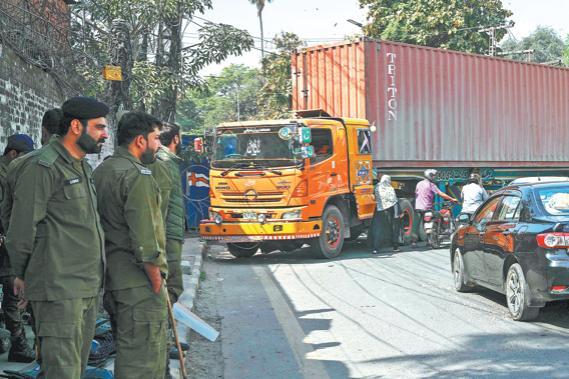
    A devastating suicide explosion ripped through a Chinese restaurant in central Kabul on Monday, claiming at least seven lives and injuring over a dozen individuals, according to emergency services. The attack, which occurred in the Shahr-e-Naw district’s bustling flower market area, has been claimed by the Islamic State (IS) armed group as specifically targeting Chinese nationals.

    Kabul police spokesman Khalid Zadran confirmed the blast originated at the Chinese Noodle restaurant, an establishment primarily serving Chinese Muslims. The explosion occurred near the kitchen area around 3:30 pm local time (1100 GMT), creating chaos in the crowded commercial zone. Initial confusion saw authorities describing the venue as a hotel before clarifying the precise location.

    The Italian humanitarian organization EMERGENCY reported its nearby medical facility received seven fatalities upon arrival, with thirteen additional casualties requiring surgical treatment. Among the wounded were four women and one child, highlighting the attack’s indiscriminate nature.

    IS justification for the assault, as monitored by the SITE Intelligence Group, cited China’s treatment of Uyghur Muslims as motivation for placing Chinese citizens on their target list. This incident marks the second IS-claimed attack against Chinese interests in Kabul within two years, following a previous assault on a hotel frequented by Chinese visitors.

    Despite Taliban authorities’ efforts to restore national security and attract foreign investment since retaking power in 2021, this attack underscores the persistent security challenges. Chinese business representatives have been increasingly active in Afghanistan, with China maintaining diplomatic relations with the Taliban government and sharing a 76-kilometer border with the country.

    Forensic investigations continue as authorities work to determine the precise mechanics of the attack, while the affected street has since reopened to normal traffic flow.

  • Aid cuts push Yemen towards catastrophe as famine pockets feared: Report

    Aid cuts push Yemen towards catastrophe as famine pockets feared: Report

    Yemen is rapidly descending toward its most severe food security catastrophe since 2022, with the International Rescue Committee (IRC) warning that pockets of famine affecting over 40,000 people will emerge across multiple districts within the next sixty days. The humanitarian organization issued this grave assessment on Monday, indicating the nation is entering a dangerous new phase of widespread hunger.

    Projections indicate that more than half of Yemen’s population—approximately 18 million people—will experience deteriorating food security by early 2026. According to the latest Integrated Food Security Phase Classification (IPC) analysis, an additional one million individuals could be pushed into life-threatening hunger levels.

    This escalating crisis stems from a decade of relentless conflict and mass displacement that has systematically dismantled livelihoods and deprived communities of essential health and nutrition services. The situation has been exacerbated by a nationwide economic collapse that has severely diminished household purchasing power, coinciding with dramatic reductions in humanitarian funding.

    By the conclusion of 2025, the aid response was funded at less than 25% capacity—the weakest financial support level in ten years—while life-saving nutrition programs received under 10% of required funding. Humanitarian agencies identify these funding cuts as primary accelerants of the collapse, with more than 80% of US foreign aid programs cancelled alongside reductions from other international donors.

    The consequences are already visible: clean water systems have ceased operation in cholera-prone regions, healthcare services have shuttered, and millions have lost access to basic medical care. Less than 10% of the $2.5 billion required for Yemen’s 2025 humanitarian response has been secured.

    Caroline Sekyewa, IRC’s Country Director in Yemen, expressed grave concern about the alarming pace of deterioration. ‘The people of Yemen still remember when they didn’t know where their next meal would come from. I fear we are returning to this dark chapter again,’ she stated. ‘What distinguishes the current deterioration is its speed and trajectory. Food insecurity in Yemen is no longer a looming risk; it is a daily reality forcing parents into impossible choices.’

    Local organizations report dismantling fragile protection networks established over years, particularly for women, through the closure of safe spaces, suspension of psychosocial services, and halted legal aid.

    Compounding the humanitarian disaster, political tensions are resurfacing. In early January, Saudi Arabia launched strikes against the UAE-aligned separatist Southern Transitional Council (STC) and targeted an Emirati arms shipment in Mukalla’s port city. Abu Dhabi subsequently withdrew its forces from Yemen, resulting in the collapse of STC control and government troops retaking Aden and surrounding areas. These developments have raised prospects of further escalation as regional powers continue to vie for influence over Yemen’s future.

  • Congolese soldiers reenter key eastern city after M23 rebels’ withdrawal, army and residents say

    Congolese soldiers reenter key eastern city after M23 rebels’ withdrawal, army and residents say

    DR Congo military forces, alongside pro-government Wazalendo militia fighters, have successfully reoccupied the strategic eastern town of Uvira following a month-long occupation by Rwanda-backed M23 rebels. The retaking of this crucial territorial foothold in South Kivu province marks a significant development in the ongoing conflict that continues to destabilize the mineral-rich region despite internationally-mediated peace efforts.

    Army spokesperson Mak Hazukay confirmed in an official statement that governmental forces initiated deployment throughout Uvira and surrounding areas on Sunday, aiming to consolidate defensive positions and ensure civilian security. This military advancement occurred precisely one month after M23 rebels captured the town during a rapid offensive that displaced approximately 300,000 residents and claimed over 1,500 lives according to government spokesperson Patrick Muyaya.

    Local resident Alain Ramazani reported witnessing the return of Congolese soldiers after their prolonged absence, noting their coordinated presence with Wazalendo militia members. However, Observatory for Human Rights director Ghislain Kabamba, based in Uvira, observed that despite military patrols circulating through the town Monday morning, sporadic gunfire persisted amid concerns about widespread weapon proliferation among various armed groups and civilians.

    The rebel group had previously announced their withdrawal as a “unilateral trust-building measure” requested by United States mediators to facilitate peace negotiations. This development occurs against a complex geopolitical backdrop where Congo, supported by U.S. intelligence and UN experts, alleges Rwandan sponsorship of M23—a rebel force that has expanded from hundreds to approximately 6,500 combatants since 2021 according to United Nations assessments.

    The capture of Uvira had carried particular strategic significance as it represented the final major government stronghold in South Kivu province following February’s fall of provincial capital Bukavu. Its seizure had enabled rebels to establish a consolidated corridor of influence across eastern Congo while bringing the conflict to the doorstep of neighboring Burundi, raising concerns about potential regional escalation given Burundi’s longstanding military presence in the area.

    This military shift unfolds despite high-level diplomatic efforts, including recent meetings between Congolese President Félix Tshisekedi and Rwandan leader Paul Kagame with U.S. mediators in Washington to reaffirm peace commitments. The persistent violence underscores the profound challenges in resolving a conflict involving over 100 armed groups vying for control in eastern Congo, which has created one of the world’s most severe humanitarian crises with more than 7 million displaced persons according to UN refugee agencies.