分类: world

  • What images and videos tell us about why Swiss bar fire spread so quickly

    What images and videos tell us about why Swiss bar fire spread so quickly

    Swiss authorities are investigating the catastrophic New Year’s Eve fire at Le Constellation bar in Crans-Montana that claimed 40 lives and injured 119 people. Official reports indicate that champagne bottle sparklers held dangerously close to the ceiling ignited the blaze in the basement venue. However, the extreme rapidity of the fire’s spread has raised critical questions about safety protocols and construction materials.

    Forensic analysis of verified video evidence shows revelers celebrating with pyrotechnic-adorned bottles moments before combustion. BBC Verify authenticated footage showing flames erupting directly from ceiling areas where sparklers made contact. The subsequent fire progression suggests a devastating ‘flashover’ phenomenon where superheated gases triggered near-instantaneous combustion throughout the space.

    Fire safety experts identified potentially combustible polyurethane acoustic foam lining the ceiling as a major contributing factor. Dr. Peter Wilkinson of Loughborough University warned that untreated PU foam ‘can exhibit rapid flame spread and produce dense, toxic smoke.’ Professor Edwin Galea of Greenwich University added that fire-retardant treatments can degrade over time, compromising safety.

    The investigation now encompasses multiple failure points: questionable safety inspections of the two-level establishment, potential exit route deficiencies, and the venue’s historical use of sparklers despite obvious risks. Videos from 2024 reveal staff routinely serving champagne with active pyrotechnics, suggesting established but hazardous traditions.

    While the bar owners claim compliance with regulatory inspections, authorities confirm examining whether emergency exits were functional during the crisis. Witness accounts describe chaotic escapes through narrow stairwells that became fatal bottlenecks during the panic.

    The Office Cantonal du Feu faces scrutiny over inspection frequencies for entertainment venues, with experts noting annual checks should be mandatory for comparable establishments. As forensic teams continue analyzing the tragedy, the case has triggered global reevaluations of nightlife safety protocols during high-risk celebrations.

  • UAE expresses solidarity with Switzerland over deadly fire at ski resort

    UAE expresses solidarity with Switzerland over deadly fire at ski resort

    The United Arab Emirates has formally expressed its profound solidarity with Switzerland in the aftermath of a catastrophic fire that engulfed a popular bar at the Crans-Montana ski resort during New Year’s celebrations. The blaze, which erupted in the early hours of January 1st, resulted in approximately 40 fatalities and left more than 100 individuals injured.

    In an official communiqué, the UAE Ministry of Foreign Affairs (Mofa) conveyed its deepest sympathies to the Swiss government and citizens, emphasizing the nation’s support during this period of immense grief. The Ministry extended heartfelt condolences to bereaved families while wishing swift recovery to all those affected by the injuries sustained.

    Eyewitness accounts described scenes of chaos and desperation as revelers attempted to break windows to escape the rapidly spreading flames. Many emerged onto the streets suffering from severe burns while emergency services, including police and rescue teams, mobilized extensively at the luxury resort destination.

    The tragedy has cast a shadow over the upcoming Ski World Cup events scheduled to commence at Crans-Montana on January 30th. As Swiss authorities undertake the complex process of identifying victims, international media reports have indicated that among those lost was a 17-year-old student residing in Dubai, recognized as an accomplished golfer who had recently participated in December’s UAE Cup tournament.

    The UAE’s demonstration of international compassion highlights the cross-border impact of the disaster that cut short New Year festivities with devastating consequences.

  • Interest in Turkiye soars among Chinese tourists after introduction of visa-free entry

    Interest in Turkiye soars among Chinese tourists after introduction of visa-free entry

    A seismic shift in travel patterns is underway as Turkey’s newly implemented visa exemption policy for Chinese passport holders triggers an extraordinary surge in travel interest. Effective January 2, 2026, the landmark agreement permits Chinese citizens carrying ordinary passports to enter Turkey for tourism or transit purposes without visa requirements, allowing stays of up to 90 days within any 180-day period.

    The policy change has generated immediate and substantial market response. Leading Chinese travel platform Qunar reported remarkable spikes in flight searches within hours of the announcement. Istanbul-bound flights witnessed a staggering 630% increase in search volume compared to the previous week, while inquiries for Antalya and Izmir routes grew by 130% and 100% respectively. Competing platform Trip.com simultaneously recorded over 50% year-on-year growth in user engagement regarding Turkish travel options.

    This diplomatic development builds upon strengthened aviation connections established between the two nations. In May 2025, China and Turkey signed a memorandum of understanding that dramatically expanded flight capacity, increasing weekly passenger flights from 21 to 49. This enhanced connectivity provides the necessary infrastructure to support the anticipated tourism boom.

    Travel analytics expert Yang Han from Qunar’s Big Data Research Institute noted that Turkey had already established itself as an increasingly popular destination throughout 2025. ‘The visa-free entry policy effectively eliminates significant travel barriers,’ Yang explained. ‘When combined with the extended nine-day Spring Festival holiday in 2026, we anticipate substantially amplified demand for Turkish tourism during the peak travel period.’

    The convergence of simplified entry procedures, expanded flight availability, and favorable holiday scheduling creates ideal conditions for a transformative period in Sino-Turkish tourism relations, potentially establishing Turkey as a premier destination for Chinese travelers seeking international experiences.

  • Swiss ski resort fire: 17-year-old Dubai student reportedly among victims

    Swiss ski resort fire: 17-year-old Dubai student reportedly among victims

    A devastating fire that erupted at the Le Constellation bar in the renowned Crans-Montana ski resort of Switzerland during the early hours of New Year’s Day has resulted in a significant loss of life, with over 40 fatalities and more than 115 individuals injured. Among the victims is a 17-year-old student from Dubai, whose identity is being withheld by media outlets pending official confirmation and out of respect for the grieving family.

    The young man, described as a talented and passionate golfer who regularly participated in UAE golfing circuits, had recently competed in the UAE Cup in December. The Italian Golf Federation issued an official statement expressing profound condolences, honoring him as an athlete who embodied authentic values and genuine passion for the sport. Tributes have poured in from prominent figures within the UAE’s golf community, reflecting the profound impact of his loss.

    Authorities face a painstaking identification process that could extend for days or even weeks due to the severity of the injuries sustained. Witness accounts describe scenes of utter chaos as patrons, including many young people, attempted to escape the blaze by breaking windows. The bar’s popular basement nightclub was reportedly crowded at the time of the incident, though the exact number of attendees remains unverified.

    International casualties have been reported with Italy’s foreign ministry confirming 16 nationals missing and 12 injured, while France reported eight citizens unaccounted for, with potential fatalities among them. One Australian citizen was among the injured. The cause of the fire remains under investigation, with preliminary witness reports suggesting sparklers or flares in champagne bottles as potential ignition sources.

  • Seven people killed by Saudi air strikes in southern Yemen, say separatists

    Seven people killed by Saudi air strikes in southern Yemen, say separatists

    Saudi Arabia has conducted a series of airstrikes against positions held by the Southern Transitional Council (STC) in southeastern Yemen, resulting in significant casualties and escalating tensions within the fragile coalition. According to STC officials, seven aerial assaults targeted a camp in al-Khasah, killing at least seven individuals and wounding more than twenty others.

    The military action follows the launch of what Saudi-backed authorities termed a “peaceful operation” to reclaim territory seized by the separatist group during its rapid offensive in December. Governor Salem al-Khanbashi of Hadhramout province, granted full military and administrative authority by Yemen’s internationally recognized Presidential Leadership Council (PLC), described the initiative as a “precautionary measure to protect security and prevent chaos” rather than a declaration of war.

    However, STC leadership has vehemently condemned Saudi actions as deceptive and contradictory. Amr al-Bidh, the STC’s special representative for foreign affairs, accused Riyadh of deliberately misleading the international community by announcing peaceful intentions while simultaneously preparing military strikes. “Their actions indisputably prove otherwise,” al-Bidh stated regarding Saudi claims of seeking de-escalation.

    The conflict emerges amid deepening fractures within the PLC, an eight-member governing body originally established with both Saudi and Emirati support. Half of the council’s members reportedly support the southern separatists, creating significant internal divisions.

    In a related diplomatic development, Saudi Arabia’s ambassador to Yemen publicly accused STC chairman Aidarus al-Zubaidi of refusing landing permission to a Saudi delegation seeking de-escalation talks at Aden’s airport. Ambassador Mohammed al-Jaber characterized Zubaidi’s unilateral decisions as “dangerous,” particularly his leadership of military operations in Hadhramout and al-Mahra provinces.

    The tensions reflect broader regional complexities, including recently strained relations between Saudi Arabia and the United Arab Emirates. Earlier this week, Saudi forces targeted an Emirati shipment in southern Yemen and explicitly criticized UAE support for the southern separatists—a notable escalation in rhetoric. Abu Dhabi rejected these accusations as containing “fundamental inaccuracies” while subsequently announcing the withdrawal of its limited forces from Yemen following a request from PLC leadership.

  • Switzerland announces 5 days of mourning; victims of deadly bar fire yet to be identified

    Switzerland announces 5 days of mourning; victims of deadly bar fire yet to be identified

    Swiss authorities have initiated an extensive identification process utilizing DNA and dental analysis for the approximately 40 victims of the catastrophic New Year’s Eve fire that ravaged the Le Constellation bar in the prestigious Crans-Montana ski resort. The devastating blaze, which also left over 100 individuals injured—many critically—has prompted Switzerland to declare five days of national mourning, with flags across the nation flying at half-mast in solemn tribute.

    Hundreds of grieving community members gathered Thursday evening for a silent vigil near the cordoned-off scene, creating a makeshift memorial adorned with floral tributes and flickering candles. The emotional gathering witnessed tearful embraces as residents struggled to comprehend the tragedy that struck their seemingly secure alpine community.

    Federal officials caution that establishing a definitive victim list remains challenging due to the severe condition of remains, with complete identification potentially requiring several days. ‘All forensic work must be meticulously completed before communicating with families, as the information remains extremely sensitive,’ emphasized Mathias Reynard, head of the Valais canton government.

    The international dimension of the tragedy continues to unfold, with Italian Foreign Minister Antonio Tajani scheduled to visit the site Friday. Italy reports six nationals missing and thirteen hospitalized, while France and Australia have also confirmed citizens among the casualties. Discrepancies in casualty figures persist between Swiss officials’ estimate of approximately 40 fatalities and Italy’s report of 47 deaths based on their information.

    While investigation into the fire’s origin continues, preliminary evidence suggests an accidental cause rather than intentional wrongdoing. Survivor accounts and social media footage indicate ceiling ignition in the basement area potentially resulted from sparkler candles being positioned too close to flammable materials. The resort community, renowned for both winter sports and summer golf, remains profoundly shaken by what represents one of Switzerland’s most severe modern tragedies.

  • Gaza enters 2026 with more deaths and Israeli attacks

    Gaza enters 2026 with more deaths and Israeli attacks

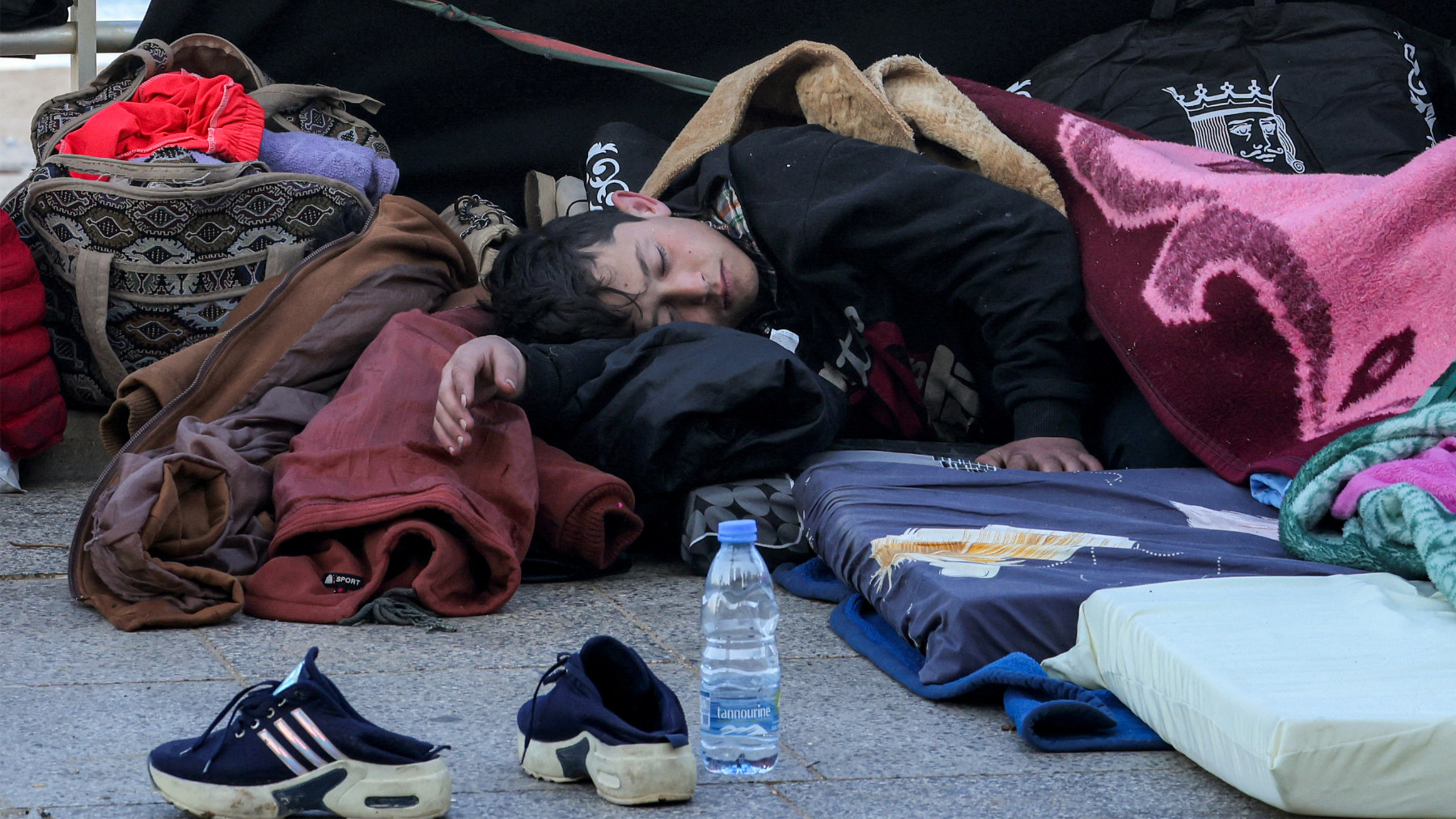
    The new year in Gaza has been marred by escalating tragedy as a combination of severe winter conditions and ongoing Israeli military operations exacerbates an already dire humanitarian crisis. Civil defence authorities reported multiple fatalities, including a five-year-old boy, Saud Muhammad Abu al-Khair, and his 65-year-old grandmother, Amal Hamed Abu al-Khair, who perished in a tent fire caused by a cooking accident amplified by strong winds near Gaza City. In a separate incident, a young child, Malak Rami Ghneim, succumbed to hypothermia in central Gaza’s Nuseirat camp, highlighting the lethal consequences of inadequate shelter during plummeting temperatures.

    These deaths occur against a backdrop of continued violence, with the Israeli military reported to have shot and killed a Palestinian man near Khan Younis, further violating a fragile ceasefire agreement that has been breached nearly a thousand times since its inception. The cumulative death toll from the two-year conflict now exceeds 71,271 Palestinians, with over 171,233 wounded.

    Compounding the disaster, a coalition of international aid organizations, including Doctors Without Borders (MSF), faces an operational ban imposed by Israeli authorities. MSF issued a stark warning that this decision would sever hundreds of thousands of Palestinians from essential medical care, emphasizing that the decimated health system and destroyed infrastructure necessitate more humanitarian services, not less. Philippe Lazzarini, Commissioner-General of UNRWA, condemned the new restrictions as part of a ‘troubling pattern of disregard for international humanitarian law,’ setting a ‘dangerous precedent’ that undermines the principles of neutral and impartial aid.

    The humanitarian response is further crippled by infrastructural collapse. Recent storms have damaged over 42,000 tents and makeshift shelters, displacing nearly a quarter of a million people. The Gaza-based Government Media Office accuses Israel of systematically evading its ceasefire obligations, allowing only approximately 20,000 aid trucks into the strip since October against an agreed-upon 48,000, a deficit it describes as instituting a ‘slow death’ for the population.

    Diplomatic pressure is mounting, with a joint statement from eight nations—Egypt, Qatar, Jordan, Saudi Arabia, the UAE, Indonesia, Pakistan, and Turkey—demanding Israel grant aid groups ‘sustainable, predictable and unrestricted access.’ This echoes earlier calls from a group of ten major countries, reflecting growing international alarm over the restrictions on life-saving assistance during a critical winter emergency.

  • Watch: Earthquake interrupts Mexico’s president during press conference

    Watch: Earthquake interrupts Mexico’s president during press conference

    A significant seismic event measuring 6.5 on the Richter scale abruptly disrupted Mexican President Andrés Manuel López Obrador’s scheduled press conference today, creating a dramatic moment captured on live broadcast. The tremor originated near the southwestern coast, causing substantial building vibrations across multiple regions and triggering the nation’s sophisticated earthquake early warning system.

    The incident occurred precisely as the president was addressing journalists at the National Palace in Mexico City, forcing an immediate suspension of governmental proceedings. Security protocols were swiftly implemented as structural engineers conducted preliminary safety assessments of the presidential compound and surrounding government buildings.

    Mexico’s renowned Seismic Alert System, considered among the world’s most advanced earthquake detection networks, successfully activated alarms approximately two minutes before substantial shaking reached urban centers. This critical advance warning enabled countless citizens to implement emergency evacuation procedures despite the sudden nature of the event.

    Preliminary reports from the U.S. Geological Survey indicate the epicenter was located approximately 15 kilometers southeast of Aquila in Michoacán state, with a depth of 10 kilometers. While structural damage appears limited to non-critical infrastructure, emergency response teams remain deployed throughout affected regions conducting comprehensive impact evaluations.

    The presidential administration confirmed no injuries among government staff or press corps, with Obrador resuming his briefing following all-clear verification from seismic authorities. This incident marks another testament to Mexico’s continued investment in seismic preparedness following devastating earthquakes in 1985 and 2017 that transformed the nation’s approach to geological hazards.

  • Sparklers on champagne bottles likely cause of deadly Swiss bar fire

    Sparklers on champagne bottles likely cause of deadly Swiss bar fire

    A catastrophic fire that erupted at a popular Swiss ski resort bar during New Year’s celebrations has been preliminarily attributed to sparklers placed on champagne bottles that were positioned dangerously close to the ceiling, according to official investigations. The devastating incident at Le Constellation nightclub in Crans-Montana resulted in 40 fatalities and left 119 injured, many in critical condition with severe burns.

    Valais Attorney General Beatrice Pilloud disclosed at a Friday press conference that the rapidly spreading blaze appears to have originated from sparkling candles attached to champagne bottles that were elevated too close to the ceiling materials. The investigation will comprehensively examine multiple factors including the establishment’s compliance with building regulations, fire safety protocols, ceiling materials (particularly foam installation), and whether the venue exceeded its 300-person capacity during the celebrations.

    Authorities are currently prioritizing the formal identification process for the victims, with police commander Frédéric Gisler confirming that 113 injured individuals have been identified thus far. The casualties include 71 Swiss citizens, 14 French nationals, 11 Italians, and four Serbians among others. Notably, 19-year-old French footballer Tahirys Dos Santos was severely burned and has been airlifted to Germany for specialized treatment.

    Mathias Reynard, president of the Valais region, announced that approximately 50 injured individuals are being transferred to specialized burn centers across Europe. A national mourning ceremony is scheduled for January 9th in Crans-Montana to honor the victims. The two French managers of the establishment have been interviewed as part of the ongoing investigation, which will determine whether criminal prosecutions are warranted.

    Eyewitness Lea Zehnder, who was celebrating at a nearby venue, described hearing screams from the nightclub and witnessing victims who “couldn’t walk or talk.” The community has established makeshift memorials with flowers and candles near the police-cordoned site, while a conference center outside town provides support to families of the missing.

  • Russia accuses Ukraine of killing 27 people in New Year attack in occupied Kherson

    Russia accuses Ukraine of killing 27 people in New Year attack in occupied Kherson

    Russian-installed authorities in occupied Kherson have alleged that Ukrainian forces conducted a deadly drone strike on a civilian New Year’s celebration, resulting in significant casualties. According to Vladimir Saldo, the Moscow-appointed regional governor, three unmanned aerial vehicles targeted a coastal cafe and hotel in the village of Khorly, killing at least 27 people and injuring over 30 others.

    Russian state media circulated photographs showing extensive structural damage to a three-story building identified as the former ‘Ukrainian House,’ now operating as ‘Buganova’s Cafe.’ One image depicted what appeared to be a body covered by a sheet beneath collapsed roofing materials.

    Ukrainian officials declined to directly address the specific allegations but maintained their adherence to international humanitarian law. A defense forces source quoted by AFP confirmed a military strike occurred but asserted it targeted a closed military gathering rather than civilian facilities.

    The United Nations Human Rights Monitoring Mission in Ukraine acknowledged awareness of the incident and committed to verifying reports of civilian harm in future documentation.

    This incident occurs amid heightened tensions following recent mutual accusations of provocative actions. Russia’s Investigative Committee has launched a formal probe into the attack, while the foreign ministry accused President Zelensky of attempting to intimidate populations in annexed territories.

    The diplomatic context remains complex, with Zelensky recently suggesting a US-brokered agreement with Russia was ‘90% ready’ in his New Year address. Meanwhile, Ukraine’s foreign intelligence service has counter-accused Russia of preparing large-scale provocations with human casualties to undermine peace negotiations.