分类: world

  • Teenager who studied in UK missing after Swiss bar fire

    Teenager who studied in UK missing after Swiss bar fire

    A British teenager who attended two Jewish schools in England is now among those missing following a catastrophic New Year’s fire at a Swiss alpine resort that claimed at least 40 lives and left 119 injured. Charlotte Niddam, previously a student at Immanuel College in Hertfordshire and the Jewish Free School (JFS) in northwest London, remains unaccounted for after flames engulfed Le Constellation bar in Crans-Montana during early Thursday celebrations.

    Swiss prosecutors revealed preliminary investigations indicate sparklers on champagne bottles carried ‘too close to the ceiling’ likely ignited the basement blaze. The popular bar was crowded with Swiss nationals and international tourists ringing in the new year when the disaster struck.

    Both educational institutions Charlotte attended issued emotional statements. JFS described her as ‘loved by so many’ during her two-year enrollment, while Immanuel College shared her family’s request for prayers ‘during this extremely difficult time,’ adding ‘We are all praying for a miracle.’ Crans-Montana’s tourism website lists Charlotte as a holiday babysitter in the resort.

    Swiss President Guy Parmelin characterized the incident as ‘one of the worst tragedies’ in the nation’s history. Valais Attorney General Beatrice Pilloud confirmed the criminal investigation will examine construction materials, fire safety protocols, and occupancy levels at the time of the incident.

    Authorities caution that victim identification may require ‘days if not weeks,’ with 113 injured persons already identified and six remaining unnamed. The international community continues to monitor developments as search operations progress.

  • Multiple explosions rock Venezuelan capital Caracas

    Multiple explosions rock Venezuelan capital Caracas

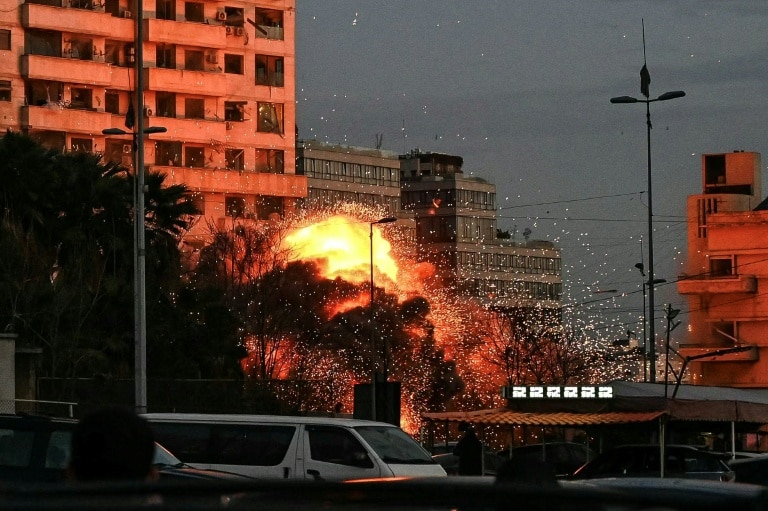
    The United States has launched targeted military strikes against Venezuelan defense installations, according to U.S. officials who confirmed the operation to CBS News. The pre-dawn attacks on Saturday morning sent plumes of smoke rising over Caracas and prompted the Venezuelan government to declare a national emergency.

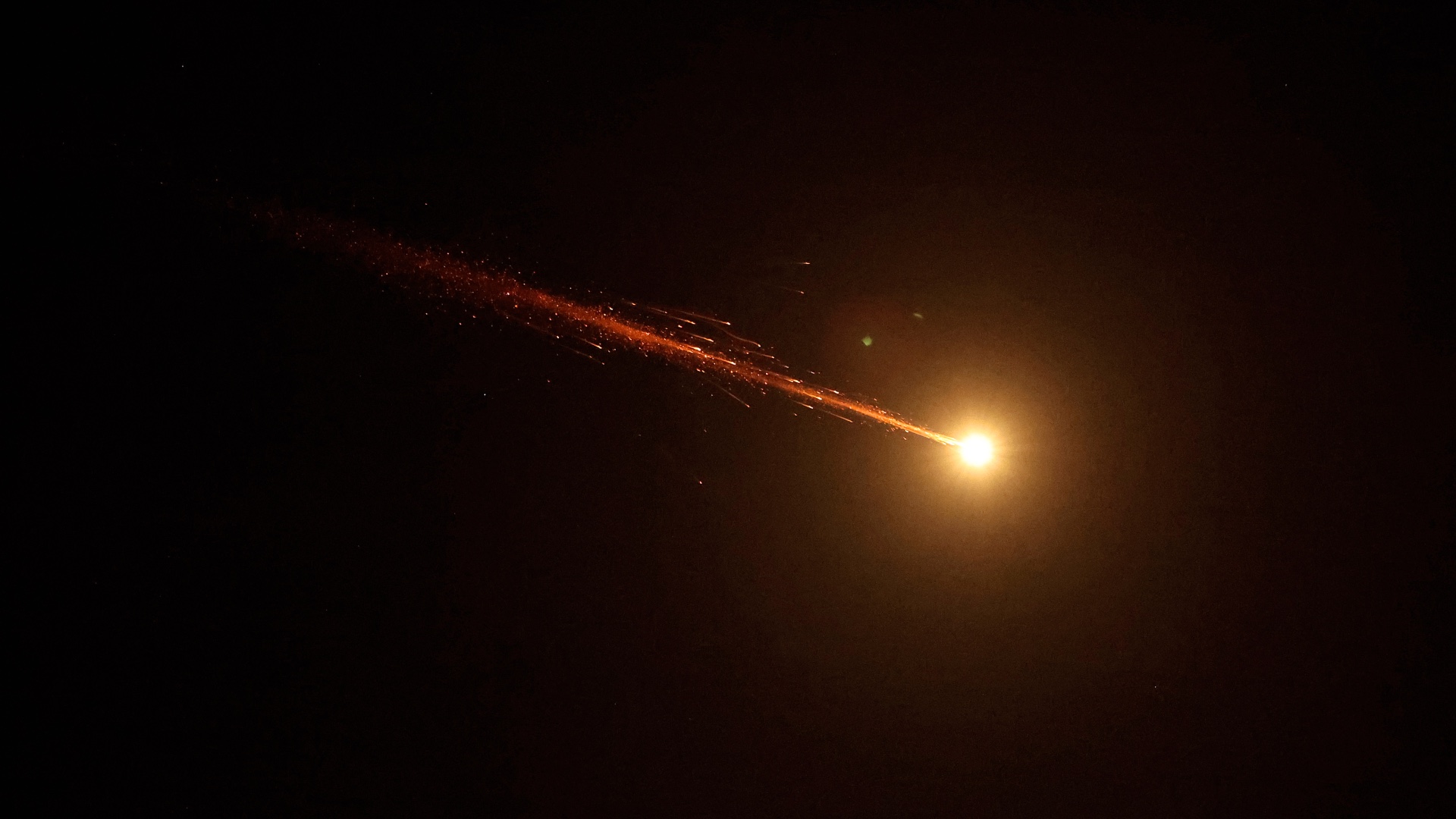
    Multiple explosions rocked the Venezuelan capital, with reports indicating strikes hit strategic military locations including La Carlota airfield and the primary Fuerte Tiuna military base. Social media circulated unverified footage showing explosions and military helicopters operating overhead, while several surrounding communities experienced power outages.

    The Venezuelan government issued an official statement vehemently condemning what it described as “extremely serious military aggression” by the United States, calling on the international community to denounce the actions. The White House and Pentagon have maintained official silence regarding the operations.

    This escalation occurs amid already heightened tensions between Washington and Caracas. President Trump had previously deployed naval forces to the Caribbean and repeatedly suggested potential military intervention in Venezuela. Recent weeks have seen U.S. forces targeting vessels suspected of drug trafficking in the region, including a strike earlier this week on a dock facility allegedly connected to Venezuelan drug operations.

    The political context underscores the confrontation: The U.S. administration considers President Nicolás Maduro’s government illegitimate and has accused him of direct involvement in narcotics trafficking. Meanwhile, Maduro maintains that Washington’s true objective is regime change aimed at controlling Venezuela’s substantial oil reserves, citing recent U.S. seizures of Venezuelan oil tankers as evidence of this motivation.

    The international community now faces a rapidly developing crisis that marks a significant escalation in the long-standing tensions between the two nations.

  • At least 7 explosions and low-flying aircraft are heard in Venezuela’s Caracas

    At least 7 explosions and low-flying aircraft are heard in Venezuela’s Caracas

    CARACAS, Venezuela — The pre-dawn hours of Saturday were shattered by a series of at least seven powerful explosions and the ominous sound of low-flying aircraft over Venezuela’s capital, sending panicked residents into the streets despite the early morning darkness. The mysterious incidents occurred approximately at 2:00 a.m. local time, with the origin and nature of the detonations remaining officially unconfirmed as multiple governments maintained silence.

    The unsettling events unfolded against a backdrop of dramatically escalating tensions between Venezuela and the United States, which has been conducting an extensive military campaign targeting alleged drug-smuggling operations in the region. According to the Trump administration, American forces have executed 35 separate boat strikes since early September, resulting in at least 115 casualties.

    Eyewitness accounts described a scene of chaos and terror. ‘The entire ground shook violently. This is absolutely horrifying. We heard consecutive explosions and aircraft in the distance,’ recounted Carmen Hidalgo, a 21-year-old office worker whose voice trembled as she spoke. She was returning from a birthday party with two relatives when the explosions occurred.

    Remarkably, Venezuelan state television continued regular programming without interruption, airing cultural content about national music and art rather than addressing the explosions. This broadcasting decision raised questions about the government’s response to the incidents.

    The geopolitical context adds layers of complexity to the situation. Just one day prior to the explosions, the Venezuelan government had expressed openness to negotiating an anti-drug trafficking agreement with the United States. However, President Nicolás Maduro simultaneously accused the U.S. of attempting to force regime change in Venezuela to gain access to the country’s substantial oil reserves through a prolonged pressure campaign that began with a massive military deployment to the Caribbean Sea in August.

    The relationship between the nations has further deteriorated following a recent CIA drone strike on Venezuelan soil targeting areas believed to be used by drug cartels—the first known direct U.S. operation on Venezuelan territory. Maduro himself faces narco-terrorism charges in the United States.

    Adding to the economic pressure, the U.S. has implemented sanctions against four Venezuelan oil companies and seized multiple sanctioned oil tankers near Venezuela’s coast, alongside establishing a naval blockade that effectively constricts the country’s economy.

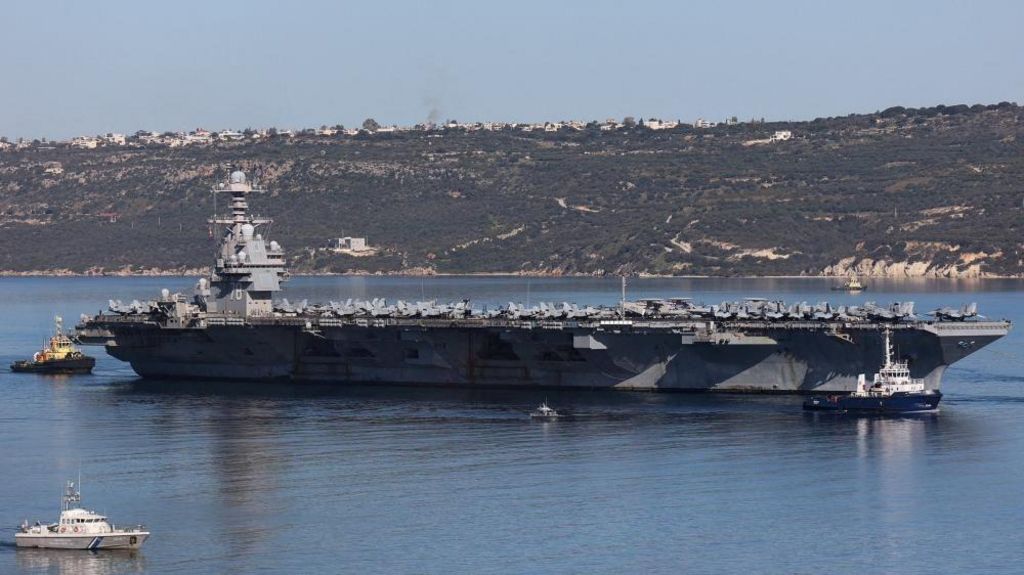
    The American military presence in the region represents the largest in generations, highlighted by the November deployment of the nation’s most advanced aircraft carrier with thousands of additional troops. President Trump has characterized the boat strikes as a necessary escalation in what he describes as an ‘armed conflict’ with drug cartels responsible for funneling narcotics into the United States.

    International attention came from an unexpected source as Iranian state television reported on the Caracas explosions, showcasing images of the Venezuelan capital. The coverage underscored the strategic alliance between Iran and Venezuela, bonded significantly by their shared adversarial relationship with the United States.

  • Missile attack on Kharkiv kills two including child, authorities say

    Missile attack on Kharkiv kills two including child, authorities say

    A Russian missile attack on the northeastern Ukrainian city of Kharkiv has resulted in multiple casualties, including the deaths of a woman and her three-year-old child, according to Ukrainian authorities. The strike, which occurred on Friday afternoon, targeted a multi-story residential apartment block that was nearly completely destroyed in the dual missile assault.

    Ukrainian President Volodymyr Zelensky condemned what he described as a ‘heinous’ attack that killed civilians even as diplomatic efforts intensify. Preliminary reports indicate that the victims found in the rubble were likely a mother and her young son. Among the approximately 28 injured victims was a six-month-old infant, with 16 requiring hospitalization for their wounds.

    Search and rescue operations continue at the devastated site, with over 80 emergency personnel and volunteers working to locate potential survivors beneath the wreckage. Regional Governor Oleh Syniehubov is overseeing the ongoing recovery efforts.

    The Russian Defense Ministry has categorically denied responsibility for the attack, asserting in an official Telegram statement that Russian forces ‘neither planned nor launched attacks using missile weapons or aircraft weapons within the city of Kharkiv.’ Russian officials instead suggested the destruction resulted from Ukrainian ammunition detonating, citing pre-attack footage showing ‘heavy smoke of unknown origin.’

    The attack comes at a diplomatically sensitive moment, with crucial peace talks brokered by the United States scheduled to take place in Kyiv on Saturday. President Zelensky indicated that approximately 15 countries are expected to participate in the discussions, along with representatives from the EU and NATO, with a US delegation joining via video link. This meeting will be followed by a gathering of the ‘coalition of the willing’ in France on January 6th.

    In a related development, Russian authorities have accused Ukraine of conducting a drone strike on a New Year’s Eve celebration in the village of Khorly in the Russian-occupied Kherson region, claiming at least 27 fatalities and over 30 injuries. Ukraine has declined to directly address these allegations, maintaining that it adheres to international humanitarian law by exclusively targeting military installations.

    The BBC has been unable to independently verify casualty figures from either incident amid the ongoing conflict and information warfare between the two nations.

  • Yemen: STC announce two-year transition towards independence in south

    Yemen: STC announce two-year transition towards independence in south

    The Southern Transitional Council (STC), a major secessionist force in Yemen, has formally declared the commencement of a two-year transitional process aimed at achieving full independence for the nation’s southern regions. The landmark announcement was delivered by STC leader Aidarus al-Zubaidi in a primetime televised address on Friday, January 2nd, 2026.

    This decisive move follows the STC’s military successes, wherein its forces have effectively seized and consolidated control over substantial territories across southern Yemen. The council’s strengthened position on the ground has provided the impetus for this political maneuver towards statehood.

    “Guided by the overwhelming desire and sovereign will of our southern people to reclaim and proclaim their independent state, we hereby announce the beginning of a transitional phase set to last for two years,” stated al-Zubaidi, framing the decision as a direct response to the populace’s aspirations.

    The proclamation signals a critical juncture in Yemen’s complex geopolitical landscape, potentially fracturing the country further and redrawing the map of a region already embroiled in a prolonged and devastating multi-party civil war. The STC’s roadmap challenges the existing framework of a unified Yemen and could significantly alter the dynamics of both the ongoing conflict and future diplomatic negotiations, presenting a new challenge to the internationally recognized government and other warring factions.

  • Two people killed in magnitude 6.5 earthquake in Mexico

    Two people killed in magnitude 6.5 earthquake in Mexico

    A significant seismic event measuring 6.5 on the Richter scale struck southern and central Mexico on Friday, resulting in multiple casualties and widespread structural damage. The earthquake’s epicenter was located near the coastal tourist destination of Acapulco, specifically close to San Marcos in Guerrero state, triggering immediate emergency responses across affected regions.

    Official reports confirm at least two fatalities from the tremors. Guerrero State Governor Evelyn Salgado identified one victim as a 50-year-old woman, while Mexico City Mayor Clara Brugada confirmed the death of a 60-year-old man. Additionally, medical authorities reported approximately 12 individuals sustained injuries during the event. Mayor Brugada noted that aftershocks continued to reverberate through the region hours after the initial quake.

    The seismic activity prompted immediate evacuations throughout Mexico City and Acapulco as the Mexican Seismic Alert System activated. This sophisticated warning mechanism, implemented after the catastrophic 1985 earthquake that claimed over 10,000 lives, provided critical seconds for residents and tourists to seek safety.

    Structural engineers initiated emergency assessments of potentially compromised buildings, with two structures evaluated for collapse risk and 34 buildings plus five homes undergoing comprehensive inspections as precautionary measures.

    The earthquake occurred during President Claudia Sheinbaum’s inaugural press conference of the year, with video footage capturing the moment she interrupted proceedings to ensure orderly evacuation. The president’s calm response exemplified official preparedness protocols, including reminders about maintaining ‘Life Backpacks’—emergency kits containing essential survival items such as flashlights, radios, water, non-perishable food, warm clothing, and document copies.

    Mexico’s position within one of the world’s most seismically active regions was underscored by this event, coming seven years after the devastating 2017 earthquake that killed over 200 people and destroyed numerous structures in Mexico City.

  • More than 50 NGOs warn Israeli bans will gravely impede aid access in Gaza

    More than 50 NGOs warn Israeli bans will gravely impede aid access in Gaza

    A coalition of 53 international non-governmental organizations operating in occupied Palestinian territories has issued an urgent warning that Israel’s recent registration measures could paralyze humanitarian operations during Gaza’s most severe crisis. The organizations, including prominent groups like Amnesty International, Doctors Without Borders, and Oxfam, revealed that 37 NGOs received official notifications on December 30th indicating their registrations would expire immediately, triggering a two-month countdown to operational cessation across Gaza, the West Bank, and East Jerusalem.

    Israel’s Ministry of Diaspora Affairs justified the licensing suspensions by citing failures to meet “security and transparency requirements,” specifically mentioning organizations that declined to provide lists of Palestinian employees for terrorism screening. The NGOs collectively challenged this rationale, emphasizing their existing compliance with rigorous international standards including donor-mandated audits, counterterror financing controls, and due diligence protocols.

    The humanitarian groups articulated profound ethical concerns about transferring sensitive employee data to conflict parties, noting such actions would violate fundamental humanitarian principles, duty of care obligations, and data protection standards. They highlighted the extreme risks facing aid workers, with over 500 humanitarian personnel killed since October 2023.

    This regulatory confrontation occurs amid deteriorating environmental conditions in Gaza, where heavy rains and powerful winds have flooded and destroyed thousands of tents, exacerbating the already catastrophic living conditions. The Shelter Cluster reports more than 42,000 tents and makeshift shelters damaged between December 10-17 alone, affecting approximately 250,000 residents. Tragically, at least three children have died from exposure to cold weather since December, with 17 additional fatalities resulting from storm-related structural collapses.

    Concurrently, eight Muslim-majority nations—Saudi Arabia, UAE, Jordan, Indonesia, Turkey, Pakistan, Qatar, and Egypt—issued a joint statement expressing deep concern about the compounded humanitarian crisis. Their foreign ministers criticized the slow pace of essential material entry into Gaza and demanded Israel ensure unimpeded operation of UN agencies and international NGOs. The ministers urged the international community to pressure Israel, as the occupying power, to immediately lift constraints on aid distribution and open the Rafah Crossing for bidirectional access.

  • Earthquake of magnitude 6.3 jolts southern Mexico; no serious damage reported

    Earthquake of magnitude 6.3 jolts southern Mexico; no serious damage reported

    A significant seismic event measuring 6.3 on the Richter scale struck the southern Mexican region of Guerrero on Friday, according to data from the German Research Center for Geosciences (GFZ). The earthquake originated at a shallow depth of approximately 10 kilometers (6.21 miles), potentially amplifying ground shaking across affected areas.

    The tectonic disturbance created a dramatic moment during Mexican President Claudia Sheinbaum’s morning press briefing, triggering earthquake warning systems and prompting an orderly evacuation of the presidential conference. Demonstrating remarkable composure, President Sheinbaum calmly exited the premises alongside attending journalists as established safety protocols were activated.

    Initial assessments from governmental authorities indicate no substantial structural damage or casualties resulting from the seismic activity. President Sheinbaum confirmed via social media platform X that communication with Guerrero’s state governor revealed no serious infrastructure impact within the region. Further updates from the capital confirmed Mexico City similarly escaped significant damage despite experiencing noticeable tremors.

    The incident highlights Mexico’s advanced earthquake preparedness systems, including early warning alarms that provide critical seconds for protective actions. The nation’s seismic monitoring infrastructure, refined through previous earthquake experiences, continues to demonstrate effectiveness in mitigating potential disaster scenarios.

  • Angelina Jolie visits Rafah crossing, meets aid workers delivering help to Gaza

    Angelina Jolie visits Rafah crossing, meets aid workers delivering help to Gaza

    Hollywood actress and former UNHCR special envoy Angelina Jolie conducted a high-profile visit to the Egyptian side of the Rafah border crossing on Friday, January 2, 2026. The humanitarian mission brought the acclaimed actress to the critical transit point between Egypt and the Gaza Strip, where she engaged directly with Red Crescent personnel and aid truck drivers facilitating humanitarian deliveries into the conflict-devastated territory.

    According to eyewitness accounts from AFP journalists present at the location, Jolie’s visit focused on two primary objectives: assessing the medical condition of injured Palestinians being transferred to Egyptian medical facilities and evaluating the logistical challenges facing aid delivery operations. The Rafah crossing has served as the primary gateway for humanitarian assistance entering Gaza amid ongoing regional tensions.

    The visit underscores the continuing international concern regarding the humanitarian situation in Gaza, with high-profile advocates like Jolie drawing global attention to the plight of civilians affected by the conflict. Her presence at the border highlights the critical role of humanitarian corridors in conflict zones and the challenges faced by aid organizations in delivering essential supplies under complex geopolitical circumstances.

    Jolie, who has extensive experience in humanitarian work through her former role with the United Nations refugee agency, represents a growing cohort of celebrity advocates using their platform to spotlight international crises. The timing of her visit coincides with increased diplomatic efforts to address the humanitarian situation in the region, though specific outcomes from her assessment remain undisclosed.

  • UAE, 7 other nations call for urgent aid amid worsening humanitarian crisis in Gaza

    UAE, 7 other nations call for urgent aid amid worsening humanitarian crisis in Gaza

    A coalition of eight nations has issued a joint declaration expressing profound alarm over the rapidly deteriorating humanitarian situation in the Gaza Strip, where severe winter conditions have exacerbated an already critical crisis. The foreign ministers of the United Arab Emirates, Jordan, Indonesia, Pakistan, Turkey, Saudi Arabia, Qatar, and Egypt emphasized that torrential rains and storms have intensified civilian suffering amid persistently limited aid access.

    The ministerial coalition highlighted that nearly 1.9 million displaced Palestinians now face catastrophic living conditions, with many sheltering in inadequate camps where flooded tents, collapsed structures, and freezing temperatures have created life-threatening circumstances. The statement specifically noted that widespread malnutrition and the heightened risk of disease transmission pose particular dangers to children, women, the elderly, and those with pre-existing medical conditions.

    Officials praised the efforts of UN agencies, including the UN Relief and Works Agency for Palestine Refugees (UNRWA), and other international humanitarian organizations operating under extremely challenging conditions. The ministers stressed the imperative for Israel to permit unimpeded humanitarian access, noting that any obstruction of aid delivery operations remains unacceptable given the critical nature of their mission.

    The coalition reaffirmed support for UN Security Council Resolution 2803 and the comprehensive plan advanced by US President Donald Trump, expressing commitment to contribute to its implementation. They emphasized that the plan offers a viable pathway toward maintaining ceasefire arrangements, ending hostilities, alleviating humanitarian suffering, and advancing Palestinian self-determination aspirations.

    Ministers called for immediate expansion of early recovery efforts, including provision of permanent shelter solutions to protect vulnerable populations from harsh winter conditions. They urged the international community to uphold its legal and moral responsibilities by pressuring Israel, as the occupying power, to immediately lift restrictions on essential supplies including medical aid, clean water, fuel, and sanitation support.

    The joint statement concluded with an urgent appeal for immediate, full, and unimpeded humanitarian aid delivery through United Nations agencies, rehabilitation of critical infrastructure and hospitals, and the reopening of the Rafah crossing in both directions as outlined in President Trump’s comprehensive plan.