分类: world

  • Pope to visit Spain this year, with stops in Madrid, Barcelona and Canary Islands, cardinal says

    Pope to visit Spain this year, with stops in Madrid, Barcelona and Canary Islands, cardinal says

    VATICAN CITY — Pope Leo XIV is preparing for a significant journey to Spain in 2026, with an itinerary featuring Madrid, Barcelona, and the Canary Islands. This pilgrimage fulfills a vision initially contemplated by his predecessor, Pope Francis, particularly regarding visiting a crucial migration gateway to Europe.

    Cardinal José Cobo Cano, Archbishop of Madrid, confirmed the developing plans following high-level discussions with Vatican officials. While speculation had suggested a June timeline, the cardinal emphasized that specific dates remain undetermined. The proposed agenda includes official engagements in the capital city of Madrid and a ceremonial visit to Barcelona’s iconic Sagrada Familia basilica. This segment holds special significance as 2026 marks the centenary of architect Antoni Gaudí’s death, who currently awaits possible beatification.

    The Canary Islands segment represents the most symbolically charged portion of the visit. This archipelago, situated near northwest Africa, serves as a primary entry point for migrants crossing from West Africa. Pope Francis had previously expressed particular interest in visiting these islands to demonstrate solidarity with migrants and refugees, though he consistently declined invitations to mainland Spain during his pontificate.

    This Spanish journey constitutes the first confirmed international travel plans for Pope Leo XIV in 2026. The American pontiff has additionally expressed intentions to visit Africa, with Algeria featuring prominently due to its connection to St. Augustine, foundational to Leo’s Augustinian order. Potential visits to Peru—where he served as a missionary for twenty years—along with Argentina and Uruguay are also under consideration.

    The announcement coincided with a landmark development in Spain’s Catholic Church governance. Spanish bishops recently conceded to grant the state ombudsman ultimate authority in determining compensation for clergy sexual abuse victims, representing a substantial shift in ecclesiastical policy.

  • Iranians step up protests as death toll mounts, internet cut

    Iranians step up protests as death toll mounts, internet cut

    Iran is experiencing its most significant civil unrest in years as nationwide protests intensify against the clerical leadership. The demonstrations, which originated on December 28th following the collapse of Iran’s rial currency to unprecedented lows, have now expanded across all 31 provinces with reports of gatherings in 348 distinct locations.

    The Norway-based organization Iran Human Rights has documented at least 45 fatalities since the movement began, including eight minors, with Wednesday marking the deadliest day of confrontations. Security forces have allegedly employed live ammunition against demonstrators, resulting in hundreds of injuries and over 2,000 arrests according to human rights monitors. Iranian state media, however, maintains a significantly lower official death toll of 21 individuals, including security personnel.

    In response to the escalating situation, authorities have implemented a comprehensive internet blackout across the nation, severely restricting information flow and communication capabilities. Despite this digital suppression and the violent crackdown, protests continued into Thursday night with significant gatherings reported on Tehran’s Ayatollah Kashani Boulevard and in numerous other urban centers.

    The current wave of dissent presents a substantial challenge to Ayatollah Ali Khamenei’s administration, which already contends with severe economic difficulties exacerbated by prolonged international sanctions. The protests have drawn international attention, with U.S. President Donald Trump issuing a stark warning against further violence toward demonstrators, while German Foreign Minister Johann Wadephul condemned Tehran’s ‘excessive use of force.’

    Notably, the movement has seen participation from diverse segments of society, including Kurdish regions where opposition parties called for a general strike, and academic institutions where final examinations at Tehran’s Amir Kabir University were postponed. Symbolic acts of defiance have emerged, including the toppling of a statue commemorating Qassem Soleimani, the Revolutionary Guards commander killed in a 2020 U.S. strike.

    This represents the most widespread challenge to Iran’s leadership since the 2022-2023 demonstrations triggered by Mahsa Amini’s death in custody, with current protests echoing similar anti-establishment sentiments and calls for political change.

  • Winter storm slams UK and France, disrupting travel and leaving tens of thousands without power

    Winter storm slams UK and France, disrupting travel and leaving tens of thousands without power

    Western Europe faced severe weather disruptions on Friday as Storm Goretti, a powerful Atlantic weather system, battered coastal regions of northern France and southern England with destructive winds, heavy precipitation, and significant infrastructure damage.

    The meteorological event originated as a deep low-pressure system that first struck the Isles of Scilly off England’s southwestern coast, where wind velocities reached unprecedented speeds of 99 mph (159 kph). The extreme conditions resulted in blocked transportation routes, structurally compromised buildings, and extensive power failures that subsequently affected water supply systems in multiple communities.

    According to National Grid, Britain’s primary electricity transmission operator, over 57,000 households and commercial establishments experienced power interruptions across southwestern England, the Midlands, and Wales. The situation intensified as the advancing storm front interacted with an established Arctic air mass, generating substantial snowfall across northern territories and torrential rainfall in southern regions.

    Northern Scotland endured particularly severe conditions, with accumulated snow depths exceeding half a meter (20 inches) from earlier winter events. Municipal authorities deployed snowplows continuously to maintain road accessibility, while educational institutions remained shuttered—over 250 schools across Scotland canceled classes, with some facilities closing for five consecutive days.

    Transportation networks suffered extensive disruptions throughout the United Kingdom. National Rail issued comprehensive travel advisories warning of service interruptions across England, Scotland, and Wales. Birmingham Airport implemented temporary closures due to hazardous conditions, later resuming operations with significantly reduced runway capacity.

    The Met Office, Britain’s national meteorological service, had preemptively declared its highest-level red weather warning for southwestern England—an exceptional measure reserved for potentially life-threatening conditions.

    Simultaneously, northwestern France experienced comparable devastation from the storm’s onslaught. French power grid operator Enedis reported approximately 320,000 households without electricity by midday Friday, notably concentrated in Normandy where wind gusts reached extraordinary velocities of 213 kph (132 mph) at Gatteville-le-Phare.

    Météo-France, the national weather service, had issued severe weather alerts recommending residents remain indoors. Regional rail services throughout northwestern France were suspended indefinitely, while high-speed rail connections and Paris airport operations maintained minimal service levels despite the challenging conditions.

  • Exit of US from key intl groups draws criticism

    Exit of US from key intl groups draws criticism

    In an unprecedented move that experts warn could fundamentally reshape global governance, the Trump administration has initiated withdrawal from 66 international organizations and treaties, marking the most extensive retreat from multilateral engagement in modern history.

    President Donald Trump signed an executive memorandum on January 6, 2026, directing the comprehensive disengagement from institutions the White House characterizes as ‘no longer serving American interests’ or promoting ‘hostile agendas.’ The sweeping list includes 31 United Nations entities and 35 non-UN organizations spanning climate, health, education, and development sectors.

    Among the most significant withdrawals are the UN Framework Convention on Climate Change—the foundational treaty for the Paris Agreement—alongside UN Women and the UN Population Fund. This decision follows previous exits from the World Health Organization, UNESCO, and the Paris climate accord, consolidating a pattern of systematic disengagement from global institutions.

    According to Yuan Sha, a governance expert at the China Institute of International Studies, the financial implications could be catastrophic for these organizations. ‘The United States contributes approximately 20 percent of the UN’s regular budget,’ Yuan noted. ‘This withdrawal will trigger severe financial crises that could undermine operational capacity and institutional authority.’

    Professor Zhu Jiejin of Fudan University’s Center for the Study of the UN highlighted the procedural irregularities in these withdrawals. ‘Unlike previous disengagements that followed established protocols,’ Zhu observed, ‘the current administration is bypassing treaty obligations by immediately ceasing participation and funding.’

    The administration has further reinforced this isolationist stance by dismantling domestic support structures, including the July 2025 shutdown of the United States Agency for International Development (USAID).

    At a recent press briefing, Chinese Foreign Ministry spokeswoman Mao Ning reaffirmed Beijing’s commitment to multilateralism, stating that China ‘will continue to support the UN’s central role in global affairs’ and work toward ‘a more just and equitable global governance system.’

    Experts universally characterize these actions as embodying an ‘America First’ unilateralism that prioritizes absolute national interests over international cooperation. This approach, they warn, not only threatens global governance mechanisms but also severely damages American credibility as a reliable international partner, potentially reverting global relations to zero-sum power dynamics.

  • Yemen rift deepens as separatist leader skips talks

    Yemen rift deepens as separatist leader skips talks

    Yemen’s precarious political landscape has descended into deeper crisis following the dramatic defiance of Southern Transitional Council (STC) leader Aidarous al-Zubaidi, who refused to attend critical reconciliation talks in Riyadh this week. This act of rebellion triggered a chain of escalating responses, including Saudi-led coalition airstrikes in Zubaidi’s home province of Al-Dhalea and his subsequent removal from Yemen’s Presidential Leadership Council on charges of “high treason.”

    The situation intensified when Zubaidi, instead of traveling to Saudi Arabia, embarked on an unexpected journey to the United Arab Emirates via Mogadishu, Somalia. The Saudi military confirmed his circuitous route from Aden to Abu Dhabi, though Emirati officials maintained conspicuous silence regarding his arrival.

    The rupture follows the STC’s aggressive territorial expansion last month and Zubaidi’s recent proclamation of a two-year transition plan for southern independence. Coalition spokesman Turki al-Maliki justified military operations as “limited preemptive strikes” necessary to prevent Zubaidi from “escalating the conflict” after reports emerged of his forces mobilizing armored vehicles and heavy weaponry.

    Meanwhile, the STC appears fractured internally, with deputy leader Abdulrahman al-Muharrami remaining in Riyadh and receiving instructions to maintain security in Aden. Concurrently, Saudi-backed National Shield Forces have been deployed toward the strategic port city, which serves as Yemen’s temporary capital and STC headquarters.

    The escalating tensions have sparked widespread panic among Aden residents, with civilians rushing to stockpile food, fuel, and essential supplies amid fears of imminent urban combat or airstrikes. In a separate humanitarian development, the first evacuation flight transported 180 stranded tourists from Yemen’s Socotra Island to Jeddah, with additional rescues planned for those trapped by mainland fighting.

  • Gaza remains on the edge

    Gaza remains on the edge

    Three decades after orchestrating the landmark Oslo Peace Accords, former Israeli deputy foreign minister Yossi Beilin remains actively engaged in peace advocacy while offering sharp criticism of current approaches to the Israeli-Palestinian conflict. The renowned architect of the 1993 agreement maintains that despite the horrific nature of Hamas’ October 2023 attacks, which he describes as “beyond any nightmare,” Israel and the international community must intensify efforts toward a two-state solution.

    A temporary ceasefire brokered in October by the Trump administration alongside Qatari and Egyptian mediators initially provided glimmers of hope, culminating in UN Security Council Resolution 2803 (2025) which established a framework for peace monitoring. The agreement created both a Board of Peace and an International Stabilization Force (ISF) tasked with overseeing ceasefire compliance in Gaza. However, the fragile truce has been repeatedly tested by sporadic attacks and mutual accusations of violations between Israel and Hamas.

    Beilin, who served in the Knesset for two decades and held ministerial positions, emphasizes the critical role of the Palestinian Authority (PA) in any viable peace process. “Our partners are the Palestine Liberation Organization,” he stated in an exclusive interview, “and the big mistake of the current Israeli government is that it is weakening the PLO, it is weakening the Palestinian Authority.” He specifically cited Israel’s refusal to transfer funds owed to the PA under the 1994 Paris Agreement as counterproductive to peace efforts.

    The political landscape has shifted dramatically since the Oslo Accords created the Palestinian Authority to administer limited self-governance. Currently, 157 United Nations member states recognize the State of Palestine, while 165 recognize Israel. Despite this diplomatic progress, mediators from Egypt, Qatar, and Turkey have struggled to advance to the second phase of the ceasefire agreement, which would address Hamas disarmament and Israeli withdrawal from occupied territories.

    Ammar Al-Dwaik, Director General of the Palestinian Independent Commission for Human Rights, notes that successful disarmament historically requires parallel political processes that provide compelling incentives for armed groups to lay down weapons. As Gaza remains precariously balanced between temporary calm and renewed conflict, experts agree that sustainable peace will require addressing both immediate humanitarian concerns and underlying political grievances.

  • Oreshnik hypersonic ballistic missile fired in fresh strikes on Ukraine, Russia says

    Oreshnik hypersonic ballistic missile fired in fresh strikes on Ukraine, Russia says

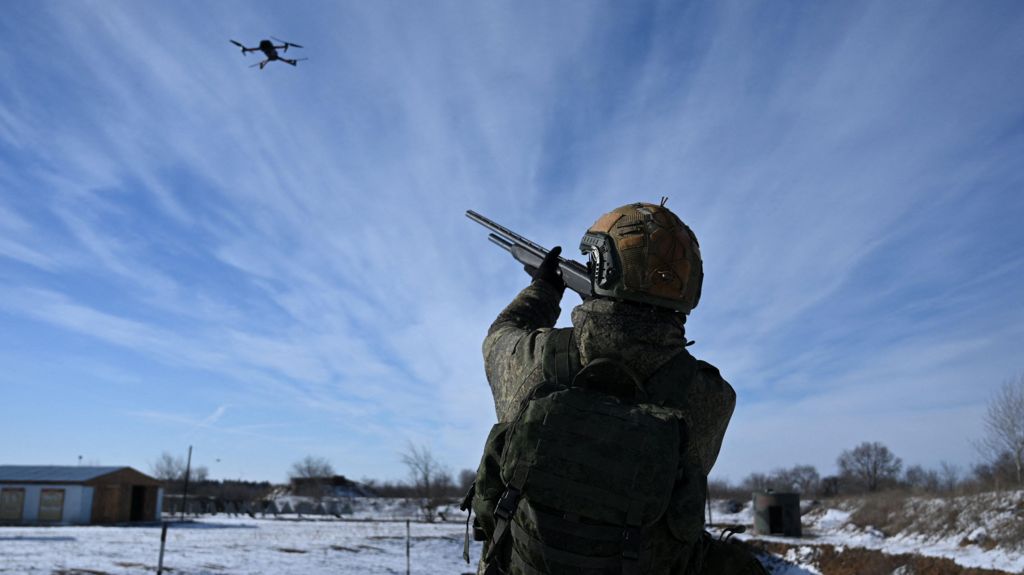
    In a significant escalation of hostilities, Russia has confirmed deploying its advanced Oreshnik intermediate-range ballistic missile during a massive overnight assault on Ukrainian territory. The strikes resulted in four fatalities and twenty-five injuries in the capital city of Kyiv, where residents endured hours of deafening explosions that illuminated the night sky.

    According to Russia’s defense ministry, this offensive operation was conducted as a retaliatory measure for an alleged Ukrainian drone attack on President Vladimir Putin’s residence in late December—an accusation that Ukrainian authorities vehemently deny. While the ministry did not identify specific targets for the Oreshnik missile, social media platforms circulated videos showing multiple explosions near Lviv, a western Ukrainian city located approximately 60 kilometers from the Polish border.

    Ukrainian officials confirmed that ballistic missile strikes damaged critical infrastructure in the Lviv area. The Oreshnik system, first deployed in November 2024 against Dnipro, represents a formidable technological advancement with an estimated range of 5,500 kilometers. Its warhead is designed to fragment during final descent into multiple independently targeted projectiles, creating distinctive sequential explosions.

    Ukrainian Foreign Minister Andrii Sybiha characterized the strike near NATO’s eastern flank as ‘a grave threat to European security and a test for the transatlantic community,’ dismissing Russia’s justification as based on ‘hallucinations.’ The European Union has expressed skepticism regarding Russia’s claims about the initial drone incident, with former U.S. President Donald Trump recently questioning whether the alleged attack on Putin’s residence ever occurred.

    The assault on Kyiv involved sophisticated tactical coordination, employing over a dozen missiles and hundreds of drones. Tragedy struck when a paramedic responding to an initial explosion became a victim of a ‘double-tap’ strike—a military tactic where secondary explosives target first responders. Residential buildings along the Dnipro River and in central districts sustained direct hits, while power outages affected multiple neighborhoods during exceptionally harsh winter conditions, with temperatures expected to drop to -15°C.

    Concurrently, Ukrainian forces targeted Russian energy infrastructure, with half a million residents in Belgorod losing power and the city of Oryol experiencing disruptions to water and heating systems following strikes on power plants. This reciprocal targeting of energy infrastructure has become a defining characteristic of the conflict, creating humanitarian challenges for civilians on both sides of the border.

  • Jersey returns £7m of ‘tainted’ funds to Nigeria

    Jersey returns £7m of ‘tainted’ funds to Nigeria

    In a significant move against international financial corruption, the Government of Jersey has formally agreed to repatriate $9.5 million (£7 million) in illicit funds to Nigeria. The restitution follows a landmark ruling by Jersey’s Royal Court, which determined the assets were “more likely than not” derived from a corrupt scheme involving Nigerian officials.

    The funds, held in a Jersey-based financial institution, were identified as proceeds from a corruption network where third-party contractors systematically diverted government money for the benefit of senior Nigerian officials and their associates. His Majesty’s Attorney General for Jersey, Mark Temple KC, finalized the restitution process through a Memorandum of Understanding (MOU) signed with Nigerian authorities in December.

    This agreement represents the third major asset repatriation arrangement between Jersey and Nigeria, following previous agreements that facilitated the return of over $300 million in stolen assets. The latest recovery underscores Jersey’s robust anti-corruption framework and its commitment to international judicial cooperation.

    Nigerian Attorney-General and Minister of Justice Lateef Fagbemi confirmed the returned assets would be allocated according to the MOU’s provisions, specifically supporting the completion of a critical highway infrastructure project connecting Nigeria’s capital with its second-largest city. Fagbemi emphasized that the successful recovery demonstrates Nigeria’s effective collaboration with international partners in combating illicit wealth transfer to foreign jurisdictions.

    Attorney General Temple highlighted the case as evidence of Jersey’s powerful civil forfeiture legislation, which serves as an essential tool in the global fight against corruption. The restitution sets another precedent for international cooperation in tracking and returning illicit assets to their rightful owners.

  • Russia bombards Kyiv after rejecting peacekeeping plan

    Russia bombards Kyiv after rejecting peacekeeping plan

    In a significant escalation of hostilities, Russian forces launched a massive aerial bombardment against Ukraine’s capital city of Kyiv early Friday, resulting in multiple casualties and widespread destruction. The assault, which involved drone strikes and missile attacks, killed at least four civilians and injured 19 others according to Mayor Vitali Klitschko, who described the offensive as a ‘massive enemy missile attack’ that left several neighborhoods without power.

    The intensified military action follows Moscow’s categorical rejection of a Western-backed security agreement proposed during the Paris Summit earlier this week. Russian foreign ministry spokeswoman Maria Zakharova explicitly warned that any Western troops stationed in Ukraine would be considered ‘legitimate military targets,’ characterizing the coalition between Ukraine and its allies as an ‘axis of war.’

    Simultaneously, Russian forces continued their advance in eastern regions, claiming capture of additional territory in the Dnipropetrovsk area. The conflict reached new technological thresholds with reports of hypersonic ballistic missiles traveling at approximately 13,000 kilometers per hour striking infrastructure near the Polish border, though authorities confirmed radiation levels remained normal despite concerns about weapon types.

    As diplomatic efforts stall, German Chancellor Friedrich Merz acknowledged that a ceasefire agreement remains ‘quite far’ from realization due to Russia’s uncompromising position on territorial demands, including full control of the Donbas region. The ongoing assaults have created a national emergency with hundreds of thousands of households facing energy shortages during winter conditions, particularly in the Dnipropetrovsk and Zaporizhzhia regions where critical infrastructure has been systematically targeted.

  • Russia attacks Ukraine with drones and missiles, killing 4 in Kyiv

    Russia attacks Ukraine with drones and missiles, killing 4 in Kyiv

    Ukrainian cities faced a severe escalation in hostilities as Russian forces executed a coordinated multi-front assault overnight Thursday into Friday. The offensive, which combined drone and missile strikes, resulted in significant civilian casualties and infrastructure damage across multiple regions.

    According to official statements from Kyiv’s military administration, the attacks claimed four lives and left at least twenty-two individuals wounded. Among the fatalities was an emergency medical responder, highlighting the dangers faced by first responders during active combat operations. Ukraine’s security service confirmed that five rescue personnel sustained injuries while attempting to provide assistance at attack sites.

    The western city of Lviv experienced particularly concerning developments when an unidentified ballistic missile targeted critical infrastructure facilities. Mayor Andriy Sadoviy reported the strike, while Ukraine’s Western Air Force Command later disclosed the missile traveled at approximately 13,000 kilometers per hour. Military analysts are currently working to identify the specific rocket type used in this unprecedented attack.

    In the capital, several districts suffered direct impacts from the assault. The Desnyanskyi district witnessed a drone collision with a multi-story residential building, while another location within the same district sustained damage to the lower floors of an apartment complex. Meanwhile, in Dnipro district, debris from downed drones ignited fires and caused structural damage to civilian housing.

    The aftermath of the bombardment created widespread disruption throughout Kyiv, with Mayor Vitali Klitschko reporting interruptions to both water and electricity services. These utility failures occurred during particularly harsh winter conditions, compounding the challenges for emergency response teams.

    This escalation comes shortly after Ukrainian President Volodymyr Zelenskyy warned the nation about Russia’s planned large-scale offensive operations. The president specifically noted Russia’s intention to exploit adverse weather conditions, including dangerously icy roads and frigid temperatures that complicate defense efforts.