分类: world

  • ‘When will Baba come back?’ Gaza’s widows and orphans struggle to survive

    ‘When will Baba come back?’ Gaza’s widows and orphans struggle to survive

    In the rubble-strewn courtyard of a decimated school in Gaza City’s al-Zaytoun neighborhood, four-year-old Zain al-Halawani maintains his daily vigil at the tent entrance, awaiting a father who will never return. His mother, 25-year-old Nada al-Halawani, watches with a heart heavy with the knowledge that her son’s childhood mirrors her own—growing up parentless in a conflict zone.

    This poignant scene encapsulates the invisible humanitarian crisis unfolding among Gaza’s most vulnerable populations. Since Israel’s military offensive began in October 2023, official statistics reveal over 16,000 women have been widowed and more than 44,000 children orphaned amidst a death toll exceeding 71,424 Palestinians. These numbers only hint at the profound social catastrophe emerging from the rubble.

    The personal tragedies are countless. Ashraf al-Halawani, Zain’s father, was killed by an Israeli sniper while attempting to reach an aid distribution point last September. His body remains unrecovered, officially categorized among Gaza’s 11,000 missing persons. For Nada, this administrative limbo compounds her tragedy—without a death certificate, she cannot register for essential aid distributions that require paternal documentation.

    Twenty-seven-year-old Rawand Salim embodies another dimension of this crisis. After losing her husband Mohammed during a February 2025 ceasefire violation, she now navigates the impossible calculus of survival—selling precious wedding jewelry to feed her children, standing in endless lines for contaminated water and meager food portions, and witnessing the psychological deterioration of her young sons.

    The trauma manifests physically and emotionally in Gaza’s children: psoriasis outbreaks, hair loss, weakened immune systems, and severe anxiety disorders. Six-year-old Abdelrahman Salim’s attempt to excavate his father’s grave with bare hands represents the profound psychological damage inflicted upon an entire generation.

    Compounding these personal tragedies is the systematic destruction of Gaza’s support infrastructure. More than 80% of educational institutions lie in ruins, including specialized schools operated by the Al-Salah Charitable Society that previously provided orphans with free education, meals, and psychological support. Local and international aid organizations have either been destroyed by military operations or forced to suspend services indefinitely.

    The United Nations has documented Israel’s ‘systematic obliteration’ of Gaza’s education system—a crucial lifeline for vulnerable populations. Meanwhile, Israel’s continued blockade severely restricts humanitarian aid, creating what UN experts term a ‘policy of starvation’ that disproportionately affects female-headed households.

    Despite these overwhelming challenges, Gaza’s widows demonstrate extraordinary resilience. Nada al-Halawani dreams of pursuing graduate studies to provide better opportunities for her son, while Rawand Salim finds solace in her children’s gradual emotional recovery through educational initiatives. Their stories reveal not only the depth of human suffering but also the remarkable endurance of maternal love amidst unimaginable adversity.

    As one widow poignantly observed: ‘The world has forgotten about us. Our children have seen horrors no child should ever witness. They are all I have—I give them all my love, time, and effort just to see them smile, to give them a chance for a better future.’

  • Iran postpones execution of 26-year-old protester, family and rights group say

    Iran postpones execution of 26-year-old protester, family and rights group say

    In a significant development amid ongoing civil unrest, Iranian authorities have postponed the execution of 26-year-old demonstrator Erfan Soltani, according to human rights organizations and family sources. The decision emerges against a backdrop of violent clashes between protesters and security forces that have resulted in substantial casualties across the country.

    The postponement follows stern warnings from U.S. President Donald Trump, who threatened “strong action” if Iran proceeded with executions of protesters. Trump subsequently acknowledged receiving assurances through diplomatic channels that executions had been halted, though Iranian Foreign Minister Abbas Araqchi denied any planned hangings, characterizing such reports as misinformation designed to provoke American engagement.

    Soltani’s case has drawn international attention due to the accelerated judicial process surrounding his detention. Arrested on January 8 at his residence west of Tehran, the young protester was denied legal representation and faced a death sentence just four days after his arrest, according to the Norway-based Hengaw Organization for Human Rights.

    The protests, initially sparked by economic grievances, have evolved into the most significant challenge to Iran’s clerical establishment in years. Human rights organizations report between 2,500-3,400 fatalities since the unrest began, though accurate assessment remains difficult due to extensive internet restrictions that persisted for nearly a week.

    Iranian officials have increasingly adopted a hardline stance toward demonstrators, with Chief Justice Gholam-Hossein Mohseni-Ejei calling for expedited trials and executions of what authorities term “rioters.” State television has broadcast numerous forced confessions, typically showing blurred faces of detainees alongside footage allegedly depicting attacks on security forces.

    The geopolitical implications continue to escalate, with Trump indicating continued monitoring of Iranian actions while Tehran has restricted its airspace to pre-approved international flights. Senior Iranian officials have responded with counter-threats, referencing previous missile strikes against U.S. bases in the region and emphasizing Iran’s capacity to respond to any aggression.

  • Myanmar’s military government claims a record seizure of illicit drugs at production sites

    Myanmar’s military government claims a record seizure of illicit drugs at production sites

    In a significant counter-narcotics operation, Myanmar’s military government has reported the largest drug seizure in the nation’s history. State media confirmed on Thursday that security forces conducted extensive raids from January 8-12 targeting dual threats: drug production facilities and online scam centers in northern Shan state.

    The operation focused on Mongyai township, approximately 200 kilometers northeast of Mandalay, where authorities dismantled three major drug manufacturing facilities located within kilometers of each other. Home Affairs Minister Lt. Gen. Tun Tun Naung disclosed that these sites produced heroin, methamphetamine, and crystal methamphetamine (‘ice’).

    Photographic evidence released by the military revealed sophisticated production setups featuring dozens of blue plastic barrels filled with powdery substances, industrial gas cylinders, large mixing vats, and complex glass flask systems connected by tubing in makeshift structures.

    Military spokesperson Maj. Gen. Zaw Min Tun characterized these facilities as potentially the country’s primary drug-production hubs, with trafficking routes extending to neighboring Bangladesh, Thailand, and Malaysia through conflict areas in western, northwestern, and southeastern Myanmar.

    The context of Myanmar’s escalating civil war, which intensified following the 2021 military takeover, has created conditions that facilitate both drug production and distribution. Ethnic armed groups and local resistance forces have long been accused of using drug revenues to fund their operations, though the Shan State Progress Party specifically denied involvement in the targeted regions.

    According to official statistics, Myanmar authorities have seized drugs valued at approximately $2.8 billion over the past five years, destroyed over 10,000 hectares of opium poppy fields, and made more than 43,900 drug-related arrests.

    This development occurs against the backdrop of a December UN report indicating opium poppy cultivation in Myanmar has reached its highest level in a decade, with the country maintaining its status as the world’s largest methamphetamine producer.

  • Saudi Arabia says will invest $500 million in Yemen development projects

    Saudi Arabia says will invest $500 million in Yemen development projects

    In a significant move to bolster Yemen’s reconstruction efforts, Saudi Arabia has unveiled a comprehensive $506 million development package targeting critical infrastructure across ten governorates. The announcement came from Saudi Defense Minister Prince Khalid bin Salman, who confirmed the initiative through an official statement on social media platform X.

    The substantial investment will be administered through the Saudi Development and Reconstruction Program for Yemen (SDRPY), which has operated within the Arabian Peninsula’s most impoverished nation since 2018. The funding encompasses several landmark projects including the establishment of Yemen’s inaugural desalination plant, extensive rehabilitation of Aden International Airport, development of a modern medical facility on Socotra Island, and the construction and furnishing of 30 educational institutions.

    According to program officials, these resources will finance entirely new initiatives primarily within southern governorates where the separatist Southern Transitional Council maintains influence. This strategic investment places Riyadh at the forefront of coordinating disparate factions within Yemen’s government while confronting the monumental task of rebuilding a nation devastated by prolonged conflict.

    Analysts note that Saudi Arabia now assumes primary responsibility for reconstructing damaged infrastructure and sustaining military forces under its jurisdiction. Farea al-Muslimi, a Yemen specialist at Chatham House, observed that ‘This will all become the burden of Saudi Arabia,’ highlighting the Kingdom’s expanding role in shaping Yemen’s political future through planned negotiations between southern factions.

  • Turkish Airlines flight makes emergency landing in Barcelona after ‘threat’ alert

    Turkish Airlines flight makes emergency landing in Barcelona after ‘threat’ alert

    A Turkish Airlines aircraft was compelled to execute an emergency landing at Barcelona-El Prat International Airport on Thursday following the discovery of a disturbing bomb threat transmitted via an unconventional method—a personal Wi-Fi network. The incident occurred aboard flight TK1853, an Airbus A321 en route from Istanbul to Barcelona.

    According to airline spokesperson Yahya Üstün, the threat emerged as the flight was on its final approach. A passenger allegedly established a personal wireless hotspot within the cabin. The network’s name (SSID), visible to others attempting to connect to in-flight Wi-Fi, was configured to include a message indicating a bomb was on the aircraft. This prompted the flight crew to initiate emergency protocols immediately.

    The plane landed safely under emergency conditions and was met by Spanish security forces on the tarmac. Spain’s Civil Guard, a national police force with responsibilities in border and transport security, swiftly launched an investigation. A comprehensive security sweep of the aircraft and all luggage was conducted. Authorities confirmed that no explosives or any other threatening devices were found onboard, classifying the event as a severe hoax.

    Following the all-clear from security personnel, normal operations resumed at Barcelona’s airport. Turkish Airlines stated that the return flight service would continue as scheduled, emphasizing that safety procedures were followed correctly. The individual suspected of creating the fraudulent network was detained for questioning by police, potentially facing serious legal consequences for initiating a false security alert.

  • Iran reopens airspace after temporary closure forced flights to reroute

    Iran reopens airspace after temporary closure forced flights to reroute

    Iran has restored civilian air traffic following an abrupt five-hour closure of its national airspace that triggered widespread flight disruptions and regional security concerns. The temporary shutdown, implemented at 5:15 PM ET (2215 GMT) on Wednesday, compelled multiple international carriers to cancel, reroute, or delay flights while raising alarms about potential military escalation between Tehran and Washington.

    According to the US Federal Aviation Administration’s published notice, Iran had restricted its airspace exclusively to internationally authorized flights to and from Iranian territory. The restriction was lifted shortly before 10:00 PM ET (0300 GMT), with tracking service Flightradar24 confirming the resumption of operations by Iranian carriers Mahan Air, Yazd Airways, and AVA Airlines.

    The closure occurred against the backdrop of heightened geopolitical tensions, with US President Donald Trump evaluating responses to Iran’s ongoing anti-government protests—the most significant in years. A senior US official confirmed partial personnel withdrawals from Middle Eastern bases following Tehran’s warning to neighboring states about potential retaliatory strikes against American installations if attacked.

    Commercial aviation faced immediate operational challenges. India’s largest airline, IndiGo, reported impacts on international routes, while Air India implemented alternative routing that risked delays and cancellations. Russia’s Aeroflot saw a Tehran-bound flight return to Moscow mid-route. European carriers including Lufthansa and Italy’s ITA Airways instituted precautionary measures, bypassing Iranian and Iraqi airspace indefinitely and restricting Tel Aviv and Amman operations to daylight hours.

    Aviation security monitor Safe Airspace, operated by flight risk organization OPSGROUP, highlighted the growing threat from missile and drone deployments across conflict zones. The organization noted that most carriers had already reduced or suspended services through Iranian airspace due to risks of misidentification or accidental engagement. This warning carries particular resonance following the 2020 tragedy when Iran’s military mistakenly shot down Ukraine International Airlines Flight PS752, killing all 176 aboard.

    Germany issued fresh directives cautioning national airlines against entering Iranian airspace, reflecting broader international apprehension about regional stability. The developments underscore the persistent vulnerability of civilian aviation to geopolitical conflicts, with airlines forced to navigate both physical and diplomatic airspace amid escalating tensions.

  • UN Security Council to meet Thursday for ‘briefing’ on Iran

    UN Security Council to meet Thursday for ‘briefing’ on Iran

    The United Nations Security Council has scheduled a high-level briefing session for Thursday afternoon to address the ongoing situation in Iran. This diplomatic gathering comes at the formal request of the United States government, as confirmed by official scheduling documentation.

    According to representatives from the Somali presidency, which currently holds the rotating Security Council presidency, the meeting will focus exclusively on developments within the Islamic Republic. The briefing represents the latest international effort to address concerns regarding Iran through multilateral diplomatic channels.

    The convening of the Security Council underscores the continued global attention on Iranian affairs and demonstrates the persistent utilization of UN mechanisms for addressing regional stability matters. Such briefings typically involve detailed assessments from UN officials, intelligence reports, and diplomatic exchanges among the fifteen member states.

    The United States’ initiative in requesting this session highlights the ongoing Western engagement with Iranian developments through established international organizations. These periodic briefings serve as formal platforms for information sharing and policy coordination among permanent and non-permanent members of the Security Council.

    The meeting occurs within the context of increasing international diplomacy surrounding Middle Eastern stability, with the Security Council maintaining its role as the primary forum for addressing global security concerns under the United Nations Charter.

  • Israeli army chief orders to boost defensive readiness amid Iran tensions

    Israeli army chief orders to boost defensive readiness amid Iran tensions

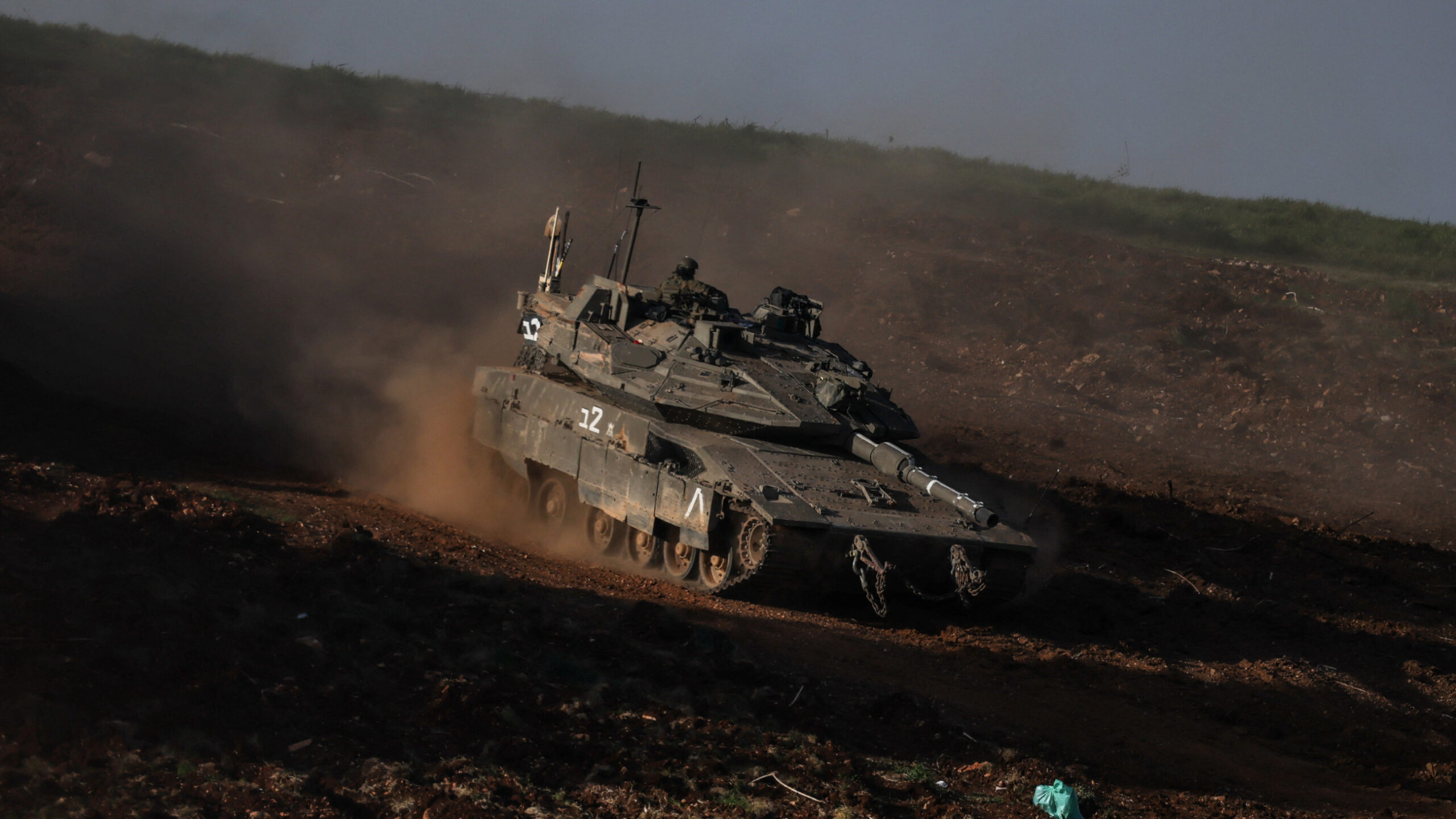
    The Israeli Defense Forces (IDF) have initiated a comprehensive enhancement of defensive readiness in response to escalating regional tensions originating from Iran. Military Chief Eyal Zamir issued direct orders for all army formations to strengthen their defensive capabilities, according to an official statement released Wednesday.

    IDF Spokesman Effie Defrin confirmed the strategic shift through an official communication on social media platform X, emphasizing that while the military remains vigilant, current developments in Iran are considered an internal matter of the Islamic Republic. “The IDF maintains continuous monitoring of regional developments and stands prepared defensively for potential surprise scenarios should the situation necessitate,” Defrin stated.

    The military leadership has been conducting regular situational assessments in recent days, though officials confirmed no changes to civilian defense guidelines at this stage. Defense authorities reiterated their commitment to providing public updates should the security landscape evolve.

    Concurrently, Israel’s Airports Authority reported normal operations across all aviation facilities, though travelers were advised to maintain communication with their airlines due to the volatile regional climate. This advisory comes amid widespread demonstrations that erupted in multiple Iranian cities during late December.

    The geopolitical context includes heightened rhetoric from U.S. President Donald Trump, who has repeatedly threatened military action against Iran if protesters face violence. Iranian officials have countered with warnings of potential targeting of U.S. and Israeli military installations in response to any aggression.

  • Watch: Aerial footage shows cars swept away by flash floods in Australia

    Watch: Aerial footage shows cars swept away by flash floods in Australia

    Dramatic aerial footage has emerged capturing the sheer force of flash floods that struck Australia’s southeastern state of Victoria, showing multiple vehicles being swept away by raging torrents. The devastating weather event prompted authorities to close the iconic Great Ocean Road on Thursday as a safety precaution amid rapidly deteriorating conditions.

    The sudden inundation transformed normally tranquil waterways into violent currents that overwhelmed roadways and infrastructure. Emergency services responded to numerous incidents across the affected regions, with rescue teams deployed to assist stranded motorists and residents. The flash flooding represents the latest in a series of extreme weather events to impact Australia in recent years, highlighting the increasing climate volatility facing the nation.

    Meteorological officials attributed the sudden flooding to an intense low-pressure system that delivered unprecedented rainfall amounts within a condensed timeframe. The phenomenon demonstrates how quickly weather conditions can change in coastal regions, particularly during Australia’s volatile spring season. Local authorities have issued warnings for residents to avoid floodwaters and heed evacuation recommendations where provided.

    The temporary closure of the Great Ocean Road, one of Australia’s most famous tourist routes, underscores the significant disruption caused by the extreme weather. The route’s closure affects both local communities and tourism operations along the scenic coastline, with economic implications for businesses reliant on the thoroughfare.

  • Hand-stitched Indian ship arrives in Oman to rousing welcome

    Hand-stitched Indian ship arrives in Oman to rousing welcome

    The Indian Navy’s traditionally crafted wooden sailing ship INSV Kaundinya has successfully completed a 17-day maritime journey from India to Oman, arriving in Muscat on Wednesday to a ceremonial water salute. This remarkable vessel, constructed entirely without engines or metal fastenings, embarked from Porbandar on India’s western coastline on December 29th, retracing ancient trade routes that once connected Indian civilization with global trading partners.

    Built using historical shipbuilding techniques that predate modern naval engineering, INSV Kaundinya represents a significant archaeological reconstruction. The vessel’s construction involved stitching wooden planks together with coir rope derived from coconut fiber, sealed with natural resin instead of modern adhesives. Propelled solely by square sails harnessing favorable winds, the ship embodies maritime traditions that were once commonplace throughout the Indian Ocean region.

    The vessel’s design inspiration originates from a 5th-century painting within the Ajanta caves of western India, considered among the few surviving visual records of early Indian seafaring technology. With no existing blueprints from that historical period, naval architects relied extensively on iconographic evidence and historical documentation to recreate the ship’s authentic form.

    Notable cultural elements adorn the vessel, including sails displaying Gandabherunda motifs (a mythical two-headed bird representing Lord Vishnu) and solar symbols. The bow features a sculpted Simha Yali—a mythical creature from South Indian lore—while the deck showcases a symbolic Harappan-style stone anchor, each element carefully selected to evoke India’s rich maritime heritage.

    Construction of INSV Kaundinya commenced in September 2023, culminating in its launch in Goa in February 2025. Among the crew members was Sanjeev Sanyal, an economic advisor to Prime Minister Narendra Modi, who documented the voyage through regular social media updates. Commander Hemant Kumar, the officer-in-charge, described the journey as both “exhilarating” and “adventurous,” noting challenges including extreme heat without air conditioning, basic sleeping arrangements, and periods of seasickness. The return schedule to India remains undetermined at this time.