分类: world

  • Venezuelans in Spain are caught between hope and fear after Maduro’s capture

    Venezuelans in Spain are caught between hope and fear after Maduro’s capture

    MADRID — The dramatic capture of Venezuelan leader Nicolás Maduro by U.S. forces has triggered powerful emotional responses among the 600,000 Venezuelan expatriates residing in Spain—the largest diaspora community outside the Americas. Many originally fled political persecution, violence, and economic collapse under Maduro’s regime, establishing new lives in Madrid’s healthcare, hospitality, and service industries.

    David Vallenilla, a 65-year-old Caracas native living in Madrid, received the news through frantic messages from relatives. His personal tragedy epitomizes the regime’s brutality: In 2017, his 22-year-old nursing student son was fatally shot point-blank by a Venezuelan soldier during protests. The widely circulated video of the incident became symbolic of state violence. After demanding justice, Vallenilla faced threats and relocated to Spain with NGO assistance. While acknowledging that nothing can restore his son, he views recent developments as potential light after years of darkness.

    Journalist Carleth Morales, who arrived in Madrid twenty-five years ago anticipating temporary studies, never envisioned Venezuela’s prolonged deterioration. She founded the Venezuelan Journalists Association in Spain, connecting hundreds of exiled professionals. Though skeptical about returning personally after decades abroad, she dreams of her daughters someday considering Venezuela a land of opportunity rather than trauma.

    Verónica Noya embodies the anguish of families with imprisoned relatives. Her husband, army Captain Antonio Sequea, remains in solitary confinement since 2020 for participating in a military operation against Maduro. With four relatives still detained, she awaits news of their promised release while struggling to explain her husband’s absence to their children. Despite obtaining Spanish citizenship through family roots, she maintains her Venezuelan identity and hopes for a democratic homeland.

  • Explosion causes large fire in Dutch town of Utrecht, at least four injured

    Explosion causes large fire in Dutch town of Utrecht, at least four injured

    A significant explosion triggered a massive blaze in the historic center of Utrecht, one of the Netherlands’ principal urban centers, on Thursday afternoon, resulting in at least four confirmed injuries. Emergency services rushed to the scene following the detonation, which ignited a ferocious fire that continued to rage for hours. Local municipal authorities confirmed to national broadcaster NOS that an emergency field hospital was rapidly established near the incident site to treat casualties and assist emergency responders. As of 4:30 PM GMT, the fire remained uncontained, with intense flames and structural instability preventing firefighters from entering the affected building to conduct search and rescue operations. The precise number of potential individuals still inside the structure remains unknown due to the ongoing dangers. Municipal officials have stated that the definitive cause of the explosion is currently under investigation, with no immediate determination available. The incident has drawn a substantial emergency response, with multiple fire crews, paramedics, and police units deployed to secure the area and provide assistance.

  • Indian embassy issues safety advisory for its nationals in Israel amid regional tensions

    Indian embassy issues safety advisory for its nationals in Israel amid regional tensions

    The United States has implemented a new sanctions regime targeting senior Iranian officials believed to be responsible for the violent suppression of nationwide protests. This decisive action represents a significant escalation in diplomatic pressure against Tehran’s human rights record.

    Concurrently, the Israeli Defense Forces conducted precision military strikes against multiple Hezbollah positions across southern Lebanon. The operations targeted what military officials described as terrorist infrastructure and launch sites that pose an immediate threat to Israeli security.

    These parallel developments reflect the continuing volatility in Middle Eastern geopolitics, where internal civil unrest and cross-border tensions frequently intersect. The U.S. Treasury Department specifically identified several high-ranking figures within Iran’s security apparatus for their roles in quelling dissent through excessive force. Asset freezes and travel bans have been imposed on these individuals, effectively cutting them off from the global financial system.

    Meanwhile, the Israeli military operations represent the most substantial engagement along the Lebanon-Israel border in recent months. Military analysts suggest these strikes constitute a proactive response to heightened threat levels from the Iran-backed militant group, which continues to maintain substantial arsenals along Israel’s northern frontier.

    The geopolitical implications of these simultaneous actions highlight the complex interplay between domestic governance issues and regional security dynamics. Both developments underscore the ongoing proxy conflicts and ideological divisions that continue to shape the Middle East’s strategic landscape.

  • Kuwait army concludes emergency drill for radioactive, biological, chemical incidents

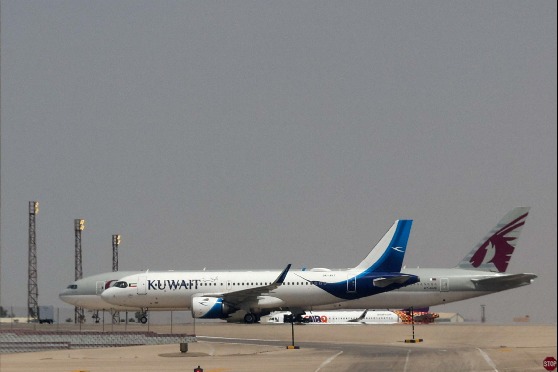
    Kuwait army concludes emergency drill for radioactive, biological, chemical incidents

    The United States has implemented a new wave of sanctions targeting senior Iranian officials implicated in the violent suppression of domestic protests, according to an announcement from the Treasury Department. The sanctions specifically name multiple high-ranking leaders within Iran’s security apparatus and morality police units, freezing any U.S.-based assets and prohibiting American entities from conducting business with them.

    Concurrently, the Israeli Defense Forces conducted precision airstrikes against Hezbollah operational sites across southern Lebanon. Military spokespersons confirmed the strikes targeted weapons depots, observation posts, and command centers belonging to the Iranian-backed militant group. The operations were characterized as defensive measures against perceived imminent threats along Israel’s northern border.

    The dual developments highlight escalating tensions in the Middle East, where Iran’s internal governance conflicts intersect with its regional proxy warfare strategies. Washington’s sanctions reflect continued pressure on Tehran’s human rights record, while Israel’s military actions demonstrate ongoing security concerns regarding Iranian-sponsored militant activities near its borders.

    Regional analysts note these simultaneous actions represent the complex multidimensional nature of Middle Eastern conflicts, where domestic governance issues frequently intertwine with international security concerns. The United States and Israel maintain coordinated strategies regarding Iranian influence, though officials stress these specific actions were independently timed.

  • Christian schools in Jerusalem suspend classes to protest at Israeli restrictions

    Christian schools in Jerusalem suspend classes to protest at Israeli restrictions

    Christian educational institutions in Jerusalem have initiated a significant escalation of protest measures, including widespread class suspensions and a comprehensive strike. This decisive action represents a forceful rejection of Israeli administrative policies that school administrators characterize as arbitrary and disruptive to their educational operations.

    The catalyst for this educational crisis emerged when Israeli authorities implemented stringent restrictions on work permit renewals for educators residing in the West Bank. This bureaucratic intervention has created substantial staffing shortages, directly compromising the educational experience for thousands of students across Jerusalem’s Christian school system.

    According to institutional data, these 15 Christian schools collectively educate more than 12,000 students while employing 820 educational professionals. Among these, 235 teachers holding West Bank identification cards issued by the Palestinian Authority have been particularly affected. These educators traditionally secured access through entry permits renewed at each academic term’s commencement.

    At the beginning of the current term, the Israeli Civil Administration implemented a new permit protocol: outright denial for some educators, placement under administrative review for others, and issuance of restricted third-category permits valid only for specific weekdays for the remainder.

    Ibrahim Faltas, Principal of Terra Sancta School in Jerusalem, revealed to Middle East Eye that the majority of West Bank teachers now lack comprehensive permits, specifically prohibiting their entry into Jerusalem on Saturdays—a regular school day within the Christian educational calendar. Faltas emphasized this represents an unprecedented administrative approach, noting that despite official assurances of resolution, numerous educators continue facing permit denials.

    “The operational challenge is profound,” Faltas explained. “These West Bank teachers bring over two decades of invaluable classroom experience that cannot be readily replaced. Furthermore, we are confronting the potential economic devastation of 235 families whose livelihoods are now imperiled.”

    Beyond their educational excellence, Jerusalem’s Christian schools maintain historical significance as among the city’s most prestigious institutions, maintaining affiliations with all Christian denominations in Jerusalem without exception.

    Reverend Munther Ishaq, Pastor of the Evangelical Lutheran Church in Bethlehem, characterized the timing as revealing governmental hypocrisy. “While presenting themselves as protectors of Christian communities, they simultaneously undermine Christian education through permit restrictions,” he stated. Ishaq condemned the permit system as fundamentally unacceptable, arguing it perpetuates occupation dynamics and systemic injustice.

    “The suggestion that military-issued permits constitute some form of generosity is offensive,” Ishaq continued. “We are indigenous people with two millennia of continuous worship in this land. Now we must secure military authorization to teach in schools that predate the Israeli state itself.”

    Reverend Ishaq interpreted these developments as evidence of systematic targeting of Christian presence in Jerusalem, part of broader efforts to reshape the city’s religious character through Judaization policies.

    Education analysts note this crisis occurs within a context of systematic challenges facing Jerusalem’s educational sector. These include forced curriculum changes, financial pressures through funding mechanisms, operational licensing complications, and infrastructure neglect resulting in severe classroom shortages.

    According to the Faisal Husseini Foundation, which specializes in Jerusalem education statistics, the city requires approximately 80 new classrooms annually to accommodate population growth. Israeli authorities typically provide fewer than half this number, creating a cumulative deficit exceeding 10,000 school places.

    Fakhri Abu Diab, a Jerusalem affairs researcher, argues Israel pursues a coordinated strategy to control educational content and institutional administration. “The ultimate objective appears to be reshaping student mentality and cultural awareness,” Abu Diab suggested. “This constitutes a comprehensive campaign against Arab educational culture throughout Jerusalem.”

  • 16 Indian ship crew members detained in Iran; family appeals to PM Modi

    16 Indian ship crew members detained in Iran; family appeals to PM Modi

    The United States has intensified its diplomatic and economic pressure on Iran by imposing sanctions on key security officials implicated in the violent suppression of domestic protests. Concurrently, escalating tensions along Israel’s northern border culminated in the Israeli military executing targeted strikes against Hezbollah positions within Lebanese territory.

    The U.S. Treasury Department’s Office of Foreign Assets Control (OFAC) designated multiple Iranian leaders for their roles in the government’s crackdown on widespread civil unrest. These sanctions specifically target commanders within the Islamic Revolutionary Guard Corps (IRGC) and Iran’s Law Enforcement Forces (LEF), effectively freezing any U.S.-based assets and prohibiting American entities from conducting business with them. This action represents a direct response to allegations of severe human rights abuses against demonstrators.

    In a separate but regionally linked development, the Israeli Defense Forces (IDF) launched aerial and artillery assaults on what they identified as Hezbollah military infrastructure across several areas in southern Lebanon. Israeli authorities stated the operation was a retaliatory measure against repeated cross-border attacks and was aimed at neutralizing imminent threats. The strikes targeted launch sites, observation posts, and other assets belonging to the Iranian-backed militant group.

    Analysts observe that these simultaneous events highlight the volatile and interconnected nature of security dynamics in the Middle East. The U.S. sanctions underscore a continued strategy of confronting Iranian aggression both domestically and through its proxy networks, while Israel’s military actions demonstrate a low tolerance for threats on its borders. The situation continues to develop with potential implications for regional stability.

  • UAE calls for more international efforts to achieve peace, stability in Yemen

    UAE calls for more international efforts to achieve peace, stability in Yemen

    In a significant escalation of international pressure, the United States has imposed targeted sanctions on senior Iranian leadership figures directly implicated in the violent suppression of domestic protests. The measures are designed to freeze U.S.-based assets and prohibit any financial transactions with the designated individuals, representing a clear condemnation of their roles in human rights abuses.

    Concurrently, the Israeli Defense Forces (IDF) launched precision military strikes against multiple Hezbollah operational sites and infrastructure across southern Lebanon. The IDF characterized the operation as a ‘response to imminent threats’ and a direct retaliation for recent attacks originating from Lebanese territory. The strikes targeted what were described as Hezbollah military compounds and launch positions.

    These parallel developments underscore the volatile and interconnected nature of security dynamics in the Middle East. The U.S. action reflects a continued policy of confronting the Iranian regime’s internal and external activities, while Israel’s military response highlights the ongoing, low-intensity conflict along its northern border with the Iranian-backed Hezbollah militia. Both events signal a potential hardening of positions and a likely continuation of regional tensions.

  • Pakistan hopes immigrant visas will resume soon as US announces suspension

    Pakistan hopes immigrant visas will resume soon as US announces suspension

    The United States has implemented targeted sanctions against senior Iranian leadership figures directly implicated in the violent suppression of domestic protests, according to an official announcement from the Treasury Department. The sanctions specifically name multiple Iranian officials connected to the Islamic Revolutionary Guard Corps and law enforcement agencies, freezing any U.S.-based assets and prohibiting American entities from conducting business with them.

    Concurrently, the Israeli Defense Forces conducted precision airstrikes against Hezbollah operational positions across multiple regions of southern Lebanon. Military officials confirmed the strikes targeted weapons storage facilities and command centers in response to recent cross-border attacks. The escalation marks one of the most significant military exchanges between Israel and Hezbollah since the 2006 Lebanon War, raising concerns about broader regional instability.

    The coordinated international pressure on Iran’s leadership and the heightened military activity along the Israel-Lebanon border represent escalating tensions in the Middle East. Regional analysts note that these developments occur amid stalled nuclear negotiations and increasing Iranian military cooperation with Russia, creating a complex geopolitical landscape that threatens to further destabilize the region.

  • Israeli military strikes Hezbollah targets in several areas in Lebanon

    Israeli military strikes Hezbollah targets in several areas in Lebanon

    The Israeli Defense Forces launched targeted operations against Hezbollah positions across multiple locations in southern Lebanon on Thursday, January 15, 2026, marking a significant escalation in regional tensions despite an existing ceasefire arrangement. The military actions were preceded by formal evacuation warnings issued to residents of Sohmor village through official channels, including social media announcements from Colonel Avichay Adraee, the military’s Arabic-language spokesperson.

    The strategic strikes targeted what Israeli authorities described as ‘terrorist military infrastructure’ allegedly being reconstructed by Hezbollah in violation of the November 2024 ceasefire terms. This development comes precisely one week after Lebanese military forces reported completing the initial phase of disarming Hezbollah operations south of the Litani River, a claim that Israeli officials have publicly dismissed as inadequate.

    Prime Minister Benjamin Netanyahu’s administration reiterated its firm position that the ceasefire agreement explicitly requires complete disarmament of Hezbollah forces. The ongoing military operations demonstrate Israel’s continued commitment to unilateral action when deemed necessary for national security purposes, regardless of diplomatic arrangements.

    According to Lebanon’s National News Agency, the region has experienced intensified violence in recent days, with reports of ‘violent Israeli strikes’ affecting multiple southern towns including Jezzine, Mahmudiyeh, Al-Dimasqiyeh, and Al-Bureij, where over ten separate strikes were recorded just days prior to Thursday’s operations. The persistent hostilities suggest a deteriorating security situation along the Lebanon-Israel border despite theoretical peace agreements.

  • Public pay their respects to Cubans killed in Venezuela during US raid

    Public pay their respects to Cubans killed in Venezuela during US raid

    The streets of Havana witnessed a profound display of collective mourning as citizens gathered to honor the memory of their compatriots killed during a recent cross-border security operation in Venezuela. The incident, which involved a US-led raid, has sparked significant emotional outpouring and diplomatic tensions. In the Cuban capital, residents formed solemn processions, demonstrating a powerful sense of national solidarity. The fatalities, reported to be Cuban nationals, occurred during a contentious military action on Venezuelan soil, further complicating the already strained relations between Havana and Washington. This public demonstration serves not only as a memorial but also as a silent protest against foreign intervention, highlighting the deep-seated grievances and the human cost of international geopolitical conflicts. Local authorities observed the gatherings, which remained peaceful yet charged with emotion, reflecting the community’s call for justice and sovereignty.