分类: world

  • Attack on Saudi Arabian pipeline wiped out 10 percent of kingdom’s oil export capacity

    Attack on Saudi Arabian pipeline wiped out 10 percent of kingdom’s oil export capacity

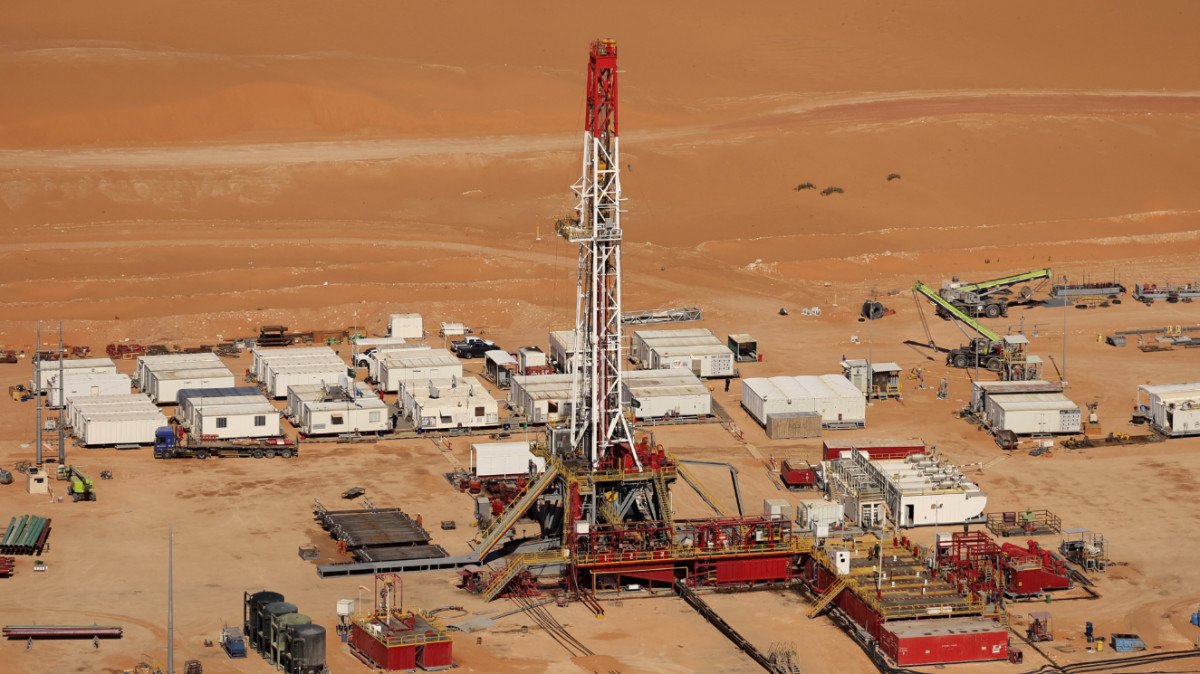
    In a landmark official statement released Thursday, Saudi Arabia’s energy ministry confirmed that coordinated attacks on its critical East-West oil pipeline have eliminated 700,000 barrels per day (bpd) of production capacity — equal to roughly 10 percent of the kingdom’s current total oil exports.

    The ministry’s announcement marked the first time Riyadh has publicly acknowledged that Iranian strikes have caused meaningful damage to its national energy infrastructure, a revelation that lands just 48 hours before high-stakes US-Iran peace negotiations are set to kick off in Islamabad, Pakistan. Among the targets hit was a key pumping station along the East-West pipeline, the kingdom’s primary alternative route for getting Gulf crude to global markets after Iran blocked commercial vessel traffic through the Strait of Hormuz, the world’s busiest chokepoint for oil trade. Connecting Saudi Arabia’s oil-rich Gulf coast to the Red Sea export terminal at Yanbu, the pipeline had previously been operating at full 7 million bpd capacity, per earlier reporting from Bloomberg. The attack cut that pumped volume by 10 percent overnight.

    Beyond the pipeline strike, Riyadh also confirmed that two major oil processing facilities, Manifa and Khurais, were targeted in earlier Iranian attacks. Those strikes reduced combined production capacity at the two sites by an additional 600,000 bpd. Iranian forces also struck major refining complexes in four key Saudi locations: Jubail, Ras Tanura, Yanbu and the capital Riyadh. Those hits have directly cut into the kingdom’s ability to ship refined petroleum products to global buyers.

    In its official statement, the energy ministry warned that the ongoing wave of attacks on Saudi energy infrastructure carries severe consequences for global energy security. “The continuation of these attacks leads to supply shortages and slows the pace of recovery, impacting the security of supplies for beneficiary countries and contributing to increased volatility in oil markets,” the statement read.

    The public confirmation marks a sharp shift from Riyadh’s previous approach, which saw the kingdom stay largely silent on damage from repeated attacks on its energy assets. The announcement comes amid a fragile ceasefire between the US and Iran, announced earlier this week, that Saudi Arabia has publicly welcomed. Multiple international outlets including the Financial Times have reported that other Gulf states including the United Arab Emirates, Qatar and Kuwait have also faced continued Iranian strikes in recent days, though violence had tapered off by Thursday.

    Diplomatic preparations for the Saturday talks in Pakistan have accelerated in recent days. On Thursday, Saudi Foreign Minister Prince Faisal bin Farhan held separate calls with his Pakistani counterpart Mohammad Ishaq Dar and US Secretary of State Marco Rubio. As a close strategic partner of both Islamabad and Riyadh, Pakistan’s role as mediator for the talks was only possible with explicit approval from the Saudi government, unnamed diplomats told Middle East Eye. The talks come amid shifting geopolitical alignments in the region: earlier reporting from MEE confirmed that Saudi Arabia recently granted the US military access to King Fahd Air Base in western Saudi Arabia, after Washington pressured Riyadh to back the US-Israeli campaign against Iran.

  • Pope’s Africa trip takes him to a source of growth for the church, and critical challenges

    Pope’s Africa trip takes him to a source of growth for the church, and critical challenges

    VATICAN CITY – A landmark papal journey is set to kick off Monday, as Pope Leo XIV makes his first visit to Algeria, launching an 11-day, 11,000-mile trek across four African nations that underscores both the rapid growth of Catholicism on the continent and the complex challenges it and local communities face. The sweeping itinerary, which includes stops in Algeria, Angola, Cameroon and Equatorial Guinea, requires 18 separate flights and will see the 70-year-old pontiff deliver addresses and homilies in four languages: French, Spanish, Portuguese and English. The logistical scale of the journey has drawn comparisons to the extensive global travels of a young St. John Paul II. When Leo identified himself as “a son of St. Augustine” on the night of his election, many Algerians initially interpreted the comment as a reference to ancestral ties to the North African nation, where the 5th-century Christian leader lived and died. While the line actually referenced Leo’s commitment to Augustinian spirituality, the connection to one of Christianity’s most influential figures – who is widely recognized by Algeria’s Sunni Muslim majority – has already served as a warm opening for the pontiff’s visit. This tour marks a deliberate priority on Africa, a region that has become central to the global expansion of the Catholic Church, yet carries a unique set of social, political and theological challenges that Leo will directly address. Across the four nations, which span vastly different cultural and historical contexts, Leo’s agenda covers a broad spectrum of pressing issues. Key themes include the human and environmental costs of unregulated resource extraction – a critical concern in a region that supplies much of the world’s oil, yet where a large share of the population lives in deep poverty. He will also address systemic corruption in long-ruling authoritarian regimes, and peace-building in regions torn by sectarian and separatist conflict. In Cameroon, where Catholics make up 29% of the population, organizers expect massive turnout, with as many as 600,000 faithful set to attend one of Leo’s public Masses. The pontiff will also host a dedicated peace gathering in Bamenda, a northwestern city that has been ravaged by years of separatist violence. For local Catholic believers, the visit is a moment of profound spiritual significance. “To see His Holiness Pope Leo XIV arrive in Cameroon, for us who are Catholic Christians, it further strengthens our faith, it further strengthens our ties with our God,” said Simon Pierre Ngombo, a Cameroonian Catholic. “It is a perfect moment to touch each other’s hearts.” For Algeria, the visit offers a high-profile platform for Leo to advance his push for peaceful coexistence between Christians and Muslims, at a moment of heightened global religious tension tied to the U.S.-Israeli conflict in Iran. Notably, Vatican officials confirmed that no additional security measures have been added for the trip despite ongoing regional instability. Leo, who has already positioned himself as a moderate counterweight to U.S. President Donald Trump within American religious circles, will visit the Great Mosque of Algiers, where interfaith dialogue will be a core focus of discussion, according to Algiers Archbishop Cardinal Jean-Paul Vesco. Algeria carries a painful modern history: a brutal 1990s civil war, known locally as the “black decade,” killed an estimated 250,000 people during a government campaign against an Islamist insurgency. Just last year, the country took a major step toward addressing its colonial past, when parliament voted to formally label 130 years of French colonization a crime against the Algerian people, and called for restitution of property seized during colonial rule. “The visit acts as a bridge between the Christian and Muslim worlds, while reflecting the richness of the country’s history,” Vesco told Algeria’s official news agency APS. However, the trip has already seen one notable point of disagreement: Algerian authorities rejected a Vatican request for Leo to travel to Médéa, 30 miles south of Algiers, to pray at the site of the Tibhirine monastery, where seven French Trappist monks were abducted and killed by Islamist fighters in 1996, during the civil war. The monks were among 19 Catholic clergy and laypeople killed during the conflict, and were beatified as martyrs for the faith in 2018, in the first such ceremony ever held in a majority-Muslim nation. In a commentary supporting the government’s decision, state-run daily El Moudjahid noted that “Algeria has no intention of reopening a painful chapter of its history,” though Leo is still expected to acknowledge the monks’ sacrifice during his visit. Beyond interfaith dialogue, the tour shines a light on the dramatic transformation of the Catholic Church in Africa. Recent Vatican statistics show that the continent accounted for more than half of all new Catholic baptisms globally in 2023, adding 8.3 million new faithful to the church. What was once a region dependent on Western missionary work now exports thousands of priests and nuns to congregations around the world every year. Angola and Cameroon are consistently among the top African countries for new priestly vocations: as of December 2024, Angola counted 2,366 seminarians, while Cameroon had 2,218, ranking just behind leading vocation hubs Nigeria, the Democratic Republic of Congo and Tanzania. But this exponential growth has brought significant growing pains, as the church adapts to local cultural contexts while upholding core theological doctrines. Past popes have repeatedly reminded African clergy of the requirement to uphold celibacy vows, and a 2009 visit to Angola and Cameroon by Pope Benedict XVI was overshadowed by global backlash to his claim that condoms worsen the global AIDS crisis, a statement widely condemned by public health experts. Today, one of the most pressing challenges the Vatican faces in Africa is ethnic division within church leadership, particularly in the selection of bishops. According to the Rev. Fortunatus Nwachukwu, second-in-command at the Vatican’s missionary evangelization office, bishops assigned to multi-ethnic dioceses are frequently rejected by local clergy and faithful based on their ethnic origin. Nwachukwu terms this trend the “son of the soil syndrome,” noting that the Vatican emphasizes the identity of “son of the church” over ethnic affiliation. Another longstanding point of tension is the traditional practice of polygamy, which African bishops have repeatedly raised as a critical cultural issue for the church. In response, the Vatican released a full doctrinal document last year reaffirming the church’s commitment to monogamous marriage, and convened a special working group to study the issue. Catholic doctrine holds that marriage is a lifelong, monogamous union between one man and one woman, a position that clashes with longstanding cultural norms in many rural and nomadic African communities, where multiple wives and large families are often seen as an economic necessity for survival. Vatican spokesman Matteo Bruni confirmed that Leo will hold multiple meetings with clergy, bishops and lay faithful during the tour to reaffirm the church’s teaching on Catholic family life. Leo will also turn a spotlight on the harms of resource extraction and corruption in former European colonies that are now major global suppliers of oil, gold, diamonds and iron. While these industries have driven economic growth in recent decades, the benefits have largely accrued to a small elite, while local communities and the environment have suffered severe harm. This issue is particularly acute in Equatorial Guinea, where President Teodoro Obiang Nguema Mbasogo has held power since 1979, and he and his family face widespread international accusations of systemic corruption and authoritarian rule. This focus on environmental justice and economic equity aligns with the legacy of Pope Francis, who centered these themes in his landmark 2015 environmental encyclical *Laudato Si’* (Praised Be), a document Leo has openly endorsed and actively promoted. This Associated Press religion coverage is produced through a collaboration with The Conversation US, with funding from Lilly Endowment Inc. The AP retains sole responsibility for all content.

  • US military bases in Gulf ‘useless’ after Iranian strikes, experts say

    US military bases in Gulf ‘useless’ after Iranian strikes, experts say

    A group of leading Middle East policy experts warned Thursday that extensive damage to over a dozen U.S. military installations across the Gulf region from Iran’s retaliatory strikes has flipped the strategic calculus of America’s decades-long military presence in the area – turning long-held security assets into major liabilities that create more risk than they mitigate.

    Details of the severe damage to the bases, which multiple outlets have described as effectively uninhabitable, were first revealed in a New York Times report last month, but the Trump administration has still not publicly confirmed the full scope of the destruction.

    Speaking at the Arab Center Washington DC’s annual conference, Marc Lynch, director of George Washington University’s Project on Middle East Political Science, called the bases the physical foundation of decades of American primacy in the Middle East, noting Iran effectively rendered that infrastructure useless in just one month. Lynch emphasized that U.S. officials have failed to release a full, transparent accounting of the damage sustained across the installations, which are tightly restricted by both the Pentagon and host Gulf nations including Bahrain, Saudi Arabia, the United Arab Emirates, Kuwait, Qatar, and Oman.

    Lynch shared that regional contacts have shared on-the-ground imagery of damage to Naval Support Activity Bahrain, the headquarters of the U.S. Fifth Fleet that hosts roughly 9,000 U.S. military personnel. He argued that the widespread damage to regional bases has made the strategic position of the Fifth Force in Bahrain untenable, saying the risk of further attacks is too great to reestablish a full permanent presence there. “So in a sense, the entire purpose of ‘America’s Middle East’ has come crashing down [and] we don’t have an alternative way yet of articulating or thinking about what might replace it,” Lynch added.

    In total, 19 publicly acknowledged U.S. military sites are spread across the broader Middle East, stretching from Egypt to Iraq and from northern Syria to southern Oman, holding up to 50,000 total U.S. service members. The U.S. military presence in the region dates to the late 1950s, but the large-scale network of active bases in the Gulf took shape after the 1990 Gulf War, built on a long-standing core agreement: the U.S. would provide security guarantees to Gulf states in exchange for access to energy resources and a stable petrodollar system.

    That decades-old arrangement has now collapsed following the recent wave of Iranian strikes that came in response to U.S. and Israeli attacks, experts say. Gulf states have been forced to drain their air defense interceptor stockpiles, shut down civilian airports and schools, and suffer major damage to key energy production facilities, eroding any remaining benefits of the security agreement for host nations.

    Shana R Marshall, associate director of George Washington University’s Institute for Middle East Studies, told the conference that as the benefits of the transactional relationship between the U.S. and Gulf states have eroded sharply, the bilateral relationship is inevitably fraying. Marshall noted that tensions over U.S. basing are not new, pointing to the 1996 Khobar Towers bombing that killed 19 U.S. service members in Saudi Arabia, and al-Qaeda founder Osama bin Laden’s long-stated core grievance over the permanent presence of U.S. troops in the Gulf. “Close relations with the U.S., whether it’s U.S. military bases or promoting normalisation with Israel, or enforcing U.S. sanctions or maintaining the dollar peg of their currencies, is less a benefit now than actually a liability,” Marshall explained.

    Trita Parsi, executive vice president of the Quincy Institute for Responsible Statecraft, added that the seven-week escalation has made clear Gulf states can no longer count on the U.S. as a reliable security partner, a sentiment amplified by the recent ceasefire deal that failed to explicitly end Iranian attacks on U.S.-linked assets across the Gulf. The omission has left many Gulf leaders feeling betrayed, Parsi said.

    “Those bases were not a deterrent against Iranian attacks. Instead, they became the target of those attacks. They became magnets for those attacks, and as a result, reliance on the American security umbrella really seems to be in shatters,” Parsi explained.

    Parsi outlined one likely outcome of this shift: disillusioned Gulf states that cannot reach a new security accommodation with Iran may pivot toward Israel as an alternative security partner. Unlike the 2020 Abraham Accords, which were anchored by explicit U.S. security guarantees, Parsi said this potential shift could happen even without major new concessions from the U.S., driven purely by Gulf states’ loss of faith in American security commitments. “There may be some sort of a gravitation towards Israel among some of these [Gulf] states, if they believe that they either cannot or do not want to find a new relationship with Iran,” he added.

  • Spreading Islamist insurgency dominates Benin’s presidential campaign

    Spreading Islamist insurgency dominates Benin’s presidential campaign

    As Benin prepares for a pivotal presidential election on Sunday, the entire campaign season has been overshadowed by growing alarm over the expansion of a violent Islamist insurgency that has already destabilized much of West Africa, turning this once largely peaceful nation into the conflict’s latest front line.

    The vote comes just four months after outgoing two-term President Patrice Talon survived a coordinated coup attempt, a crisis that was only averted when regional power Nigeria deployed warplanes to target mutinous soldiers plotting to overthrow his civilian government. Nigeria’s swift intervention stopped Benin from following the trajectory of neighboring Niger, Burkina Faso and Mali, all of which have fallen to military takeovers in recent years amid widespread public anger over civilian governments’ failure to counter al-Qaeda and Islamic State-affiliated militant groups.

    Benin’s own vulnerability to the insurgency was underscored in late March, when fighters from Jama’a Nusrat al-Islam wal-Muslimin (JNIM), an al-Qaeda affiliate, killed 15 Beninese soldiers in a raid on a military outpost in Kofouno, near the Niger border. The attack continued a deadly pattern that emerged in 2025: that January, 28 soldiers died in an assault on W National Park, a vast protected reserve that spans Benin, Niger and Burkina Faso, and a further 54 troops were killed in the same area just three months later, marking the deadliest single string of losses for Benin’s military at the hands of insurgents.

    W National Park, along with adjacent Pendjari and Arly Parks, forms West Africa’s largest contiguous protected wilderness, covering more than 1.7 million hectares of dense forest. Combined with the region’s highly porous international borders, the terrain provides ideal cover for militants to establish hidden bases and cross between countries undetected by security forces.

    According to the Armed Conflict Location & Event Data Project (Acled), a violence monitoring organization, attacks in the border triangle linking Niger, Benin and Nigeria have spiked dramatically over the past 18 months, turning once-quiet remote transit routes into active conflict zones. Acled data shows that at least 1,000 people were killed in this border region in 2025, more than double the death toll recorded in 2024.

    The rising violence has spread fear and disruption among local communities, who now worry their country could face the same level of devastation that neighboring Nigeria has endured from decades of Boko Haram insurgency. “We only want to work, to educate the youth, but it’s becoming so difficult,” a local school teacher told the BBC. “We can’t imagine our country becoming like Nigeria with Boko Haram’s threats, which has killed so many people.” A mother of one added: “We are afraid to go to the fields. I don’t know what to do, where to go. Anytime, those guys could come here and rape us, steal our stuff or kill us. It’s not easy. Benin doesn’t deserve this. The youth don’t deserve this.”

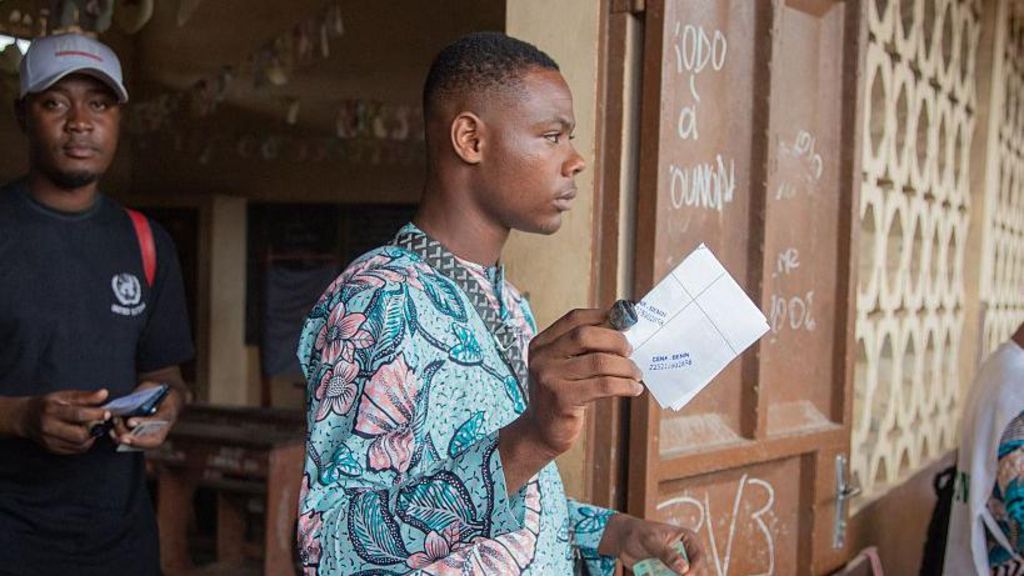
    Heading into Sunday’s vote, the race for the presidency is a two-candidate contest between Romuald Wadagni, the 49-year-old incumbent finance minister and ruling coalition candidate who is currently the poll front-runner, and 56-year-old challenger Paul Hounkpè, a former culture minister.

    In a bid to ease voter anxieties over security, Wadagni opened his campaign in March in Kandi, a key trade hub near the Niger-Nigeria border, before touring other violence-hit northern localities including Banikoara and Ségbana. Addressing thousands of cheering supporters, he pledged to make the safety of all Beninese citizens a non-negotiable daily priority if elected. “We will not let any dark forces come and take our lands or threaten citizens,” Wadagni said. “We will make sure our whole country is under protection.”

    Hounkpè, who launched his campaign from Benin’s economic capital Cotonou, has echoed the focus on security while calling for a major shift in regional diplomacy. “We must join forces with our neighbours without losing our dignity,” he said. “Benin cannot act alone, close cooperation with Niger and Burkina Faso is essential.”

    Hounkpè’s call for detente carries particular weight, as relations between Benin and the coup-ruled military governments of Niger and Burkina Faso have collapsed since 2023. Benin is a member of the Economic Community of West African States (ECOWAS), which suspended the membership of the three coup-hit nations and initially threatened military intervention to restore civilian rule in Niger. In response, the three military-led states formed a separate political alliance, reoriented their foreign policy toward Russia, and accused ECOWAS of acting as a proxy for Western powers – a claim the regional bloc denies.

    While Wadagni has also signaled openness to improving ties with the military governments, he is widely viewed as closer to Western powers than Hounkpè. Relations between Benin and Niger, currently led by Gen Abdourahmane Tiani, are particularly strained: Niger has kept its border with Benin closed since Tiani seized power in 2023, citing what it calls “hostile manoeuvres” originating from Benin’s territory, a charge Talon’s outgoing government rejects.

    The election comes as Talon steps down after completing two full terms in office. His supporters argue he has preserved Benin’s standing as a stable civilian democracy, a key distinction at a time when military leaders in the region such as Burkina Faso’s Capt Ibrahim Traoré have publicly argued that democracy “kills” and that populations must abandon democratic governance. But Talon’s critics say democratic institutions have eroded during his tenure, pointing to changes to electoral and party registration laws that have drastically reduced opposition participation in national politics.

    The new rules led to the main opposition bloc, The Democrats, being completely shut out of all seats in January’s parliamentary elections. The party’s intended presidential candidate was also disqualified from Sunday’s vote, after failing to secure the required number of candidate sponsorships. In a recent analysis, the South Africa-based Institute for Security Studies noted that Hounkpè’s qualification for the race was only possible through a political arrangement with the ruling coalition, which provided the sponsorship signatures he needed to meet legal requirements.

    With the main opposition excluded from the contest, many high-profile Democrats have thrown their support behind front-runner Wadagni, a move widely seen as a pragmatic bet on his likely victory and expectation of future government posts. Hounkpè, however, remains confident he can pull off an electoral upset, framing himself as the candidate of real change for Benin.

    Regardless of which candidate claims victory on Sunday, most Beninese voters are anticipating a peaceful transfer of power, and share the same core hope: that the new administration will make greater progress repairing strained regional relations and rolling back the insurgency that has brought growing violence and uncertainty to the country’s northern borderlands.

  • Russia and Ukraine agree to truce for Orthodox Easter

    Russia and Ukraine agree to truce for Orthodox Easter

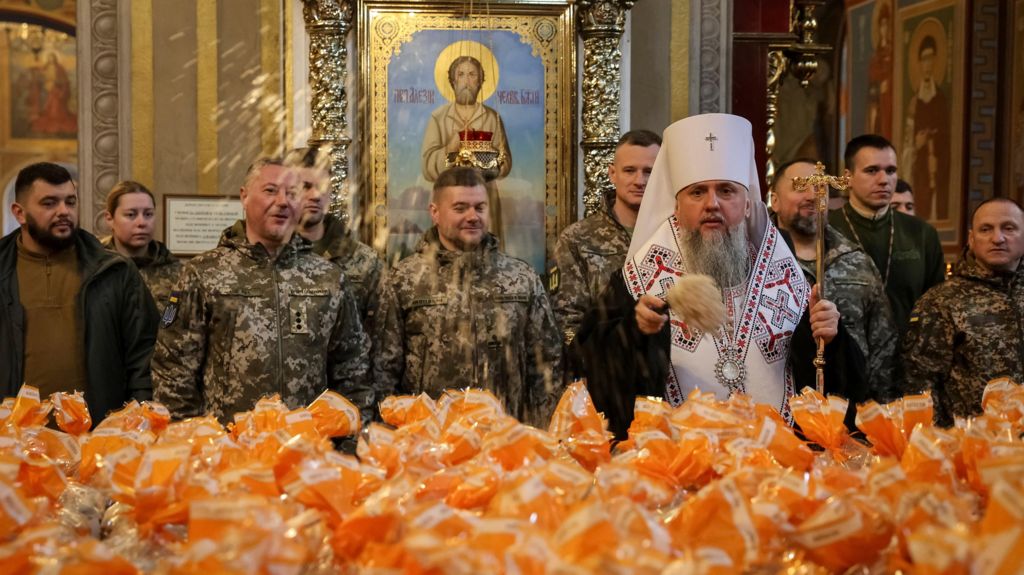
    In the heart of Kyiv’s St. Michael’s Cathedral on April 9, 2026, a solemn yet hopeful ceremony unfolded days before Orthodox Easter. Metropolitan Epiphanius I, the primate of the Orthodox Church of Ukraine, performed a blessing by sprinkling holy water over stacks of Easter cakes, all bound for Ukrainian troops holding defensive positions along the country’s frontlines. This quiet act of spiritual support comes as both Moscow and Kyiv have formally announced a temporary ceasefire set to coincide with the religious holiday, a rare break in a conflict that has stretched on for years.

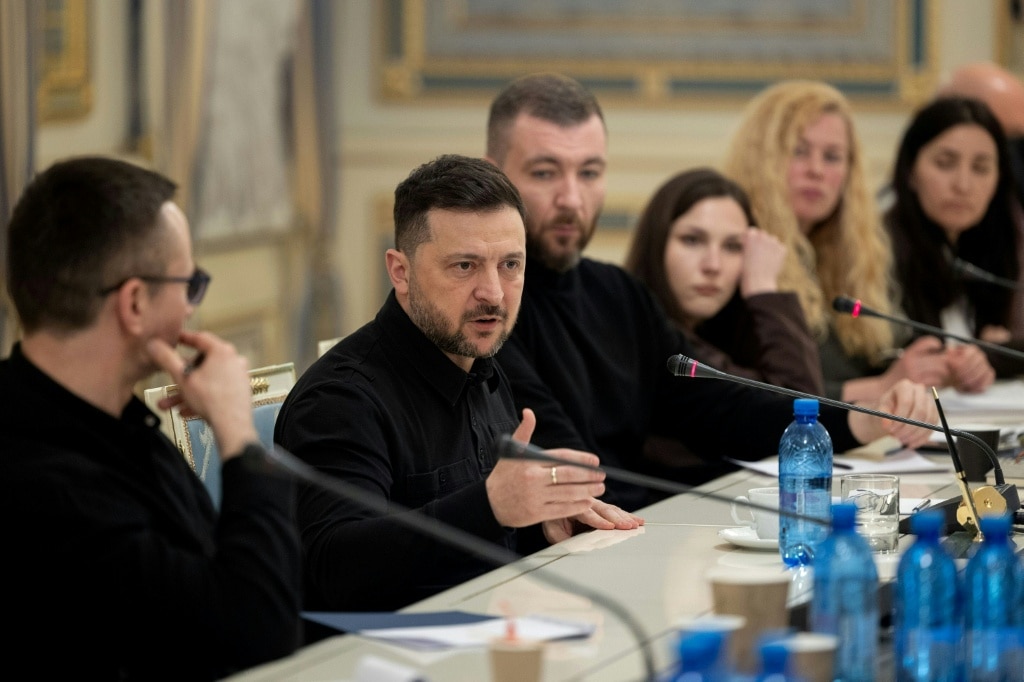
    The path to this truce began with repeated ceasefire appeals from Ukrainian President Volodymyr Zelensky, all of which were previously rejected by the Kremlin. In an unexpected shift, Russian President Vladimir Putin announced that he had ordered all Russian military forces to hold their fire across the entire frontline from 16:00 local time (14:00 BST) on April 11 through Easter Sunday. Putin added that he expected Ukraine to mirror Russia’s gesture, while also ordering his troops to remain on high alert to respond to any perceived Ukrainian provocations or aggressive actions.

    This framing of the truce, which positions Russia as the initiator to seize diplomatic initiative, has historically created friction with Ukrainian officials, but Kyiv moved quickly to confirm its willingness to match the pause. Shortly after Putin’s announcement, Zelensky published a post on X confirming Ukraine would take reciprocal steps. “People need an Easter free from threats and real movement toward peace,” he wrote, adding that Russia had an opportunity to extend the pause beyond the holiday weekend rather than resuming offensive strikes.

    Days earlier, Zelensky revealed he had asked the United States to relay his proposal for a holiday truce to Moscow, framing the temporary pause as a small but critical first confidence-building step toward broader peace talks. For frontline soldiers who face constant harassment from Russian attack drones along the hundreds of kilometers of eastern front, any halt to active fighting would bring much-needed relief. The truce would also grant a rare reprieve to civilians across Ukraine, where daily air raid sirens, regular Russian missile and drone strikes have become a normalized part of life, with civilian casualties reported just days before the truce announcement.

    Just last week, multiple civilians were killed when a drone struck a passenger bus in Nikopol, a southeastern Ukrainian city near the frontline. In Zhytomyr, a city west of Kyiv, a woman died when a Russian missile landed adjacent to her home in the middle of a weekday morning. Even moments after the truce was publicly announced, air raid sirens blared again across Kyiv, a stark reminder that the conflict remains active. In recent weeks, Ukraine has also ramped up its own cross-border drone campaign against Russia, with strikes focusing heavily on Russian energy export infrastructure, though Moscow claims residential areas have also been hit in the attacks.

    Despite the announcement of a temporary pause, many Ukrainians remain deeply skeptical that this truce will hold beyond the holiday weekend. Past Russian-declared ceasefires have been short-lived and marred by violations, reinforcing Kyiv’s distrust of Moscow’s intentions. Earlier this year, Putin announced a so-called “energy truce” that paused Russian strikes on Ukraine’s critical power infrastructure during the coldest months of winter. That pause only lasted long enough for Russia to reposition and rearm for a new wave of large-scale missile attacks. In May 2025, Russia declared a unilateral ceasefire to mark the 80th anniversary of the Soviet Union’s victory over Nazi Germany; Ukrainian officials recorded hundreds of Russian ceasefire violations during that planned pause.

    For Ukraine, the end goal remains unchanged: Kyiv has repeatedly pushed for a full, permanent ceasefire as the first step toward formal negotiations to end Russia’s full-scale invasion. Moscow, by contrast, has insisted that a final peace agreement be reached before any lasting ceasefire can take effect, a position that has led Kyiv to accuse the Kremlin of acting in bad faith and lacking genuine commitment to ending the war. Multiple rounds of peace talks mediated by the United States have taken place over the course of the conflict, but negotiations have been stalled since the Trump administration redirected its diplomatic focus to the ongoing crisis in the Middle East.

  • Hot in the city: Energy crisis tests Singapore’s air-con addiction

    Hot in the city: Energy crisis tests Singapore’s air-con addiction

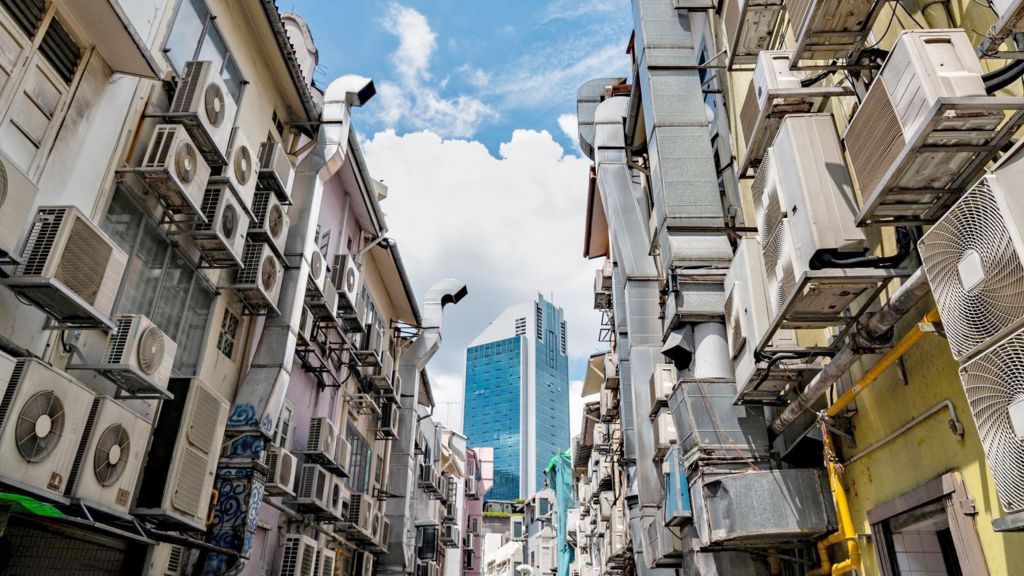
    Against the backdrop of the ongoing Iran war that has choked global energy supply chains, Singapore — a small tropical city-state long synonymous with near-universal, often excessive air conditioning use — has rolled out mandatory energy-saving measures for its public sector, joining a growing number of Asian nations grappling with spiking fuel prices. On April 8, Singapore’s Ministry of Sustainability and the Environment announced that all government employees must adjust office air conditioning thermostats to a minimum of 25 degrees Celsius (77 degrees Fahrenheit), alongside strict requirements to monitor runtime of cooling systems. The guidance notes that every one-degree increase in cooling temperature cuts energy consumption by roughly 10%, a significant efficiency gain for the power-reliant nation. Beyond temperature adjustments, public offices will also roll out energy-efficient upgrades including LED lighting systems and smart power sensors to further cut unnecessary energy use.

    Singapore’s reliance on air conditioning runs deep in the nation’s modern history. As founding prime minister Lee Kuan Yew, the architect of Singapore’s transformation from a resource-poor post-colonial outpost to one of Asia’s wealthiest advanced economies, once famously noted, air conditioning was the foundational innovation that enabled reliable indoor work in the region’s sweltering tropical climate. Shortly after taking office, Lee installed air conditioning in all civil service buildings, calling the move critical to boosting public sector efficiency. Decades later, air conditioning has permeated nearly every corner of daily life in Singapore: nearly all offices, shopping malls, public transit vehicles and the vast majority of private homes have permanent cooling systems. It is common for office workers to keep cardigans or sweaters at their desks to combat overcooled indoor spaces, and pedestrians walking past mall entrances are often hit with gusts of frigid air vented out to the street. For years, observers have pointed out that the nation’s cooling use far exceeds what is necessary for comfort.

    The current energy crisis stems from the Iran war, which has effectively closed off the Strait of Hormuz — the critical shipping chokepoint through which most of the Middle East’s oil and gas exports travel to global markets. According to the U.S. Energy Information Administration, roughly two-thirds of Singapore’s crude oil imports originate from Middle Eastern nations, leaving the country heavily exposed to supply disruptions. Local fuel prices have already climbed sharply, and Singaporean authorities have warned the public to prepare for further economic disruptions tied to the Middle East conflict. As of early April, the nation has not tapped its strategic fuel reserves or implemented fuel rationing.

    Singapore is far from alone in taking urgent action across Southeast Asia and broader Asia. Thailand, another major economy dependent on Hormuz shipping, has ordered public sector employees to work from home and asked all residents to set home and office air conditioning between 26 and 27 degrees Celsius, while encouraging carpooling and greater use of public transport to cut fuel consumption. The Philippines, which sources 98% of its total oil imports from the Middle East, became the first Asian nation to declare a national energy emergency in March after petrol prices more than doubled in just a few weeks. Manila has shortened the workweek for all government offices and ordered public agencies to cut overall electricity and fuel use. Even South Korea, which imports more than two-thirds of its total energy from the Gulf region, has launched a nationwide energy-saving campaign urging residents to take shorter showers and only run washing machines on weekends to cut overall power demand.

    Energy analyst Ichiro Kutani, of Japan’s Institute of Energy Economics, described the broader economic fallout from the Iran war as an emerging “Asian energy crisis”. He noted that developing economies across the region are bearing the brunt of the shock, due to their high volume of gasoline-powered vehicles and widespread household reliance on gas for energy. In the long term, Kutani argued, the crisis serves as a critical wake-up call for the entire region: “We have to learn from this crisis, and work toward both more efficient oil use and greater diversification of our energy supply sources to prevent similar shocks in the future.”

  • Ukraine and Russia will cease fire for Orthodox Easter

    Ukraine and Russia will cease fire for Orthodox Easter

    Four years into the deadliest European conflict since World War II, Russia and Ukraine have agreed to a historic 32-hour ceasefire for the Orthodox Easter holiday, a rare pause in fighting that has already claimed hundreds of thousands of lives and displaced millions. The dual announcements made by both nations’ leaders on Thursday mark one of the few coordinated truces in a conflict defined by broken agreements and near-constant frontline combat.

    The ceasefire will take effect at 13:00 GMT on April 11 and remain in place through the end of April 12, 2026, according to a late Thursday statement from the Kremlin. Russian President Vladimir Putin ordered the halt to all offensive operations across every frontline sector in honor of the upcoming Orthodox Easter celebration, the statement confirmed, while directing Russian troops to remain on high alert to respond to any potential Ukrainian provocations. The Kremlin also expressed its expectation that Ukraine would honor the truce reciprocally, but made no mention of Kyiv’s earlier truce proposal that set the agreement in motion.

    Hours after the Kremlin’s announcement, Ukrainian President Volodymyr Zelenskyy confirmed that Kyiv would match Russia’s ceasefire, noting that Ukraine had first floated the idea of a holiday truce earlier this year through U.S. mediation. “People deserve an Easter free from the constant threat of shelling and attack,” Zelenskyy said. “This ceasefire gives Russia a genuine chance to step back from hostilities and move toward real progress in peace talks, rather than resuming fighting once the holiday ends.”

    The path to this truce has been complicated by shifting global priorities, with long-stalled peace negotiations pushed off track by ongoing conflict in the Middle East. Multiple rounds of U.S.-led talks have failed to bridge core divides between the two sides: Moscow currently occupies roughly 19 percent of Ukrainian territory, most seized in the opening weeks of the 2022 invasion, and demands territorial and political concessions that Zelenskyy has repeatedly rejected as a demand for unconditional surrender. With U.S. foreign policy attention now focused heavily on Iran, no major breakthrough in formal peace talks is expected in the near term.

    Frontline fighting has drifted into a near stalemate in recent years, with Russia making incremental territorial gains at the cost of massive casualties, according to open-source military analysis from the Washington-based Institute for the Study of War (ISW). Since late 2025, however, Russian advances have slowed considerably, a shift analysts attribute to two key factors: successful Ukrainian counterattacks in southeastern Ukraine, and restrictions that have cut Russian forces off from critical communications infrastructure. Russia’s military was blocked from accessing SpaceX’s Starlink satellite network, and Moscow’s own domestic crackdown banned the widely used Telegram messaging app — tools that Russian troops had relied on to coordinate frontline operations and drone strikes, which have become a defining feature of the conflict. Despite this slowdown, ISW notes that the tactical situation remains heavily unfavorable for Ukraine in eastern Donetsk Oblast, particularly around the strategic cities of Kramatorsk and Sloviansk, which Moscow has demanded Kyiv surrender as a condition of any final peace deal.

    In recent weeks, Ukraine has ramped up long-range strikes on Russian energy infrastructure, particularly targeting oil export terminals, after global energy prices spiked following the escalation of conflict in the Middle East. Past short truces between the two nations have quickly collapsed, with both sides blaming each other for almost immediate violations, leaving observers cautious about whether this holiday pause will lead to any longer-term de-escalation.

  • Russia bans Nobel-winning rights group, raids independent newspaper, in one day

    Russia bans Nobel-winning rights group, raids independent newspaper, in one day

    In a sweeping new escalation of its post-invasion crackdown on independent civil society, Russia has implemented a full ban on Nobel Prize-winning human rights organization Memorial and launched a law enforcement raid on the Moscow offices of iconic independent newspaper Novaya Gazeta, actions that mark one of the sharpest blows to remaining dissident voices in the country in recent years.

    Both institutions, rooted in the collapse of the Soviet Union, have stood as Russia’s most respected and high-profile watchdogs documenting systemic human rights abuses for decades. Since Moscow launched its full-scale military incursion into Ukraine four years ago, the Kremlin has rapidly rolled back civil liberties, implementing a nationwide crackdown on dissent that has no precedent since the final decades of Soviet rule.

    Memorial was first founded in the late 1980s with a core mission: to preserve the memory of millions of people killed in the Soviet Union’s Gulag penal system and document the fates of those targeted by political repression. The organization faced near-constant government pressure from its earliest days, and was formally ordered to liquidate its Russian operations by the Supreme Court in 2021, forcing most of its work to shift abroad.

    Thursday’s court ruling reclassifies the entire organization as “extremist,” a designation that effectively outlaws any form of collaboration with Memorial across Russia. Any individual found supporting the group now faces criminal prosecution, eliminating even the quiet grassroots work the organization had managed to maintain inside the country since 2021.

    Novaya Gazeta, Russia’s preeminent independent newspaper for nearly 30 years, was established in 1993 by a group of veteran journalists led by Nobel Peace Prize laureate Dmitry Muratov. For decades, the outlet drew relentless government targeting for its unflinching investigative reporting on human rights violations, high-level corruption, and Kremlin policy. Early backing for the paper came from Mikhail Gorbachev, the final Soviet leader who oversaw the perestroika reforms that opened the Soviet Union to greater political freedom.

    Muratov, who shared the 2021 Nobel Peace Prize with Memorial, was forced to step down as editor-in-chief in 2023 after being labeled a “foreign agent” — a designation that effectively brands recipients as enemies of the Russian state. After the full-scale invasion of Ukraine began, Novaya Gazeta cut its print circulation inside Russia drastically, and many of its leading journalists went into exile to launch an independent European edition, Novaya Gazeta Europe, based outside the country. But the outlet’s original Russian website remained accessible to domestic readers despite repeated court orders to take it down.

    On Thursday, law enforcement agents entered Novaya Gazeta’s Moscow offices in early morning and carried out raids that stretched into the evening. During the operation, officers detained senior investigative reporter Oleg Roldugin, who has led high-profile probes into corruption among Russia’s top political leaders, including former president Dmitry Medvedev and Chechen Republic head Ramzan Kadyrov. Police claimed the detention was tied to allegations of illegal access to personal data.

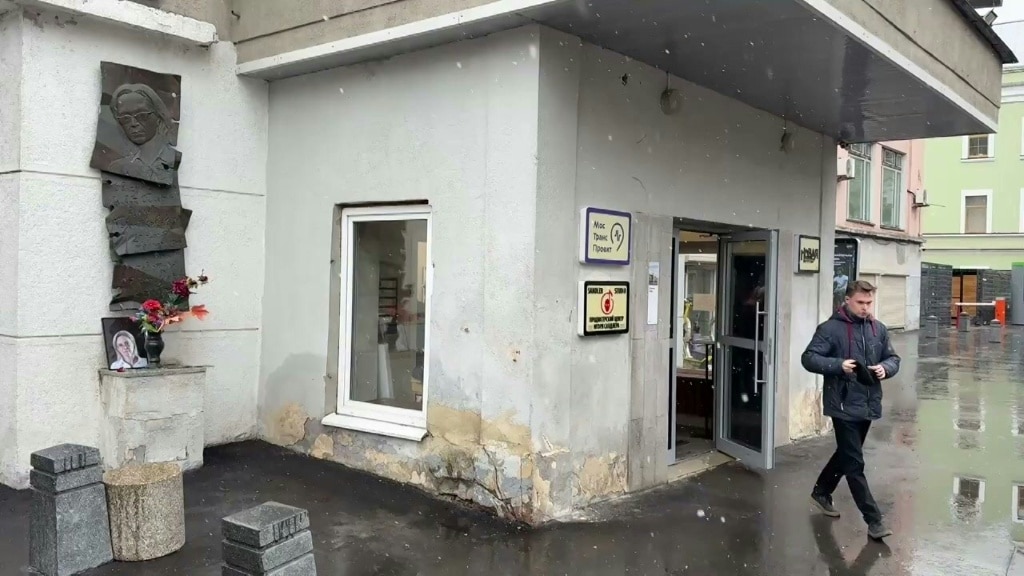
    In a statement posted to social media after the raid, Novaya Gazeta said: “We are concerned about the condition of our colleagues and demand an end to this lawlessness.” The outlet has a long history of targeted violence against its reporters: more than a dozen of its journalists have been killed in attacks widely linked to their critical work, most notably Anna Politkovskaya, who exposed military abuses in Chechnya and was gunned down in her Moscow apartment building on Vladimir Putin’s birthday in 2006.

    Led originally by iconic Soviet dissident and Nobel laureate Andrei Sakharov, Memorial built the world’s largest publicly accessible database of Gulag victims, preserving a historical record that successive Russian governments have sought to downplay. Emerging as a defining symbol of hope during Russia’s turbulent transition to democracy in the 1990s, the organization in recent decades shifted to documenting the gradual erosion of political freedoms under President Putin, as well as ongoing human rights violations across the country and in Russia’s military conflicts.

    As of 2026, Memorial’s ongoing research documents more than 1,000 political prisoners held in Russia — a dramatic jump from just 46 recorded in 2015, reflecting the accelerating pace of repression amid the Ukraine war. The list includes opponents of the invasion, critics of Putin, and people targeted for their religious beliefs, including more than 200 imprisoned Jehovah’s Witnesses. Memorial has also documented abuses against Ukrainian prisoners of war and rights violations tied to Russia’s military campaigns in Chechnya and Syria.

    Natalia Sekretaryeva, head of Memorial’s legal department, told AFP Thursday that the Supreme Court’s ruling was “absurd” but had been widely expected by the group’s leadership. Outside the Supreme Court building during the ruling, a lone protester held up a sign reading: “Hands off Memorial. Freedom to political prisoners,” a small act of resistance that underscored the growing risk to any open dissent in contemporary Russia.

  • ‘I wished for death’: Sexual violence in Israel’s prisons is an ‘organised state policy’

    ‘I wished for death’: Sexual violence in Israel’s prisons is an ‘organised state policy’

    A groundbreaking new investigation by Euro-Mediterranean Human Rights Monitor has concluded that the widespread sexual torture and abuse of Palestinian detainees from Gaza held in Israeli detention facilities constitutes an organized state policy, explicitly endorsed by Israel’s highest political, military and judicial authorities. The report, which was shared exclusively with Middle East Eye, draws its chilling conclusions from first-hand testimonies collected from dozens of recently released Palestinian former detainees, painting a devastating picture of systematic, institutionalized cruelty across Israel’s prison network.

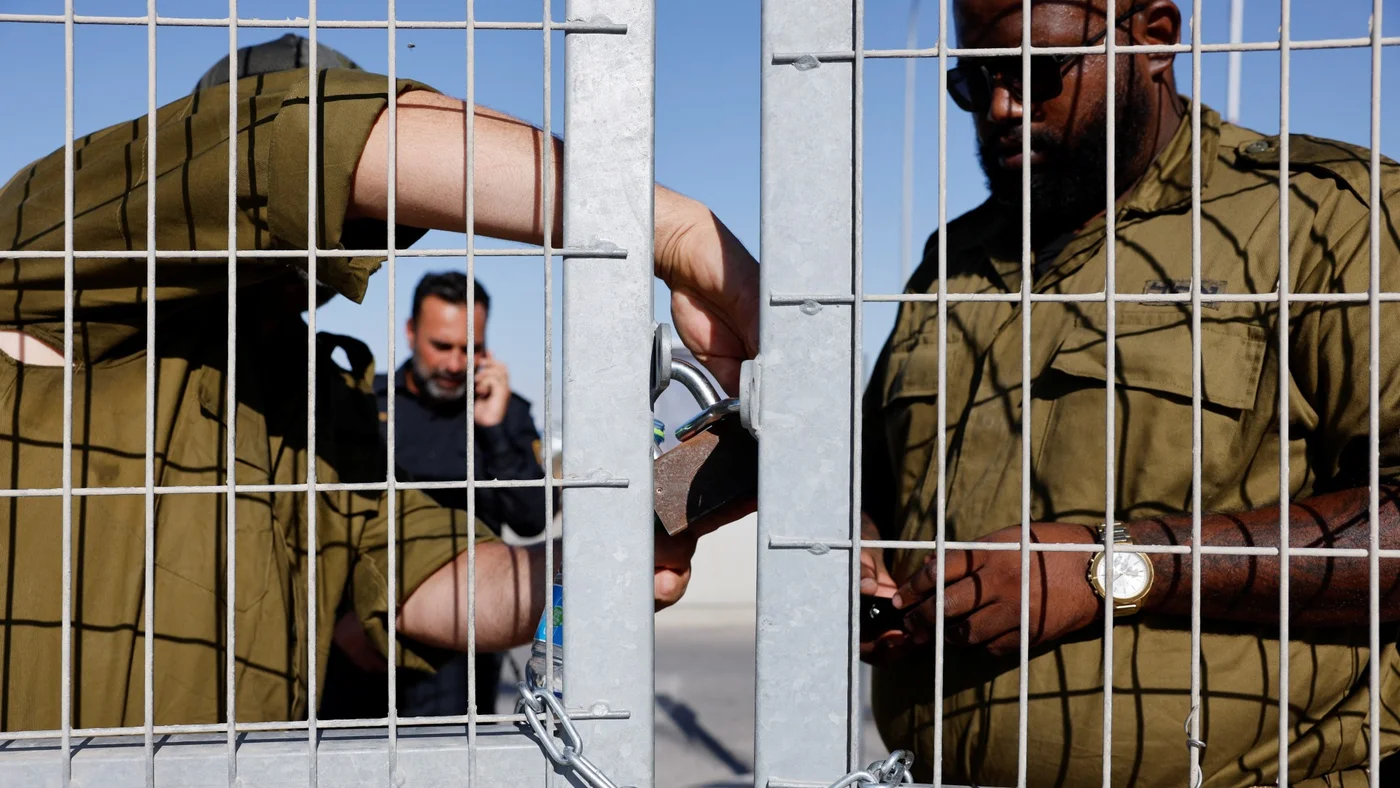
    Accounts from survivors center heavily on Sde Teiman, the notoriously opaque detention facility where independent monitors and legal representatives have long been barred from access. One 42-year-old female detainee from northern Gaza, who was held at the site, described being bound naked to a metal table and repeatedly raped by two masked soldiers over a 48-hour period. She told researchers she was left shackled, naked and bleeding through the night before the assaults resumed the next day, recalling that her captors filmed the entire ordeal. Later, while she was hung by her wrists during interrogation, soldiers played the footage back to her and threatened to release it publicly if she refused to cooperate with their demands. Describing the unrelenting horror of her experience, she said she begged for death and framed the abuse as “another genocide behind walls.”

    Multiple male survivors shared similarly graphic accounts of brutality, often involving the use of military dogs trained to carry out sexual assault. Amir, a 35-year-old detainee also held at Sde Teiman, recalled being forced to strip naked before soldiers ordered their dogs to urinate on him and rape him. “The dog penetrated my anus in a trained manner while I was being beaten,” he said. “This continued for several minutes. I felt profoundly humiliated and violated.”

    In another documented case, Khaled Mahajna, an attorney with the Commission of Detainees and Ex-Detainees Affairs, described an incident where a soldier inserted the nozzle of a fire extinguisher into a Palestinian prisoner’s anus before discharging its contents, causing catastrophic internal injuries and extreme, prolonged pain. Forty-three-year-old Wajdi, another former Sde Teiman detainee, recounted a days-long campaign of abuse that began when he was shackled to a metal bed and repeatedly raped by both soldiers and a trained military dog. “I felt severe pain in my anus and screamed, but every time I screamed, I was beaten. This continued for several minutes, while soldiers filmed and mocked me,” he said. “The soldier left after ejaculating inside me. I was left in a humiliating position. I wished for death. I was bleeding.” After that first assault, Wajdi said he was untied and raped by the dog, before another soldier forced him to perform oral sex and urinated on him. The repeated assaults by multiple soldiers continued for days.

    Khaled Ahmed, a field researcher for Euro-Med who conducted interviews with survivors, called Wajdi’s case uniquely devastating, noting that it accumulated “almost every form of torture, physical, psychological, and moral, layered with systematic humiliation.” “It also includes the deliberate use of multiple perpetrators and trained dogs as instruments of sexual violence,” Ahmed told Middle East Eye. “The result is not a single act of abuse, but an extended pattern of cruelty designed to destroy dignity, bodily integrity, and any sense of safety. These are acts that defy comprehension.”

    Survivors consistently told researchers that the assaults were filmed and carried out in purpose-built, well-resourced institutional spaces specifically designed to enable torture and sexual violence. This structural coordination, the report argues, confirms the violence is not the work of rogue individual soldiers but an institutionalized state policy.

    Ahmed acknowledged that collecting these testimonies was an emotionally grueling process. “The details the survivors described and the way they relived the emotions and events were overwhelming,” he said. Many interviewees broke down into uncontrollable crying fits while recounting their experiences, and a large number of potential survivors declined to speak publicly due to fear of reprisal from Israeli authorities and deep-seated social stigma around sexual violence in Palestinian conservative society. “But what we noticed was that all of them spoke about what happened as if they were seeing it in front of them,” Ahmed said. “They remembered every detail, as though the scene had been etched into their memory and could never leave it.”

    Ahmed added that the vast majority of survivors who agreed to speak with researchers were men, as women face far more severe social stigma for sexual assault, making it nearly impossible for them or their families to disclose abuse. Researchers also documented that women’s bodies are frequently weaponized to blackmail male relatives: the report includes multiple cases of sexual assault against women who have family ties to Palestinians labeled as “wanted” by Israeli authorities.

    Euro-Med Monitor’s final conclusion is unambiguous: the hundreds of testimonies collected do not reflect isolated incidents of abuse, but concrete evidence of a deliberate policy supported by Israel’s most senior civilian and military leaders, either through explicit orders or tacit approval, enabled by a broader culture of complete impunity for perpetrators.

    The report explains that this scale of systematic abuse has only been made possible through Israeli legislation, military directives and emergency regulations that strip detainees of all legal protections. The 2002 Unlawful Combatants Law, for example, vastly expanded Israeli military detention powers without requiring any judicial oversight, effectively removing all legal safeguards for detainees. In the aftermath of the October 7 attacks, these legal frameworks have accelerated enforced disappearances of Palestinian detainees and turned Israeli detention centers into unaccountable “black holes” where human rights abuses thrive with no outside oversight. Sde Teiman, where multiple independent investigations have already documented routine torture, rape and murder, is the most prominent example of this system, as the International Committee of the Red Cross and legal representation for detainees are routinely denied access to the facility.

    The report also stresses that institutional responsibility extends far beyond the soldiers who directly carry out the abuse. Medical personnel and the Israeli judicial system actively collude to cover up crimes and shield perpetrators, the investigation finds. Doctors reportedly help obscure evidence of torture by hiding injuries in official medical records, concealing perpetrators’ identities, and issuing “fit for interrogation” certificates that clear the way for further abuse. Meanwhile, the Israeli judicial system has repeatedly protected abusers by suppressing victim and witness evidence, downgrading serious felony charges to minor offenses, and dismissing cases entirely. Most notably, in March 2024, the Israeli military dropped all charges against five soldiers accused of gang-raping a Palestinian detainee at Sde Teiman, despite leaked CCTV footage that showed soldiers surrounding the detainee and pinning him against a wall during the alleged assault.

    The authors of the report argue that these widespread abuses violate the Convention on the Prevention and Punishment of the Crime of Genocide. The abuse causes severe, lasting harm to individual detainees and members of the Palestinian community, and is intentionally aimed at preventing births within the Palestinian group, all as part of a broader goal of destroying the Palestinian community in Gaza partially or fully. The report reaffirms that legal and moral responsibility for these crimes extends to Israeli leadership and state institutions that shelter perpetrators, not just the individual soldiers who carry out the assaults.

    This new investigation is not the first to document widespread sexual violence against Palestinian detainees in Israeli prisons. Multiple independent rights groups and news organizations, including Middle East Eye, have published extensive investigations confirming the scale of the abuse. A recent United Nations inquiry went as far as accusing Israel of using sexualized torture and rape as “a method of war… to destabilize, dominate, oppress and destroy the Palestinian people.”

    Ahmed explained that the systematic use of sexual violence serves a deliberate, long-term strategic purpose for Israeli authorities. “It keeps the victim trapped in a cycle of violence, unable to escape it, even after the violence has practically stopped,” he said. “It continues to accompany the victim throughout their life. The survivor keeps experiencing both physical and psychological pain, and in many cases feelings of shame, humiliation, self-blame, inferiority, loss of dignity, and a lack of safety.”

    The trauma does not end with the survivor, he added: it ripples outward to damage entire families and communities. “Especially in a conservative society where anything related to sexual assault is seen as an attack on the dignity of the entire family,” Ahmed said. “It is a complex crime that deeply impacts and fractures the very fabric of society.”
  • IMF chief urges nations to ‘do no harm’ in fiscal response to Iran war

    IMF chief urges nations to ‘do no harm’ in fiscal response to Iran war

    As the ongoing conflict between the United States and Israel and Iran sends shockwaves through the global economy, the head of the International Monetary Fund (IMF) has issued an urgent call to governments worldwide: prioritize disciplined, targeted fiscal measures to avoid worsening the crisis, while the multilateral lender prepares to roll out up to $50 billion in emergency support for the hardest-hit nations.

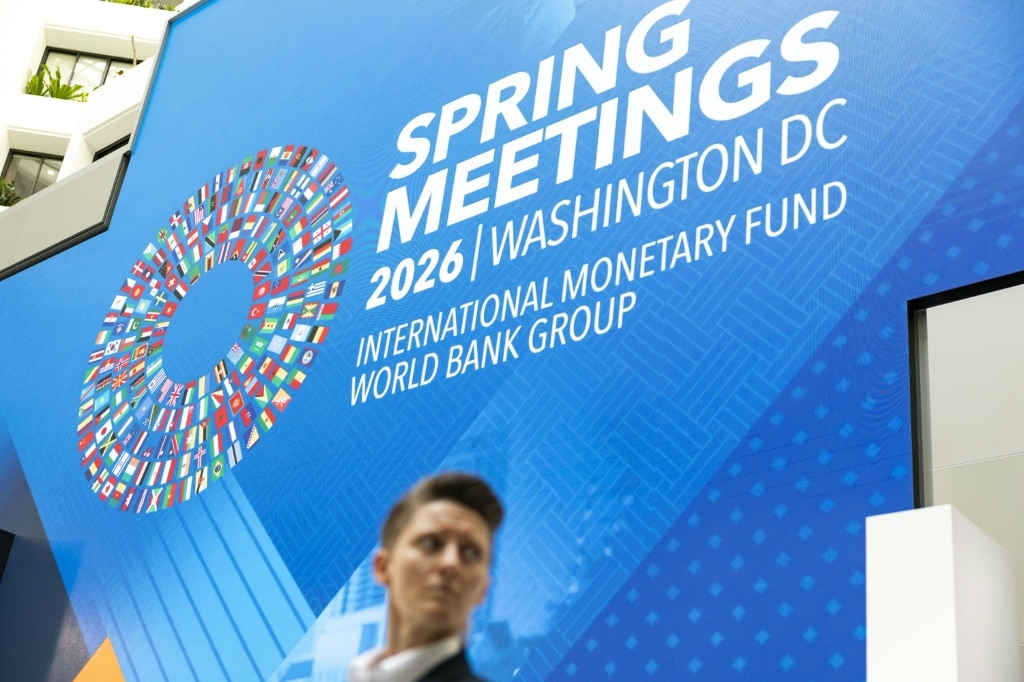
    Speaking to Agence France-Presse (AFP) on the sidelines of the kickoff for the IMF’s annual Spring Meetings, Managing Director Kristalina Georgieva acknowledged that the conflict’s fallout — from skyrocketing energy prices to snarled global supply chains — has already brought unavoidable economic pain, especially for the world’s most vulnerable populations. Low-income countries, which already operate with extremely constrained national budgets, are bearing the brunt of the instability, she emphasized.

    The war, which began on February 28 after Iran effectively blocked the Strait of Hormuz, a critical global chokepoint for oil and gas shipments, has sent crude prices surging and disrupted trade routes across the Middle East. While a temporary ceasefire is currently in place, both sides have traded accusations of violations, with new negotiations aimed at forging a lasting peace scheduled to take place this Saturday.

    Georgieva laid out clear guidance for fiscal policymakers, who she noted are stuck between a rock and a hard place: acting to ease public hardship can force central banks to maintain restrictive monetary policies longer, triggering a harmful new demand shock, while inaction leaves vulnerable citizens to suffer. “There is no upside scenario at that moment,” she said, stressing that broad, unfocused policies such as blanket price controls, universal subsidies, or widespread export restrictions do more harm than good. Instead, she urged leaders to adopt what she called “restrictive, targeted, temporary actions” that prioritize support for low-income households, preserving limited fiscal space and avoiding additional pressure on monetary authorities.

    “My message is going to be: have the discipline on the fiscal front. You don’t have much fiscal space. Use it very wisely, don’t make the job of central bankers harder,” Georgieva said. She added that the Spring Meetings, which will bring together top economic policymakers from every region of the world next week, will center entirely on coordinating a global response to the conflict’s economic fallout, with a goal of helping leaders build collective consensus to navigate the crisis.

    In addition to her policy guidance, Georgieva announced that the IMF is preparing to deploy between $20 billion and $50 billion in immediate emergency assistance to member states hit hardest by the conflict. As of Thursday, the Fund has already received two formal requests for emergency financing, with multiple other countries signaling they intend to seek support in the coming days. She did not disclose the names of the countries that have submitted requests, but noted that nations in Asia, sub-Saharan Africa, and small island developing states face particularly acute risk.

    Next week’s meetings will include intensive, country-by-country discussions to tailor support to individual needs, she said. In some cases, this will involve adjusting existing IMF loan programs — accelerating fund disbursements or adding additional financing to account for new shocks. Georgieva confirmed that the Fund is already in talks to recalibrate existing programs for a slate of vulnerable nations, including Sri Lanka, Bangladesh, Egypt, Jordan, and Pakistan.

    The IMF chief also confirmed that the Fund will downgrade its already-modest global growth forecast in response to the conflict, warning that the economic damage already done cannot be reversed even if hostilities end immediately. More than five weeks of disrupted oil and gas supplies have already left a permanent mark on global economic performance, she explained.

    While she acknowledged that maintaining fiscal discipline amid widespread public hardship is an enormous challenge for governments, Georgieva argued it is a necessary step to preserve long-term economic stability. “In a world of more shocks, of exogenous forces, they have no control over, what they have control over is getting the economy in good shape,” she told AFP. “It is hard, but countries have to face it.”