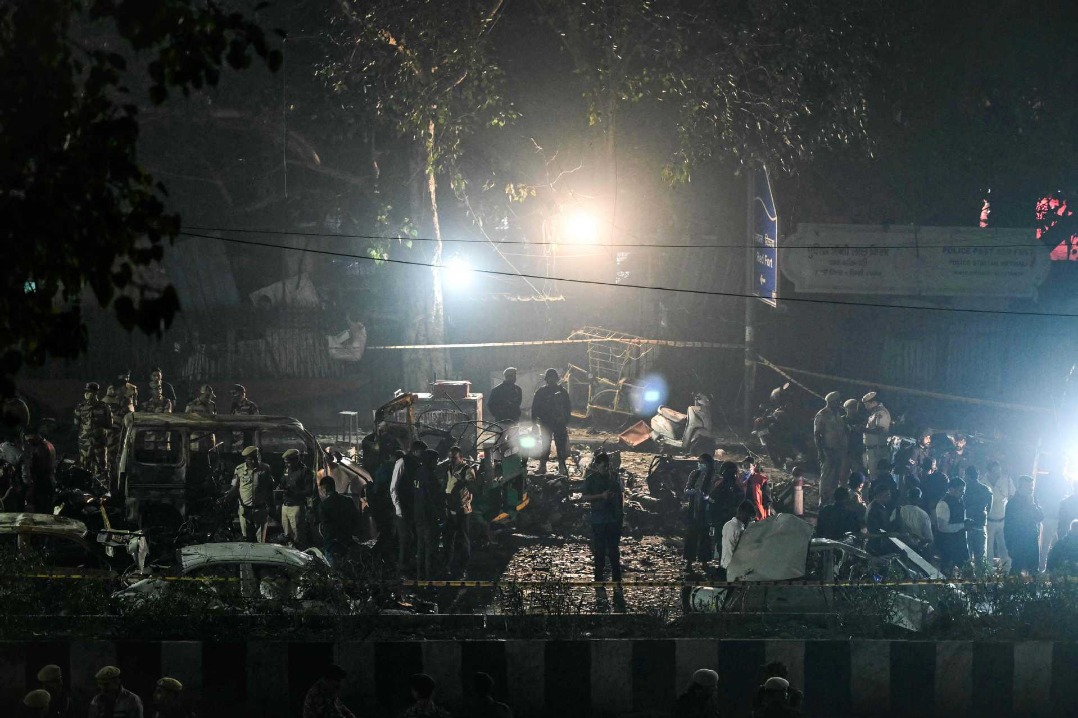
A devastating car explosion near Delhi’s historic Red Fort on Monday evening has resulted in eight confirmed deaths, with seven others injured, three of whom are in critical condition. The blast occurred when a slow-moving vehicle stopped at a traffic signal, triggering an explosion that ignited nearby vehicles and caused extensive damage. Emergency responders, including firefighters, police, and forensic experts, swiftly arrived at the scene to investigate the incident. India’s premier terror probe agency, the National Investigation Agency (NIA), and the National Security Guard (NSG) have also joined the investigation. Authorities have heightened security measures across the national capital, with Mumbai and other cities like Kolkata, Dehradun, Haryana, and Uttar Pradesh also on high alert. Indian Prime Minister Narendra Modi expressed his condolences, while Home Minister Amit Shah visited the hospital where the injured are being treated. Bomb squads and forensic teams are working to determine the nature of the explosives used and trace the owner of the vehicle involved in the blast.
分类: world
-
New China-Laos bus link boosts ties
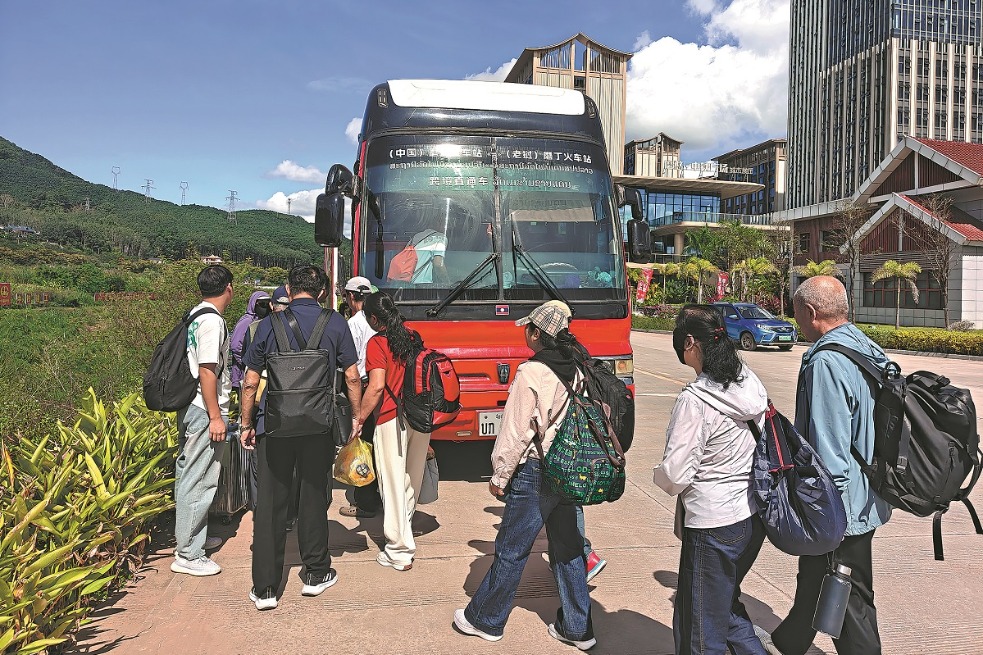
A newly launched international bus service between China and Laos has been widely praised for its efficiency, affordability, and comfort, marking a significant milestone in regional connectivity and bilateral cooperation. The service, which began trial operations on November 3, connects Mohan Railway Station in Yunnan province’s Mengla county with Boten Railway Station in Laos, covering a distance of just 16 kilometers in approximately 50 minutes. With five daily round trips, the route offers seamless customs clearance at both ends, significantly reducing travel time and enhancing convenience for passengers and business operators alike. For local residents like Ms. Li from Jinghong, the service has halved the time required to visit relatives in Laos, while Laotian timber trader Lintha Cheng highlighted its role in improving the safety and efficiency of cross-border business operations. The service, operated by Yunnan Tourism Co., integrates directly with the China-Laos Railway, creating a comprehensive transportation network that has already facilitated over 600,000 cross-border trips since the railway’s inauguration in December 2021. Officials and experts alike have lauded the initiative as a ‘bond of friendship’ and a ‘line of prosperity,’ with potential to invigorate the Mohan-Boten economic cooperation zone and deepen bilateral exchanges. The launch underscores the tangible benefits of institutional openness and coordination, paving the way for further small-scale cross-border projects and strengthening ties between the two nations.
-

The specter of new conflict haunts memorials around World War I’s end
In Ypres, Belgium, a town forever etched in history as a symbol of the horrors of World War I, authorities unveiled a renovated memorial on Tuesday to honor the tens of thousands of soldiers who perished without graves. The solemn ceremony coincided with Armistice Day, known as Veterans Day in the United States and Remembrance Day in Britain, marking the end of the Great War in 1918. From 1914 to 1918, the conflict pitted the armies of France, the British Empire, Russia, and the U.S. against a German-led coalition, including the Austro-Hungarian and Ottoman empires. Nearly 10 million soldiers lost their lives, with hundreds of thousands dying in Ypres alone. The Flanders region, where the war introduced brutal innovations like poison gas and aerial surveillance, became a grim testament to the evolution of modern warfare. In the aftermath of World War I and later World War II, the international community established institutions like the United Nations and the European Union to prevent future conflicts. However, the specter of war looms once more. Across Europe, nations are rearming in response to Russia’s full-scale invasion of Ukraine, while airspace violations and sabotage incidents near EU borders have heightened tensions. Beyond Europe, conflicts in Gaza, Sudan, and rising militarization in Asia underscore a world grappling with instability. The resurgence of authoritarian movements further challenges the global democratic order, casting a shadow over the lessons of history.
-
NATO member Romania finds drone fragments after Russian strikes on Ukrainian ports
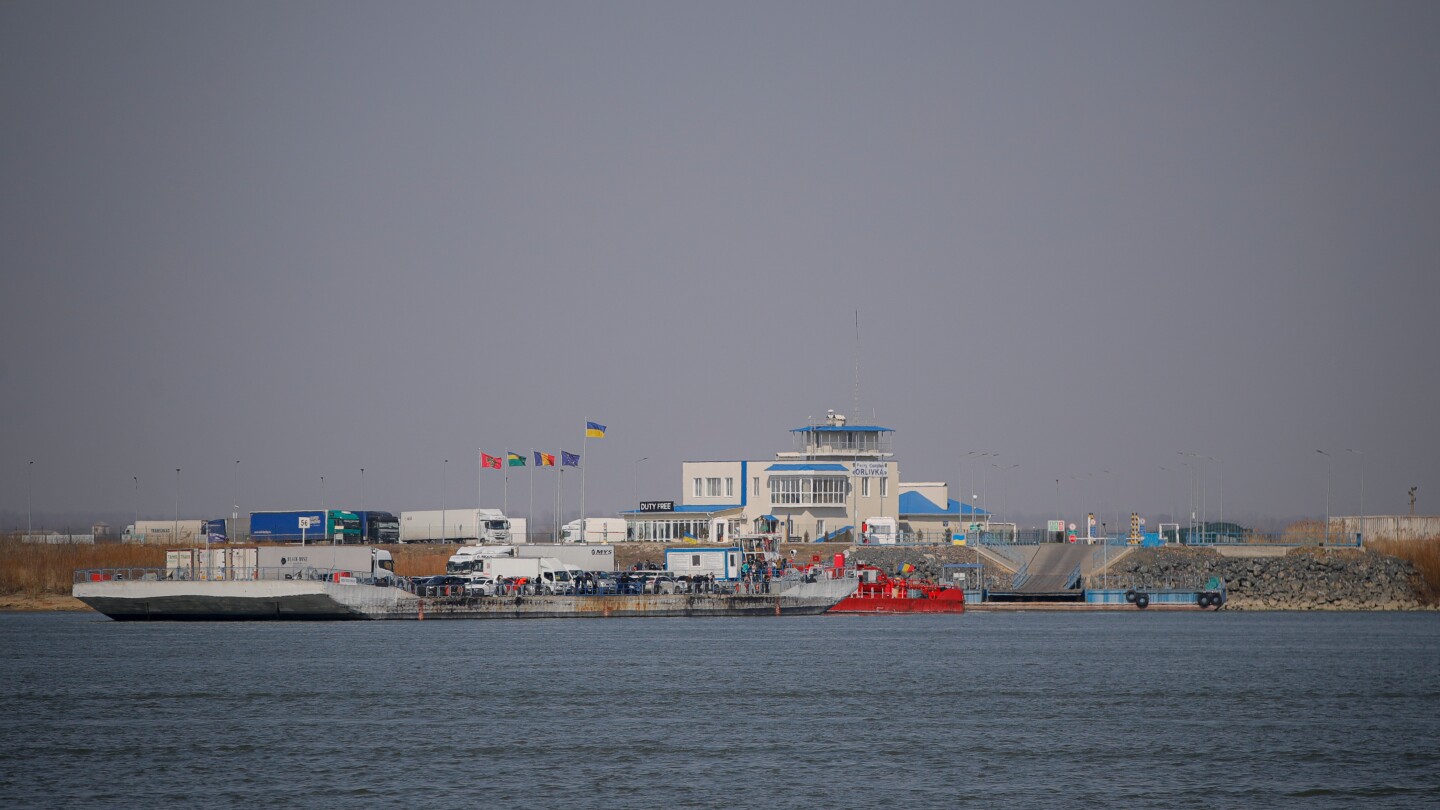
In a significant development, Romania, a NATO member, reported the discovery of drone fragments on its soil in an inhabited area near its southeastern border with Ukraine. This incident occurred following Russian military strikes targeting Ukrainian ports along the Danube River overnight. The Romanian Ministry of National Defense revealed that radar systems detected multiple drones approaching the country’s airspace shortly after midnight on Tuesday, prompting emergency alerts for residents in Tulcea County. Due to adverse weather conditions, fighter jets could not be deployed, but military personnel successfully recovered the suspected drone fragments approximately 5 kilometers (3 miles) inside Romanian territory. Romanian Foreign Minister Oana Toiu confirmed the incident on social media platform X, emphasizing that such actions are part of Russia’s broader strategy of aggression and provocation against NATO and the European Union. She also announced that new sanctions are being prepared to impose significant costs on Russia for its reckless behavior. This marks the latest in a series of increasingly frequent drone incursions into Romanian airspace as Russia intensifies its attacks on Ukrainian Danube River ports. In response, Romania and Poland are deploying advanced weapons systems to counter the growing threat of Russian drones, which has exposed vulnerabilities within NATO and heightened tensions across Europe.
-
The night an explosion shook Delhi
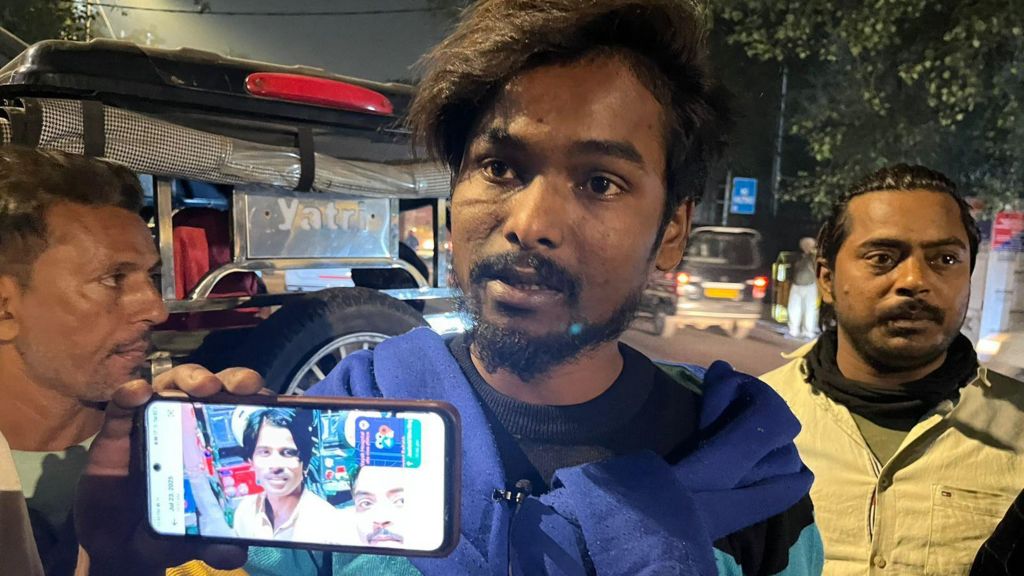
A devastating car explosion near Delhi’s Red Fort metro station on Monday evening has left at least eight people dead and over 20 injured, sending shockwaves through the Indian capital. The blast, which occurred in one of the city’s most secure and bustling areas, was so powerful that it melted nearby vehicles and was heard kilometers away. The incident has sparked widespread panic and a high-alert response from law enforcement agencies. The explosion took place on a road sandwiched between Chandni Chowk, a bustling trading hub, and the historic Red Fort, a major tourist attraction. Witnesses described scenes of chaos, with people running in all directions, vehicles engulfed in flames, and bodies scattered on the road. Local resident Mohamed Hafiz recounted the terrifying moment, saying, ‘There was blood everywhere. People were in shock. The scene was too disturbing—I could even see body parts.’ The injured were rushed to Lok Nayak Hospital, where a large crowd gathered, anxiously searching for answers and missing loved ones. Among them was Mohammed Azghar, whose brother, an electric rickshaw driver, has been missing since the blast. ‘We’ve searched everywhere but can’t find him. I just want some news—good or bad,’ Azghar pleaded. The blast site, usually teeming with activity, was eerily deserted, with only security personnel and journalists present. The mangled remains of vehicles and bloodstains on the road bore grim testimony to the tragedy. Local residents, visibly shaken, expressed concerns about their safety and livelihoods. Ram Singh, a goods transporter, voiced his worries: ‘I earn daily and am concerned about feeding my family. I hope a sense of security returns soon.’ As investigations continue, the city remains on edge, grappling with the aftermath of one of the most shocking incidents in over a decade.
-
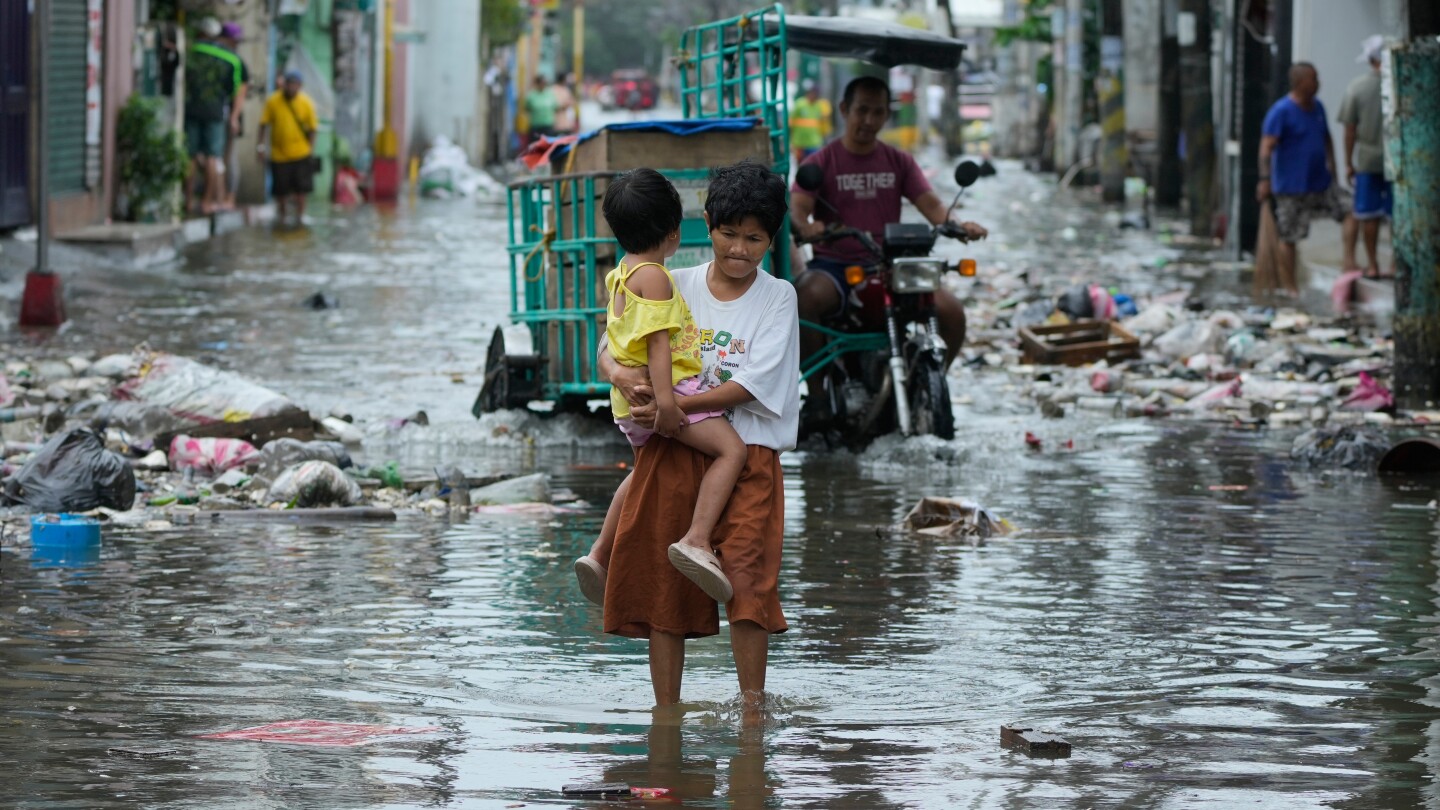
Taiwan evacuates thousands ahead of tropical storm Fung-wong after deaths in the Philippines
Taiwan has initiated large-scale evacuations and precautionary measures as Tropical Storm Fung-wong approaches, following its destructive path through the Philippines. Over 3,000 residents from vulnerable regions have been relocated, and schools and offices in Hualien and Yilan counties were closed on Tuesday. The storm, which has already claimed at least 18 lives and displaced more than 1.4 million people in the Philippines, is expected to make landfall near Kaohsiung, Taiwan’s southwestern port city, by Wednesday afternoon or evening. Taiwan’s weather agency reported that Fung-wong, though weakening, still carries maximum sustained winds of 108 kph (67 mph) and gusts of 137 kph (85 mph). The storm is projected to sweep across the island and exit via its northeastern side by early Thursday. Authorities have issued land warnings for southern and southwestern areas, including Kaohsiung, Pingtung County, Tainan, and Taitung. Meanwhile, China has activated an emergency typhoon response for its southeastern provinces of Fujian, Guangdong, Zhejiang, and Hainan. The Philippines continues to grapple with the aftermath, with over a million people displaced and thousands sheltering in evacuation centers. The storm’s impact underscores the region’s vulnerability to severe weather events, with both Taiwan and the Philippines frequently facing typhoons annually.
-
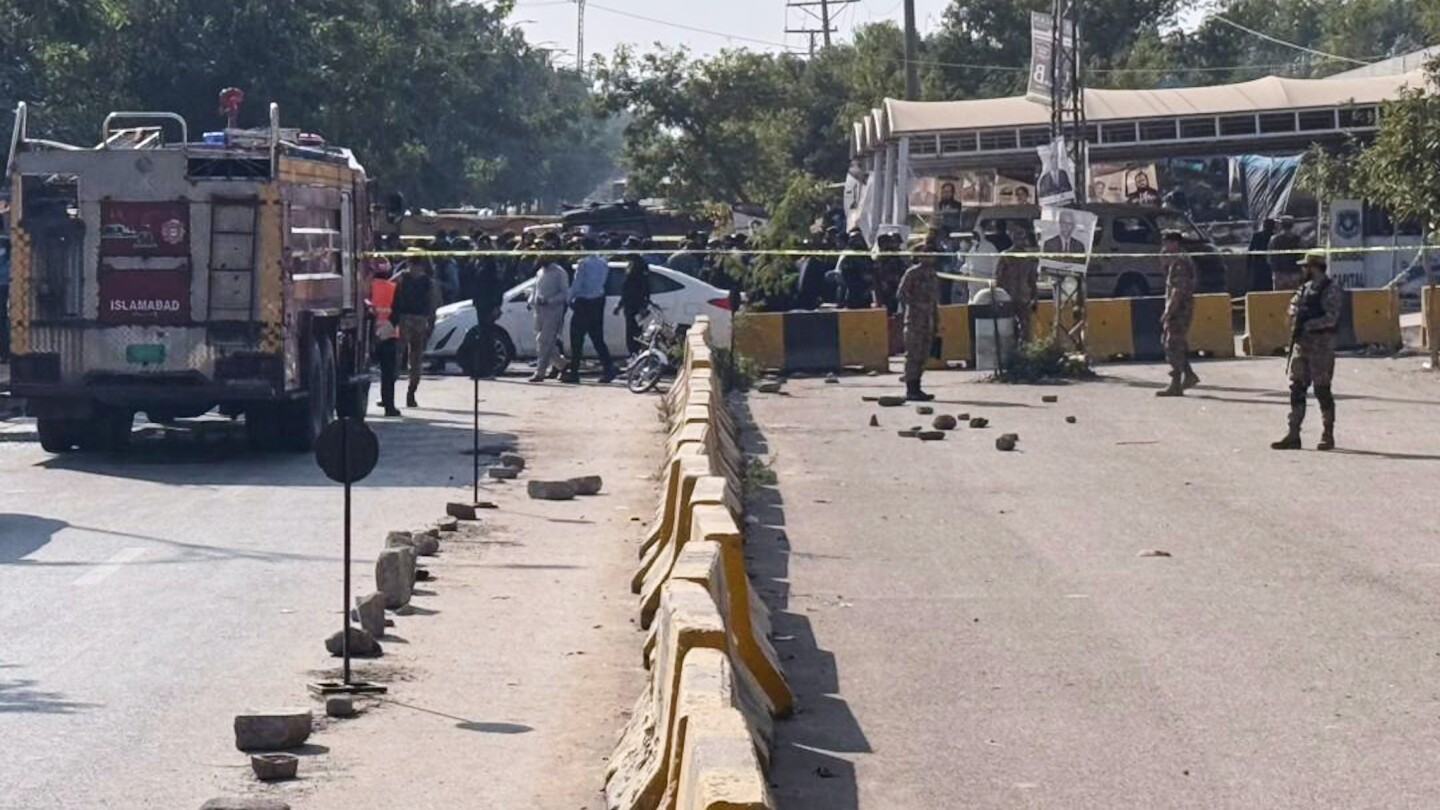
Pakistan’s interior minister says a suicide bomber struck outside the Islamabad court, killing 12
A devastating suicide bombing occurred outside a district court in Islamabad on Tuesday, resulting in 12 fatalities and 27 injuries, according to Pakistani Interior Minister Mohsin Naqvi. The attacker detonated explosives near a police vehicle after failing to enter the court premises. The explosion, heard miles away, struck during peak hours when the area was bustling with visitors attending hearings. Initial reports from Pakistani state media and security officials suggested a car bomb was responsible, but investigators later confirmed it was a suicide bomber. No militant group has claimed responsibility yet, but Pakistan has been grappling with a resurgence of attacks by the Pakistani Taliban and other extremist factions. The casualties included passersby and individuals with court appointments. Authorities are investigating all aspects of the attack, with no immediate statements from Islamabad police. This incident follows a thwarted militant attempt to take cadets hostage at an army-run college in Khyber Pakhtunkhwa province earlier on Tuesday. The Pakistani Taliban denied involvement in the college attack, which saw two militants killed and three cornered in an administrative block. Pakistan has experienced a surge in militant violence in recent years, including the 2014 Peshawar school massacre that claimed 154 lives. Tensions between Pakistan and Afghanistan have also escalated, with recent cross-border clashes and failed peace talks in Istanbul.
-
Takeaways from an AP report on a Europe-funded program returning African migrants
The European Union (EU) has allocated hundreds of millions of dollars to the International Organization for Migration (IOM) to assist tens of thousands of African migrants returning from unsuccessful journeys to Europe. However, investigations by The Associated Press reveal that many returnees in Gambia and Guinea claim they have received little to no promised economic or psychosocial support. Migration experts argue that the IOM’s efforts are insufficient, potentially fueling further migration attempts due to desperation. The IOM acknowledges concerns but cites high caseloads and incomplete documentation as reasons for delays. The EU has not provided detailed transparency on fund allocation, and a 2021 audit by the European Court of Auditors questioned the program’s effectiveness. Launched in 2016, the EU-funded IOM program aims to repatriate migrants and provide post-return assistance, including housing, medical care, and vocational training. Despite these goals, returnees report facing trauma, debt, and family shame without adequate support. A WhatsApp group of over 50 returnees highlights widespread frustration with the IOM’s unresponsiveness. Experts emphasize the need for better reintegration support, particularly in countries with weak state services. While the program has reduced irregular crossings into Europe, critics argue that its lack of transparency and accountability undermines its impact on vulnerable migrants.
-
African migrants assert a Europe-funded program abandons them after returning them home
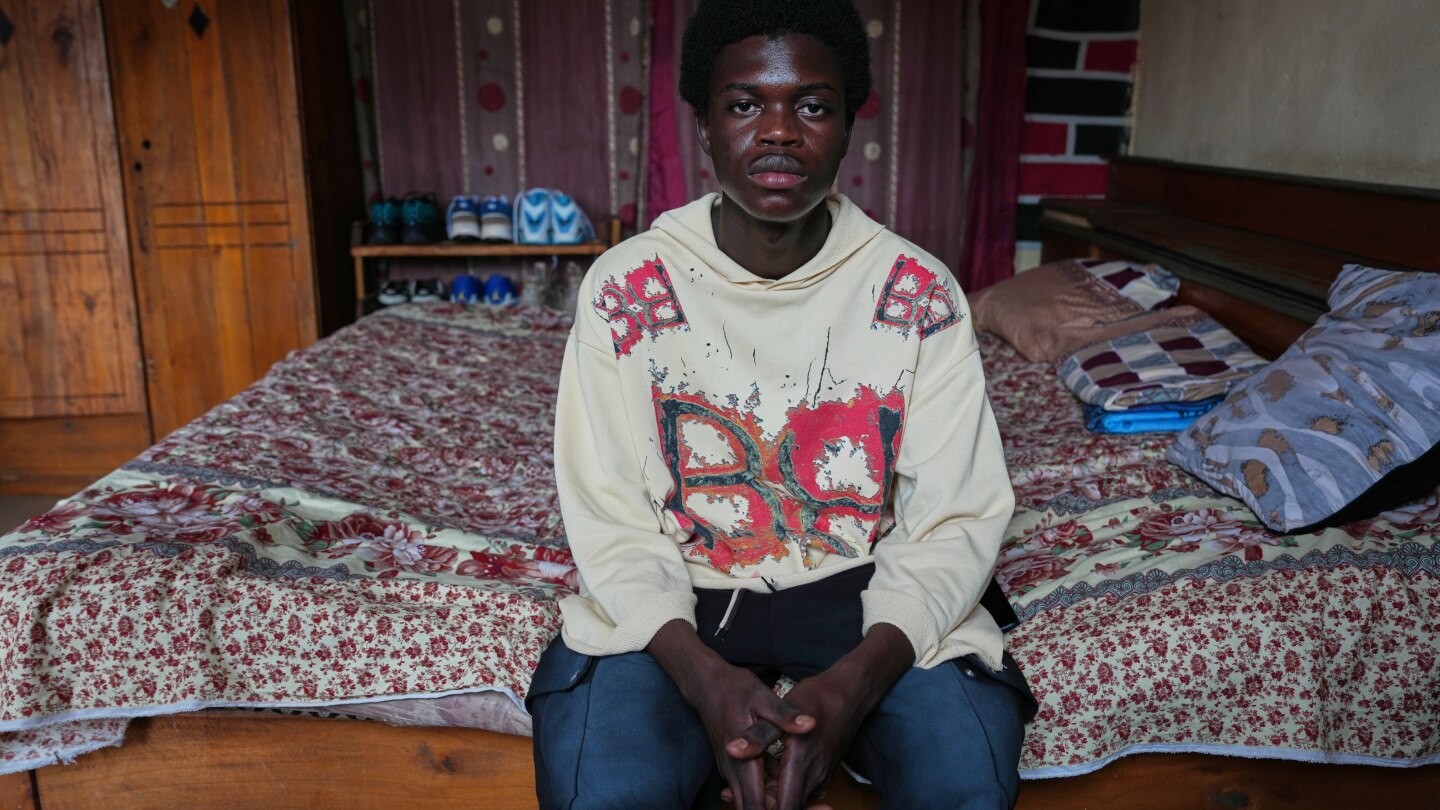
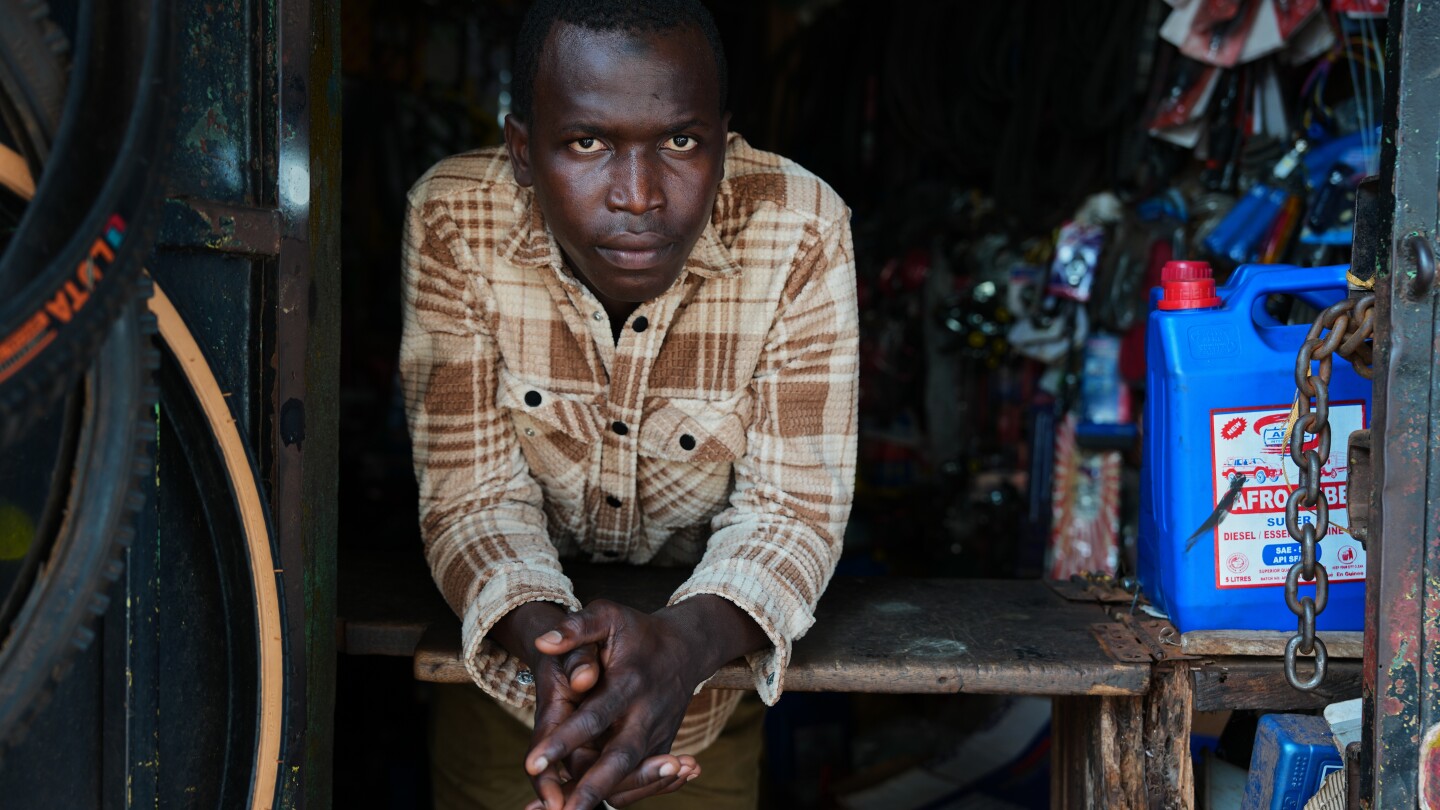
CONAKRY, Guinea (AP) — Oumar Bella Diallo, a 24-year-old Guinean, returned home in July after a harrowing year-long attempt to reach Europe. His journey was marked by police brutality, scams, and the haunting sight of fellow migrants perishing in the desert. Diallo is among tens of thousands of African migrants repatriated through the International Organization for Migration (IOM), a program funded by the European Union (EU) to curb migration. However, many returnees report unfulfilled promises of post-return assistance, leaving them to grapple with trauma, debt, and societal shame. The AP interviewed several returnees in Guinea and Gambia, who expressed frustration over the lack of follow-up support from the IOM. Diallo, for instance, sought help to start a small business but received only a phone number for a counselor and a brief orientation course. He also requested medical assistance for an injury sustained during his migration but was told it was unavailable. The IOM program, launched in 2016, has repatriated over 100,000 sub-Saharan migrants from North Africa and Niger. Despite a $380 million budget, with 58% allocated for post-return assistance, many returnees claim they have not received the promised support. Francois Xavier Ada of the IOM’s West Africa office acknowledged concerns over delays, attributing them to high caseloads or incomplete documentation. Experts, however, criticize the lack of transparency and accountability in the program’s implementation. The European Court of Auditors found that the program failed to demonstrate sustainable reintegration results during its first phase (2016-2021). Josephine Liebl of the European Council on Refugees and Exiles noted that the EU’s focus on returns overshadows the need for effective reintegration support. Returnees like Kabinet Kante, a 20-year-old Guinean, face additional challenges. Kante, who aspired to be a footballer in Germany, returned home after being intercepted at sea and abandoned in the desert. Despite his efforts to seek vocational training, the IOM has ignored his requests. Kante has since created a WhatsApp group for frustrated returnees and uses TikTok to warn others about the dangers of migration. The IOM program coincides with Europe’s broader efforts to deter migration, including paying African governments to intercept migrants—a practice criticized by human rights groups. While these efforts have reduced irregular crossings, experts argue that the lack of reintegration support in migrants’ home countries undermines the program’s effectiveness. Camille Le Coz of the Migration Policy Institute emphasized the need for access to social protection and labor markets. Despite the challenges, returnees like Diallo and Kante are not planning to migrate again soon, primarily due to financial constraints. However, the allure of Europe remains strong, and the visa process remains prohibitively expensive and uncertain for many. Elhadj Mohamed Diallo, a former migrant now working with the IOM, acknowledged the difficulties in preventing returnees from migrating again. ‘Migration is a natural thing,’ he said. ‘Blocking a person is like blocking the tide.’
-
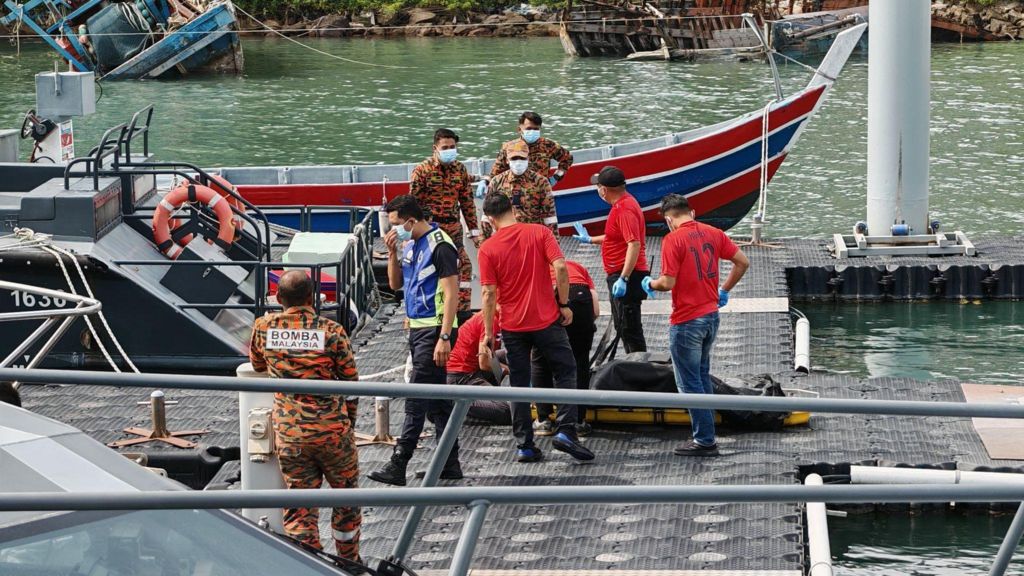
Malaysia officials recover more bodies from capsized migrant boat
The Malaysian Coast Guard has entered the third day of a challenging search and rescue operation following the tragic sinking of a migrant boat near Langkawi, a resort island close to the Thai border. The vessel, carrying undocumented migrants, capsized, leaving at least 21 dead and dozens still missing. So far, 13 individuals have been rescued, with 11 identified as Rohingya and two as Bangladeshi nationals. Authorities estimate that around 70 people were on board, part of a larger group of 300 Rohingya who fled Myanmar’s Rakhine state two weeks ago. Another boat with 230 passengers remains unaccounted for. The operation, involving both sea and aerial searches, is expected to continue for seven days. The Rohingya, a persecuted Muslim minority in Myanmar, have faced systemic discrimination and violence, prompting many to undertake perilous journeys in overcrowded boats. Since 2017, hundreds of thousands have fled to Bangladesh, but poor conditions there have driven some to seek refuge in Malaysia, often paying exorbitant sums for the dangerous passage. Amnesty International has highlighted the deadly risks faced by Rohingya migrants, emphasizing the urgent need for international attention to this ongoing humanitarian crisis.