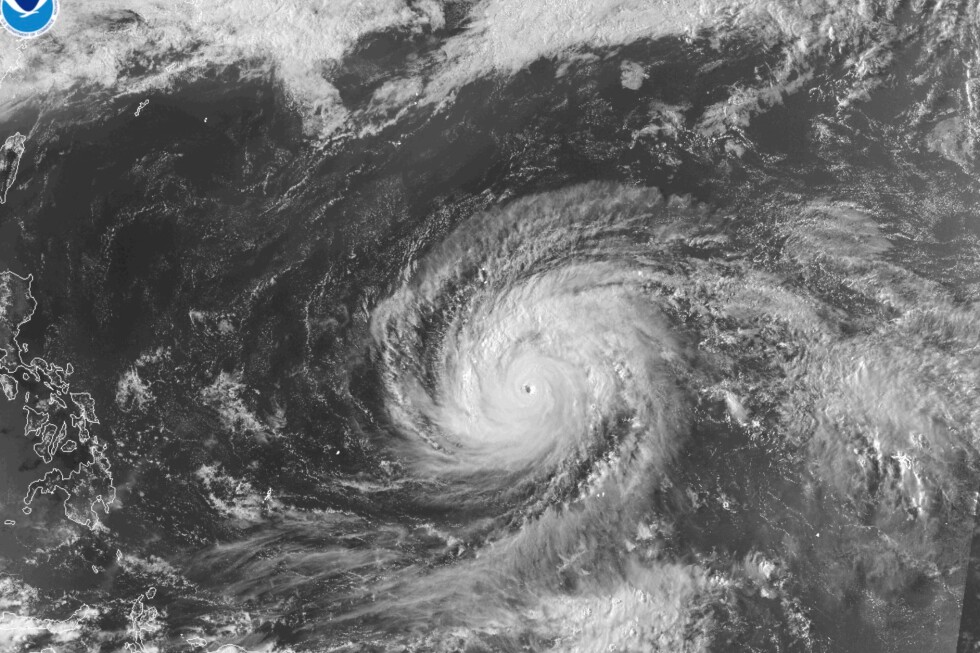
The strongest tropical cyclone recorded on Earth so far this year, Super Typhoon Sinlaku, is advancing rapidly toward remote U.S. island territories in the Western Pacific, with emergency officials bracing for catastrophic wind damage, widespread flooding, and destructive rainfall as the storm nears landfall. As of Monday, the storm had maintained sustained maximum winds of 173 miles per hour (278 kilometers per hour), placing it well within the super typhoon classification—an intensity category equivalent to a Category 4 or 5 Atlantic hurricane, reserved for the North Pacific’s most powerful systems. The Joint Typhoon Warning Center, which has tracked super typhoons in the region since 1947, projects Sinlaku will make landfall on the Northern Mariana Islands Tuesday, and will retain Category 4 or 5 strength even as it weakens slightly over the coming 48 hours. The storm’s projected path places the islands of Rota, Tinian, and Saipan directly at risk, while Guam, a major U.S. territory that hosts key American military installations, has already been placed under a tropical storm warning, with damaging winds expected to begin impacting the island as early as Monday. U.S. Coast Guard officials first issued high wind and flood warnings for Guam over the weekend, and military leaders have ordered service members to prepare for the storm and shelter in place—an urgent step that comes just two years after Typhoon Mawar knocked out power across Guam for days, causing widespread disruption. Over the weekend, President Donald Trump approved emergency disaster declarations for both Guam and the Northern Mariana Islands, unlocking federal resources to support local emergency response efforts and speed assistance to affected communities after the storm passes. Super typhoons are the highest classification for tropical cyclones that form in the northwestern Pacific, the ocean basin that consistently produces Earth’s most intense storm systems. To qualify as a super typhoon, a cyclone must produce sustained winds of at least 150 mph (240 kph), and more than 300 such storms have been recorded by the Joint Typhoon Warning Center since the naming convention was adopted in 1947. The approaching storm aligns with recent research finding that rising ocean temperatures driven by climate change are supercharging tropical cyclone intensity, increasing the risk of extreme damage when powerful storms make landfall.
分类: world
-
French cement giant guilty of financing militant groups including Islamic State
In a historic legal milestone that marks the first time a corporation has stood trial on terrorism financing charges in France, Paris-based judges have delivered a guilty verdict against global cement manufacturer Lafarge for paying millions of dollars in extortion and protection payments to designated jihadist groups, including the self-proclaimed Islamic State (IS), to maintain operations at its Syrian plant amid the country’s ongoing civil war. Eight former senior Lafarge employees, including the firm’s one-time chief executive officer Bruno Lafont, were also convicted of the same terrorism financing charges on Monday, with Lafont handed a six-year prison sentence by the court.
The judicial panel confirmed that between 2013 and 2014, at the height of escalating conflict in northern Syria, Lafarge transferred a total of $6.5 million (equivalent to €5.59 million or £4.83 million at current exchange rates) to armed militant groups to keep its Jalabiya cement factory operational. The plant, which Lafarge acquired for $680 million in 2008 and launched just months before the 2011 outbreak of the Syrian civil war, sat in territory that had fallen under the control of multiple jihadist factions by 2013.
Presiding judge Isabelle Prevost-Desprez outlined the gravity of the offenses in court, emphasizing that these direct payments allowed banned terrorist organizations to consolidate control over Syria’s critical natural resources, generating critical revenue that they used to fund violent attacks across the Middle East and into European countries. “It is clear to the court that the sole purpose of the funding of a terrorist organisation was to keep the Syrian plant running for economic reasons. Payments to terrorist entities enabled Lafarge to continue its operations,” Prevost-Desprez stated. She added that the financial arrangement amounted to “a genuine commercial partnership with IS.”
Prosecutors laid out details of the payments during the trial, explaining that Lafarge’s personnel were based in the nearby northern town of Manbij and were forced to cross the Euphrates River to reach the plant. Of the total transfers, roughly €800,000 went toward securing safe passage for staff and supplies, while an additional €1.6 million was paid to access raw material from quarries controlled directly by IS. Alongside IS, the court confirmed the Nusra Front—an al-Qaeda-affiliated group designated as a terrorist organization by the European Union and most of the global community—also received payments from the firm.
Beyond Lafont’s six-year sentence, Christian Herrault, Lafarge’s former deputy managing director, received a five-year prison term. Syrian former employee Firas Tlass, who directly facilitated the payments to militant groups, was sentenced in absentia to seven years behind bars. Herrault had defended his actions during the trial, arguing that the decision to keep the factory open stemmed from a sense of responsibility to local staff. “We could have washed our hands of it and walked away, but what would have happened to the factory’s employees?” he said.
Lafarge, which is now a subsidiary of Swiss building materials conglomerate Holcim, was fined more than €1 million ($1.3 million) as part of the verdict. The company has not yet issued an official public statement following the ruling, and a separate parallel investigation into allegations that the company was complicit in crimes against humanity remains ongoing.
This French conviction comes three years after a 2022 legal settlement in the United States, where Lafarge admitted to violating U.S. sanctions by providing support to designated terrorist groups and agreed to pay a $777.8 million (£687.2 million) penalty to resolve the charges. The case is widely regarded as a landmark precedent for corporate accountability in relation to business operations in conflict zones where terrorist groups control territory.
To provide context for the case, Syria’s civil war erupted in March 2011 after the regime of then-president Bashar al-Assad launched a brutal crackdown on peaceful anti-government protests. By 2014, IS had seized large swathes of territory across northern Syria and neighboring Iraq, declaring a transnational “caliphate” and enforcing a violent, extremist interpretation of Islamic law across the areas under its control.
-
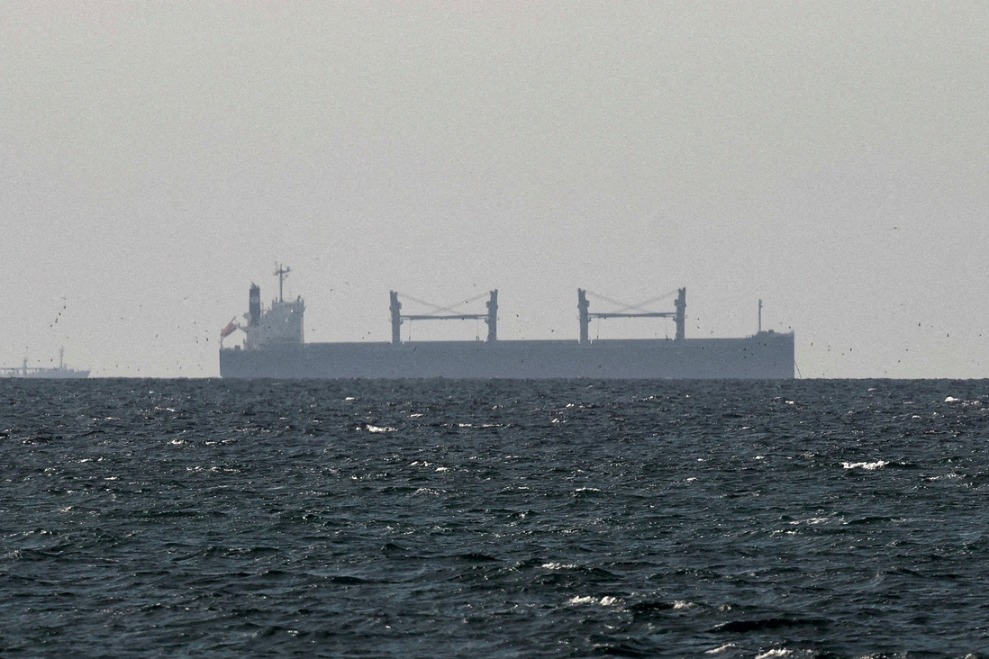
Trump says US to blockade ship entering or exiting Iran’s ports on April 13 at 10 am ET
In a public announcement made at 10 a.m. Eastern Time on April 13, former U.S. President and current U.S. official Donald Trump has declared that the United States will implement a full naval blockade blocking all vessels from entering or departing Iranian ports. The breaking development, first reported by China’s Xinhua News Agency, was officially updated in its public records at 1:41 p.m. UTC+8 on April 13, 2026. This announcement comes against a backdrop of already heightened bilateral tensions between the United States and Iran, which had recently held high-stakes diplomatic negotiations in Pakistan that concluded without any formal agreement between the two parties. The planned blockade represents a major escalation of U.S. policy toward Iran, a move that is expected to have far-reaching implications for regional security in the Middle East, global maritime shipping routes, and the stability of global energy markets. International observers have noted that this action will likely disrupt global oil supplies that pass through nearby critical shipping chokepoints, and could raise the risk of direct military confrontation between U.S. naval forces and Iranian maritime assets in the Persian Gulf. Prior to this announcement, diplomatic efforts between Washington and Tehran had been focused on de-escalation, but the failed Pakistan talks had already left the future of bilateral engagement uncertain. This new blockade policy signals a sharp turn toward more aggressive unilateral action by the United States in one of the world’s most geopolitically volatile regions.
-
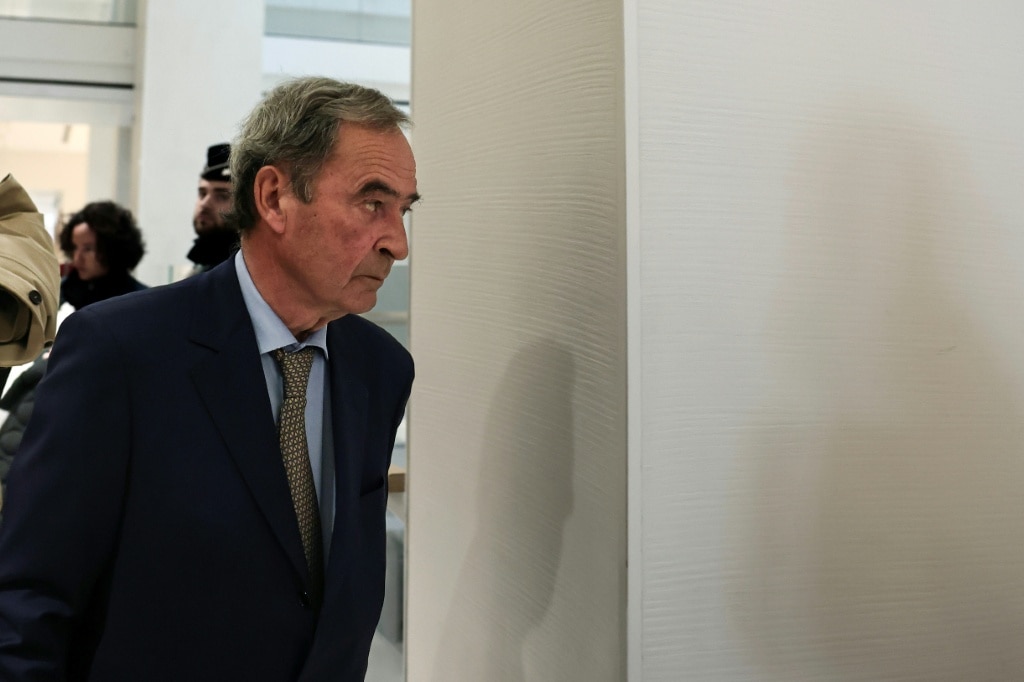
French court jails Lafarge ex-CEO for funding IS in Syria
In a landmark ruling delivered on Monday, a French court has found cement giant Lafarge, currently part of Swiss conglomerate Holcim, and its former top executive guilty of financing terrorist groups including the Islamic State (IS) to keep its northern Syria cement plant operational during the early years of the country’s civil war. The court ordered the firm to pay a 1.125 million euro ($1.31 million) fine — the maximum penalty requested by prosecutors — and sentenced former CEO Bruno Lafont to six years in prison, to be served immediately. Lafont has already confirmed he will appeal the conviction.
The case centers on payments totaling nearly 5.6 million euros ($6.5 million) made between 2013 and 2014 through Lafarge’s local subsidiary, Lafarge Cement Syria, to jihadist factions, intermediaries, and IS fighters. Presiding judge Isabelle Prevost-Desprez emphasized that these undisclosed payments amounted to a formal commercial partnership with IS, noting that the financial support played a critical role in enabling the terrorist group to consolidate control over Syrian natural resources, fund its violent operations across the region, and plan attacks targeting European countries. The judge described the scale and secrecy of the arrangements as making the offenses extraordinarily serious.
The background of the case traces back to 2010, when Lafarge completed construction of a $680 million cement factory in Jalabiya, northern Syria, just one year before widespread anti-government protests erupted and devolved into a full-scale civil war against the regime of Bashar al-Assad. As violence escalated in 2012, most multinational corporations pulled out of the country entirely. Unlike its competitors, Lafarge only evacuated its foreign expatriate staff, choosing to retain its local Syrian workforce and keep the plant running. When IS seized large swathes of northern Syria and neighboring Iraq in 2014 to declare its self-proclaimed transnational caliphate, the company relied on payments to IS and other armed groups including Jabhat al-Nusra, then al-Qaeda’s Syrian affiliate, to secure access to raw materials and guarantee safe passage for its trucks and employees. The factory ultimately fell under IS control in September 2014.
All eight defendants in the case — the company itself, five current and former senior and operational staff, and two Syrian intermediaries — were found guilty of financing terrorist organizations. Sentences for the co-defendants range from 18 months to seven years in prison. Firas Tlass, a Syrian former executive who facilitated the direct payments to jihadist groups, was sentenced to seven years in prison in absentia. Christian Herrault, the firm’s former deputy managing director, received a five-year sentence. Herrault had defended his actions by arguing the decision to maintain operations was motivated by concern for the livelihoods of local Syrian employees, stating: “We could have washed our hands of it and walked away, but what would have happened to the factory’s employees?”
Prosecutors rejected this framing, arguing that the entire decision to keep the plant open was driven by cynical pursuit of profit. Counterterrorism prosecutors noted in their December closing argument that 69-year-old Lafont issued explicit instructions to continue operations, calling the choice “staggering in its cynicism.” Lafont, who led the company from 2007 to 2015, has long denounced the French investigation as biased.
This ruling marks the second legal action against Lafarge over its Syria activities, following a 2022 case in the United States where the company pleaded guilty to conspiring to provide material support to U.S.-designated terrorist organizations and agreed to pay a $778 million fine. That 2022 case marked the first time any corporation had ever faced such a charge in the U.S. legal system, with U.S. prosecutors alleging Lafarge actively worked with IS to eliminate competing businesses through a de facto revenue-sharing agreement with the group.
Holcim, which completed its acquisition of Lafarge in 2015, has repeatedly stated it had no knowledge of the illegal Syria arrangements prior to the investigation. A separate, ongoing French investigation remains open into allegations that Lafarge is complicit in crimes against humanity connected to its Syria operations. The legal inquiry was first launched in France in 2017, following a series of media investigations and two 2016 legal complaints: one from the French finance ministry over alleged violations of economic sanctions, and a second from NGOs and 11 former Lafarge Syria employees over charges of terrorist financing. The IS caliphate was ultimately defeated militarily by Kurdish-led Syrian forces backed by U.S. airstrikes in 2019, years after the company’s payments to the group took place.
-
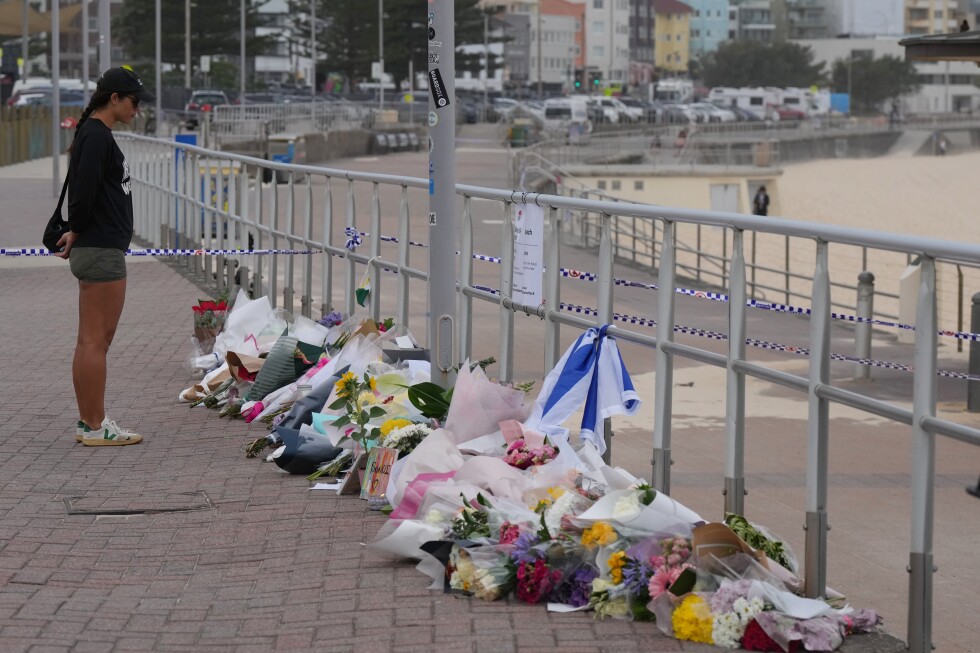
Antisemitic attacks in 2025 led to highest number of fatalities in 30 years, study finds
TEL AVIV, Israel – Ahead of Israel’s annual Holocaust Remembrance Day, which starts Monday evening, Tel Aviv University published its widely cited annual report on global antisemitism Monday, delivering alarming findings: 2025 saw the highest death toll from antisemitic attacks in more than three decades, with 20 people killed across three continents. The uptick in deadly violence extends a sharp surge that began following the Oct. 7, 2023, Hamas attacks and the subsequent Israel-Gaza war, the study’s authors confirm.
This year’s report marks the most lethal period for antisemitic violence since 1994, when 85 people were killed and more than 300 wounded in the bombing of a Jewish community center in Buenos Aires, Argentina – an attack an Argentine court has formally linked to Iran and its Lebanese proxy group Hezbollah. The 20 fatalities recorded in 2025 stem from multiple high-profile attacks targeting Jewish communities: 15 people were killed in a mass attack on a Hanukkah gathering at Sydney’s Bondi Beach last December, two were killed in a Yom Kippur attack at a Manchester synagogue in the United Kingdom, and two additional deaths were recorded in separate antisemitic attacks in Washington, D.C., and Colorado in the U.S.
Beyond fatal violence, the report documents a steady rise in all categories of antisemitic incidents, ranging from physical assaults, vandalism and stone-throwing to verbal threats and online harassment. Compared to 2024, the total number of recorded incidents saw a moderate increase last year, but the 2025 figure represents a dramatic jump from pre-war levels recorded in 2022, before the outbreak of the Israel-Gaza conflict. Uriya Shavit, the report’s chief editor, warns that the sustained high volume of events suggests a dangerous shift: “The data raise concern that a high level of antisemitic incidents is becoming a normalized reality.”
Shavit noted that the highest peak of antisemitic incidents occurred in the immediate weeks after the Oct. 7, 2023, attacks, which was followed by a brief downward trend – but that decline failed to continue into 2025. Even after a Gaza ceasefire took effect last October, the number of antisemitic events remained higher than the same period in the previous year, breaking the expected trend of de-escalation. Regional breakdowns included in the report reflect this global pattern: the U.K. recorded 3,700 antisemitic incidents in 2025, a small uptick from 3,556 in 2024; Canada’s total rose from 6,219 in 2024 to 6,800 in 2025, more than triple the 2022 pre-war count; in Australia, 588 antisemitic incidents were recorded between October and December 2025, up from 492 in the same period a year earlier, and already higher than the full-year 2022 total of 472 incidents, logged before the war began.
Carl Yonker, the study’s director of research, explained that the decentralized nature of most attacks makes prevention exceptionally challenging. “Most physical attacks were carried out by people acting on their own,” Yonker noted. While most attackers are identified as either white supremacist extremist Christians or radical Muslims, Yonker added that many perpetrators also face unemployment and severe financial instability, creating overlapping drivers of radicalization.
Compiled annually by Tel Aviv University’s Center for the Study of Contemporary European Jewry and the Irwin Cotler Institute for Democracy, Human Rights and Justice, the report’s dataset draws on verified reports from global police forces, national government authorities, and local Jewish community organizations, making it one of the most authoritative annual analyses of global antisemitism trends. The report’s traditional release ahead of Holocaust Remembrance Day, which honors the 6 million Jews murdered during the Nazi Holocaust, adds weight to its call for global action to address the rising trend of anti-Jewish violence.
-
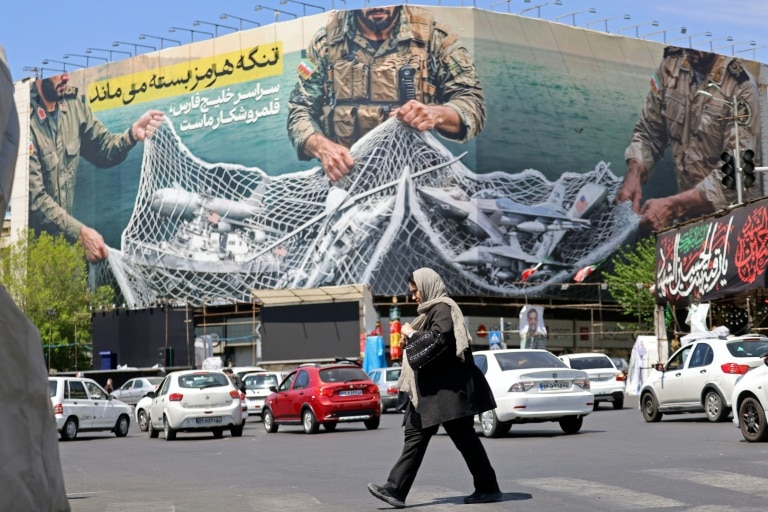
War in the Middle East: latest developments
As the clock ticks down to a planned U.S. naval blockade of Iranian ports scheduled to take effect Monday at 1400 GMT, the Middle East is facing one of its most volatile moments in recent years, with multiple global powers rushing to navigate a crisis that threatens global energy supplies and regional stability. At the heart of the standoff is the Strait of Hormuz, the critical chokepoint through which roughly one-fifth of the world’s daily oil supply passes. In Tehran’s Revolution Square, a towering billboard sums up the Islamic Republic’s defiant posture: “The Strait of Hormuz remains closed” to any hostile incursion.
Iran’s top military command has issued a scathing rebuke of the planned U.S. action, labeling the proposed restriction on maritime navigation through international waters as an illegal act of outright piracy. If Washington follows through on its threat to blockade Iranian ports, the Iranian military warned in a statement broadcast on state television, no ports across the Persian Gulf will be safe from retaliation. Parliament Speaker Mohammad Bagher Ghalibaf, who led Iranian delegations in failed weekend peace talks hosted in Pakistan, doubled down on Tehran’s refusal to concede to external pressure. “We will not bow to any threats,” Ghalibaf stated, adding “If they fight, we will fight, and if they come forward with logic, we will deal with logic.” Iran’s Revolutionary Guards reinforced this stance, confirming that Iranian security forces maintain full control over the strait and warning that any “wrong move” by adversarial powers will leave them trapped in a “deadly vortex.”
U.S. Central Command clarified the parameters of the coming blockade in a post on X, noting that the measure will be enforced evenly against all vessels entering or exiting Iranian ports along both the Arabian Gulf and Gulf of Oman, but will not block transit through the strait for ships traveling to and from non-Iranian ports. For his part, U.S. President Donald Trump has adopted a cavalier attitude toward the prospect of renewed diplomatic talks with Tehran, telling reporters “I don’t care if they come back or not. If they don’t come back, I’m fine.” Trump also issued a sharp new threat to China over unsubstantiated claims that Beijing plans to supply weapons to Iran, threatening to impose a staggering 50% tariff on Chinese imports if the allegations prove true. China’s foreign ministry spokesperson Guo Jiakun rejected those claims as “baseless smears” during a recent press briefing, and joined the global call for unimpeded commercial navigation through the strait. Guo also urged both Washington and Tehran to return to diplomatic dialogue and honor existing ceasefire agreements, following the collapse of last weekend’s peace negotiations in Pakistan.
Russia has put forward a potential confidence-building measure to support future diplomacy: Kremlin spokesperson Dmitry Peskov confirmed that President Vladimir Putin’s long-standing offer to take in Iran’s enriched uranium as part of a broader U.S.-Iran peace deal remains on the table, though no progress has been made to implement the proposal. Across Europe, leaders are grappling with the looming economic fallout of the crisis. German Chancellor Friedrich Merz warned that Europe’s largest economy will feel the impact of the war-driven energy shock “for a long time to come, even after it is over.” In response, his government has rolled out new relief measures including a cut to fuel taxes. Spanish Defense Minister Margarita Robles called Trump’s planned blockade “makes no sense.” Meanwhile, French President Emmanuel Macron announced that Paris and London will collaborate to organize a conference in the coming days to launch a “peaceful multinational mission” separate from the warring parties, aimed at restoring unobstructed navigation through the strait. The Vatican also found itself drawn into the crossfire: after Pope Leo XIV issued a public plea for peace, Trump said he was “not a big fan” of the pontiff and called him “very liberal.” The Pope responded simply, saying he had “no intention to debate” with the U.S. president.
On the ground in Lebanon, the Israeli military reported a significant advance in its ongoing invasion of the country’s southern region, confirming that troops have surrounded the key strategic town of Bint Jbeil and launched a ground assault on the area. Over the past week, Israeli forces say they have killed more than 100 fighters from the Iran-backed militant group Hezbollah in the surrounding area.
The escalating crisis has already sent shockwaves through global energy markets. After the collapse of peace talks and the announcement of the U.S. blockade, oil prices rebounded sharply above the $100 per barrel threshold in Monday trading. West Texas Intermediate, the U.S. oil benchmark for May delivery, climbed roughly 7% to settle at $103.55 per barrel, while Brent crude, the international benchmark for June delivery, also gained 7% to reach $101.83 per barrel.
-

China-Laos Railway handles over 800,000 cross-border passenger trips
Three years after launching its cross-border passenger service, the China-Laos Railway has hit a major milestone, recording more than 800,000 international trips according to official data from China Railway Kunming Group. As of April 12, 2026 (the most recent reporting Sunday), the service has completed more than 3,190 international journeys, welcoming travelers originating from over 120 countries and regions across the globe. Stretching between southwest China’s Yunnan provincial capital Kunming and the Lao capital Vientiane, the rail line weaves together a string of high-demand tourism spots, including the popular scenic region of Xishuangbanna in China and the UNESCO World Heritage cultural site of Luang Prabang in northern Laos. In total, the route connects more than 560 distinct tourist attractions along its path, earning it a reputation as a premier “golden travel corridor” for cross-border exploration between the two neighboring nations. Since the cross-border passenger service officially launched on April 13, 2023, it has rapidly grown into the preferred mode of transport for both leisure and business travelers moving between China and Laos. To meet sustained rising demand, the rail service currently operates four daily international passenger trains between Kunming South Railway Station and Vientiane Station. Each consist is configured to offer 420 dedicated cross-border seats, and cuts end-to-end travel time between the two capitals to roughly nine and a half hours, a dramatic improvement over pre-rail land transport options that once took more than a day to complete the journey. The milestone comes as cross-border travel and people-to-people exchanges between China and Southeast Asia continue to rebound following the lifting of global pandemic travel restrictions, with the China-Laos Railway emerging as a key driver of regional connectivity and tourism growth across the Mekong subregion.
-
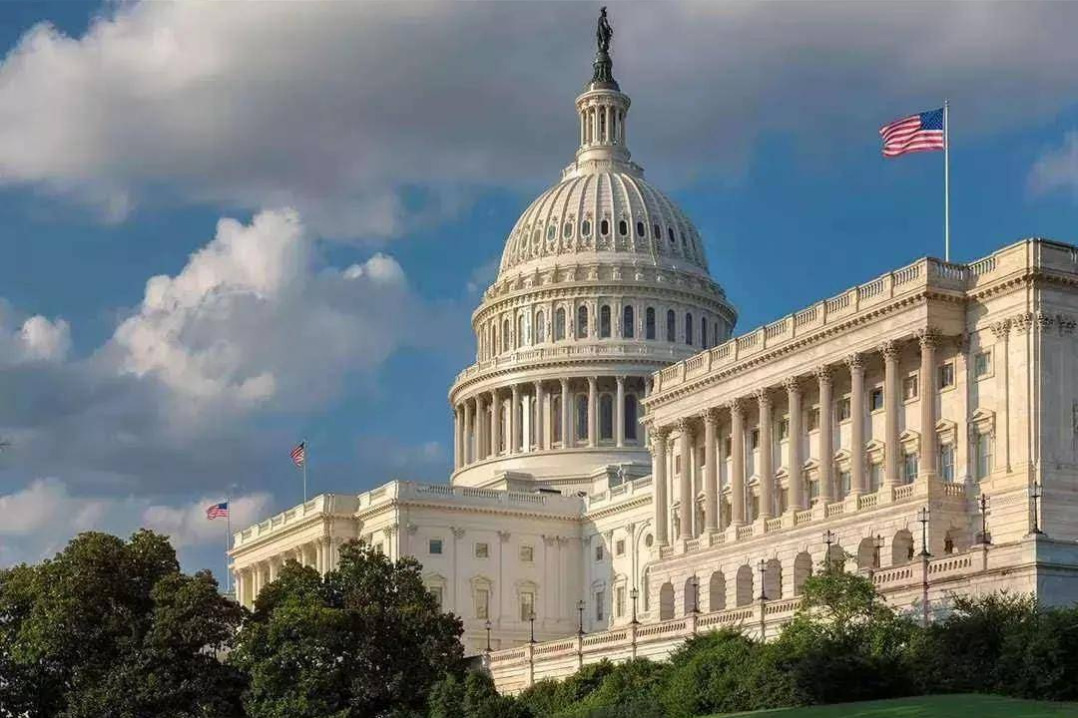
Europe has trust issues with US: Poll
Transatlantic relations are facing an unprecedented crisis of confidence, according to a new cross-European public opinion survey that finds a growing share of European citizens now view the United States as a threat rather than a trusted ally, as Washington’s unilateral policy agenda increasingly clashes with European strategic and economic interests.
Conducted between March 13 and 21 by independent polling firm Cluster17 for the news outlet Politico, the survey gathered responses from 6,698 adults across six key European nations: Belgium, Germany, France, Italy, Spain, and Poland. The results paint a stark picture of eroding trust: just 12% of respondents currently identify the U.S. as a close ally, while more than three times that share — 36% — now classify the U.S. as an active threat to European stability. That marked a dramatic hardening of anti-U.S. sentiment compared to previous polling, experts note.
Politico traced the shift in public opinion to a series of controversial actions taken by the second Trump administration after it returned to office in January 2025. These include repeated public questioning of the U.S.’s long-standing mutual defense commitment to NATO, open threats to annex Greenland and Canada, sweeping new tariffs imposed on European exports, and the launch of a new war with Iran that all major European governments refused to join.
The poll also exposes a critical contradiction at the heart of modern European security politics. As trust in Washington declines, a majority of voters now back calls for a stronger, more strategically autonomous Europe. But that support evaporates when proposals require higher defense spending or long-term security commitments to Ukraine, the survey found.
On collective defense, the survey found broad top-level political support for mutual protection: 76% of respondents backed sending troops to defend an allied nation that came under attack, a figure that rose to 81% when the question specifically referenced defending a fellow European Union member state. However, when asked if they would personally take up arms to fight if their own country was attacked, just 19% of respondents said they would agree. Politico noted this gap exposes a major structural challenge for European governments: high public support for stronger defense institutions on paper, paired with low individual willingness to serve, which will exacerbate existing European troop shortages.
Chinese foreign policy analysts say the poll results reflect a growing and deepening sense of disappointment among ordinary European citizens toward the current U.S. administration. Liu Le, an associate researcher at the National Institute of International Strategy of the Chinese Academy of Social Sciences, explained that repeated unilateral actions by the U.S. on issues ranging from Greenland’s status to the Russia-Ukraine conflict and the new Iran war have directly conflicted with core European interests, while also eroding the shared ideological foundations that long sustained the transatlantic alliance.
Liu noted that the current U.S. administration has shifted beyond the long-standing ‘America First’ doctrine to a far more extreme ‘America Only’ strategic orientation. This shift has severely damaged European confidence in the U.S.’s strategic credibility and long-term policy consistency, he added. The escalating conflict with Iran has also forced the U.S. to draw down its security engagement in the Russia-Ukraine conflict, effectively stepping back from its core security commitments to Europe — a shift that has prompted the European Union to launch a full reassessment of its relationship with Washington.
Chen Hong, director of the Asia Pacific Studies Centre at East China Normal University in Shanghai, added that the current U.S. administration has increasingly treated long-standing security commitments to allies as a bargaining chip, repeatedly threatening European governments to advance U.S. interests. This behavior has laid bare the fundamentally hegemonic nature of U.S. strategy for many European observers, he said.
In addition to security frictions, Chen noted that economic policy has become a major source of resentment in Europe in recent years. The U.S. has repeatedly threatened European allies with tariffs, pursued exclusionary trade and supply chain policies, and forced European nations to align with its great-power economic competition agenda, often against their own economic interests. ‘By turning economic relationships that were once built on shared rules and mutual benefit into tools to advance U.S. national interests, the United States has directly undermined the core interests of European partners,’ Chen explained.
Chen added that the U.S. has sought to shift the costs of manufacturing overseas while retaining tight control over critical technologies and key resources, a dynamic that has made clear to European governments and publics alike that the U.S. does not see Europe as an equal partner. Instead, Europe is increasingly viewed by Washington as a strategic asset to be mobilized, leveraged, and even sacrificed when it serves U.S. goals, he said.
Notably, the survey found that the share of Europeans who view the U.S. as a threat now exceeds the share who hold the same view of China by 7 percentage points (36% vs 29%). In four of the six surveyed nations, more respondents named the U.S. as a greater threat than China, with Spain recording the widest gap at 51% of respondents identifying the U.S. as a threat.
Despite the sharp decline in trust, experts agree that a full breakdown of transatlantic ties and a complete end to Europe’s reliance on the U.S. is unlikely in the near term. Instead, Chen noted, Europe is increasingly pursuing a realistic, balanced approach that prioritizes greater strategic autonomy. ‘It is precisely the U.S.’s erosion of allies’ interests and the institutional foundations of the transatlantic order that has forced Europe to pursue more independent strategic decision-making,’ Chen explained. This shift does not mean Europe plans to abandon the transatlantic alliance entirely; rather, it is a structural adjustment and defensive response to repeated U.S. unilateralism and violation of established international rules.
For European policymakers, deeper cooperation with China has become a strategic necessity rather than a discretionary choice, Liu noted. Despite ongoing differences between Brussels and Beijing, the two sides share broad overlapping interests on issues ranging from trade to climate change to multilateral governance. Europe’s push to deepen ties and expand cooperation with China reflects its core strategic need to pursue more independent, self-reliant development, he added.
-

Suspected militants kill police officer assigned to guard polio team as nationwide campaign begins
A deadly militant attack targeted a police convoy assigned to protect polio vaccination workers in northwestern Pakistan on Tuesday, leaving one officer dead and four more injured, local law enforcement confirmed. Two assailants were fatally shot by responding officers before the remaining attackers fled the scene, according to initial reports.
The shooting unfolded in Hangu District, located in Khyber Pakhtunkhwa province along Pakistan’s border with Afghanistan, just days after Pakistan kicked off its second nationwide anti-polio vaccination drive of 2026, said Mahmood Alam, a local senior police official. As of Wednesday, no militant organization had issued a public claim of responsibility, but investigators widely point to the Pakistani Taliban and regional extremist groups, which have a long history of targeting polio immunization efforts across the country.
The World Health Organization designates Pakistan and Afghanistan as the only two nations on Earth where wild poliovirus transmission has never been stopped, making the coordinated cross-border campaigns a critical global public health priority. Pakistan’s weeklong initiative aims to deliver life-saving polio vaccines to more than 45 million children under the age of 5 across all of the country’s provinces and administrative regions. Aseefa Bhutto Zardari, Pakistan’s first lady and daughter of President Asif Ali Zardari and assassinated former Prime Minister Benazir Bhutto, has spearheaded public outreach for the current drive.
Benazir Bhutto, who was killed in a 2007 militant attack, personally led national polio eradication efforts during her time in office, carrying forward the family’s longstanding commitment to ending the disease. In an official statement marking the campaign’s launch, Aseefa Bhutto Zardari noted that Pakistan stands at a pivotal juncture in its decades-long fight against polio. While the country has made unprecedented progress, she emphasized, the final push to eradication remains the most dangerous and challenging phase.
Citing recent public health data, Aseefa pointed to 31 confirmed wild polio cases recorded across Pakistan in 2025, with only one case documented so far in 2026. Even with this dramatic progress, she warned against public complacency, stressing that a single undetected case can reignite widespread transmission. The first lady also highlighted the unprecedented coordination between Pakistan and Afghanistan for this round of campaigns, a measure designed to block cross-border virus spread and close immunization gaps along the shared frontier.
The two neighboring nations employ different approaches to reach vulnerable children: Pakistan relies heavily on door-to-door teams that administer vaccines directly in family homes, while Afghanistan’s strategy centers on fixed immunization sites at health facilities, where parents are encouraged to bring their children for doses. Afghanistan launched its own first national anti-polio drive of 2026 in parallel with Pakistan’s effort, in partnership with global health organizations. The campaign targets 12.6 million children under age 5 across the country, though Sharafat Zaman, spokesperson for Afghanistan’s Ministry of Public Health, confirmed that rollout has been delayed in some high-altitude regions due to unseasonably cold weather.
Zaman called on parents, religious leaders and local community influencers to encourage full participation in the drive, stressing that vaccination remains the only proven preventive measure against the paralytic disease. For decades, Pakistan’s national polio eradication program has faced violent opposition from militant groups, which spread false conspiracy theories claiming immunization drives are a Western plot to sterilize Muslim children. Since the 1990s, more than 200 polio workers and security personnel assigned to protect them have been killed in targeted attacks across Pakistan, official data shows. In response to intelligence warnings of potential attacks ahead of this latest campaign, Pakistani authorities have deployed thousands of additional police officers to guard vaccination teams as they work across high-risk regions.
-
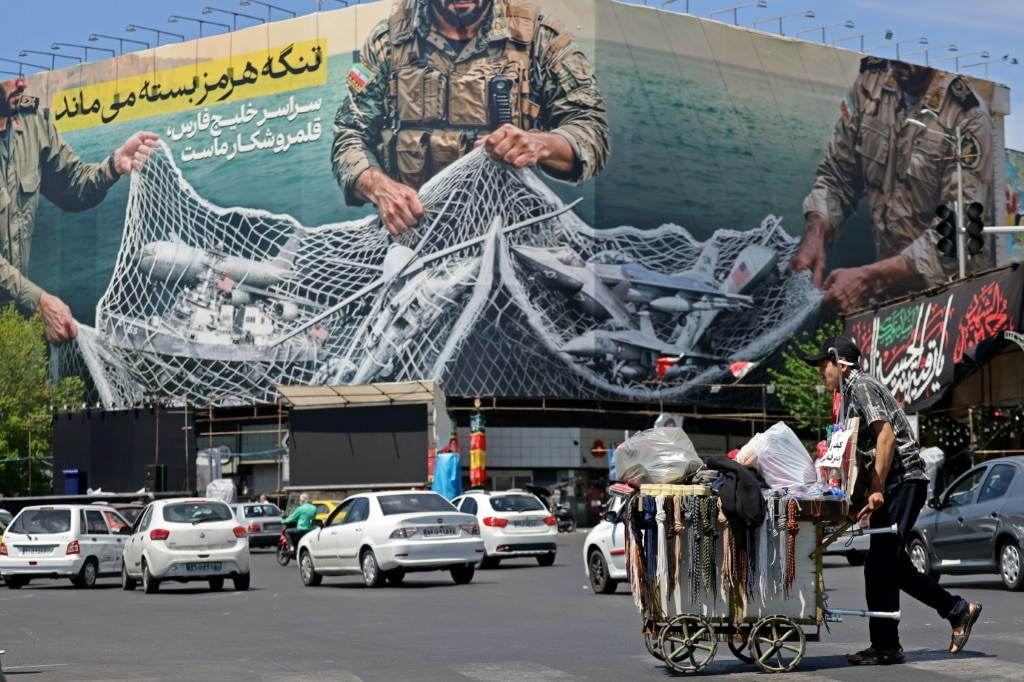
US says to begin blockade of Iranian ports
Less than an hour after the breakdown of US-Iran peace negotiations hosted in Islamabad, the United States military has announced it will launch a full blockade of all Iranian ports starting at 1400 GMT Monday, a move that Iran has already labeled an act of piracy and that has sent shockwaves through global energy markets and the Middle East. The collapse of the weekend talks came after US Vice President JD Vance, who led the American delegation alongside special envoy Steve Witkoff and former President Trump’s son-in-law Jared Kushner, left the negotiations with no agreement, capping weeks of hopes that a permanent ceasefire could end a regional war that broke out in late February.
Former President Donald Trump, who first announced the blockade plan on social media, framed the action as a necessary step to fully reopen the strategically vital Strait of Hormuz, a chokepoint that carries nearly a fifth of the world’s daily oil and gas trade. Since the war began, Iran has severely restricted traffic through the strait, only permitting passage for vessels traveling to and from allied nations such as China. Trump added that his administration’s goal is to clear the waterway of mines and open it to all global shipping, while preventing Iran from gaining economic leverage from control over the route.
US Central Command confirmed the blockade parameters in an official statement, noting that the restriction will apply equally to all vessels of any flag seeking to enter or depart Iranian ports along both the Arabian Gulf and Gulf of Oman. The command clarified that US forces will not interfere with commercial traffic transiting the Strait of Hormuz bound for or coming from non-Iranian ports. But major questions remain unanswered about how the US military will practically enforce a full port blockade along Iran’s extensive coastline, a complex operation that risks direct military confrontation.
Iran has issued fierce pushback against the plan. The Iranian military command called the impending blockade a criminal act of piracy, issuing a stark warning that if the security of Iran’s Persian Gulf and Arabian Sea ports is threatened, no ports in those entire bodies of water will remain safe. Iran’s parliament speaker Mohammad Bagher Ghalibaf, who led the Tehran delegation in Islamabad, reaffirmed that Iran will never bow to US threats, while Iranian Navy Chief Shahram Irani dismissed Trump’s blockade announcement as simply “ridiculous”.
The failed talks and impending blockade have upended a fragile two-week ceasefire that paused large-scale fighting last week, bringing a sharp drop in global oil prices and hopes for a long-term peace deal. As of Monday, however, there has been no immediate indication that full-scale war will resume immediately. The conflict, which began after Israel and the US launched joint strikes on Iran, with Iran retaliating against targets in Gulf states and Israel, has already killed thousands of people and thrown the global economy into chaos. The weekend’s breakdown has now wiped out hopes for a swift, permanent resolution.
Global energy markets reacted sharply to the news: after falling steadily following the ceasefire announcement, both benchmark Brent and West Texas Intermediate crude oil prices jumped roughly 8% on Monday, pushing both contracts above the $100 per barrel threshold for the first time since the ceasefire took hold. The escalation has spread a deep sense of unease across the Middle East, where regional states are already grappling with months of volatility. “Things could change at any moment,” said Aishah, a 32-year-old economic consultant based in Doha. “It’s more about taking each day as it comes.”
International reaction to the US plan has been deeply divided. China, a major importer of Iranian crude and a longstanding geopolitical rival of the US, criticized the blockade, noting that the Strait of Hormuz is a critical global energy and trade route, and that maintaining its security, stability and free flow is a shared interest of the entire international community. Beijing called on both sides to avoid reigniting open conflict.
Russia, Iran’s closest major international ally, announced that Foreign Minister Sergei Lavrov will travel to Beijing this week to meet with Chinese Foreign Minister Wang Yi, a meeting widely seen as a consultation on the escalating crisis. Among US NATO allies, who have already faced criticism from Trump for refusing to back more aggressive action against Iran, reaction has been overwhelmingly negative. Spanish Defense Minister Margarita Robles called the planned blockade “makes no sense”, describing it as just another step in a dangerous downward spiral for the region. UK Prime Minister Keir Starmer confirmed in a BBC radio interview that Britain will not join the US blockade, saying the country will not be dragged back into open conflict with Iran.
Pakistan, which stepped in to host the fragile negotiations between the two sides, reiterated after the collapse that it remains committed to continuing dialogue facilitation, and called on both Washington and Tehran to uphold the existing ceasefire. Beyond the port blockade and the Strait of Hormuz, core disagreements over Iran’s nuclear program also derailed the talks. The US delegation walked away frustrated after Iran refused to compromise on its right to operate a civilian nuclear program, which the US says conceals military ambitions. Vance told reporters after the talks that Washington had put forward its “final and best offer” to Tehran, adding only: “We’ll see if the Iranians accept it.” Trump later reaffirmed his longstanding position on social media, writing: “I have always said, right from the beginning, and many years ago, IRAN WILL NEVER HAVE A NUCLEAR WEAPON!”
Scholars of international security say the blockade is far more than a symbolic coercive measure. Nicole Grajewski, an assistant professor at Sciences Po’s Center for International Research, called a US blockade “not a minor coercive signal”, noting that it can reasonably be interpreted as an effective resumption of open hostilities between the two nations.