分类: world

  • Ukraine remembers its dead as war enters a fifth year

    Ukraine remembers its dead as war enters a fifth year

    Ukraine solemnly commemorated the fourth anniversary of Russia’s full-scale invasion this week, honoring the fallen in a conflict with no end in sight. The nation observed a moment of silence at 10:00 local time, bringing Kyiv to a standstill as citizens gathered in Maidan Square and other memorial sites across the country.

    President Volodymyr Zelensky delivered a defiant address from the presidential palace’s subterranean corridors, asserting that “Ukraine never chose this war” while emphasizing the preservation of national sovereignty. “We have defended our independence, we have not lost our statehood,” he declared, acknowledging the staggering human cost while reaffirming Ukraine’s resilience.

    The military situation remains dire as the conflict enters its fifth year. Russian forces currently control approximately 20% of Ukrainian territory, though Moscow has failed to capture the entire Donbas region as initially intended. Kremlin spokesman Dmitry Peskov acknowledged that Russia’s war aims “haven’t been fully achieved yet,” while blaming Western support for Ukraine for escalating the conflict into a “confrontation between Russia and the West.”

    International support was visibly demonstrated as Zelensky hosted European leaders including Finnish President Alexander Stubb, Swedish Prime Minister Ulf Kristersson, and European Commission President Ursula von der Leyen. The so-called “Coalition of the Willing,” led by Britain and France and comprising approximately 35 nations, convened to discuss continued support, with some members expressing willingness to deploy troops to enforce any potential ceasefire.

    UK Prime Minister Keir Starmer, participating via video link, challenged the perception of Russian dominance, noting that Moscow had gained only “0.8% of land in Ukraine at a terrible cost to themselves of half a million losses” over the past year. Conversely, French President Emmanuel Macron expressed skepticism about near-term peace prospects, stating there was “no willingness on the Russian side to have a robust and solid peace.”

    The human toll continues to mount dramatically. BBC investigations have identified over 186,000 Russian soldiers killed, while UK defense estimates suggest total Russian casualties may reach 1.25 million. Ukrainian losses remain contested, with Zelensky acknowledging 55,000 battlefield deaths while other sources suggest the figure could approach 200,000.

    Civilian infrastructure remains under constant threat, with Ukraine urgently requesting additional Patriot interceptor missiles from the US after winter bombardments depleted defensive capabilities. The conflict has displaced millions and created Europe’s largest humanitarian crisis since World War II, with no diplomatic breakthrough appearing imminent despite multiple negotiation attempts.

  • Western forces in Erbil relocate ahead of possible US strikes on Iran

    Western forces in Erbil relocate ahead of possible US strikes on Iran

    The Erbil Air Base in Iraq’s Kurdistan region has emerged as a potential flashpoint amid escalating tensions between the United States and Iran. This strategic military installation, co-located with Erbil International Airport, has become increasingly vulnerable as coalition forces reposition personnel anticipating possible Iranian retaliatory strikes.

    Historical precedent underscores the base’s vulnerability. Since 2018, the Kurdistan region has endured repeated attacks from Iran and its proxies utilizing drones, rockets, and ballistic missiles. A suicide drone was intercepted above the airport in July, while a January attack targeted an Iranian Kurdish opposition party, resulting in casualties.

    The current military buildup includes approximately 100 aerial refuel tankers, carrier strike groups, and fighter squadrons deployed throughout the region. This mobilization coincides with critical nuclear negotiations between Washington and Tehran, with former President Trump not excluding military action should diplomacy fail.

    Multiple sources confirm that nearly half of coalition forces have been withdrawn or repositioned from Erbil as a precautionary measure. While U.S. and Hungarian troops maintain their presence, Norwegian, Swedish, Italian, and French contingents have relocated. Norway and Germany have officially acknowledged withdrawing personnel, citing regional tensions and force protection concerns.

    The base’s strategic significance has intensified following the coalition’s consolidation of forces in Kurdistan. According to the Pentagon Inspector General’s report, coalition headquarters relocated to Erbil and Kuwait after transferring facilities in Baghdad to NATO and returning al-Asad Airbase to Iraqi control in late 2023. This consolidation effectively makes Erbil the sole remaining U.S. base in Iraq.

    Nicholas Heras of the New Lines Institute notes that the base represents both a strategic vulnerability and a symbolic target: ‘Attacking it provides the Iranians with an opportunity to make a declaration to local U.S. partners in the region as to the cost of working with the Americans.’

    With estimates suggesting fewer than 2,000 troops remain in Erbil, military analysts indicate the U.S. is preparing for potential conflict while minimizing personnel exposure. The situation remains fluid as diplomatic efforts continue, with regional stability hanging in the balance.

  • Ramadan in Gaza: Palestinians break fast among rubble of destroyed homes

    Ramadan in Gaza: Palestinians break fast among rubble of destroyed homes

    In the war-ravaged landscape of Gaza, Palestinian families are observing the holy month of Ramadan under extraordinarily dire circumstances. Instead of gathering in comfortable homes adorned with festive decorations, many are breaking their fasts amidst the skeletal remains of their destroyed residences, creating a stark contrast between spiritual devotion and physical devastation.

    The traditional iftar meal, typically a joyful communal celebration, now takes place in bombed-out buildings and makeshift shelters. Families sit on rubble-strewn floors where their living rooms once stood, sharing whatever simple provisions they can secure amidst severe supply shortages. The sounds of prayer and Quranic recitation echo through hollowed-out structures that bear witness to recent conflict.

    Humanitarian conditions remain critically strained throughout the region, with limited access to essential supplies including food, clean water, and medical resources. International aid organizations report significant challenges in delivering assistance to those most affected by the ongoing crisis. Despite these hardships, the community demonstrates remarkable resilience, maintaining religious traditions and finding moments of unity amid the destruction.

    The psychological impact of observing this sacred period without basic security or adequate nourishment presents profound challenges for Gaza’s population. Community leaders emphasize the spiritual significance of perseverance during hardship, while medical professionals express concern about the combined effects of malnutrition, stress, and trauma on the physical and mental health of residents, particularly children and the elderly.

  • Sierra Leone says security force members apprehended by Guinea’s military following border incursion

    Sierra Leone says security force members apprehended by Guinea’s military following border incursion

    LAGOS, Nigeria — Tensions between West African nations Sierra Leone and Guinea have intensified following a border incident involving the detention of Sierra Leonean security personnel by Guinean military forces. The confrontation occurred Monday in the disputed border region of Kalieyereh within Falaba district.

    According to an official statement from Sierra Leone’s government, multiple members of a security detail—including at least one officer—were apprehended and transported across the border into Guinean territory. The detained personnel were reportedly engaged in construction activities for a border post and accompanying accommodation facilities at the time of their capture. Their weapons and ammunition were confiscated during the incident.

    The Sierra Leonean administration emphasized that the territory where the incident transpired flies Sierra Leone’s national flag and is internationally recognized as sovereign Sierra Leonean land. Authorities have initiated diplomatic and security channel negotiations to verify the exact location of detained personnel and secure their unconditional release.

    This recent confrontation represents the latest escalation in a protracted border dispute originating from Sierra Leone’s civil war (1991-2002). During the conflict, Sierra Leone had requested Guinean military assistance to secure its eastern borders. However, Guinean forces maintained a presence in the region following the war’s conclusion, creating ongoing territorial tensions.

    The mineral-rich border region has previously witnessed similar incidents, including last year’s incursion by Guinean military personnel into a Sierra Leonean border town, which raised concerns among regional observers. Guinean authorities have not yet issued an official statement regarding Monday’s events.

    The unfolding situation highlights the persistent border security challenges facing West African nations and the complex legacy of regional military cooperation arrangements that evolved during periods of conflict.

  • UN data shows 6.5 million people at risk of severe hunger from drought

    UN data shows 6.5 million people at risk of severe hunger from drought

    Somalia is confronting an escalating humanitarian emergency with approximately 6.5 million citizens projected to experience crisis-level food insecurity by March’s end, according to joint assessments by the federal government and United Nations agencies. The alarming data, compiled in the Integrated Food Security Phase Classification report, reveals a multifaceted crisis driven by compounding factors including severe drought conditions, ongoing conflict, and drastic reductions in global humanitarian funding.

    The nutritional outlook appears particularly dire for children, with estimates indicating 1.84 million children under five will likely suffer acute malnutrition throughout 2026. Within this vulnerable demographic, nearly 500,000 are expected to experience severe malnourishment requiring urgent medical intervention.

    Environmental factors have significantly exacerbated the situation, with below-average rainfall creating widespread agricultural failures, substantial livestock losses, and critical water shortages. These conditions have triggered dramatic food price increases and forced approximately 278,000 people from their homes between July and December, further disrupting agricultural production and market accessibility.

    UN Humanitarian Coordinator for Somalia George Conway characterized the drought emergency as ‘deepening alarmingly,’ noting the convergence of exorbitant water prices, diminished food supplies, and inadequate humanitarian funding. Conway emphasized that immediate lifesaving assistance remains essential throughout the coming months, particularly as no meaningful rainfall is anticipated before the primary rainy season commencing in April.

    Even with average rainfall performance during the April-June period, officials project 5.5 million people will remain in crisis conditions throughout later 2026, noting that recovery from such extreme drought requires substantial time.

    Mohamud Moallim Abdulle, Commissioner of the Somalia Disaster Management Agency, described the situation’s severity as ‘undeniable and deeply alarming,’ issuing urgent appeals to international partners, the Somali diaspora, private businesses, and civil society organizations to intensify support efforts.

    The coordinated response capacity has been severely hampered by funding reductions, forcing humanitarian organizations to scale back or completely suspend critical programs addressing food security, health services, nutrition support, and water sanitation infrastructure.

  • GCC calls on Iraq to withdraw UN map rejected by Kuwait

    GCC calls on Iraq to withdraw UN map rejected by Kuwait

    The Gulf Cooperation Council (GCC) has formally intervened in a renewed maritime sovereignty dispute between Kuwait and Iraq, calling for the immediate withdrawal of recently submitted United Nations documents. The diplomatic escalation follows Iraq’s submission of coordinates and maps to the UN Secretary-General on January 19 and February 9, 2026, outlining its territorial sea baselines and maritime zones in accordance with the 1982 United Nations Convention on the Law of the Sea (UNCLOS).

    Kuwait has vigorously contested these submissions, asserting that the proposed coordinates constitute an unlawful encroachment on its established maritime sovereignty and fixed water elevations. According to Kuwaiti authorities, these maritime boundaries have never previously been subject to dispute between the neighboring nations.

    The GCC, representing six Gulf nations including the UAE, Qatar, Oman, Saudi Arabia, and Bahrain, has unanimously voiced support for Kuwait’s position. GCC Secretary General Jasem Mohamed Albudaiwi issued a formal statement urging Iraq to retract its UN submissions, specifically highlighting concerns over claims to maritime areas including Fasht Al Qaid and Fasht Al A’aij shoals.

    Albudiawi emphasized the critical importance of adhering to international law and UNCLOS principles, particularly those aligned with existing bilateral agreements and memoranda of understanding between Iraq and Kuwait. The Secretary General referenced the GCC Supreme Council’s firm stance as articulated in the Final Statement of its 46th session, which explicitly calls for Iraq’s respect of Kuwait’s sovereignty and territorial integrity.

    The GCC statement categorically rejects any violations of Kuwait’s sovereignty over its lands, islands, associated shoals, and entire maritime zone while underscoring the necessity of upholding all relevant bilateral and international agreements, including UN resolutions.

    Despite acknowledging the deep-rooted historical relations and neighborly ties between GCC members and Iraq, Albudaiwi noted that such territorial claims undermine ongoing efforts to strengthen regional cooperation. The Secretary General concluded by expressing hope that Iraq would review and withdraw its submissions as a confidence-building measure that would reinforce mutual trust, promote stability, and demonstrate commitment to established legal and international principles.

  • From rural migrant to cartel chief: The rise and fall of Mexico’s El Mencho

    From rural migrant to cartel chief: The rise and fall of Mexico’s El Mencho

    The era of Nemesio Rubén Oseguera Cervantes, infamously known as ‘El Mencho,’ concluded violently on February 22nd when Mexican military forces fatally wounded the drug lord during an operation in Jalisco state. The leader of the Jalisco New Generation Cartel (CJNG) succumbed to gunshot injuries while being transported by air to Mexico City, marking the most significant blow to Mexican organized crime since the recapture of Joaquin ‘El Chapo’ Guzman.

    El Mencho’s journey from rural poverty to cartel leadership began in the village of Naranjo de Chila, Michoacán, where he was born into a farming family in 1966. His criminal trajectory started after immigration to California, where heroin distribution convictions led to nearly three years in U.S. federal prison followed by deportation at age 30.

    His brief tenure as a local police officer in Mexico proved strategically valuable, providing insights into law enforcement tactics that would later facilitate his evasion of capture for over a decade. Through marriage into the influential Gonzalez Valencia family and ruthless ambition, Oseguera rose within the Milenio Cartel before co-founding CJNG around 2009-2010.

    Under his leadership, CJNG transformed from a breakaway faction into a global criminal enterprise operating in dozens of countries. The cartel established control over key Pacific ports, enabling massive importation of precursor chemicals from China for synthetic drug production. The U.S. Drug Enforcement Administration identified CJNG as a primary supplier of cocaine, methamphetamine, heroin and fentanyl to American markets.

    The organization’s expansion was characterized by extreme violence, including the 2015 downing of a Mexican military helicopter, the killing of 15 police officers, and a 2020 attack on Mexico City’s police chief. Despite this brutality, Oseguera maintained an unusually low public profile, with few recent photographs circulating and reports of his movement between remote locations to avoid detection.

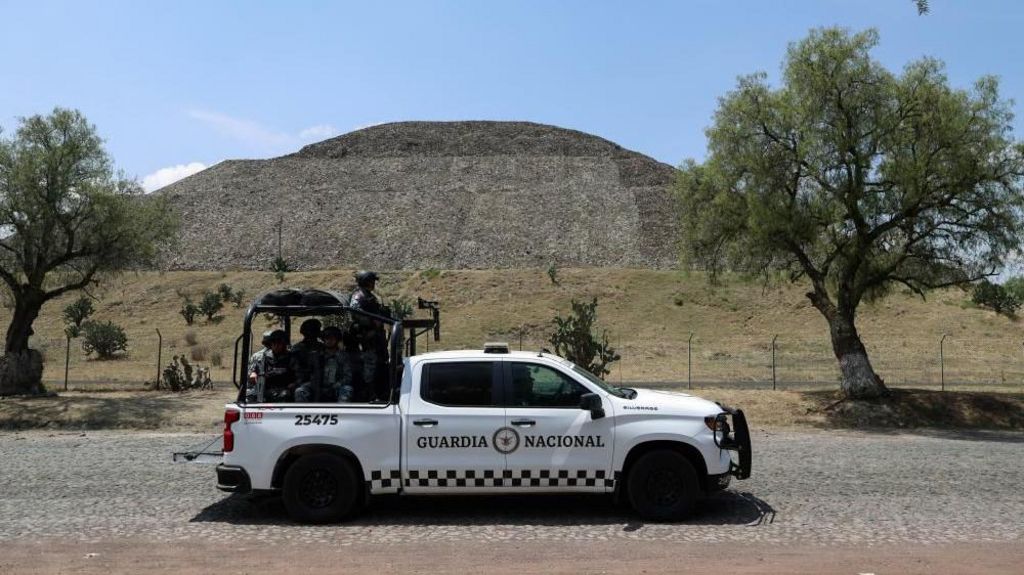
    The aftermath of his death triggered immediate violence, with CJNG gunmen torching vehicles, blocking highways, and clashing with security forces across multiple states. Authorities reported at least 25 National Guard members killed in the retaliatory violence.

    With key family members including his son ‘El Menchito’ serving life sentences in the U.S. and no clear successor, analysts warn of potential cartel fragmentation, intensified turf wars, and escalating violence in contested regions as rival factions compete for control of Mexico’s criminal underworld.

  • At least 4 killed as army helicopter crashes in central Iran

    At least 4 killed as army helicopter crashes in central Iran

    A military helicopter operated by the Iranian Army crashed into a bustling fruit market in Dorcheh, Isfahan province, on Tuesday, resulting in four confirmed fatalities. The deceased include both the aircraft’s pilot and co-pilot, alongside two local merchants who were present at the scene.

    Initial reports from state media indicate the crash triggered an immediate fire, which emergency response teams successfully extinguished. The incident has drawn renewed attention to Iran’s longstanding aviation safety challenges.

    Aviation experts frequently attribute Iran’s poor air safety record to an aging fleet, largely composed of aircraft procured prior to the 1979 Islamic Revolution. These older models face significant maintenance hurdles due to international sanctions that severely restrict access to original manufacturer parts and technical support.

    This tragedy follows another recent military aviation incident in Iran. Just last week, a US-manufactured F-4 Phantom fighter jet crashed during a training exercise in Hamadan province, claiming the life of one pilot. These consecutive accidents highlight persistent operational risks within the country’s military aviation branches.

  • Two dead after winter storm hammers the US northeast

    Two dead after winter storm hammers the US northeast

    A severe winter storm, classified as a major nor’easter, has wrought havoc across the northeastern United States, resulting in tragic fatalities and causing extensive logistical paralysis. The system, which has now moved into eastern Canada, delivered historic snowfall totals and powerful winds, leaving a trail of disruption from canceled flights to prolonged power outages.

    In a tragic incident underscoring the storm’s danger, two Maryland residents lost their lives on Sunday afternoon. The Calvert County Sheriff’s Office confirmed that a falling tree struck a vehicle, killing 60-year-old Michael Simpson and 43-year-old Virginia Quesenberry. The state of Maryland experienced accumulations of up to 16 inches (40 cm) from the powerful system.

    The storm set records elsewhere. Providence, Rhode Island, was buried under 37.9 inches of snow, marking its largest blizzard in history. Consequently, travel bans and preemptive school closures remained enforced in Rhode Island and sections of Massachusetts as communities initiated large-scale recovery operations.

    Air travel faced severe interruptions, with FlightAware data revealing over 5,000 cancellations on Monday. Disruptions persisted into Tuesday, with more than 2,000 additional flights canceled and nearly 1,000 delayed. Major aviation hubs, including Boston’s Logan International Airport and New York’s John F. Kennedy International and LaGuardia airports, were among the most significantly impacted.

    New York City, which recorded over 20 inches of snow—ranking this as its ninth-largest winter storm—implemented a travel ban. Mayor Zohran Mamdani deployed a massive workforce of 2,600 sanitation personnel for road plowing, supplemented by 1,400 emergency workers tasked with clearing sidewalks and bus stops. The city resumed in-person schooling on Tuesday, though neighboring regions in New Jersey and Pennsylvania opted for delays and virtual learning.

    The storm’s impact extended beyond transportation. The historic weather event forced the Boston Globe to suspend its print edition for the first time in its 153-year history, as delivery routes were rendered impassable. Furthermore, a significant power crisis lingered; according to poweroutage.us, approximately 250,000 Massachusetts residents were without electricity on Tuesday morning. Officials in the coastal town of Scituate warned residents to prepare for power to remain out for several days due to restoration challenges posed by persistent high winds.

    The National Weather Service reported that while the core of the nor’easter has moved offshore, strong winds are expected to continue affecting coastal areas of eastern Canada.

  • Drone strike in eastern Congo kills senior rebel official, escalating tensions

    Drone strike in eastern Congo kills senior rebel official, escalating tensions

    A senior spokesperson for the Rwanda-supported M23 rebel faction operating in eastern Democratic Republic of Congo has been confirmed killed in a drone strike, according to anonymous sources from both the United Nations and local human rights organizations. The incident occurred near the mining town of Rubaya in North Kivu province during predawn hours on Tuesday.

    Willy Ngoma, recognized as a key operational figure within the M23 leadership structure, was targeted in an attack that struck a known rebel enclave. The strike represents a significant escalation in regional hostilities following the collapse of recent peace negotiations. Both the UN official and rights coordinator provided information under strict anonymity due to legitimate security concerns for their personal safety.

    This development occurs against the backdrop of intensified fighting between Congolese armed forces, supported by Wazalendo militia groups, and the M23 insurgents. The conflict, which spans decades, entered a particularly violent phase in January 2022 when rebels achieved unprecedented territorial gains, including advances toward the strategic cities of Goma and Bukavu.

    While responsibility for the drone strike remains unclaimed, the attack underscores the deteriorating security situation despite diplomatic interventions from international mediators including the United States and Qatar. Both conflicting parties have exchanged accusations regarding violations of previously established ceasefire agreements facilitated by foreign and regional partners.