分类: world

  • Guterres says rule of law ‘outmuscled’

    Guterres says rule of law ‘outmuscled’

    United Nations Secretary-General Antonio Guterres delivered a stark warning during the opening of the 61st UN Human Rights Council session in Geneva, declaring that the rule of law is being systematically “outmuscled” by the rule of force worldwide. The UN leader emphasized that human rights are facing “a full-scale attack around the world” with devastating consequences.

    Guterres specifically highlighted the deteriorating situation in the Occupied Palestinian Territory, stating that “the two-state solution is being stripped away in broad daylight” through blatant violations of human rights and international law. He called on the international community to prevent this deliberate undermining of peace prospects.

    The warning comes amid escalating tensions in the West Bank, where Israeli forces recently raided the towns of Silwad and Turmus Ayya according to Palestinian news agency WAFA. In a separate incident, the Palestinian Foreign Ministry condemned the torching of Abu Bakr al-Siddiq Mosque in Tell village by Israeli settlers, demanding international intervention.

    Diplomatic pressure is mounting as nearly twenty nations from the Middle East, Europe, and Asia—plus the League of Arab States and Organization of Islamic Cooperation—issued a collective statement condemning Israel’s expanding control over the West Bank. The coalition criticized recent measures that reclassify Palestinian land as Israeli state territory and accelerate illegal settlement activity.

    The international community expressed particular concern about violations of Jerusalem’s historic status quo during Ramadan, warning these actions threaten regional stability. Meanwhile, high-level discussions between Egyptian President Abdel Fattah El-Sisi and Saudi Crown Prince Mohammed bin Salman Al Saud in Jeddah focused on ceasefire implementation, humanitarian aid delivery to Gaza, and reaffirmed rejection of Palestinian displacement.

    Chinese Foreign Ministry spokeswoman Mao Ning urged restraint and dialogue, stating that escalating Middle East tensions serve no party’s interests. Indonesian legal scholar Arie Afriansyah supported Guterres’ assessment, noting that military and political power increasingly override legal restraints, with inconsistent application of UN Charter protections for civilians.

  • Mexico on edge after drug lord slain

    Mexico on edge after drug lord slain

    Mexico has been plunged into a state of heightened security crisis following the military killing of Nemesio Oseguera Cervantes, known as ‘El Mencho,’ the leader of the Jalisco New Generation Cartel (CJNG). The operation, which resulted in the death of Mexico’s most wanted drug lord, has triggered widespread retaliatory violence across multiple states, forcing the government to deploy substantial military resources to restore order.

    The coordinated military operation that eliminated El Mencho occurred on Sunday in Tapalpa, where the cartel leader was initially wounded before succumbing to injuries during transport to a medical facility. Mexican Security Minister Omar Garcia Harfuch confirmed the operation resulted in significant casualties, including 25 National Guard members and approximately 30 cartel suspects. Authorities reported seizing substantial weaponry including armored vehicles and rocket launchers during the confrontation.

    In response to their leader’s death, CJNG members initiated a coordinated campaign of violence across 20 Mexican states, establishing over 250 roadblocks, burning vehicles, and engaging in open shootouts with security forces. The western Jalisco state experienced particularly intense violence, prompting Governor Pablo Lemus Navarro to activate an emergency ‘code red’ protocol, suspend public transportation, and advise residents to remain indoors.

    The escalating violence has significantly impacted civilian life and tourism. Multiple airlines canceled or redirected flights from affected regions, while social media footage showed passengers at Guadalajara International Airport scrambling for cover amid terminal chaos. The Chinese Embassy in Mexico issued security alerts advising Chinese citizens to maintain heightened vigilance and follow local government directives.

    US intelligence agencies provided support for the operation against El Mencho, according to White House press secretary Karoline Leavitt. The collaboration follows Washington’s formal designation of several Mexican cartels, including CJNG, as foreign terrorist organizations due to their involvement in drug trafficking, kidnappings, and targeted killings.

    Security experts caution that targeting individual cartel leaders produces limited long-term impact. Guadalupe Correa-Cabrera, a professor at George Mason University’s Schar School of Policy and Government, notes that criminal organizations like CJNG maintain fragmented leadership structures with multiple cells operating under local protection networks. ‘Arrests or extraditions don’t destroy the organization; family members or successors usually step in,’ Correa-Cabrera explained, emphasizing that the fundamental drivers—drug demand and systemic corruption—remain unaddressed.

    Mexican President Claudia Sheinbaum has praised security forces while calling for public calm amid the ongoing crisis. The government has deployed approximately 10,000 troops, including an additional 2,500 specifically to Jalisco, to quell the violence that continues to threaten stability across the region.

  • Indonesia frees and deports American who spent 11 years in prison for Bali ‘suitcase murder’

    Indonesia frees and deports American who spent 11 years in prison for Bali ‘suitcase murder’

    JAKARTA, Indonesia — Indonesian authorities deported American national Tommy Schaefer on Tuesday evening following his 11-year incarceration for the premeditated 2014 murder of Sheila von Wiese-Mack, his girlfriend’s mother, in a case that gained international notoriety as the Bali “suitcase murder.”

    Schaefer’s release and subsequent removal from Bali International Airport came after he completed his reduced prison term, having originally received an 18-year sentence. Felucia Sengky Ratna, Head of the Bali Regional Office of Immigration, confirmed that Schaefer qualified for early deportation due to accumulated sentence remissions awarded for consistent good behavior during imprisonment.

    The case dates back to August 2014, when the severely beaten body of 62-year-old Chicago socialite von Wiese-Mack was discovered inside a suitcase in the trunk of a taxi parked at the exclusive St. Regis Bali Resort. The victim had been vacationing at the luxury property with her daughter, Heather Mack, who was then 18 years old and several weeks pregnant, and Mack’s boyfriend, Schaefer, then 21.

    Both Mack and Schaefer were apprehended on the Indonesian island within 24 hours of the grim discovery. Mack ultimately served seven years of her 10-year Indonesian sentence for complicity in her mother’s murder before being deported to the United States in October 2021. Earlier this year, in January 2024, a Chicago court sentenced Mack to an additional 26 years imprisonment after she pleaded guilty to U.S. charges related to the murder conspiracy and concealment of her mother’s body in a suitcase.

  • Starmer visit sparks interest in Shanghai’s premier snack

    Starmer visit sparks interest in Shanghai’s premier snack

    A simple culinary purchase by British Prime Minister Keir Starmer during his Shanghai visit has unexpectedly catapulted a local pastry into global recognition. While touring the historic Yuyuan Garden, Starmer acquired a box of hudiesu—a butterfly-shaped confection—from renowned restaurant Lu Bo Lang, sparking immediate international interest in the traditional Shanghai treat.

    The Prime Minister’s 48-yuan ($6.90) purchase of eight palm-sized pastries generated substantial social media buzz across multiple countries. This incidental endorsement produced dramatic commercial results: daily sales at Lu Bo Lang surged from approximately 100 boxes to 300 boxes almost overnight, according to restaurant staff.

    Shanghai residents expressed bemusement at the sudden international attention, as hudiesu has long been regarded as one of the city’s premier culinary gifts. The pastry represents a unique fusion of Chinese and Western culinary traditions—a crispy, flaky delicacy that perfectly complements coffee or tea. Unlike its northern Chinese counterparts which tend to be smaller and harder, the Shanghai variation is notably buttery, light, and exceptionally flaky.

    Veteran pastry chef Lin Jianming attributes the distinctive quality to precise flour-butter ratios. Though the palmier originated in 1930s Europe (where it’s sometimes called “the heart of France”), Shanghai’s interpretation has evolved into a distinctly local specialty.

    Wu Jianglei, manager of the prestigious Park Hotel Bakery—whose recipe gained intangible cultural heritage status in Huangpu District in 2021—explained the adaptation process: “We reduced sugar content by 50 percent from traditional French recipes to emphasize butter’s aroma, transforming the texture from hard and crispy to soft and fluffy.”

    The Park Hotel Bakery’s version has achieved legendary status among connoisseurs. First introduced when the hotel opened in 1934 as “Ear Cake” and originally served exclusively during afternoon tea, the pastry became publicly available in the 1980s and rapidly gained popularity.

    Wu characterizes the treat as “a miniature embodiment of Chinese-Western cultural fusion that symbolizes Shanghai’s openness and inclusiveness.” Obtaining these freshly made delicacies requires significant dedication—lines typically form by 7:30 AM for the 8 AM opening, with waits extending to 2.5 hours during peak afternoon periods. The bakery enforces a six-pack daily purchase limit to manage demand.

    Despite the challenges, the bakery sells approximately 7,500 packs daily to both local enthusiasts and international visitors. American tourist Mike Brown attested: “I waited three hours from 2 PM—definitely worth it!” Wu notes the growing international clientele recognizes these pastries as representing significant contemporary cultural and economic phenomena.

  • Inside the Mexican resort that was the final hideout of ‘El Mencho’

    Inside the Mexican resort that was the final hideout of ‘El Mencho’

    The picturesque mountain resort of Tapalpa, Jalisco—typically known for its serene ecotourism and weekend retreats—became the unlikely epicenter of Mexico’s relentless drug war this week. Nemesio Oseguera Cervantes, the notorious leader of the Jalisco New Generation Cartel (CJNG) known as ‘El Mencho’, met his end following an audacious military operation at the exclusive Tapalpa Country Club.

    The dawn raid on Sunday transformed the tranquil resort into a combat zone, with machine gun fire and military helicopters shattering the calm. Tourists, initially seeking refuge in the area’s luxurious cabins, described hours of intense firefights between government special forces and the cartel’s security detail. ‘It was terrifying… you could hear machine guns firing from the ground into the air and from the air to the ground,’ one anonymous tourist recounted to AFP.

    Authorities revealed that Oseguera had been maintaining a low profile at the property with his girlfriend, whose presence ultimately proved instrumental in tracking the elusive drug lord. During the attempted escape through the mountainous terrain, Oseguera sustained fatal wounds and died while being transported to a medical facility.

    The aftermath revealed a scene of abrupt departure: Oseguera’s two-story stone residence, adorned with religious imagery, was surrounded by hundreds of shell casings and an abandoned Jeep with doors left open. Inside, media photographs showed luxurious furnishings in disarray—open drawers, unmade beds, and personal items including kidney medication (reflecting Oseguera’s long-reported health issues) alongside religious candles and handwritten prayers.

    The operation’s success triggered immediate retaliation across Mexico, with CJNG militants launching coordinated attacks in 20 states. Vehicles were burned on Tapalpa’s outskirts, and the normally vibrant town fell into an eerie desolation as tourists evacuated en masse. By Tuesday, authorities had secured the area, but the resort community remained shaken by its unexpected role in the demise of Mexico’s most-wanted criminal.

  • BBC sees damage in Puerto Vallarta after Mexican cartel violence

    BBC sees damage in Puerto Vallarta after Mexican cartel violence

    The popular Mexican coastal resort of Puerto Vallarta is undergoing damage assessment following a recent outbreak of cartel-related violence. BBC correspondent Will Grant conducted a firsthand inspection of the affected areas, documenting the physical and psychological impact on this tourist-dependent community.

    Grant’s reporting reveals a stark contrast between the town’s international reputation as a vacation paradise and the current reality of violence-scarred streets. The assessment follows intense clashes between rival cartel factions that disrupted the normally tranquil atmosphere of this Pacific coast destination.

    Local authorities have intensified security measures while business owners and residents evaluate the economic consequences of the security incident. The timing proves particularly damaging as Puerto Vallarta typically experiences high tourist traffic during this season. Restoration efforts are underway, though the psychological impact on both visitors and residents may prove more lasting than physical repairs.

    This incident represents another challenge for Mexico’s tourism industry, which contributes significantly to the national economy yet remains vulnerable to security issues in various regions. The Mexican government faces ongoing difficulties in balancing tourist security with complex cartel dynamics that occasionally spill into resort areas.

  • Japan demands the swift release of a Japanese national detained in Iran

    Japan demands the swift release of a Japanese national detained in Iran

    TOKYO — The Japanese government formally acknowledged on Wednesday that one of its citizens has been held in Iranian custody since late January, issuing a firm demand for their immediate release. The confirmation came during a press briefing where Deputy Chief Cabinet Secretary Masanao Ozaki addressed growing international media reports on the case.

    While confirming the detention occurred on January 20th, Ozaki refrained from disclosing specific details regarding the individual’s identity or the circumstances leading to the arrest, emphasizing the government’s obligation to protect private citizen information. The official stated that Japanese diplomatic channels are actively engaged, maintaining communication with both the detainee and their family members to provide all necessary consular assistance and support.

    The announcement highlights a delicate diplomatic situation for Japan, which has historically maintained a neutral and oil-dependent relationship with Iran. The incident occurs amidst a complex geopolitical landscape in the Middle East, though Japanese officials have not linked the detention to broader international tensions. The government’s statement was carefully crafted, balancing a demand for release with a neutral tone to avoid further escalating the situation, reflecting Japan’s standard diplomatic approach of quiet negotiation.

  • Prominent Russian scholar of North Korea detained during lecture in Latvia, Russian media says

    Prominent Russian scholar of North Korea detained during lecture in Latvia, Russian media says

    In a significant development involving international academia and diplomacy, Professor Andrei Lankov—a distinguished Russian scholar specializing in North Korean studies—was apprehended by Latvian authorities while delivering a lecture in the country. The incident, initially reported by Russian media outlets RBK and Tass, occurred during his presentation on North Korea, though specific grounds for the detention remain undisclosed.

    Lankov, who holds dual Russian and Australian citizenship and serves as a history professor at Seoul’s Kookmin University, confirmed to RBK that he was detained by Latvian police, blacklisted, and subsequently transferred to immigration services. As of 11 p.m. Moscow time, he remained in custody with legal representatives and associates addressing his case.

    South Korea’s Kookmin University administration stated they are actively evaluating the circumstances surrounding his detention. Attempts to contact Lankov directly were unsuccessful at the time of reporting.

    With deep expertise in North Korean affairs, Lankov spent his formative academic years as an exchange student in North Korea during the 1980s and has maintained a decades-long career analyzing the regime. He has taught in Seoul since 2004 after previous academic engagements in South Korea and Australia.

    Lankov is recognized for his realist perspective on North Korea, characterizing it as a Machiavellian state skillfully leveraging limited resources and manipulating global powers to ensure its survival. Notably, he has also voiced criticism against Russia’s military operations in Ukraine and Moscow’s recruitment of North Korean personnel to support its campaign.

    This incident follows a previous legal challenge in Russia, where in April 2025, a Moscow court fined Lankov 10,000 rubles (approximately $130) for participating in activities of an organization deemed “undesirable” by Russian authorities. Lankov had learned about those charges through media inquiries at the time.

  • Iran nears deal to buy supersonic anti-ship cruise missiles from China: Report

    Iran nears deal to buy supersonic anti-ship cruise missiles from China: Report

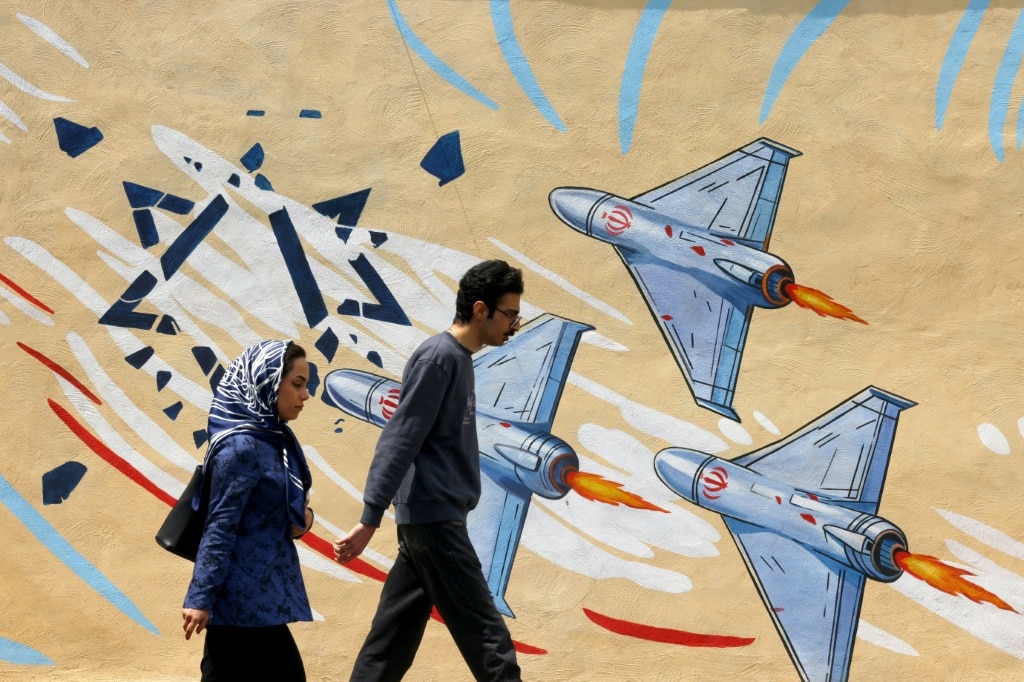
    Iran is advancing toward a significant arms acquisition from China, with negotiations nearing completion for the purchase of advanced CM-302 supersonic anti-ship cruise missiles. This development occurs alongside substantial US military deployments to the region, creating a volatile geopolitical landscape.

    According to intelligence reports, these bilateral defense talks initiated two years ago have gained considerable momentum since June 2025. This acceleration follows coordinated US-Israeli strikes targeting Iranian nuclear facilities. The CM-302 missiles under discussion represent a substantial capability upgrade with their 290-kilometer operational range and advanced countermeasure evasion technology.

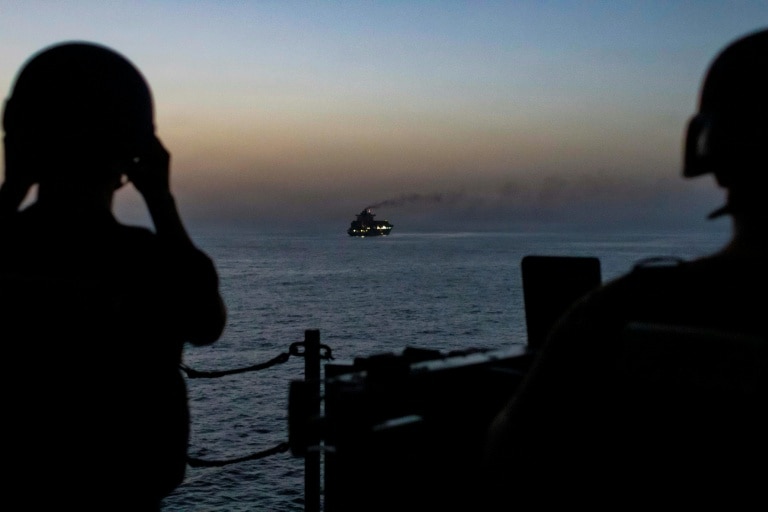
    The United States has responded with pronounced military reinforcement, positioning the USS Abraham Lincoln carrier strike group in the Arabian Sea while the USS Gerald Ford maintains presence in the Eastern Mediterranean. This deployment coincides with ongoing nuclear negotiations between Washington and Tehran.

    This potential transaction builds upon existing defense cooperation between Tehran and Beijing. Middle East Eye previously reported Iran’s acquisition of Chinese surface-to-air missile systems in June 2025, reportedly compensated through oil shipments. China remains Iran’s predominant oil customer, importing approximately 90% of Iranian crude exports according to US Energy Information Administration data.

    The geopolitical implications are particularly significant given the strategic importance of the Strait of Hormuz, through which nearly 20% of global seaborne oil transits. Iran has previously demonstrated capability to disrupt this critical waterway, temporarily closing the channel recently and conducting joint military exercises with China and Russia in adjacent waters.

    Historical context reveals deep-rooted Sino-Iranian defense cooperation dating to the 1980s, when China supplied HY-2 Silkworm missiles during the Iran-Iraq conflict. More recently, Iran acquired HQ9 anti-aircraft systems in 2010. The current missile transfer would represent a substantial escalation as offensive weaponry capable of threatening US naval assets.

    Despite growing cooperation, regional diplomats suggest China may exercise caution in over-committing to the partnership amid ongoing US-China rapprochement efforts. The upcoming April summit between Presidents Trump and Xi Jinping adds further complexity to these strategic calculations.

  • Threat of further violence looms after Mexican cartel rampage

    Threat of further violence looms after Mexican cartel rampage

    GUADALAJARA, Mexico – The aftermath of a coordinated cartel assault continues to haunt Mexico’s western Jalisco state, where charred vehicle carcasses and scorched asphalt bear witness to Sunday’s eruption of violence. The Jalisco New Generation Cartel (CJNG), among Mexico’s most formidable criminal syndicates, orchestrated this display of force in retaliation for the killing of their leader, Nemesio “El Mencho” Oseguera.

    The systematic torching of vehicles and looting of convenience stores served as a stark demonstration of the cartel’s operational capacity and its intent to maintain dominance regardless of leadership decapitation. This calculated spectacle of chaos successfully instilled widespread fear across urban centers, challenging governmental authority and disrupting civilian life.

    President Claudia Sheinbaum’s administration has attempted to project control, emphasizing the restoration of “peace and tranquillity” during daily briefings while deploying military and police convoys throughout Guadalajara. Despite these visible security measures, public apprehension persists, evidenced by unusually empty streets, shuttered businesses, and closed educational institutions as residents adopt precautionary measures.

    Amid the tension, local entrepreneur Anwar Montoya defied the climate of fear by reopening his Severo café. “We’re a new business and I have a lot of things to pay for,” Montoya explained, acknowledging the previous day’s events as “strange and difficult” while hoping his establishment might provide a safe haven for the community. His café attracted patrons including left-wing parliamentarian Mariana Casillas, who criticized both the cartel violence and what she characterizes as the government’s inadequate response.

    Casillas contextualized the crisis within Mexico’s two-decade-long drug war, noting that Sunday’s violence represented an intensified manifestation of persistent patterns rather than an isolated incident. She argues that the government’s continued focus on high-profile leader extraction fails to address root causes including systemic violence, poverty, and forced recruitment that sustain cartel operations.

    Security analysts echo these concerns, with Insight Crime managing editor Deborah Bonello observing that leadership decapitation strategies consistently trigger violent power struggles within criminal organizations. “When you take out a major leader, there’s a detonation of a struggle to take control in that vacuum,” Bonello noted, predicting intensified conflict in various regions.

    This security crisis emerges as Guadalajara prepares to host World Cup matches in June, raising international concerns about spectator safety. While FIFA President Gianni Infantino expressed being “very reassured” about security preparations and Mexican officials guarantee fan protection, local skepticism remains profound. Montoya questioned the city’s readiness, stating “I don’t think this is a safe place for the World Cup,” while Casillas emphasized that residents prioritize basic security, clean water, and locating disappeared relatives over international sporting events.

    The unfolding situation underscores Mexico’s complex security challenges as the government balances international commitments against domestic crises, with the upcoming tournament presenting both an opportunity for global prestige and a potential flashpoint for further violence.