分类: world

  • Israel killed most journalists worldwide in 2025

    Israel killed most journalists worldwide in 2025

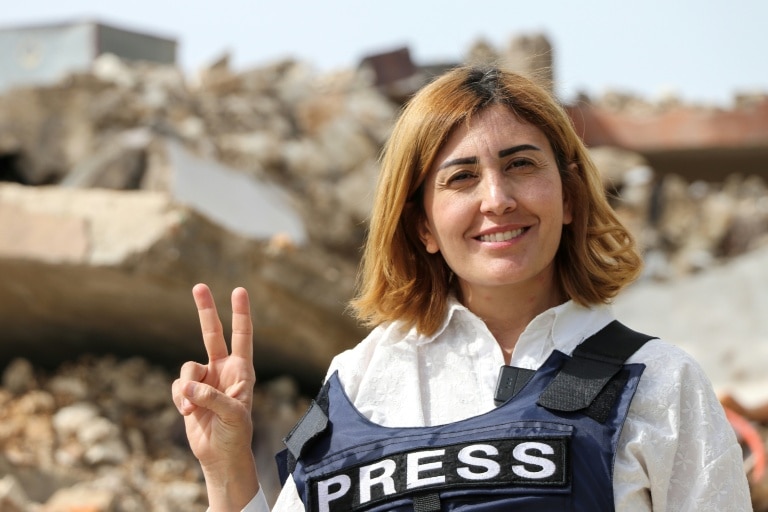
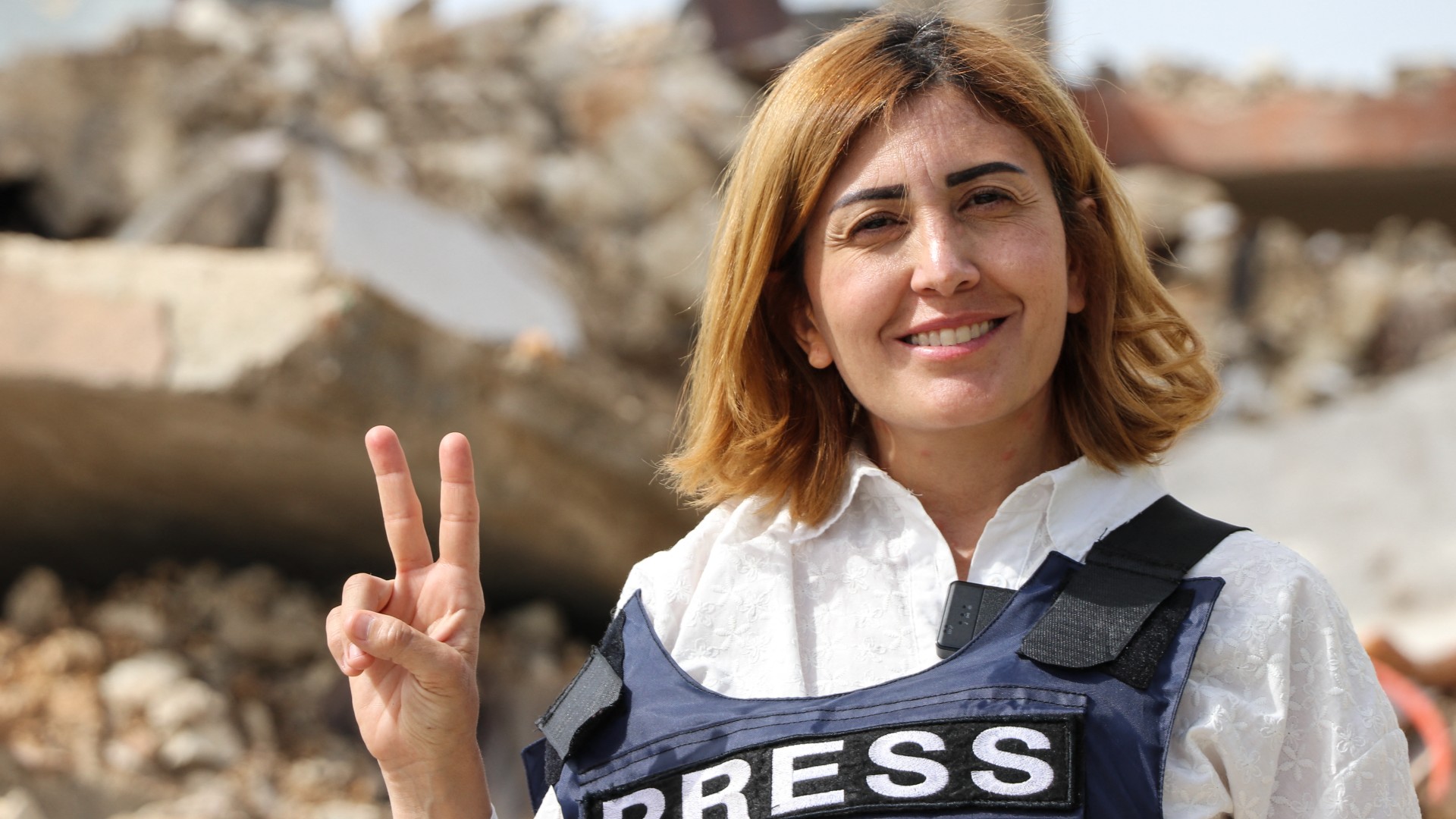
    The Committee to Protect Journalists (CPJ) released a devastating report on Wednesday revealing that 2025 became the most lethal year for media professionals since the organization began documenting casualties over thirty years ago. With a record 129 journalists killed worldwide, Israel was responsible for approximately 86 deaths—representing nearly two-thirds of the global total.

    According to the press freedom watchdog, more than 60% of those killed by Israeli forces were Palestinian reporters operating in Gaza, where numerous human rights organizations and UN experts have acknowledged an ongoing genocide. The report highlighted that Israel’s unprecedented targeting of journalists resulted in back-to-back record years for press fatalities.

    The deadliest single incident occurred on August 25, when Israeli airstrikes conducted a ‘double-tap’ attack on Nasser hospital in southern Gaza, killing at least 20 people including five media staff—two of whom were journalists with Middle East Eye. This controversial tactic, which involves striking the same location twice after first responders and journalists have gathered at the scene, has been widely condemned by human rights experts and foreign governments.

    The CPJ report further noted a global increase in drone strikes against journalists, with Israel employing this method most frequently in 2025. Of the 39 documented drone-related journalist deaths worldwide, 28 were attributed to the Israeli military in Gaza.

    Israeli authorities routinely denied targeting journalists, claiming instead that they were militants posing as media personnel. Rights groups have dismissed these assertions as ‘smear campaigns,’ noting that Israel has provided no credible evidence to support these allegations.

    CPJ CEO Jodie Ginsberg emphasized the critical importance of protecting journalists, stating: ‘Journalists are being killed in record numbers at a time when access to information is more important than ever. Attacks on the media are a leading indicator of attacks on other freedoms, and much more needs to be done to prevent these killings and punish the perpetrators.’

    Israel has maintained a ban on international media entering Gaza independently since the conflict began in October 2023, a restriction that remained in place even after the ceasefire agreement took effect last October. Consequently, nearly all on-the-ground reporting during the genocide has been conducted by Palestinian journalists working under extreme conditions—including displacement, limited access to humanitarian aid, and intimidation of family members due to their journalistic work.

    The Palestinian Journalists’ Syndicate reported that the Israeli military has killed more than 700 family members of journalists since October 2023, noting that ‘the family has been transformed into a tool of pressure and collective punishment, violating the core principles of international humanitarian law.’

    Other countries with significant journalist fatalities included Sudan (9 deaths), Mexico (6), Russia (4), and the Philippines (3), with these five nations collectively responsible for 84% of all journalist killings in 2025.

  • ‘Pay or he dies,’ families told as more Egyptians risk Mediterranean crossing

    ‘Pay or he dies,’ families told as more Egyptians risk Mediterranean crossing

    A disturbing pattern of extortion and tragedy unfolds as Egyptian families face harrowing ultimatums from human smugglers in Libya. Relatives of missing migrants report receiving threatening demands for exorbitant payments—typically around $4,000—with smugglers threatening to execute their loved ones or throw them into the sea if ransoms remain unpaid.

    This alarming trend emerges against a backdrop of massive irregular migration from Egypt to Europe. Official data reveals over 17,000 Egyptians successfully reached European shores via the Mediterranean last year, while 1,328 individuals of various nationalities perished or disappeared along what stands as the world’s most lethal migration pathway.

    The escalating crisis finds its roots in Egypt’s profound economic deterioration. Since 2022, the Egyptian pound has collapsed, losing more than two-thirds of its value against the dollar. Essential commodity prices have skyrocketed—bread costs have tripled while fuel expenses quadrupled within two years. These conditions have left approximately 50 million Egyptians under age 30 feeling devoid of future prospects within their homeland.

    In rural communities like Kafr Abdallah Aziza in Sharqiya province, the desperation becomes visibly apparent. Infrastructure crumbles with cracked irrigation canals and unpaved roads, while half-built brick structures dot landscapes where families struggle to sustain meager livelihoods through small-scale trade or daily labor.

    Migration experts identify shifting patterns in smuggling routes. Following Egypt’s 2016 crackdown on departures from its own coastline, trafficking networks shifted westward through Libya. This alternative journey through desert terrain in minibuses and pickup trucks presents even greater dangers than previous routes.

    The European Union has responded with a €7.4 billion economic development agreement signed with Cairo in 2024, partially aimed at curbing irregular migration. However, analysts argue that border control measures fail to address the fundamental drivers—economic despair and absence of opportunity that push citizens toward life-threatening journeys despite awareness of the risks.

    Tragic incidents continue to mount. In one recent case, a vessel carrying Egyptian migrants sank near Crete, claiming 17 lives including six from a single village. Another 2023 shipwreck off Greece, involving an overcrowded fishing boat carrying 750 migrants, remains subject to multiple judicial proceedings regarding alleged coastguard negligence.

    Despite the overwhelming dangers and emotional trauma, many young Egyptians maintain their determination to pursue migration. Success stories of those who eventually establish themselves in Europe continue to fuel aspirations, even among educated professionals who increasingly view emigration as their only viable future.

  • Pope Leo to visit four African countries in April

    Pope Leo to visit four African countries in April

    Vatican officials have confirmed that Pope Leo XIV will embark on a significant 10-day pastoral journey across four African nations commencing April 13th. This landmark visit will mark the pontiff’s first official trip to the African continent since ascending to leadership of the Catholic Church.

    The extensive itinerary includes Algeria, Cameroon, Angola, and Equatorial Guinea, with detailed stops planned across each nation. The Pope’s schedule will include visits to Algiers and Annaba in Algeria; Yaoundé, Bamenda and Douala in Cameroon; Luanda, Muxima and Saurimo in Angola; and Malabo, Mongomo and Bata in Equatorial Guinea.

    This visit carries particular significance as it represents the first papal visit to Algeria, a predominantly Muslim nation. The choice holds personal meaning for Pope Leo, who belongs to the Augustinian religious order and has previously expressed interest in visiting the birthplace of St. Augustine of Hippo. His selection of Cameroon’s Northwest region, specifically the Anglophone city of Bamenda currently experiencing armed conflict, signals a pastoral emphasis on areas experiencing turmoil.

    While this marks his first African visit as Pope, Cardinal Robert Prevost (his former title) had extensive prior experience on the continent, having visited Kenya and Tanzania. The journey underscores Africa’s growing importance within the global Catholic community, which now counts approximately 20% of the world’s Catholics among its African congregants.

    The visit follows Pope Leo’s first international trip to Turkey and Lebanon in late 2025, where he advocated for Middle Eastern peace and reconciliation. It also continues the tradition of papal engagement with Africa established by his predecessor, Pope Francis, who visited the Democratic Republic of Congo and South Sudan in February 2023.

    Cardinal Fridolin Ambongo, Archbishop of Kinshasa, previously hinted at this April visit, noting that papal journeys to crisis-affected nations primarily serve to ‘give hope to the people, especially people who are suffering.’ The full official program detailing the Pope’s activities during the April 13-23 tour is expected to be released in the coming weeks.

  • ‘Fear is everywhere’: BBC reports from Mexican city turned into war zone by drug cartel feud

    ‘Fear is everywhere’: BBC reports from Mexican city turned into war zone by drug cartel feud

    The recent death of Nemesio Oseguera Cervantes, alias “El Mencho,” Mexico’s most-wanted drug lord, has exposed a dangerous paradox in the nation’s war against cartels. While Mexican special forces are being praised for this tactical victory, the elimination of powerful cartel leaders often triggers devastating internal power struggles that escalate violence in affected regions.

    In Culiacán, the capital of Sinaloa state, paramedics Héctor Torres and Julio César Vega navigate a city gripped by constant fear. Their emergency call volume has surged by over 70% in the past year as they respond to shooting after shooting, most ending with another corpse and grieving relatives. The medics operate in full body armor—14kg of Kevlar and armor plate—recognizing that tending to victims might make them targets themselves.

    The current violence stems from a schism within the Sinaloa cartel, once a unified criminal empire now fractured into warring factions. This internal conflict began when the son of one leader betrayed another, creating a deadly feud that has transformed the region into a battleground. The situation worsened after the removal of cartel leader Ismael “El Mayo” Zambada, now imprisoned in the United States.

    The brutality extends beyond targeted killings to include horrific acts of intimidation. Victims are frequently tortured, mutilated, and displayed publicly with threatening messages between factions. Schools, hospitals, and even funerals have been attacked, demonstrating that no place remains safe in this escalating conflict.

    The human toll extends beyond the immediate violence to a growing crisis of disappearances. Reynalda Pulido leads Mothers Fighting Back, a group searching for missing loved ones. These women probe fields with metal rods, smelling the earth for the distinctive odor of decomposition, hoping to find closure regarding their disappeared family members.

    At the root of this misery lies the fentanyl trade. In a cartel-operated laboratory, a producer known as “Román” demonstrates how the organization packages kilograms of the deadly opioid worth up to $29,000 each for shipment to American cities. He expresses no remorse for his role in a trade that has cost tens of thousands of lives, arguing that consumer demand justifies continued production.

    The Mexican government claims progress in combating drug trafficking, citing a 50% reduction in fentanyl supplies to the U.S. and deploying thousands of troops to Sinaloa. Yet paramedics Torres and Vega recently experienced a rare moment of hope when they successfully treated two shooting victims—the first survivors they had encountered since November—highlighting both the brutality of the conflict and the resilience of those fighting to save lives amidst the carnage.

  • UN sanctions paramilitary leaders over Sudan atrocities

    UN sanctions paramilitary leaders over Sudan atrocities

    The United Nations Security Council has levied targeted sanctions against four high-ranking commanders of Sudan’s paramilitary Rapid Support Forces (RSF) for their direct involvement in atrocities committed during the capture of el-Fasher. Among those designated are Abdul Rahim Hamdan Dagalo (brother of RSF chief Mohamed ‘Hemedti’ Dagalo) and Brigadier General Al-Fateh Abdullah Idris, infamously dubbed the ‘Butcher of el-Fasher.’ The list also includes deputy commander Gedo Hamdan Ahmed and field commander Tijani Ibrahim.

    This decisive action follows a damning UN fact-finding mission report that characterized the RSF’s violent October takeover of the city as bearing the ‘hallmarks of a genocide.’ The operation, which ended an 18-month siege on the capital of North Darfur, was described as ‘three days of horror’ marked by summary executions, systematic sexual violence, and mass detentions primarily targeting the ethnic Zaghawa population.

    The UN cited extensive evidence, including graphic videos posted by Idris himself, showing him executing civilians and boasting of killing over 2,000 people. Dagalo was identified as having overseen operations on the day of the capture, during which his forces conducted mass killings and ethnically targeted executions.

    This marks the fourth international sanction designation for Dagalo, following similar actions by the United States, United Kingdom, and European Union. While war crimes investigators from The Sentry organization welcome the coordinated targeting of officials, they emphasize that far more comprehensive measures are needed to impose real financial consequences on the RSF and its support networks.

    The conflict in Sudan, escalating since April 2023 between the RSF and national army, has created what the UN describes as a ‘war of atrocities,’ resulting in tens of thousands of deaths and triggering the world’s most severe hunger and displacement crisis. According to the UN refugee agency, over 70,000 people have fled el-Fasher since its capture, with many civilians remaining trapped, missing, or detained by RSF forces within the city.

    The specific sanctions imposed were not detailed in the announcement, though the UN Security Council holds authority to implement measures including asset freezes and travel bans.

  • Aid groups petition Israeli court to halt work bans in Gaza, West Bank

    Aid groups petition Israeli court to halt work bans in Gaza, West Bank

    Seventeen international humanitarian organizations have filed an urgent petition with Israel’s Supreme Court seeking to overturn a government order that would force them to cease operations in Gaza, the West Bank, and East Jerusalem by next month. The controversial directive, issued in December, affects 37 NGOs including prominent groups like Oxfam International, Doctors Without Borders (MSF), and the Norwegian Refugee Council.

    The legal challenge argues that Israel’s demand for comprehensive staff lists—including Palestinian and international personnel—creates unacceptable security risks for aid workers. Petitioners contend the ban demonstrates “extreme unreasonableness and lack of proportionality” and exceeds Israel’s jurisdictional authority in territories nominally under Palestinian Authority control.

    Humanitarian organizations warn the March shutdown deadline would trigger catastrophic consequences for millions of Palestinians dependent on external assistance. In Gaza, where renewed strikes compound existing aid restrictions, and in the West Bank, where military operations and settler violence escalate needs, the termination of services would cause immediate humanitarian collapse.

    The dispute highlights the deadly environment for aid workers in conflict zones. According to Human Rights Watch, 543 humanitarian personnel have been killed in Israeli attacks on Gaza since hostilities began. Investigations reveal multiple incidents of aid workers being targeted despite providing their coordinates to Israeli authorities, including a March 2023 incident where 15 paramedics were shot dead execution-style.

    This latest ban follows Israel’s earlier termination of UNRWA operations, including the demolition of its East Jerusalem headquarters despite an International Court of Justice ruling ordering cooperation with UN humanitarian providers. Israeli authorities maintain the staff disclosure requirement is necessary to “rule out any links to terrorism,” but aid organizations remain unwilling to compromise staff security despite attempted negotiations.

  • Brazil floods: ‘I saw people trapped in their homes crying for help’

    Brazil floods: ‘I saw people trapped in their homes crying for help’

    Brazil’s southeastern state of Minas Gerais faces a mounting humanitarian crisis following torrential rainfall that triggered devastating floods and lethal landslides. Official reports confirm at least 32 fatalities, with rescue teams urgently searching for 38 individuals still missing amid the wreckage.

    The municipalities of Juiz de Fora and Ubá suffered the most severe impacts. In Juiz de Fora, entire neighborhoods vanished as mudslides swept away 12 residences. Ubá experienced catastrophic river overflow that submerged entire districts within minutes, with water levels rising at alarming speed according to local accounts.

    Meteorological data reveals extraordinary precipitation levels, with February’s rainfall already doubling the historical average for the region. Forecasters warn additional storms approaching in coming days could hamper rescue operations and exacerbate the situation.

    Eyewitness Lucas Gandra described the rapid escalation: ‘By 00:07 the water was overflowing and within twenty minutes it was causing enormous damage.’ The city, located 300km north of Rio de Janeiro, had experienced previous flooding in 2019 and 2020, but residents unanimously describe the current disaster as unprecedented in severity.

    Tragic accounts emerge of residents trapped in homes pleading for assistance as waters rose, with some victims reportedly perishing while attempting to rescue others. Over 200 people have been successfully evacuated by emergency services according to fire department statistics.

    Dentist Carolina Magalhães documented the surreal scene as floodwaters carried everything from household appliances to commercial vehicles through streets transformed into raging rivers. ‘First it was rubbish, then a freezer, a chair, motorbikes, lots of gas cylinders until even a van and a lorry floated past,’ she recounted.

    As waters recede, residents confront overwhelming destruction. Doctor Marcela Barbosa described Ubá as ‘unrecognizable’ with properties blanketed in thick mud and near-total infrastructure damage. Despite the devastation, community solidarity shines through as survivors coordinate cleanup efforts and support displaced neighbors.

    Temporary shelters are being established to accommodate thousands rendered homeless, while emergency crews continue their search operations in hazardous conditions complicated by unstable terrain and forecasted continued rainfall.

  • Saudi Arabia imposes total ban on poultry, egg imports from 40 countries

    Saudi Arabia imposes total ban on poultry, egg imports from 40 countries

    In a significant move to safeguard its food supply chain, Saudi Arabia has implemented a sweeping temporary prohibition on poultry and egg imports originating from 40 nations. This decisive action, announced by the Saudi Food and Drug Authority (SFDA), directly responds to the escalating global spread of highly pathogenic avian influenza (HPAI), specifically the H5N1 strain.

    The extensive list of affected countries includes major trading partners such as India, China, the United Kingdom, Germany, Japan, and South Korea. The SFDA’s updated advisory clarifies that the embargo does not apply to heat-treated poultry products or those processed using methods scientifically proven to eliminate the Avian Influenza and Newcastle viruses, provided they are accompanied by an official health certificate from the exporting country’s competent authorities and originate from approved establishments.

    Furthermore, the regulatory measures extend beyond nationwide bans. Authorities have instituted targeted regional restrictions affecting specific provinces and states within 16 additional countries. Notably, this includes the U.S. states of Delaware, Kentucky, and Minnesota, as well as regions in Canada, Australia, Italy, France, and Malaysia, indicating a highly granular approach to risk management based on localized outbreak data.

    The current HPAI outbreak, traceable to 2021, has presented unprecedented challenges by crossing species barriers. It now affects over 50 different mammal species, including recent detections in dairy cattle, complicating traditional containment paradigms. While public health agencies acknowledge sporadic human infections, they maintain that the risk of sustained human-to-human transmission remains low, though vigilant monitoring for viral adaptation continues.

  • Floods ravage Minas Gerais, killing 36 as rescuers race to find dozens missing

    Floods ravage Minas Gerais, killing 36 as rescuers race to find dozens missing

    A catastrophic flooding event continues to unfold in southeastern Brazil’s Minas Gerais state, where torrential rains have claimed at least 36 lives and left dozens missing. Rescue operations persist under urgent conditions as meteorological forecasts predict additional precipitation in the coming days.

    The devastating impact has been concentrated in the municipalities of Juiz de Fora and Uba, located approximately 310 kilometers north of Rio de Janeiro. According to the latest figures from Minas Gerais fire authorities, 33 individuals remain unaccounted for while approximately 3,000 residents have been forcibly evacuated from their homes due to rising waters and landslide threats.

    Juiz de Fora, a urban center of 560,000 inhabitants, has been transformed into a landscape of mud-covered thoroughfares and destabilized terrain. Neighboring Uba, with its population of 107,000, has seen complete suspension of normal activities, including educational services which have been halted in both municipalities.

    Municipal authorities in Juiz de Fora reported that the region has experienced double the average February rainfall, triggering at least 20 separate landslide incidents since the precipitation began on Monday evening. Approximately 600 families residing in high-risk zones are being transferred to emergency shelters established in local educational facilities.

    The federal government has mobilized national resources in response to the emergency. President Luiz Inácio Lula da Silva confirmed via official communications that security forces have been deployed for search and rescue operations while medical teams have been dispatched to assist affected communities in the topographically vulnerable region characterized by hills, valleys, slopes.

  • Pope Leo will visit 4 African countries as part of his packed 2026 travel plan

    Pope Leo will visit 4 African countries as part of his packed 2026 travel plan

    The Vatican unveiled an extensive international travel itinerary for Pope Leo XIV on Wednesday, mapping out one of the most ambitious papal schedules in recent years for the first half of 2026. The pontiff will embark on significant journeys to Monaco, Spain, and four African nations: Algeria, Cameroon, Angola, and Equatorial Guinea.

    This announcement signals a new chapter in Leo XIV’s papacy following the conclusion of the 2025 Holy Year, during which he ministered to 33 million pilgrims in Rome. The 70-year-old pontiff, who assumed office in May 2025 as the first U.S.-born pope, has maintained a relatively stationary presence until now due to Jubilee commitments.

    The travel program commences with a one-day visit to Monaco on March 28, followed by an extensive 10-day African pilgrimage from April 13-23. This African journey represents one of the most extensive papal trips since Pope Francis’s 2024 tour of Southeast Asia. The Algeria stop holds particular significance for Leo XIV, given its deep connections to Saint Augustine of Hippo, the 5th-century theologian who inspired the pontiff’s religious order.

    In June, the pope will spend nearly a week in Spain (June 6-12), with expectations high for his presence in Barcelona on June 10 to commemorate the centenary of architect Antoni Gaudí’s death. This timing coincides with the recent completion of the Sagrada Familia basilica’s central tower, reaching its maximum height just last week.

    Concurrently, Pope Leo will undertake a grand tour of Italy beginning in May, featuring half a dozen one-day visits throughout the peninsula. On July 4, while the United States celebrates its 250th independence anniversary, the pontiff will be visiting the Italian island of Lampedusa—a symbolic gesture highlighting his focus on migration issues and peripheral communities.

    The Vatican confirmed that while additional travel to Peru, Argentina, and Uruguay is anticipated in the latter half of 2026, no visit to the United States is planned for this year. This travel pattern reflects Leo XIV’s background as former Augustinian superior Robert Prevost, who spent two decades as a missionary in Peru and developed a reputation for extensive travel during his leadership of the religious order.