分类: world

  • Fight between Afghanistan and Pakistan escalates – but who started it depends on who you ask

    Fight between Afghanistan and Pakistan escalates – but who started it depends on who you ask

    Pakistan’s military has publicly released video evidence purporting to show airstrikes conducted against targets within Afghanistan’s capital city of Kabul, marking a significant intensification of hostilities between the neighboring nations. The nighttime assaults, which also targeted regions in Paktia and Kandahar provinces, triggered panic among residents of District 6 who reported structural vibrations and aerial activity during the attacks.

    This military escalation follows retaliatory ground operations conducted by Afghanistan’s Taliban government against Pakistani border positions earlier the same evening. Taliban authorities assert their offensive successfully captured multiple military posts and resulted in Pakistani soldier casualties, characterizing their actions as justified retaliation for prior Pakistani incursions that allegedly killed Afghan civilians, including women and children.

    Islamabad maintains a contradictory narrative, insisting its aerial campaigns exclusively target militant strongholds belonging to the Tehreek-i-Taliban Pakistan (TTP). Pakistani officials cite ‘conclusive evidence’ linking TTP to recent domestic terrorist attacks, including the Islamabad Shia mosque bombing that claimed over thirty lives. They further allege the Taliban government provides active support to TTP operatives planning cross-border assaults.

    The Taliban government consistently denies permitting its territory to be used against neighboring states, condemning Pakistan’s military actions as ‘unprovoked aggression’. This latest confrontation continues a pattern of border violence that peaked in October 2025, when previous mediation attempts by Qatar and Turkey produced only temporary ceasefires without resolving underlying tensions.

    Military analysts note the fundamental asymmetry between Pakistan’s conventional military superiority and the Taliban’s proven guerrilla warfare capabilities. While Pakistan commands advanced aircraft and defense technology, the Taliban government has demonstrated increasing drone warfare proficiency despite limited aerial capabilities. The conflict’s trajectory remains difficult to assess due to severely restricted media access and unreliable information from remote border regions.

    The prolonged closure of bilateral trade routes since October 2025 has exacerbated humanitarian challenges within Afghanistan, where civilians already facing severe economic hardship now confront the renewed trauma of aerial bombardment after briefly experiencing post-2021 security.

  • What to know about the latest fighting between Afghanistan and Pakistan

    What to know about the latest fighting between Afghanistan and Pakistan

    Pakistan’s Defense Minister Khawaja Mohammad Asif declared Friday that his nation is engaged in an ‘open war’ with Afghanistan, marking the most severe military confrontation between the neighboring countries since their October ceasefire mediated by Qatar. The escalating violence represents a dangerous deterioration in relations between two nations bound by complex historical, ethnic, and social ties dating to Pakistan’s creation in 1947.

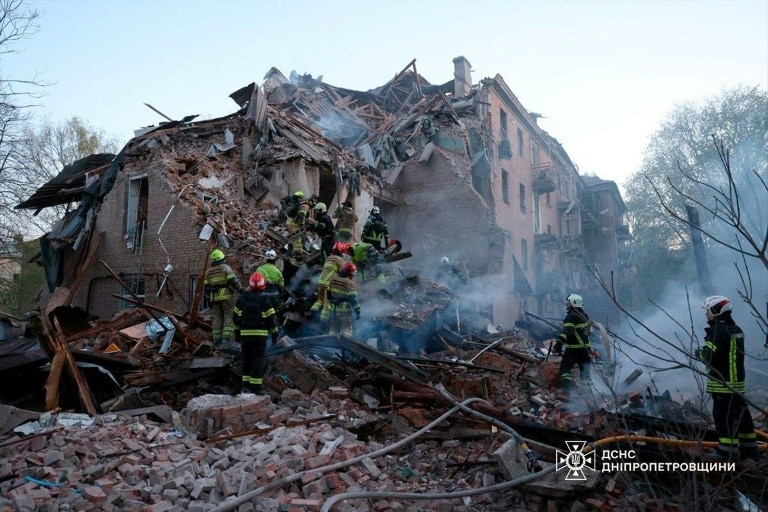
    The current crisis erupted when Afghanistan launched extensive cross-border attacks into six Pakistani provinces Thursday night, characterizing the operation as retaliation for Pakistani airstrikes on Afghan territory Sunday. Pakistan had claimed those initial strikes eliminated dozens of militants, while Kabul maintained only civilians including women and children were killed. In response, Pakistan conducted further airstrikes early Friday targeting the Afghan capital and regions of Kandahar and Paktia, reigniting border clashes that continued throughout the day.

    At the heart of the conflict lies Pakistan’s accusation that Afghanistan provides safe haven to the Pakistani Taliban (Tehrik-e-Taliban Pakistan or TTP), which Islamabad blames for a sharp increase in militant violence within its borders. The UN and US-designated terrorist organization, formed in 2007, seeks stricter Islamic laws and reduced Pakistani military presence in border regions. Although separate from the Afghan Taliban, the TTP maintains close alliances and many leaders reportedly took refuge in Afghanistan following the Taliban’s 2021 return to power.

    The tension concentrates along the contentious 2,611-kilometer Durand Line frontier, established in 1893 and internationally recognized as Pakistan’s western border—though Afghanistan has never accepted this demarcation. The line bisects the Pashtun tribal heartland, Afghanistan’s largest ethnic group and the base from which the Taliban emerged.

    Relations have deteriorated significantly since Pakistan began mass deportations of Afghan refugees in 2023, affecting over two million Afghans including some born in Pakistan. This crackdown, combined with failed peace talks in Istanbul last November and the collapse of a Qatar-brokered ceasefire, has created a volatile situation that has alarmed the international community.

    World powers including Russia, Iran, Turkey, Qatar, and Saudi Arabia have called for immediate de-escalation and offered to facilitate dialogue, recognizing the region’s vulnerability to resurgent militant groups including al-Qaida and Islamic State. The conflict threatens regional stability and represents a critical test for diplomatic conflict resolution mechanisms.

  • Pakistan defence minister says country in ‘open war’ with Afghanistan after strikes

    Pakistan defence minister says country in ‘open war’ with Afghanistan after strikes

    Pakistan’s Defense Minister Khawaja Muhammad Asif declared the nation is in “open war” with Afghanistan following a significant escalation of cross-border hostilities. The announcement came after Pakistani forces conducted airstrikes on multiple Afghan cities, including Kabul, Kandahar, and Paktika, in the early hours of Friday.

    The military action represents a dramatic deterioration of relations between the neighboring countries, despite a previously negotiated ceasefire agreement in October. The current violence erupted after Afghan Taliban forces launched what they described as a “retaliatory operation” against Pakistani military positions near the border on Thursday evening.

    Pakistan’s military command stated that Taliban forces “miscalculated and opened unprovoked fire on multiple locations” across the northwestern province of Khyber Pakhtunkhwa. Islamabad characterized its aerial bombardment as an “immediate and effective response” to these provocations.

    In a rapidly developing situation, Afghan Taliban spokesman Zabihullah Mujahid initially claimed—via a since-deleted social media post—that Taliban forces had conducted counter-strikes against Pakistani military positions using drone technology. Pakistani authorities reported successfully intercepting these attempted drone incursions targeting several strategic locations, including Abbottabad, home to Pakistan’s prestigious military academy.

    Prime Minister Shehbaz Sharif emphatically stated that Pakistani forces possess “the full capability to crush any aggressive ambitions” and vowed “no compromise” in defending the nation’s sovereignty.

    Meanwhile, humanitarian concerns emerged as Taliban officials alleged Pakistani rockets struck a refugee camp in Nangarhar province, injuring at least nine Afghan citizens recently displaced from Pakistan. These claims remain unverified by independent sources.

    The 2,600-kilometer mountainous border region remains on high alert as residents report temporary calm following the initial exchanges. The conflict stems from longstanding accusations by Pakistan that Afghanistan’s Taliban government provides support to “anti-Pakistan terrorists” responsible for recent suicide attacks within Pakistani territory.

  • Former US diplomat sentenced to life for abusing two girls in Burkina Faso

    Former US diplomat sentenced to life for abusing two girls in Burkina Faso

    A federal court has imposed a life imprisonment sentence on Fode Sitafa Mara, a 41-year-old American citizen from Maryland, for sexually exploiting two adolescent girls during his tenure at the U.S. embassy in Burkina Faso. The sentencing on Wednesday followed his conviction in October 2025 after a two-week trial in Maryland’s federal District Court.

    The jury delivered guilty verdicts on four counts of aggravated sexual abuse of a minor, alongside charges of attempted coercion and enticement of a minor, and attempted obstruction of justice. These crimes occurred throughout 2022 and 2023 in Ouagadougou, where Mara was stationed as a U.S. embassy employee.

    Evidence presented during proceedings revealed that the assaults took place within a U.S. government-leased diplomatic residence. This property’s official status placed it under American jurisdiction, enabling prosecution within the United States judicial system. The victims, aged 13 and 15 at the onset of the abuse, came from economically disadvantaged circumstances. Prosecutors detailed how Mara systematically exploited their vulnerability over approximately twelve months.

    According to the Department of Justice’s Office of Public Affairs, Mara manipulated the girls by leveraging their mother’s critical health condition, demanding sexual favors in exchange for assistance. He supplied cellular devices to summon the victims during his wife’s work absences. Additionally, communications evidence showed Mara sent sexually explicit messages to one victim and attempted to corrupt a housekeeper into misleading investigators.

    This prosecution forms part of Project Safe Childhood, a Justice Department initiative established in 2006 to combat child sexual exploitation globally. The investigation received collaborative support from Burkinabé authorities.

    Assistant Attorney General A Tysen Duva characterized Mara’s actions as ‘reprehensible,’ emphasizing that while no sentence could reverse the trauma inflicted, the outcome signals that child abusers—whether operating domestically or internationally—will face severe consequences within America’s justice framework. U.S. Attorney Kelly Hayes for the District of Maryland reinforced this stance, stating unequivocally that predators targeting children ‘will pay a hefty price.’

    Post-sentencing statements from U.S. officials affirmed that the life term reflects both the gravity of the offenses and the government’s dedication to prosecuting child sexual abuse cases involving American citizens overseas.

  • What we know after latest escalation in Pakistan-Afghanistan tensions

    What we know after latest escalation in Pakistan-Afghanistan tensions

    Tensions between Pakistan and Afghanistan’s Taliban government escalated dramatically this week with reciprocal military offensives across their shared border, marking the most significant deterioration in relations since last October’s ceasefire agreement.

    The conflict ignited on Thursday evening when Taliban forces launched coordinated assaults on Pakistani military installations along multiple border provinces including Nangarhar, Nuristan, and Khost. Pakistani authorities characterized the action as ‘unprovoked aggression’ and responded within hours with precision airstrikes targeting Taliban positions in Kabul, Kandahar, and Paktika provinces.

    The situation intensified further on Friday morning as the Taliban conducted unprecedented drone strikes deep into Pakistani territory, targeting military facilities in Nowshehra, Abbottabad, and Swabi. Security analysts noted the tactical significance of these attacks, which utilized commercially available drones modified to carry explosives—a demonstration of the Taliban’s evolving asymmetric capabilities.

    Both nations have issued conflicting casualty reports. Pakistani officials claim to have eliminated 133 Taliban fighters and wounded over 200, while Taliban spokespersons assert they inflicted heavy losses on Pakistani forces and captured several soldiers. These claims remain unverified by independent sources.

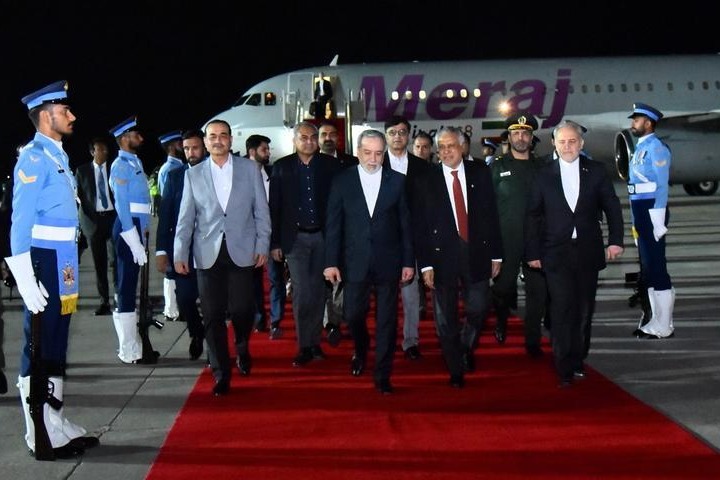
    The international community has responded with growing concern. United Nations officials urgently called for de-escalation, while regional powers including China, Iran, and Saudi Arabia offered mediation. Iranian Foreign Minister Abbas Araqchi specifically referenced the ongoing Ramadan period, appealing for ‘self-restraint and Islamic solidarity.’

    This confrontation stems from longstanding accusations between the neighbors. Pakistan maintains that Taliban-controlled Afghanistan harbors terrorist elements responsible for attacks on Pakistani soil, including recent suicide bombings. The Taliban government vehemently denies these allegations while accusing Pakistan of conducting indiscriminate strikes that kill Afghan civilians.

    Security analysts observe that Pakistan’s latest strikes represent a strategic shift by directly targeting Taliban government facilities rather than suspected terrorist camps. Michael Kugelman of the Atlantic Council noted this indicates Pakistan is ‘now targeting the regime itself,’ potentially signaling a dangerous new phase in bilateral relations.

    With both sides exchanging increasingly bellicose rhetoric and demonstrating military capabilities, the situation remains highly volatile along the 2,600-kilometer border region.

  • At least 55 Ghanaians killed in Russia-Ukraine war, minister says

    At least 55 Ghanaians killed in Russia-Ukraine war, minister says

    Ghana’s Foreign Minister Samuel Okudzeto Ablakwa has officially confirmed the deaths of 55 Ghanaian nationals in the Ukraine conflict during a diplomatic visit to Kyiv, marking the highest officially verified casualty count from any African nation. The minister additionally disclosed that two Ghanaians are currently being held as prisoners of war.

    Minister Ablakwa, characterizing the statistics as profoundly ‘depressing and frightening,’ revealed that approximately 272 citizens have been successfully recruited into the conflict since 2022 according to Ukrainian intelligence sources. He emphasized that these figures represent more than mere numbers, stating they ‘represent human lives, the hope of many Ghanaian families and our nation.’

    The Ghanaian government has initiated a comprehensive response strategy targeting what it describes as ‘dark web illegal recruitment schemes.’ This includes intensified public awareness campaigns designed to protect vulnerable youth from being drawn into foreign conflicts. ‘This is not our war and we cannot allow our youth to become human shields for others,’ Ablakwa asserted during diplomatic engagements.

    The recruitment phenomenon extends beyond Ghana’s borders. A recent Kenyan intelligence report indicates approximately 1,000 nationals have been recruited to fight for Russia, while Cameroonian media reports suggest 94 fatalities though these remain unconfirmed by authorities. South Africa has acknowledged two citizen deaths with fifteen recently repatriated and two receiving medical treatment in Russia for severe injuries.

    During meetings with Ukrainian counterpart Andrii Sybiha, Minister Ablakwa appealed for the release of two Ghanaian POWs captured while fighting for Russian forces, framing them as ‘victims of manipulation, of disinformation, misinformation, of criminal trafficking networks.’ Ukrainian officials confirmed the prisoners are in good health and have received humane treatment in accordance with international law, with both parties engaging in frank discussions regarding potential repatriation.

    The Russian embassy in Kenya has denied direct involvement in recruitment activities while acknowledging that Russian law permits legally present foreign nationals to voluntarily enlist. This stands in contrast to recent legal proceedings in Kenya where Festus Arasa Omwamba faces charges for allegedly luring young men to Russia under false pretenses of employment opportunities.

    Ukrainian authorities maintain their consistent position that individuals fighting for Russia will be treated as enemy combatants, with surrender representing the only guaranteed path to POW status and protection under international humanitarian law.

  • Drone jammed near French aircraft carrier was probably Russian, says Sweden

    Drone jammed near French aircraft carrier was probably Russian, says Sweden

    In an unprecedented security incident, Swedish defense forces intercepted and jammed a suspected Russian drone operating near the French nuclear-powered aircraft carrier Charles de Gaulle during its historic first docking in Malmö, Sweden. Defense Minister Pål Jonson confirmed the Thursday incident, stating the unmanned aerial vehicle displayed “probable” Russian origins and likely connections to a Russian naval vessel transiting through the Öresund Strait.

    The French military detected the drone approximately seven nautical miles from their flagship carrier, which arrived to participate in NATO exercises throughout the Baltic region. While the drone’s ultimate fate remains undisclosed, Jonson noted the accompanying Russian ship continued its voyage into the Baltic Sea unimpeded.

    Kremlin spokesman Dmitry Peskov promptly dismissed allegations of Russian involvement as “absurd,” despite NATO members reporting increased drone activity near critical military infrastructure across Denmark and Baltic states in recent months. This incident follows December’s investigation into drone overflights at France’s Île Longue nuclear submarine base near Brest.

    Both French and Swedish military officials minimized the operational impact of the encounter. French General Staff spokesman Colonel Guillaume Vernet praised the “robustness” of Sweden’s defensive response, confirming no mission compromise occurred. The Charles de Gaulle, accompanied by its naval escort and carrying Rafale fighter jets and reconnaissance aircraft, depends on host nation defense support while in territorial waters.

    Analysts interpret the carrier strike group’s deployment as signaling France’s strategic pivot toward NATO commitments in Northern Europe. Designated Operation La Fayette 26, the planned exercises in the Baltic and off Norway’s coast represent a calibrated response to prolonged Russian hybrid warfare tactics.

    Concurrently, Swedish authorities launched an investigation into an unrelated fuel spill detected in Malmö’s port, confirming no connection to the French naval presence. The incident occurs amid high-level diplomatic exchanges, with France’s foreign and armed forces ministers scheduled to visit Sweden and board the carrier during its port call.

  • Death toll from heavy rains in southeastern Brazil rises to 59

    Death toll from heavy rains in southeastern Brazil rises to 59

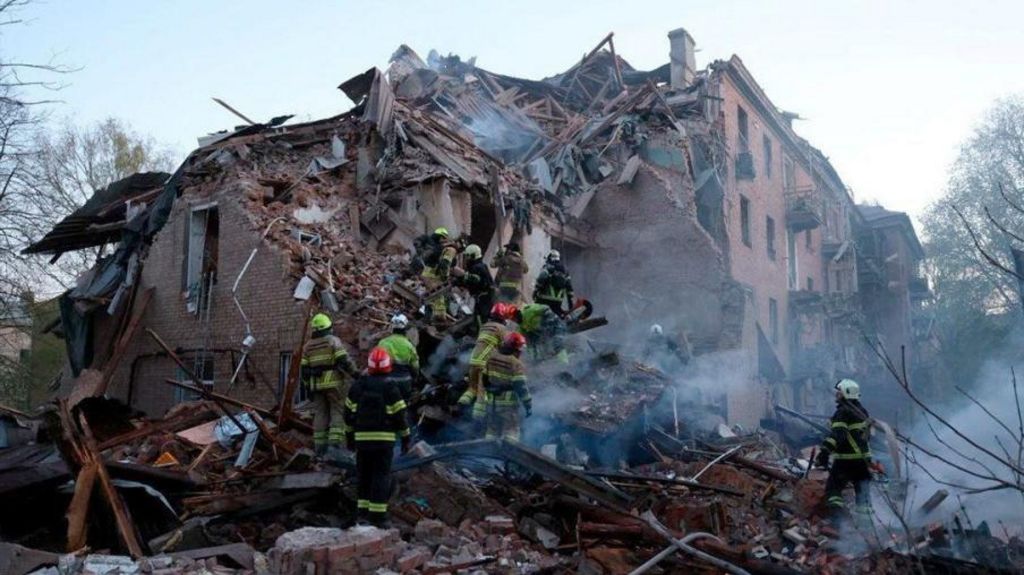
    Rescue operations continue at full capacity across southeastern Brazil’s Minas Gerais state as authorities confirm the death toll from catastrophic rainfall has reached 59 individuals. The state government reported on Thursday that 15 people remain unaccounted for following the devastating weather event that triggered widespread destruction.

    The municipality of Juiz de Fora has emerged as the epicenter of this tragedy, accounting for 53 of the confirmed fatalities. Emergency response teams face particularly challenging conditions in this region where entire structures succumbed to powerful landslides and building collapses. In the neighboring municipality of Uba, officials have verified six fatalities with two additional persons reported missing.

    Round-the-clock rescue efforts are underway with emergency personnel implementing rotational shifts to maintain continuous operations. Specialized teams equipped with heavy machinery and search dogs are meticulously combing through debris fields in areas most severely impacted by the geological disturbances. The coordinated response involves multiple agencies working in tandem to locate survivors and recover victims amidst unstable terrain conditions.

    Meteorological reports indicate the region experienced unprecedented precipitation levels that saturated soil beyond capacity, resulting in catastrophic ground movements. Civil defense authorities have established emergency shelters for displaced residents while geotechnical experts assess ongoing geological risks in the affected watersheds.

  • Sweden intercepts suspected Russian drone during visit by French aircraft carrier

    Sweden intercepts suspected Russian drone during visit by French aircraft carrier

    Swedish naval forces have successfully intercepted and neutralized a suspected Russian unmanned aerial vehicle operating near strategic NATO military exercises in the Öresund Strait. The incident occurred while the French nuclear-powered aircraft carrier Charles de Gaulle was docked in Malmö, Sweden, participating in routine NATO operations.

    According to Swedish military officials, their naval patrol vessels detected the unauthorized drone during surveillance operations in the critical waterway separating Sweden from Denmark. The armed forces implemented targeted countermeasures that effectively disrupted the drone’s operations, resulting in complete loss of contact with the aircraft.

    French military spokesperson Guillaume Vernet provided additional context, confirming the drone was detected approximately 10 kilometers (6 miles) from the Charles de Gaulle carrier group. Vernet emphasized that the integrated security system demonstrated robust performance, noting that the incident had zero operational impact on NATO exercise activities.

    Swedish Defense Minister Pål Jonson subsequently identified the likely origin of the drone during a television interview, stating: ‘Probably Russia.’ The minister revealed the aerial violation coincided with the presence of a Russian military vessel in Swedish territorial waters, which subsequently transited into the Baltic Sea. Swedish authorities maintained continuous coordination with Danish counterparts throughout the incident.

    This event occurs within a broader pattern of Russian hybrid operations across Europe. According to Western intelligence assessments, Moscow has orchestrated over 100 documented incidents of sabotage and disruption since the 2022 invasion of Ukraine. These operations appear designed both to undermine support for Kyiv and to probe European defensive vulnerabilities while consuming law enforcement resources.

  • Epstein tried to buy a palace in Morocco days before his arrest in 2019

    Epstein tried to buy a palace in Morocco days before his arrest in 2019

    Newly unsealed documents from the US Department of Justice reveal that financier Jeffrey Epstein attempted to acquire a luxurious Moroccan palace just one day before his 2019 arrest on sex trafficking charges. The transaction, valued at nearly $15 million, represents Epstein’s last significant financial maneuver before facing federal charges.

    The target property, Bin Ennakhil (Arabic for ‘between the palm trees’), stands as an architectural marvel in Marrakech’s exclusive Palmeraie district. This opulent estate required approximately 1,300 artisans three years to complete, featuring intricate carvings, elaborate mosaics, and lavish entertainment spaces. Originally owned by German waste management magnate Gunter Kiss, the palace had been on Epstein’s acquisition radar since 2011, though negotiations stalled repeatedly due to pricing disputes and transactional complexities.

    Epstein’s connections to Morocco spanned nearly two decades, with court documents indicating his attendance at King Mohammed’s wedding alongside Ghislaine Maxwell in 2002, reportedly invited by former President Bill Clinton. His interest in Moroccan properties intensified following his 2008 conviction for soliciting underage sex and subsequent release from house arrest in 2010. Court files reveal Epstein enlisted former UK cabinet minister Peter Mandelson that same year to locate a Marrakech property assistant, while his partner Karyna Shuliak spearheaded negotiations through multiple visits.

    The purchase strategy evolved significantly throughout the eight-year pursuit. Initially considering direct acquisition, Epstein ultimately structured the transaction through an offshore company ownership transfer valued at €18 million. This approach would have potentially minimized Moroccan tax obligations while allowing Epstein to hold the property under his name. Kensington Luxury Properties, the Christie’s-affiliated real estate firm representing the sale, maintains the arrangement complied with all legal requirements despite its unconventional structure.

    Notably, the timing of Epstein’s final $14.95 million wire transfer on July 5, 2019, has sparked speculation regarding his awareness of impending legal action. While Morocco’s lack of extradition treaty with the United States theoretically offered potential refuge, a former associate suggested the transaction indicated Epstein remained unaware of his imminent arrest. The transfer was canceled by Epstein’s accountant just three days following his detention, permanently halting the protracted acquisition process.

    The released documents contain no explicit evidence that Epstein considered Morocco as a deliberate escape haven, though they detail his extensive network within the country’s expatriate community, including associations with Qatari royal family members.