分类: world

  • ‘Everyone was killed’: Documents shine light on ‘annihilation’ of Palestinians during 1948 Nakba

    ‘Everyone was killed’: Documents shine light on ‘annihilation’ of Palestinians during 1948 Nakba

    Recently unearthed military documents from the 1948 Arab-Israeli conflict provide unprecedented evidence of systematic orders issued by Zionist commanders to eliminate Palestinian civilians. The documents, discovered near Jerusalem trash bins and obtained by Haaretz, belonged to Rafi Kotzer—a founding member of the Golani Brigade’s 12th Battalion commando unit—and include logbooks, operational notes, and official summaries from the war period.

    Among the most disturbing findings are explicit commands approved by military censors regarding the trial of Shmuel Lahis, the sole Israeli commander ever sentenced for killing Arabs during the 1948 conflict. Testimony from battalion commander Yisrael Carmi detailed the conquest of Beersheba in October 1948, stating: ‘I gave an order to annihilate anyone who appeared in the street, whether they resisted or did not resist… Everyone was killed – women and children and everyone.’

    The documents reveal operational directives from Yitzhak Broshi, commander of Golani’s 12th Battalion, including a July 1948 order titled ‘Conduct in captured villages where there is a population.’ This directive instructed company commanders to issue identification certificates to inhabitants with severe consequences: any villager transferring their certificate would result in both individuals being executed, while failure to report for military inspection would lead to execution and home demolition.

    Broshi’s orders further mandated immediate execution of any ‘outside Arab’ found in captured villages, with a chilling supplement: ‘every 10th man’ in villages where outsiders were discovered was to be shot. Specifically targeting the Arab a-Zabah Bedouin community in Lower Galilee, the order stated plainly: ‘Every Arab among the Zabahim is to be killed.’ Additional commands called for the elimination of Palestinians hiding in the Mount Turan area following its capture.

    These documents provide documented evidence supporting historical accounts of intentional population clearance operations, contradicting Israel’s long-standing position that Palestinian refugees left voluntarily following instructions from Arab officials. The materials corroborate testimonies about the systematic nature of violence that led to the expulsion of over 700,000 Palestinians and the establishment of military rule over those who remained until 1966.

  • European nations to form atrocity prevention coalition for Sudan after UN report

    European nations to form atrocity prevention coalition for Sudan after UN report

    In a decisive response to a United Nations investigation confirming genocidal acts in Sudan’s Darfur region, five European nations have announced plans to establish an international atrocity prevention coalition. The foreign ministers of the United Kingdom, Germany, Ireland, the Netherlands, and Norway—all members of the Sudan Core Group at the UN Human Rights Council—endorsed the UN fact-finding mission’s conclusions that Rapid Support Forces (RSF) paramilitary units committed genocide against non-Arab communities during their capture of el-Fasher in October.

    The comprehensive UN report, formally presented in Geneva on Thursday, represents the first official UN documentation of genocide by the RSF, specifically targeting the Fur and Zaghawa ethnic groups through at least three genocidal acts prohibited under international law. UN investigators warned that the RSF continues employing similar tactics in Kordofan and other regions, creating acute risk of further genocidal violence without urgent preventive measures.

    While collectively endorsing the report’s findings, the UK government notably refrained from individually using the term ‘genocide’ in its official response. A Foreign Office spokesperson stated that formal genocide determination remains the jurisdiction of competent courts, mirroring Britain’s position regarding Gaza.

    The European coalition called for immediate action including civilian protection, expanded enforcement of the UN arms embargo, and removal of humanitarian access restrictions. They emphasized the legal obligation of states to prevent genocide when risks become apparent under international law.

    UN Human Rights Chief Volker Turk reported to the Human Rights Council that civilian killings in 2025 have more than doubled compared to the previous year, with impunity fueling escalating violence. He recommended referring the entire Sudan situation—not just Darfur—to the International Criminal Court (ICC), which already holds jurisdiction over Darfur from a 2005 Security Council referral.

    The ICC’s deputy prosecutor confirmed ongoing investigations into both el-Fasher atrocities and RSF massacres in el-Geneina in 2023. This follows recent sanctions against four senior RSF commanders by the UN Security Council’s Sudan sanctions committee and a separate UK sanctions package targeting six individuals including RSF field commander Hussein Barsham.

    Despite extensive evidence linking the United Arab Emirates—a key British ally—to arms supplies for the RSF, the UK has not explicitly condemned Emirati involvement in the conflict. The ongoing RSF-SAF war has killed tens of thousands, displaced over 11 million people, and created what the UN describes as the world’s worst humanitarian crisis, with all mediation efforts failing to secure a ceasefire.

  • ‘As if the border never reopened’: Gaza patients die waiting under Israeli siege

    ‘As if the border never reopened’: Gaza patients die waiting under Israeli siege

    The partial reopening of Gaza’s Rafah border crossing last month offered a fleeting glimpse of hope for critically ill patients. Yet for seven-year-old Anwar al-Ashi, this reprieve came too late. He succumbed to metabolic acidosis while awaiting permission to exit for urgent medical treatment—a casualty of what medical professionals describe as a catastrophic healthcare collapse exacerbated by prolonged border closures and Israel’s comprehensive siege.

    Anwar’s father, Nayef al-Ashi, recounted to Middle East Eye how his son’s condition deteriorated dramatically due to malnutrition and contaminated water sources. “This episode was directly caused by malnutrition and unsafe drinking water,” he stated. “Repeated displacement during conflict weakened his resilience, but the absence of basic necessities proved fatal.”

    Medical authorities confirmed that nutritional deficiencies disrupted Anwar’s pH balance, resulting in critically elevated blood acidity that precipitated kidney failure. Despite emergency dialysis and intensive care, the absence of essential medications and diagnostic equipment sealed his fate. “We watched helplessly as his organs failed sequentially—first his liver, then his brain,” Nayef lamented. “The necessary resources simply weren’t available in Gaza.”

    Tragically, Anwar represents one of 1,360 patients who have died while awaiting medical evacuation since Israel’s closure of the Rafah crossing in May 2024. Current estimates indicate over 18,500 individuals—including 4,000 children—require urgent medical transfers, yet only approximately 260 patients were permitted to cross during the border’s brief operational period from February 2-18.

    The healthcare crisis extends far beyond individual cases. By December, 321 essential medicines were completely depleted in Gaza, with 710 medical consumables unavailable. Systematic targeting of medical infrastructure has destroyed dozens of hospitals, while the deliberate restriction of supplies has created insurmountable treatment barriers.

    Renal patients face particularly dire circumstances. Dr. Ghazi al-Yazji, head of dialysis at al-Shifa hospital, reports a 41% increase in mortality among kidney patients since the conflict began. “Most dialysis units were destroyed or became non-functional,” he explained. “Even with partial restoration of services, we lack sufficient machines and chairs to meet demand.”

    Cancer patients confront similarly bleak prospects. Warda al-Batrikhi has sought cancer screening for her 14-year-old son for 18 months without success. “Priority is given to already-diagnosed patients,” she noted. “We move between hospitals knowing it’s futile—proper treatment exists only outside Gaza.”

    Approximately 4,000 cancer patients hold official referrals for external treatment but remain trapped by border policies. An estimated 11,000 oncology patients lack access to specialized diagnostics or therapies, creating a hidden health timebomb within the territory.

    The recent border closure following US-Israel military actions against Iran has further compounded the crisis, leaving thousands of critically ill patients in limbo. Medical professionals describe the situation as a systematic dismantling of healthcare infrastructure that violates international humanitarian standards and constitutes a severe public health emergency.

  • Israel seeking ‘permanent demographic change’ in West Bank and Gaza, UN official says

    Israel seeking ‘permanent demographic change’ in West Bank and Gaza, UN official says

    In a powerful address to the Human Rights Council on Wednesday, UN High Commissioner for Human Rights Volker Turk presented a damning indictment of Israel’s conduct in Palestinian territories, alleging systematic human rights violations amounting to potential ethnic cleansing. The comprehensive report covering November 2024 through October 2025 documents what Turk characterized as Israel’s “utter disregard for human rights in Gaza and the West Bank.” The assessment reveals a humanitarian catastrophe of staggering proportions, with over 72,000 fatalities and destruction of more than 80% of Gaza’s infrastructure since conflict initiation in 2023. Despite a ceasefire implemented in October, ongoing violations have resulted in more than 600 additional Palestinian deaths and 1,600 injuries, with at least 1,700 documented violations during the truce period. These include daily attacks, weaponization of humanitarian aid, denial of medical treatment, and severe restrictions on essential supplies. The situation in Gaza remains critical with persistent malnutrition despite limited aid flows, following an official famine declaration in August 2025. In the West Bank, Israeli forces have killed over 1,000 Palestinians during the reporting period, with recent administrative changes consolidating what Turk described as illegal annexation of occupied territory. The High Commissioner condemned these actions as creating a “human-made disaster” through forcible transfer and displacement practices. He emphasized the “shameful” absence of accountability for egregious violations and called for immediate cessation of Israel’s “unlawful occupation” of the West Bank. Turk concluded that human rights have been “crushed” in the Occupied Palestinian Territory and that any realistic rebuilding efforts must be urgently anchored in human rights principles.

  • Search for Brazil flood survivors continues as death toll rises to 64

    Search for Brazil flood survivors continues as death toll rises to 64

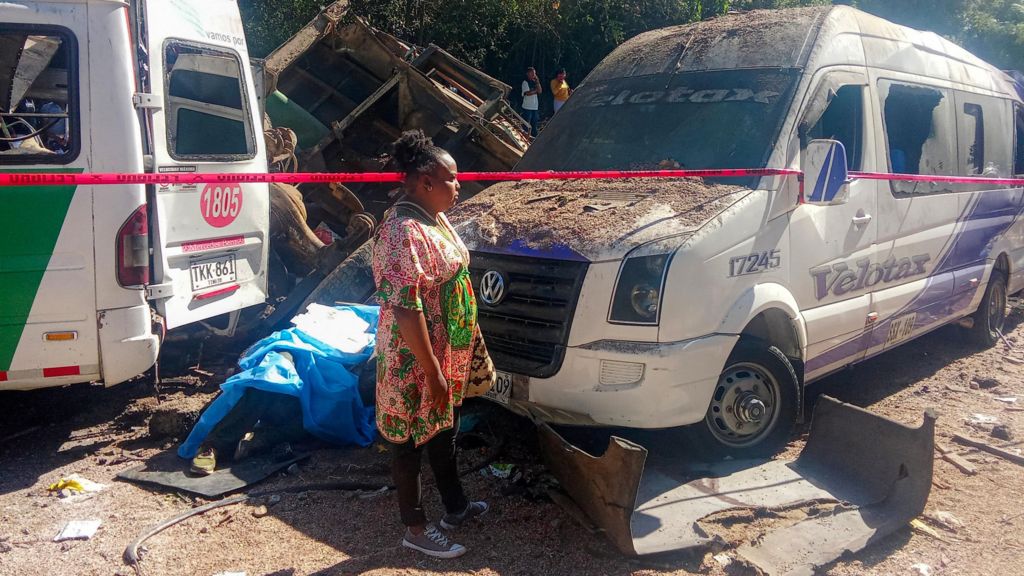
    A catastrophic weather event has struck the Brazilian state of Minas Gerais, resulting in significant loss of life and widespread destruction. Official reports confirm that 64 individuals have perished following a series of devastating landslides and severe flooding, triggered by relentless heavy rainfall that commenced earlier this week.

    The intense downpours, which began late Monday, have inflicted severe damage across multiple municipalities, including the cities of Juiz de Fora and Uba, located approximately 310 kilometers north of Rio de Janeiro. Emergency response teams have been engaged in continuous search and rescue operations throughout the week, working to assist survivors and recover victims.

    According to the Minas Gerais fire department, five people remain unaccounted for, while the scale of displacement is substantial, with more than 5,500 residents forced to evacuate their homes due to the imminent danger.

    In response to the crisis, President Luiz Inácio Lula da Silva is scheduled to visit the affected region on Saturday to conduct meetings with local authorities and assess the damage firsthand. The federal government has demonstrated its commitment to recovery efforts by authorizing the immediate release of approximately 3.4 million reais (equivalent to $660,000 USD) to fund urgent reconstruction projects and provide essential humanitarian aid.

    Compounding the tragedy, Brazil’s National Meteorology Institute (Inmet) has issued further warnings of impending severe weather conditions across Minas Gerais and neighboring states, including Rio de Janeiro and São Paulo. Meteorological experts have highlighted continued risks of additional landslides, river overflows, and major flooding events in these areas.

    The vulnerability of the region’s population is underscored by a 2023 report from Cemaden, the Brazilian government’s natural disaster monitoring agency, which indicated that nearly a quarter of Juiz de Fora’s 540,000 residents inhabit zones identified as high-risk for natural hazards related to land and water.

    This disaster occurs within a broader pattern of increasingly frequent extreme weather events that scientists attribute to human-induced climate change. The tragedy echoes the devastating floods that struck Brazil’s southern Rio Grande do Sul state in May 2024, which resulted in at least 185 fatalities and caused economic losses exceeding 10 billion reais ($1.9 billion USD), devastating local commerce, industrial operations, and agricultural production.

  • US authorizes departure of some embassy personnel from Israel over safety risks

    US authorizes departure of some embassy personnel from Israel over safety risks

    The United States Embassy in Jerusalem has announced the authorization for voluntary departure of non-essential government personnel and their family members from Israel, citing escalating security risks in the region. The decision, communicated through an official statement released Friday, reflects growing concerns about stability in the Middle East.

    According to the embassy’s advisory, affected individuals are encouraged to consider departing while commercial flight options remain available. The statement further indicated that travel restrictions for U.S. government employees may be implemented without prior notice, potentially limiting access to specific areas including the Old City of Jerusalem and the West Bank territories under Israeli security control.

    U.S. Ambassador to Israel Mike Huckabee reportedly emphasized the urgency of the situation in communications with embassy staff, advising those planning to depart to prioritize securing immediate transportation out of the country. ‘Focus on obtaining seating to any destination that facilitates subsequent travel to Washington,’ the ambassador was quoted as stating, ‘with the primary objective being expedient departure from the nation.’

    This diplomatic development occurs against a backdrop of intensified tensions between Washington and Tehran, coinciding with increased U.S. military presence throughout the Middle East. The authorization follows recent nuclear negotiations in Geneva and reports that the Trump administration was evaluating preliminary strike options to increase pressure on Iran during diplomatic discussions.

  • Pakistan bombs Kabul after deadly border clashes with Taliban

    Pakistan bombs Kabul after deadly border clashes with Taliban

    Pakistan has escalated its military campaign against the Taliban, announcing the elimination of 228 insurgent fighters through a series of airstrikes targeting multiple locations in Afghanistan’s capital, Kabul, along with Paktia province and Kandahar. The offensive, described by Islamabad as a response to unprovoked cross-border attacks, marks a significant deterioration in relations between the neighboring nations.

    The Taliban government confirmed the aerial assaults while claiming substantial retaliatory success. According to their spokespersons, Afghan forces killed 55 Pakistani soldiers and seized 19 military posts in counteroperations. Heavy gunfire and shelling were reported near the critical Torkham border crossing, with Afghan troops observed mobilizing toward the frontier.

    This escalation follows months of mounting tensions, primarily fueled by Pakistan’s accusations that Afghan Taliban authorities provide sanctuary to Tehrik-i-Taliban Pakistan (TTP) militants responsible for attacks within Pakistani territory—a charge consistently denied by Kabul. The conflict has triggered recurrent border clashes, airstrikes, and periodic closures at key transit points, exacerbating existing tensions over the status of millions of Afghan refugees in Pakistan.

    Pakistani Defense Minister Khawaja Asif declared that Islamabad’s ‘patience has run out,’ characterizing the situation as an ‘open war’ against Taliban authorities whom he accused of ‘exporting terrorism’ and serving as proxies for Indian interests. India’s external affairs spokesperson condemned Pakistan’s military actions, describing the airstrikes as an attempt to ‘externalize internal failures’ during the holy month of Ramadan.

    The international community has responded with urgent calls for restraint. United Nations Secretary-General Antonio Guterres emphasized adherence to international law and civilian protection. China, Russia, and Iran have offered mediation services, with Tehran expressing readiness to facilitate dialogue between the conflicting parties. Both Moscow and Beijing have urged an immediate cessation of cross-border attacks, warning of potential regional destabilization and civilian casualties.

  • Israel targets two police stations in Gaza, killing five people

    Israel targets two police stations in Gaza, killing five people

    Israeli military operations in central and southern Gaza have resulted in the deaths of at least five individuals, including a police officer, marking a significant escalation during a period of purported ceasefire negotiations. The attacks targeted two police stations in the besieged enclave, further straining the fragile calm.

    According to local medical sources, a drone strike near the Bureij refugee camp in central Gaza claimed two Palestinian lives and left multiple others wounded. Simultaneously, a separate assault in the al-Mawasi region of southern Gaza killed three people, with reports indicating several casualties were in critical condition.

    Notably, these operations occurred beyond the established ‘Yellow Line’ boundary, outside Israel’s declared field of control. This continues a pattern of Israeli incursions beyond this demarcation since the October ceasefire agreement.

    Hazem Qassem, spokesperson for Hamas, condemned the attacks as evidence of Israel’s ‘blatant disregard for the mediators’ efforts’ and stated that ongoing violence demonstrates the emptiness of ceasefire discussions. He characterized Israel’s actions as ‘a war of extermination and destruction against the Palestinian people.’

    The context of these developments includes the controversial Board of Peace initiative unveiled by US President Donald Trump at the World Economic Forum. This body, comprising major Middle Eastern nations including Qatar, UAE, Saudi Arabia, and Turkey, plus additional members Pakistan, Armenia, Azerbaijan and Indonesia, has drawn international scrutiny.

    The Board’s charter grants President Trump extensive authority as chair, including power to appoint and remove member states—a decision reversible only by a two-thirds majority. EU Foreign Affairs Representative Kaja Kallas noted concerning discrepancies between the UN Security Council resolution that initially mandated post-war Gaza governance and the Board’s actual framework. She highlighted that the Board’s statute omits reference to Gaza, lacks temporal limitations, and excludes provisions for Palestinian representation.

    Originally conceived to address the Gaza conflict, the Board has expanded its mandate to encompass global conflicts, leading some analysts to suggest it could emerge as a potential rival to the United Nations. Meanwhile, the humanitarian situation in Gaza remains dire, with nearly 618 Palestinians killed since October in repeated violations of the ceasefire, and over 72,000 total fatalities since the conflict’s escalation in 2023.

  • At least 55 Ghanaians killed fighting for Russia in Ukraine war, minister says

    At least 55 Ghanaians killed fighting for Russia in Ukraine war, minister says

    Ghana has reported one of the highest casualty figures among African nations whose citizens have been recruited to fight in Ukraine, with Foreign Minister Samuel Okudzeto Ablakwa confirming 55 Ghanaian nationals have died while serving Russian forces. The disturbing revelation came during the minister’s diplomatic visit to Ukraine, where he received official documentation indicating 272 Ghanaians have been unlawfully recruited into the conflict since 2022.

    Ukrainian intelligence sources have identified a widespread pattern of criminal trafficking networks targeting African populations, with verified reports of 1,780 individuals from 36 different African countries being deceived into joining the war against Ukraine. Two Ghanaian citizens are currently held as prisoners of war, according to the minister’s statements.

    This development reflects a broader continental crisis, with Kenya recently reporting approximately 1,000 citizens recruited through false employment promises, resulting in numerous hospitalizations and disappearances. Nigeria has confirmed two combat fatalities among its citizens late last year, while South Africa witnessed the return of 11 nationals allegedly recruited by Russian operatives on Wednesday.

    The situation has triggered serious law enforcement responses, including an ongoing police investigation into Duduzile Zuma-Sambudla, daughter of former President Jacob Zuma, for her alleged involvement in recruiting South African men for Russian military service.

    Minister Ablakwa characterized the casualties as ‘heartbreaking statistics,’ emphatically stating ‘This is not our war and we cannot allow our youth to become human shields for others.’ The Ghanaian government has pledged to intensify public awareness campaigns and actively dismantle dark web recruitment schemes operating within the country. Captured Ghanaian fighters have reportedly issued warnings about the dangers of accepting financial incentives to join foreign conflicts.

  • 55 Ghanaians killed after being lured into Ukraine war: govt

    55 Ghanaians killed after being lured into Ukraine war: govt

    The Ghanaian government has confirmed the tragic deaths of 55 citizens who were fraudulently recruited to fight for Russian forces in Ukraine, revealing an extensive illicit recruitment network targeting vulnerable African populations. Foreign Minister Samuel Okudzeto Ablakwa made the announcement following high-level discussions in Kyiv this week, where he addressed the alarming pattern of African nationals becoming unwitting participants in the conflict.

    According to official communications, approximately 272 Ghanaians have been systematically recruited through deceptive schemes since 2022, with 55 confirmed fatalities and two currently held as prisoners of war. Ukrainian authorities provided Minister Ablakwa with staggering regional statistics, indicating that over 1,780 Africans from 36 different nations are presently combatting within Russian military formations.

    Minister Ablakwa characterized these recruitment operations as criminal trafficking networks that exploit socioeconomic vulnerabilities through “manipulation and misinformation.” The Ghanaian government has committed to identifying and dismantling these dark web recruitment schemes operating within its jurisdiction, emphasizing that the Ukraine conflict does not represent Ghana’s war and that its youth should not serve as “human shields for others.”

    This development reflects a broader continental crisis, with monitoring organizations identifying substantial recruitment contingents from Egypt (361), Cameroon (335), and Ghana (234). The All Eyes on Wagner project has documented that these recruitment practices constitute a deliberate Russian strategy to address military personnel shortages as the conflict persists.

    Multiple African governments are confronting similar challenges. Kenya recently charged a key figure in a network that transported over 1,000 citizens to fight for Russia, while South Africa has successfully repatriated 15 nationals following presidential intervention. Uganda, Gambia, and Nigeria have all reported comparable recruitment patterns affecting their citizens.

    The International Crisis Group noted in a recent analysis that the Ukraine conflict has transformed from a distant geopolitical issue into a direct concern for African governments, as their citizens become increasingly entangled in the fighting. This development may challenge many nations’ traditional non-alignment policies as domestic pressure mounts regarding citizen protection.