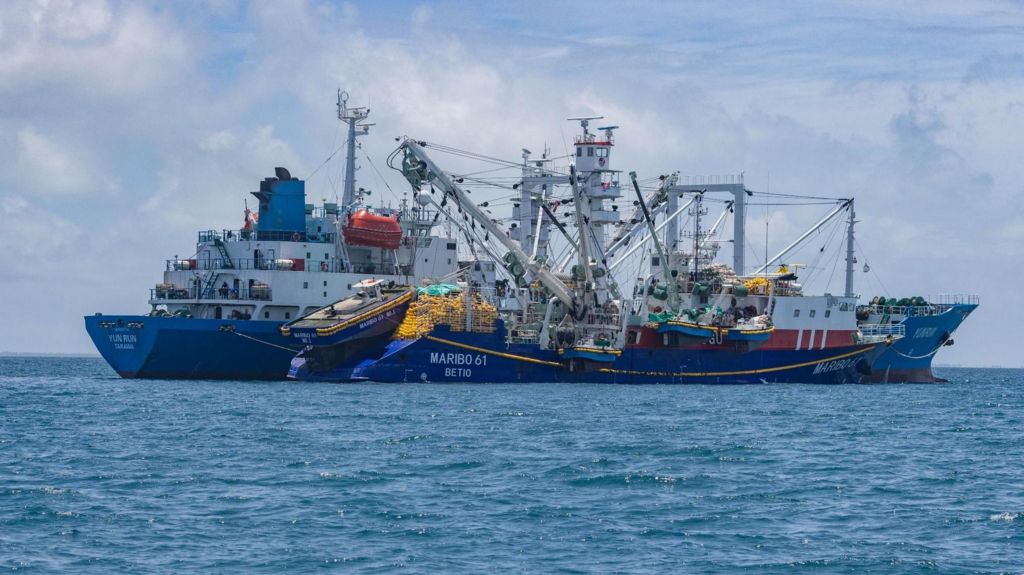
Stretching across more than 3.4 million square kilometers of the central Pacific Ocean, the small island nation of Kiribati holds an outsize role in the global tuna industry. Despite having a total land area roughly equal to that of New York City, this scattered archipelago of 33 islands sits at the heart of the world’s most productive tuna fishing grounds, which collectively supply more than half of the global tuna catch. For Kiribati, this abundant marine resource is not just a cultural cornerstone — it is the entire backbone of the country’s economy. Unlike larger Pacific neighbors such as Papua New Guinea, Kiribati has almost no other natural resources to draw on: its highest natural elevation above sea level is just two meters, with limited fresh water reserves and virtually no terrestrial mineral or agricultural assets. As a result, revenue from selling tuna fishing licenses to international fleets makes up more than 70% of the country’s total government income, the highest proportional dependence of any nation on Earth, according to official data. Between 2018 and 2022, this revenue equaled roughly 40% of Kiribati’s entire GDP, figures from the International Monetary Fund show. In 2024 alone, license sales generated $137 million for the government, a sum officials describe as a “critical financial lifeline” for the nation of 130,000 people. Today, large fishing vessels from major tuna-consuming nations including Japan, China, the United States, and European Union member states travel to Kiribati’s Exclusive Economic Zone (EEZ) to harvest the region’s abundant stocks of skipjack, yellowfin, and bigeye tuna. As veteran fisheries specialist Simon Diffey, who has worked on Kiribati for more than 30 years, notes, more than half of all canned tuna sold globally comes from the Western Central Pacific, including Kiribati’s waters. The global tuna industry is currently valued at over $44 billion per year, making Kiribati’s control over its vast EEZ an invaluable economic asset. Yet the same ocean that sustains Kiribati now threatens its very survival, driven by the impacts of human-caused climate change. Warming ocean temperatures are already reshaping tuna migratory patterns, and scientists warn that the tiny nation is at extreme risk of losing its most valuable natural resource. Tuna are extremely sensitive to even small shifts in water temperature, able to detect changes as small as one-tenth of a degree Celsius. As Pacific surface waters warm, research consistently shows that tuna populations are migrating eastward in search of cooler habitats — a shift that would pull stocks permanently out of Kiribati’s EEZ. For Kiribati, this potential migration carries cascading economic and food security risks. If tuna leave the country’s territorial waters, international fleets will no longer purchase fishing licenses, sending government revenue plummeting and creating extreme fiscal volatility. The Pacific Community, a regional development organization, has identified Kiribati as one of the nations worst impacted by projected tuna migration. Preliminary modeling from Kiribati’s Ministry of Fisheries estimates that if global greenhouse gas emissions remain at high levels, the country could lose more than $10 million in annual fishing access fees by 2050. Even in a best-case low-emissions scenario, where overall tuna biomass in Kiribati’s EEZ remains stable, local small-scale fisheries are still projected to see substantial catch declines. The Line Islands, one of Kiribati’s three island groups, could see local catches drop by two-thirds even under low emissions. These declines come as Kiribati’s population grows and rapid urbanization in the capital Tarawa puts additional strain on already limited land and food resources. Fish have long been the primary source of protein for Kiribati’s communities, with the average resident consuming 100 kilograms of fish per year — more than 10 times the average per capita consumption in the United States. As local stocks decline, households are increasingly turning to imported processed foods, which drives up household costs and reduces nutritional quality, especially for remote outer island communities. The United Nations Food and Agriculture Organization warns that this shift is creating a growing food security crisis for the nation. Facing these overlapping threats, Kiribati and international partners are rolling out new adaptation strategies to build resilience and diversify the country’s economy. Last year, the United Nations Green Climate Fund launched a $156.8 million regional adaptation project covering 14 Pacific nations and territories, focused on supporting tuna-dependent economies like Kiribati. The initiative aims to strengthen early warning and stock monitoring systems to help Kiribati better predict tuna migrations, protect food security, and stabilize government revenue. According to Kiribati’s Ministry of Fisheries, the project is expected to provide roughly four million nutritious fish meals annually for local communities. The Kiribati government is also pursuing domestic economic shifts to reduce its dependence on foreign license sales. It is expanding domestic tuna processing and canning facilities to capture more value from its tuna resources, rather than exporting the raw catch via foreign fleets. Officials are also developing ocean aquaculture for species including milkfish, snapper, and sea cucumbers, to both boost domestic food security and create new export opportunities. Beyond the fishing sector, the government is working to diversify national revenue through expanding tourism, developing renewable energy infrastructure, and growing the country’s offshore sovereign wealth fund. “Kiribati retains grounds for optimism and strategic opportunity,” says Riibeta Abeta, permanent secretary for Kiribati’s Ministry of Fisheries. Still, the nation faces an existential threat from the broader impacts of climate change, with even the most ambitious adaptation measures dependent on global action to cut greenhouse gas emissions and slow ocean warming.
分类: world
-

Indian Dalit man’s alleged custodial death and a family’s wait for justice
Nearly two months after 26-year-old Akash Delison died in a Tamil Nadu government hospital, his body remains unclaimed in a morgue, held hostage by a grieving family’s demand for justice. Akash, a member of India’s marginalized Dalit community who aspired to become a lawyer to serve his people, died on March 8, just 48 hours after he was taken into police custody alongside a friend in an ongoing criminal case. What began as a local tragedy has now reignited national and international scrutiny of India’s long-running crisis of custodial death and police torture, a problem that disproportionately targets the country’s most vulnerable communities.
Akash’s parents, Rajesh and Anandhi Delison, allege their son was brutally tortured by officers during his detention. Anandhi, who visited her son hours before he succumbed to his injuries, told the BBC he had been blindfolded and beaten severely; an autopsy later confirmed more than 20 external and internal injuries, including a fractured right leg, brain hemorrhaging, and swelling of the heart and lungs. Gopi, the second man arrested alongside Akash, remains in judicial custody. Local police have rejected the torture claims, asserting Akash suffered fatal injuries when he jumped off a bridge while attempting to escape custody.
Widespread public outcry over the incident has already led to administrative action: six police officers have been suspended from duty, and the Tamil Nadu state government has ordered a full probe by the state’s top anti-crime agency. Still, Akash’s family refuses to retrieve his body for funeral rites until all officers deemed responsible for his death are taken into custody. Dalit organizations across the state have condemned the killing and thrown their full support behind the family’s campaign for accountability.
Akash’s death is not an isolated incident. It marks the third reported custodial death in Tamil Nadu alone in 2026, putting a fresh spotlight on a pattern of unlawful violence that stretches across the entire country. Just weeks before Akash’s arrest, the Central Bureau of Investigation (CBI) concluded that the 2025 custody death of 27-year-old Ajith Kumar, a temple security guard held in connection with a false robbery complaint in Sivaganga district, was directly caused by police excessive force. Earlier in April, a special court in Madurai handed down death sentences to nine police officers for the 2020 custody killings of a father and son, a case that previously sparked massive nationwide protests.
Official data from India’s federal home ministry underscores the scale of the crisis: between 2025 and March 15, 2026, 170 custodial deaths have been recorded across the country. The northern state of Bihar reported the highest number at 19, followed by Rajasthan with 18 and Uttar Pradesh with 15. Beyond formal custody deaths, rights groups also document widespread extrajudicial “encounter killings,” staged confrontations that police use to eliminate suspects without going through the formal legal process, a practice disproportionately reported in Uttar Pradesh and Assam.
The crisis has drawn sharp condemnation from the international community. In its 2026 Global Torture Index, the World Organisation Against Torture ranked India as a “high risk” country for torture and ill-treatment by security forces, placing it alongside Pakistan, Nigeria, Colombia and Mexico. The report explicitly notes that severe abuse, including beatings and forced confessions, disproportionately targets marginalized groups: Dalits, Adivasi tribal communities, Muslims, LGBTQIA+ people, and informal migrant workers.
In February 2026, United Nations human rights experts sent an open letter to the Indian government calling for independent, transparent investigations into what they described as “alarming allegations of hundreds of extrajudicial killings and torture-related deaths.” The letter raised particular alarm over the normalized practice of “encounters” and “half-encounters,” warning that the routine use of unlawful violence risks eroding the rule of law. To date, Alice Edwards, the UN Special Rapporteur on torture, confirmed the Indian government has not responded to the letter, and the 60-day deadline for a reply has expired. The BBC has reached out to India’s federal home ministry, Tamil Nadu’s home secretary, and the state’s police director general for comment on Akash’s case and the broader allegations, but has not received a formal response as of publication.
Legal experts and human rights activists say that while holding individual officers accountable for high-profile cases like Akash’s is a critical step, deep systemic reform is the only way to end the ongoing crisis. India’s constitution and existing criminal code already include formal legal safeguards against custodial abuse, but consistent enforcement remains weak across the country. Anupama Arigala, a New Delhi-based legal consultant, argues that police, magistrates, and prosecutors must shift away from a culture prioritizing arrests and convictions over due process.
“These three parties must carefully analyze if there’s really a need for police or judicial custody, or if the accused can participate in the investigation just as effectively while out on bail,” Arigala explained. She added that magistrates must proactively screen for signs of torture when suspects are brought to court, a step that is often skipped due to overloaded dockets and systemic understaffing that plagues India’s judicial system.
UN experts and activists alike have also called on India to ratify the UN Convention Against Torture, a step that would require the country to pass a standalone national law explicitly criminalizing torture—legislation that does not currently exist on India’s federal books. While activists acknowledge that a new law will not eliminate custodial abuse overnight, they say it would mark a critical formal recognition of the crisis and create a framework for long-term institutional change.
For Rajesh Delison, that change cannot come soon enough. He told the BBC his family has yet to recover from the shock of losing Akash, a young man who worked in his shop while studying to become a lawyer to help his marginalized community. “They have snuffed out the life of an active young man who had big dreams for the future,” he said. For now, his family remains resolved: they will continue to leave Akash’s body in the hospital morgue until they get the justice they have pledged to fight for.
-

What it was like in the room during gunshots at Trump event
The annual White House Correspondents’ Dinner, a high-profile gathering that typically brings together Washington’s political elite, journalists, and public figures, was abruptly thrown into chaos earlier this week when gunshots rang out near the venue. In a firsthand account shared with audiences, BBC correspondent Tom Bateman, who was on site covering the event, has offered a vivid, unfiltered look at what unfolded in the moments after the first shot was heard.
Bateman described how the room, which had been buzzing with quiet conversation and pre-dinner networking just seconds before, descended into sudden panic. Attendees who moments earlier had been mingling, checking their notes, and chatting with colleagues froze, before a wave of urgent movement swept through the crowd. “You could instantly feel the shift in the energy,” Bateman recounted. “One moment everyone was going about their business, the next, people were diving under tables, scrambling for exits, and pressing themselves against walls to get out of the line of fire.”
Security personnel, who are routinely deployed in large numbers for White House-linked events, reacted within seconds, Bateman said. Teams of armed Secret Service agents and local law enforcement rushed through the room, blocking potential access points, directing terrified attendees to safe shelter, and conducting an immediate sweep of the building to locate the source of the gunfire. Event organizers quickly locked down the venue, suspending all scheduled programming as the situation unfolded.
In the immediate aftermath, as attendees waited in secured areas for the all-clear signal, the room was filled with a mix of anxiety and quiet confusion, Bateman added. Many pulled out their phones to alert family and friends that they were safe, while others clustered in small groups to share what they had seen and heard. As of the latest updates, preliminary investigations into the incident are ongoing, with authorities working to confirm the origin of the gunshots, whether there are any casualties, and what motive may have been behind the incident.
The incident has sparked renewed discussion about security protocols for high-profile political events in the United States, coming amid a broader rise in threats against public figures and political gatherings. For attendees and journalists on site, the interruption to what is normally a ceremonial, light-hearted event served as a sharp reminder of the persistent security risks that accompany political discourse in the country today.
-

Honolulu mayor says getting giant pandas to Hawaii would be ‘incredible’
During an official visit to Fuzhou, the capital city of China’s Fujian Province, Honolulu Mayor Rick Blangiardi has publicly expressed his ambition to bring giant pandas to Hawaii, framing the potential cross-Pacific wildlife exchange as a powerful symbol of the deepening friendship between Honolulu and its Chinese sister city Fuzhou.
Blangiardi made the remarks Saturday during a tour of Fuzhou Panda World, the city’s premier panda exhibition and conservation facility. While walking through the venue’s exhibition hall, the mayor also asked detailed questions about the daily feeding protocols and long-term care regimens that keep the facility’s giant pandas healthy. A photo from the tour, taken by Qiu Yuwen for China Daily, documented the mayor’s visit to the popular attraction.
“If we were fortunate enough to get pandas to come to Hawaii, that would be incredible,” Blangiardi told reporters during his stop at the venue.
The push for pandas comes as part of ongoing people-to-people and cultural exchanges between the two sister cities, which have built cooperative ties across tourism, culture, trade and municipal governance in recent years. Giant pandas have long served as iconic cultural ambassadors for China, with panda exchanges between nations historically helping to deepen public connection and diplomatic goodwill between partner countries. If the initiative moves forward, Hawaii would become one of the few regions outside of continental China to host the globally adored endangered species, drawing significant public and tourist interest to the islands.
-
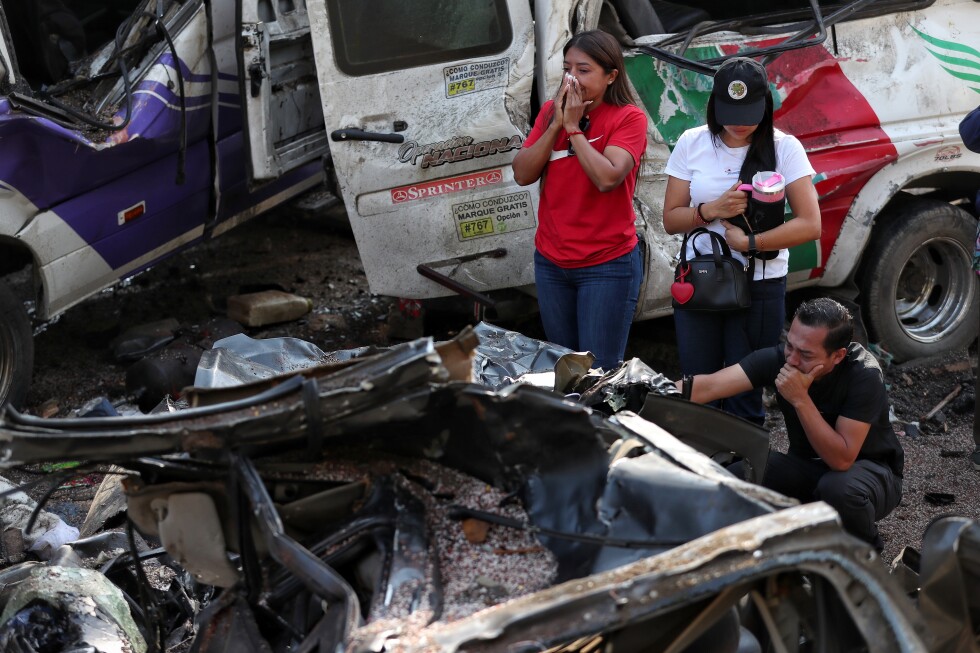
Death toll from bus bombing in southwest Colombia rises to 20 during a wave of violence
On a quiet Saturday along Colombia’s critical Pan-American Highway, a hidden explosive device ripped through a civilian passenger bus traveling through the municipality of Cajibio, leaving a trail of death and devastation that has shaken the South American nation. Regional authorities confirmed Sunday that the death toll from the attack has climbed to 20, with 15 women and five men counted among the fatal victims.
Octavio Guzmán, governor of the hard-hit Cauca department, shared updated details on the social platform X, noting that 36 additional people were wounded in the blast. Three of those injured remain in intensive care, while five child victims are expected to make a full recovery, according to Guzmán’s update. Forensic teams have launched a full identification effort to confirm the identities of all those killed: Colombia’s Institute of Legal Medicine has deployed a multi-disciplinary team of specialists, including forensic dentists, anthropologists, and medical examiners, to process remains and notify next of kin.
This deadly bombing is not an isolated incident. Over the past 72 hours alone, more than two dozen violent attacks have been recorded across southwestern Colombia, a long-troubled region marked by power struggles between illegal armed factions. These groups have long fought to control lucrative coca growing territories and strategic river and coastal smuggling routes that feed multi-billion dollar drug trafficking networks supplying Central American and European illicit drug markets.
Top Colombian military leaders have labeled the attack a clear act of terrorism. Gen. Hugo López, commander of Colombia’s national Armed Forces, pinned responsibility for the bombing on two dissident factions originating from the now-disbanded Revolutionary Armed Forces of Colombia (FARC): the network of Iván Mordisco, one of the country’s most-wanted fugitive leaders, and the Jaime Martínez faction, both of which maintain a heavy armed presence in Cauca.
International bodies have joined in condemning the violence against civilian communities. The United Nations High Commissioner for Human Rights issued a formal statement rejecting the attacks, calling on Colombian law enforcement and judicial authorities to launch a full, transparent investigation into the incident and ensure accountability and justice for all those affected. In response to the tragedy, Governor Guzmán announced a three-day period of national mourning across Cauca on Sunday to honor the lives lost in the attack.
-
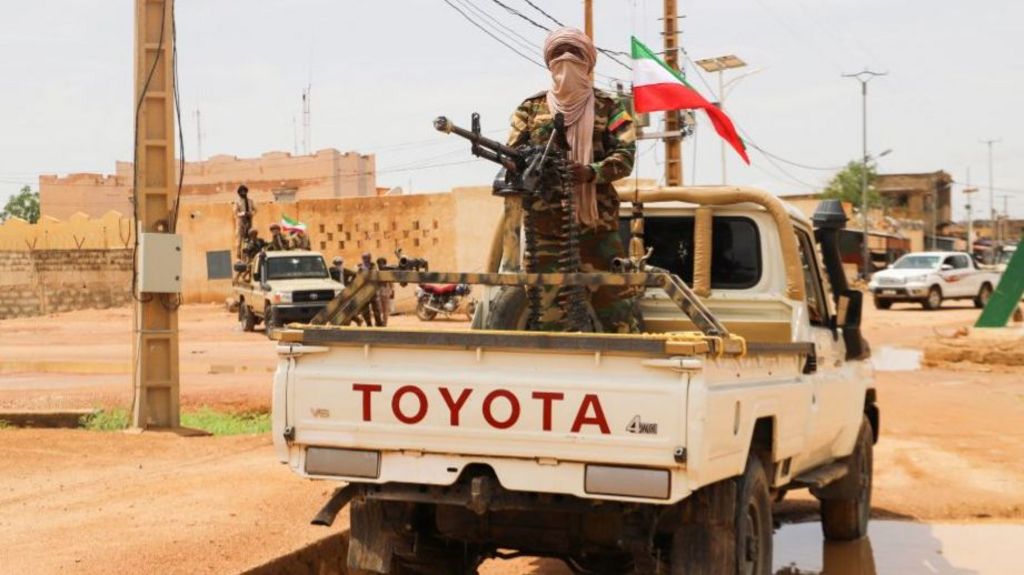
Russian mercenaries to withdraw from northern Mali city
Mali has been plunged into a new wave of deadly violence following a sweeping series of coordinated attacks carried out by separatist insurgents and jihadist militants across the country on Saturday, which has left top officials dead, triggered major military clashes, and shifted control of a strategic northern city. The Azawad Liberation Front (FLA), a separatist group fighting to establish an independent ethnic Tuareg state in northern Mali, announced that Russian mercenaries deployed by Mali’s ruling military junta have agreed to withdraw from the northern city of Kidal following two days of intense urban fighting. The FLA now claims full control of Kidal, a city that served as the separatist movement’s unofficial headquarters for more than a decade before Malian government forces backed by Russian mercenaries seized control of it in late 2023.
The wave of violence began Saturday, when the FLA joined forces with multiple armed groups to launch synchronized assaults across Mali, stretching from the capital Bamako to northern and central regions. The assault targeted a range of key sites, including Kati, a major military base located just outside Bamako, the northern cities of Gao and Kidal, and the central Malian hubs of Sevare and Mopti. According to regional analysts, the assault was split between two sets of attackers: the FLA focused its operations on key northern population centers, while the al-Qaeda-affiliated jihadist group Jama’at Nusrat al-Islam wal-Muslimin (JNIM) carried out parallel strikes across multiple locations nationwide.
Ulf Laessing, head of the Sahel programme at the Konrad Adenauer Foundation in Mali, described the coordinated assault as the largest unified jihadist attack on Mali in several years. One of the most shocking developments to emerge from Saturday’s violence was the reported death of Mali’s Defence Minister Sadio Camara, who was killed in a car bomb attack on his convoy near Kati. Multiple news agencies, citing confirmation from Camara’s family and French media, reported that the attack also killed at least three of his family members. The Malian government has not officially confirmed Camara’s death, but military officials have acknowledged ongoing fighting across multiple regions.
On the ground in Kidal, FLA spokesman Mohamed Elmaouloud Ramadane noted that the city was not fully captured during Saturday’s initial attacks, as small contingents of Malian army troops and Russian mercenaries remained holed up in parts of the city. Clashes between FLA fighters and pro-government forces resumed in Kidal on Sunday, but just hours after fighting restarted, Ramadane announced a breakthrough: a deal had been reached to allow Russian mercenaries, now part of the officially recognized Africa Corps, to withdraw from Kidal under secure conditions. Shortly after Ramadane’s social media announcement, the FLA confirmed that its fighters were escorting the withdrawing Russian mercenary contingent out of the city’s boundaries. One FLA field commander who participated in the offensive told the BBC that the group had spent months planning the assault, and that its next objectives are to seize control of Gao before moving on to Timbuktu, which the commander claimed would fall easily.
Mali’s state broadcaster ORTM has given a far more muted account of the violence, reporting that only 16 people – a mix of civilians and soldiers – were injured in the attacks, which it said caused only limited damage. The broadcaster also claimed that multiple “terrorists” had been killed in government counterattacks, and that the situation across all affected areas is “completely under control.” Despite the government’s claims, Malian military officials confirmed in an official statement Sunday that fighting is still ongoing in Kidal, Kati, and other regions across the country. The statement warned that the recent wave of violence would “not go unanswered,” and announced that a nationwide security alert had been issued. Authorities have stepped up large-scale patrols, reinforced border and urban checkpoints, and imposed curfews in multiple high-risk areas. In Bamako, a curfew is in effect from 21:00 local time to 06:00 GMT, scheduled to expire Monday.
The international community has quickly condemned the surge in violence. United Nations Secretary-General António Guterres released a statement condemning the “acts of violence” and expressed his solidarity with the people of Mali. The Economic Community of West African States (ECOWAS), the West African regional bloc that Mali, Niger, and Burkina Faso left following a string of military coups that brought military juntas to power in all three nations, also issued a formal condemnation. Mahmoud Ali Youssouf, chair of the African Union Commission, said he was monitoring the rapidly evolving situation with deep concern.
Mali has been mired in continuous instability for more than a decade. The FLA has waged a long-running separatist campaign for an independent Tuareg homeland in northern Mali, and currently holds de facto control over large swathes of that territory. The country is currently ruled by a military junta led by General Assimi Goïta, who first seized power in a 2020 coup after widespread public anger over the government’s failure to contain the insurgency. The junta claimed it would restore security and push back against armed groups, and initially enjoyed broad popular support for its promise to resolve the long-running crisis that began with the 2012 Tuareg rebellion, which was later hijacked by transnational Islamist militant groups. After the junta took power, UN peacekeepers and French counter-insurgency forces that had been deployed to Mali withdrew from the country, and the military government turned to Russian mercenaries to support its counter-insurgency operations. Despite this partnership, the jihadist insurgency has only expanded, and large portions of northern and eastern Mali remain outside of government control.
-
War in the Middle East: latest developments
Fresh waves of instability have swept across the Middle East over the weekend, as escalating cross-border tensions between Israel and the Iran-backed Hezbollah movement threaten to collapse an existing ceasefire, while regional diplomatic efforts to de-escalate broader conflict with Iran navigate unexpected disruptions from Washington.
In a public address on Sunday, Israeli Prime Minister Benjamin Netanyahu issued a sharp rebuke of Hezbollah, accusing the Lebanese militant group of systematically undermining the fragile ceasefire agreement between Israel and Lebanon through repeated violations. Netanyahu confirmed that Israeli forces would continue targeting Hezbollah with full force, warning that the group’s ongoing breaches are effectively dismantling the truce that has held partial calm along the border for months.
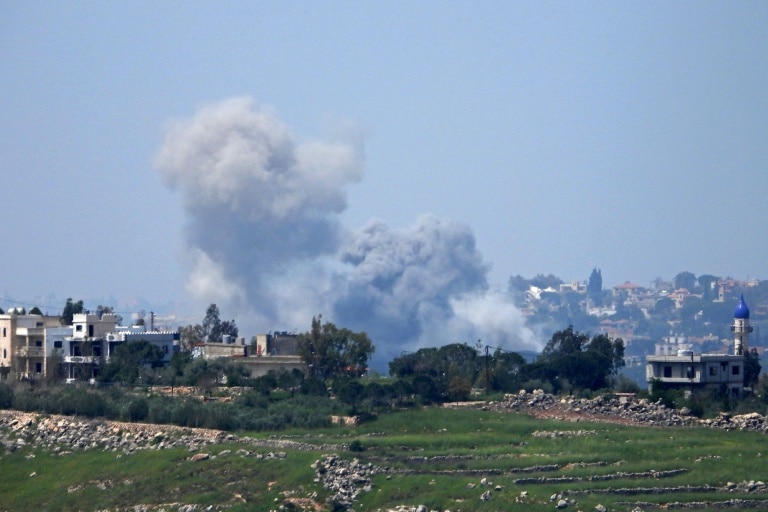
Moments after Netanyahu’s remarks, Lebanese state media reported that the Israeli Air Force launched multiple airstrikes on populated areas in southern Lebanon, just hours after the Israeli military issued urgent evacuation orders for seven local communities in the region. The National News Agency, Lebanon’s official state-run media outlet, confirmed that one of the strikes hit the southern town of Kfar Tibnit – a location explicitly named in the evacuation warning – and that early reports indicate multiple casualties have been recorded from the attack. The strikes mark a major escalation of hostilities despite the ongoing ceasefire between Israel and Hezbollah.
Parallel to the rising tensions along the Israeli-Lebanese border, regional diplomatic efforts to broker a lasting end to the Iran conflict are working to get back on track, after former U.S. President Donald Trump’s sudden decision to cancel a planned trip by U.S. peace envoys threw talks into disarray. Iran’s top diplomat Foreign Minister Abbas Araghchi is set to return to Islamabad on Sunday, just one day after his initial visit to the Pakistani capital that concluded with a side trip to Oman for additional consultations. According to Iran’s semi-official ISNA news agency, Araghchi will hold a new round of talks with Pakistani leadership to lay out Tehran’s official stance on the framework for any potential agreement that would bring a full end to active hostilities.
Pakistan, which has taken on the role of lead neutral mediator for the talks, has reaffirmed its commitment to keeping the diplomatic process moving forward. Pakistani Prime Minister Shehbaz Sharif confirmed he held a telephone call with Iranian President Masoud Pezeshkian in the wake of Washington’s decision to pull its envoys from the planned talks. In a post on the social platform X, Sharif emphasized that Pakistan remains fully committed to acting as an honest, sincere facilitator, and will continue working tirelessly to build a path toward durable peace and long-term stability across the Middle East region.
Meanwhile in Washington, Trump stated that a late Saturday shooting incident at a media dinner in the nation’s capital would not alter his administration’s approach to the conflict with Iran. Speaking to reporters at the White House just hours after the attack, Trump insisted the incident would not distract him from securing what he calls a victory in the Iran war. He added that there is currently no clear evidence linking the shooting to the Iran conflict, and he does not believe the attack is connected to ongoing hostilities based on initial information.
In another development related to Iran’s internal crackdown on opposition and alleged espionage, the Iranian judiciary announced on Sunday that authorities executed a man convicted of two charges: membership in the Sunni militant group Jaish al-Adl, and involvement in coordinated attacks on Iranian security forces in the country’s volatile southeastern region. The execution comes just one day after Iranian authorities announced the execution of a second man, who was accused of passing classified intelligence to Israel.
-
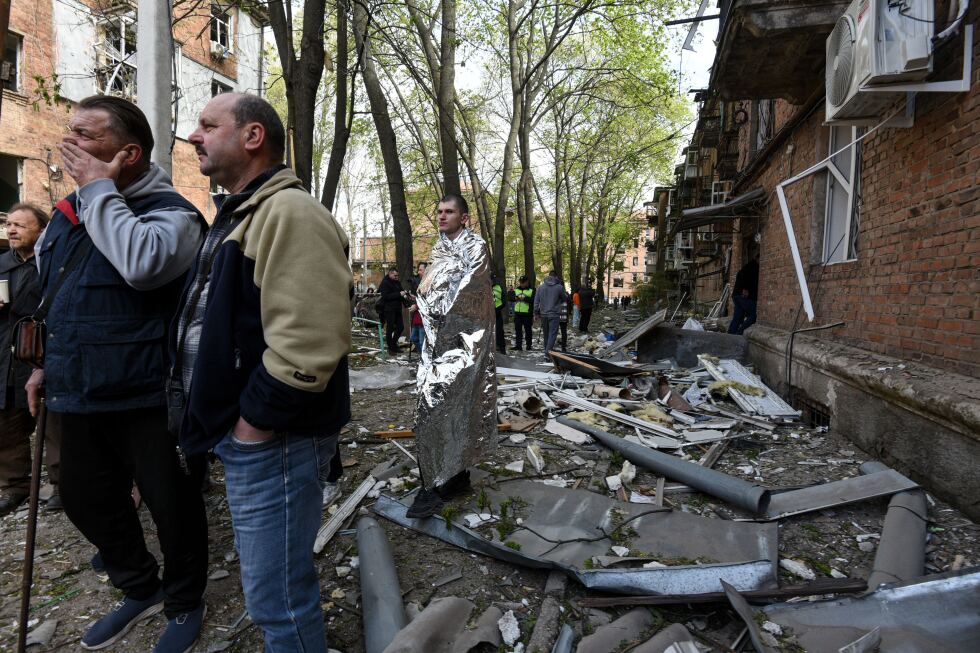
At least 16 dead in strikes as Chernobyl anniversary highlights nuclear risks of Russia-Ukraine war
On the 40th anniversary of the 1986 Chernobyl nuclear catastrophe, a wave of reciprocal drone and missile strikes across Ukraine, Russian-occupied territories and mainland Russia has left at least 16 people dead, amplifying urgent global warnings about nuclear risks stemming from more than two years of Russian full-scale invasion of Ukraine.
In southern Ukraine’s Dnipro, regional governor Oleksandr Hanzha announced Sunday that the death toll from recent Russian drone and missile attacks on the city climbed to nine. Cross-border strikes have extended into Russian-held areas as well: Moscow-appointed officials in Sevastopol, the main port on the annexed Crimean Peninsula, reported one fatality from a Ukrainian drone strike. Since Russia’s 2014 illegal annexation of Crimea, the peninsula has functioned as a key military staging and supply hub for Russian forces in the ongoing war. Further north, in Russia-claimed Luhansk Oblast of eastern Ukraine, Moscow-installed leader Leonidypasechnik stated three civilians were killed in an overnight Ukrainian drone attack on a rural village, following two deaths from a separate strike in the same region early Saturday. Ukraine has not issued official comment on any of these strikes against Russian-held territory, and the details of the attacks could not be independently verified by the Associated Press.
The streak of cross-border attacks preceded these fatal incidents: Russian local authorities reported one woman killed in a Ukrainian drone strike on the border region of Belgorod just days prior. On Sunday, Ukraine’s General Staff confirmed it had targeted a major oil refinery in Yaroslavl, a facility located hundreds of kilometers inside Russian territory. The strike ignited large fires at the refinery, which processes 15 million tons of crude annually and supplies gasoline, diesel and jet fuel directly to the Russian military. Moscow has not yet released an official response to the Yaroslavl attack.
Kyiv’s expanded long-range strike capability is rooted in its domestically produced drone program, which has developed systems capable of reaching targets 1,500 kilometers deep into Russian territory. In recent weeks, Ukraine has repeatedly targeted Russian energy infrastructure, particularly oil processing facilities. These strikes come after the Trump administration granted Russia a temporary sanctions waiver to boost energy exports, a move Kyiv has openly criticized, arguing that the additional export revenue will be funneled into new military weapons to intensify attacks on Ukraine.
The flurry of attacks coincided with global commemorations of the 40th anniversary of the Chernobyl disaster, drawing renewed attention to the ongoing threat of nuclear catastrophe at the abandoned plant. In his official address marking the anniversary, Ukrainian President Volodymyr Zelenskyy warned that Russian military aggression risks repeating the 1986 disaster. “Through its war, Russia is once again bringing the world to the brink of a man-made disaster,” Zelenskyy wrote on Facebook. “Russian-Iranian Shahed drones regularly fly over the Chernobyl plant, and one of them struck the confinement structure last year.” He added, “The world must not allow this nuclear terrorism to continue, and the best way is to force Russia to stop its reckless attacks.”
International Atomic Energy Agency (IAEA) Director General Rafael Grossi echoed these warnings during a visit to Kyiv, stressing that urgent repairs to the plant’s damaged outer protective shell must begin without delay. Grossi noted that IAEA safety assessments confirm damage from last year’s strike has already compromised a core safety function of the structure. Leaving the damage unrepaired for years, he warned, would increase risks to the original reinforced sarcophagus that contains radioactive debris from the 1986 reactor explosion. The European Bank for Reconstruction and Development has estimated that critical repairs will cost at least 500 million euros ($586 million).
Ukrainian officials say a Russian drone struck the New Safe Confinement, a $2.1 billion arch-shaped protective enclosure completed in 2019 over the ruins of Chernobyl’s Reactor No.4, in February 2024. Moscow has repeatedly denied targeting the plant, claiming Kyiv staged the incident to rally international support.
-
Malian defense chief is killed as jihadis and rebels seize towns and military bases
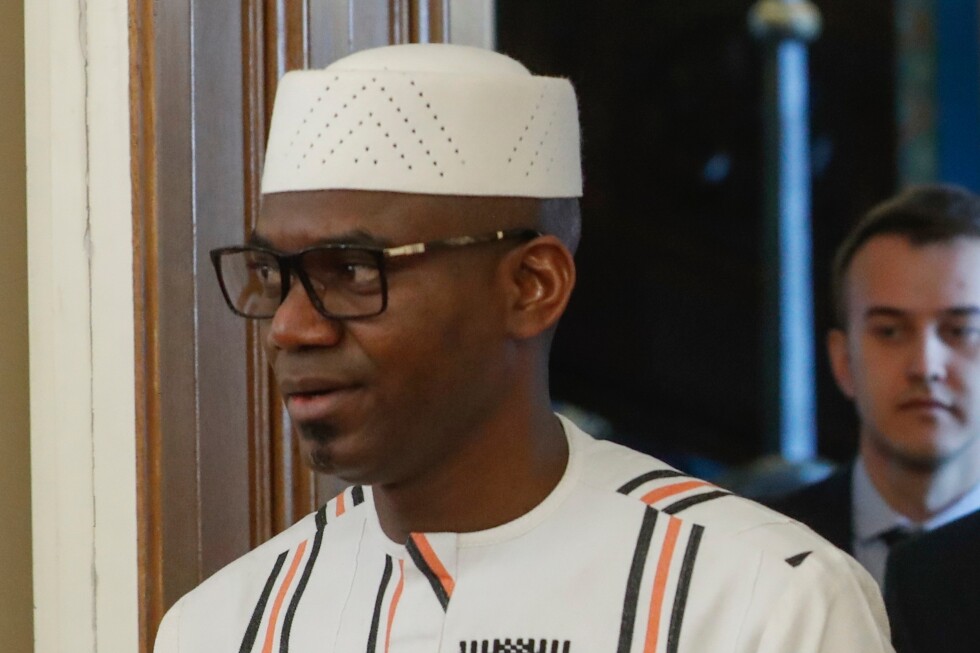
In a devastating wave of coordinated assaults across Mali that has shaken the junta-led West African nation and its key security ally Russia, the country’s top defense official has been killed, and a strategically important northern stronghold has fallen into separatist hands. Official announcements confirmed the death of General Sadio Camara, Mali’s Minister of Defense, over the weekend, marking one of the most significant losses for the country’s military leadership amid its decade-long battle against Islamist insurgency and separatist unrest.
The multi-front attacks unfolded across the country Saturday, targeting locations ranging from the capital Bamako to multiple remote towns and military bases. According to an official statement released via the Malian defense ministry’s Facebook page and broadcast on state television by government spokesman General Issa Ousmane Coulibaly, Camara’s residence was breached by a suicide car bomber and a team of armed assailants. The statement detailed that Camara engaged directly in a firefight with the attackers, neutralizing multiple assailants before suffering fatal injuries that led to his death after evacuation to a local hospital. The government extended official condolences to Camara’s family following the confirmation of his death.
By Sunday, authorities stated that the initial wave of attacks had concluded, but critical uncertainties remained, most notably over territorial control of Kidal, a key northern city that separatist forces claim to have seized. A new, united front of separatist fighters and al-Qaida-linked militants carried out the coordinated operations, a rare collaboration that security analysts describe as an unprecedented escalation of the country’s long-running conflict.
The separatist faction, the Tuareg-led Azawad Liberation Front (FLA), confirmed its joint operation with Jama’at Nusrat al-Islam wal-Muslimin (JNIM), the al-Qaida-affiliated insurgent group that has waged war against the Malian government for more than a decade. FLA spokesperson Mohamed El Maouloud Ramadan announced Saturday that Malian government forces and troops from Russia’s Africa Corps had completed a peaceful withdrawal from Kidal, declaring the city “free.” Late Sunday, Malian armed forces chief General Oumar Diarra confirmed the withdrawal in a state television address, noting that Malian troops had repositioned to Anefis, a city roughly 100 kilometers south of Kidal.
Kidal, which has long been the symbolic heart of the Tuareg separatist movement, was captured by Malian forces and Russian mercenaries in 2023, a victory that was framed as a major milestone for the ruling junta and its Russian partnership. Its recapture by the alliance of separatists and insurgents thus represents a sharp symbolic and strategic setback for the Bamako government.
Wassim Nasr, a senior research fellow at the Soufan Center security think tank and a leading expert on Sahel security, noted that this open collaboration between separatist and jihadi forces, paired with coordinated national-level attacks and a public call for Russia to end its support for the junta, is a historic first for the conflict. “This coordination, conducting attacks all over the country at the same time, the united push by the two groups and the call for the Russian military to leave was a first,” Nasr explained. Beyond military gains, he added, the collaboration extends to the political level, as both groups openly acknowledged their joint effort.
In the wake of the attacks, Malian authorities implemented a three-night curfew for the Bamako district, running from 9 p.m. to 6 a.m. daily. To date, the government has only confirmed 16 wounded people, a mix of civilian and military personnel, and stated that multiple attackers were killed. No full civilian or military death toll has been released to the public.
The attack has drawn widespread regional condemnation, with the Economic Community of West African States (ECOWAS) issuing a statement calling for unified action across the region to counter the growing extremist threat. “We call on all states, security forces, regional mechanisms and populations of West Africa to unite and mobilize in a coordinated effort to combat this scourge,” the regional bloc said.
The assault also underscores the growing instability across the Sahel, following a series of military coups that have seen the ruling juntas of Mali, Niger and Burkina Faso abandon long-standing security partnerships with Western nations and turn to Russia for counter-insurgency support. Despite this shift, security across the region has deteriorated sharply, with militant attacks reaching record highs in recent years. Both government forces and Russian mercenaries have also been repeatedly accused of extrajudicial killings of civilian populations suspected of collaborating with insurgents. Earlier this year in 2024, an al-Qaida-linked group claimed responsibility for coordinated attacks on Bamako’s international airport and a military training camp in the capital that left dozens of people dead.
Ulf Laessing, a Sahel analyst with the Konrad Adenauer Foundation, noted that the coalition of separatists and JNIM is unlikely to seize control of Bamako in the near future, due to widespread local opposition to the alliance. Even so, the attacks deliver a major blow to the credibility of Russia’s security engagement in Mali. “The attacks are a major blow to Russia as the mercenaries had no intelligence about the attacks and were unable to protect major cities,” Laessing said.
-
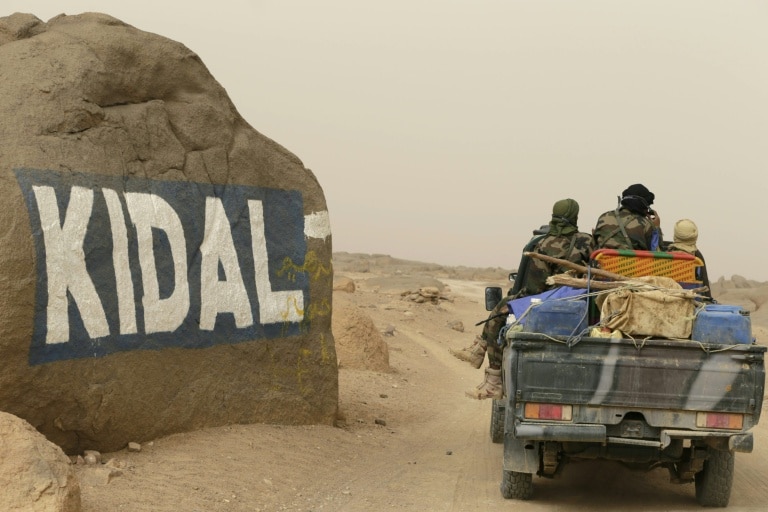
New fighting in Mali’s Kidal between army and rebels
Renewed armed confrontation broke out on Sunday in Kidal, the strategically critical northern Malian town long centered in the country’s decade-long conflict, pitting Tuareg rebel forces aligned with jihadist fighters against Malian government troops backed by Russian personnel. The outbreak of new fighting comes just 24 hours after insurgents launched a wave of coordinated attacks across the restive Sahel country, the most violent assault to hit Mali since the ruling military junta seized power in 2020.
Mohamed Ramdane, a spokesperson for the Tuareg rebel coalition the Azawad Liberation Front (FLA), confirmed Sunday that hostilities had resumed in Kidal. “Fighting resumed in Kidal this morning. We want to drive out the last Russian fighters who have taken refuge in a camp,” Ramdane stated. A local elected official, speaking on condition of anonymity, also verified the renewed clashes, confirming that residents across the town have heard sustained gunfire.
Kidal, long considered a historic stronghold of the Tuareg movement, was recaptured by Malian army forces in November 2023 with backing from Russia’s Wagner paramilitary group. That seizure ended more than 10 years of direct rebel control over the northern town, making it a powerful symbolic prize for both sides in the ongoing conflict. Beyond Kidal, the FLA has also claimed to have seized new positions in Mali’s northern Gao region, expanding the scope of their recent offensive.
A anonymous security source speaking to Agence France-Presse clarified the strategic logic behind the recent insurgent campaign: “The aim of the attackers was not to seize and control cities permanently, but to carry out coordinated actions in order to at least capture Kidal, which is a rather powerful symbol.”
Mali has been ravaged by jihadist insurgency and intercommunal conflict for more than 11 years, but Saturday’s coordinated attacks marked the deadliest and most extensive assault since the 2020 military coup that brought the current junta to power. Strikes were launched not only in northern regions but also on the outskirts of Mali’s capital Bamako, hitting multiple population centers across the large West African nation.
In an official statement released Saturday evening, the Malian government reported that the violence left 16 civilians and military personnel wounded, alongside what it described as “limited material damage.” The government also claimed that “the situation is totally under control in all the localities” targeted in the attacks.
However, developments in the capital and surrounding areas have sparked widespread anxiety among residents. Multiple witnesses and a medical source confirmed that on Sunday morning, Malian soldiers deployed heavy security around a Bamako clinic where Defense Minister Sadio Camara was admitted the previous day. Residents also reported that Camara’s official residence in Kati, a garrison town adjacent to Bamako that serves as a key stronghold of the ruling junta, was heavily damaged in a powerful explosion. Aides to the defense minister have denied claims that Camara was wounded in the attack.
An AFP journalist reporting from Bamako confirmed that access to all military facilities in the capital has been blocked by road barriers and makeshift barricades of burning tires. In Senou, the outlying Bamako district that houses the city’s main airport and saw heavy fighting on Saturday, residents remain on high alert. “I still hear the blasts ringing in my ears. It’s traumatising,” one local resident told reporters. In Kati, while calm has returned to the area after jihadist fighters withdrew, residents continue to live in constant fear of new attacks. “The jihadists left the area, but we are living in fear,” one Kati resident said Sunday.
United Nations Secretary-General António Guterres has formally condemned the wave of violence across Mali. “The Secretary‑General is deeply concerned by reports of attacks in several locations across Mali,” his spokesperson Stephane Dujarric said in an official statement. Guterres also called for unified global action to address the growing security crisis in the Sahel, adding: “The Secretary-General calls for coordinated international support to address the evolving threat of violent extremism and terrorism in the Sahel and to meet urgent humanitarian needs.”
In recent years, Mali’s ruling military leadership has shifted the country’s foreign policy dramatically, cutting long-standing security and diplomatic ties with former colonial power France and other Western nations, and forging a close alliance with Russia. Following the mutiny that ended the Wagner Group’s operations in Mali, the Russian Africa Corps, a paramilitary organization under direct control of the Russian Ministry of Defense, has taken over Wagner’s role supporting Malian government forces in their fight against insurgent and jihadist groups. Mali holds significant untapped reserves of gold and other valuable strategic minerals, making its ongoing instability a critical concern for global markets and regional security.