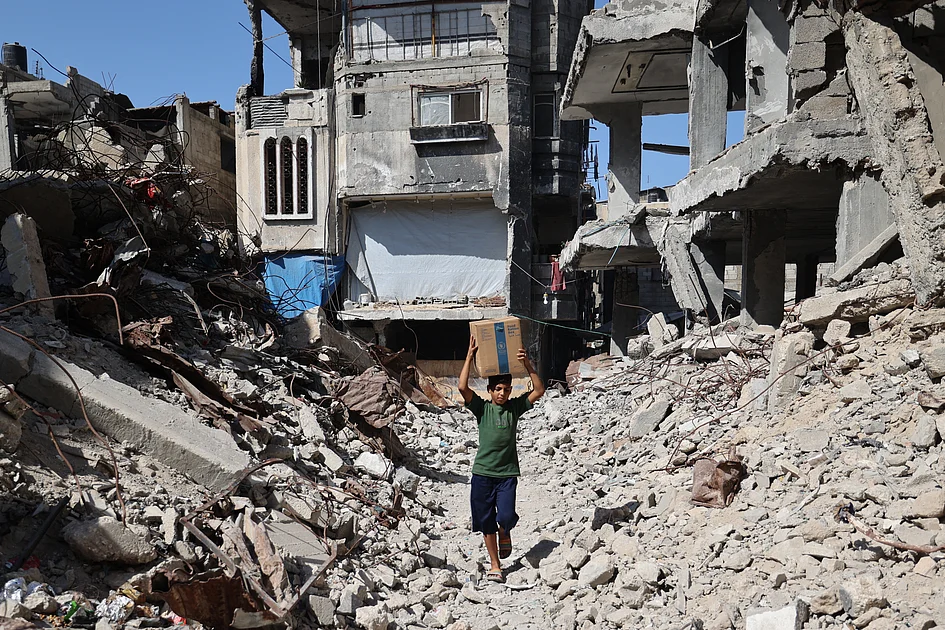
In a dramatic escalation of hostilities, Israel unleashed a massive aerial assault on Gaza, dropping 153 tonnes of bombs in a single day, according to Prime Minister Benjamin Netanyahu. The strikes were reportedly in retaliation for an alleged ceasefire violation by Hamas, the Palestinian militant group. Netanyahu, addressing the Knesset, emphasized Israel’s dual approach of strength and diplomacy, stating, ‘One of our hands holds a weapon, the other hand is stretched out for peace.’ He further asserted that peace is achievable only with the strong, not the weak, and highlighted Israel’s current unprecedented strength. The recent violence follows the killing of two Israeli soldiers in an attack attributed to Hamas, which the group has denied. Amidst the turmoil, Netanyahu met with US envoys Steve Witkoff and Jared Kushner to discuss regional developments and the fragile US-brokered ceasefire. US Vice President JD Vance is also scheduled to visit Israel to address security challenges and diplomatic opportunities. Vance has urged Gulf Arab nations to establish a security framework to disarm Hamas, a key component of the US-led Gaza peace initiative.
分类: world
-
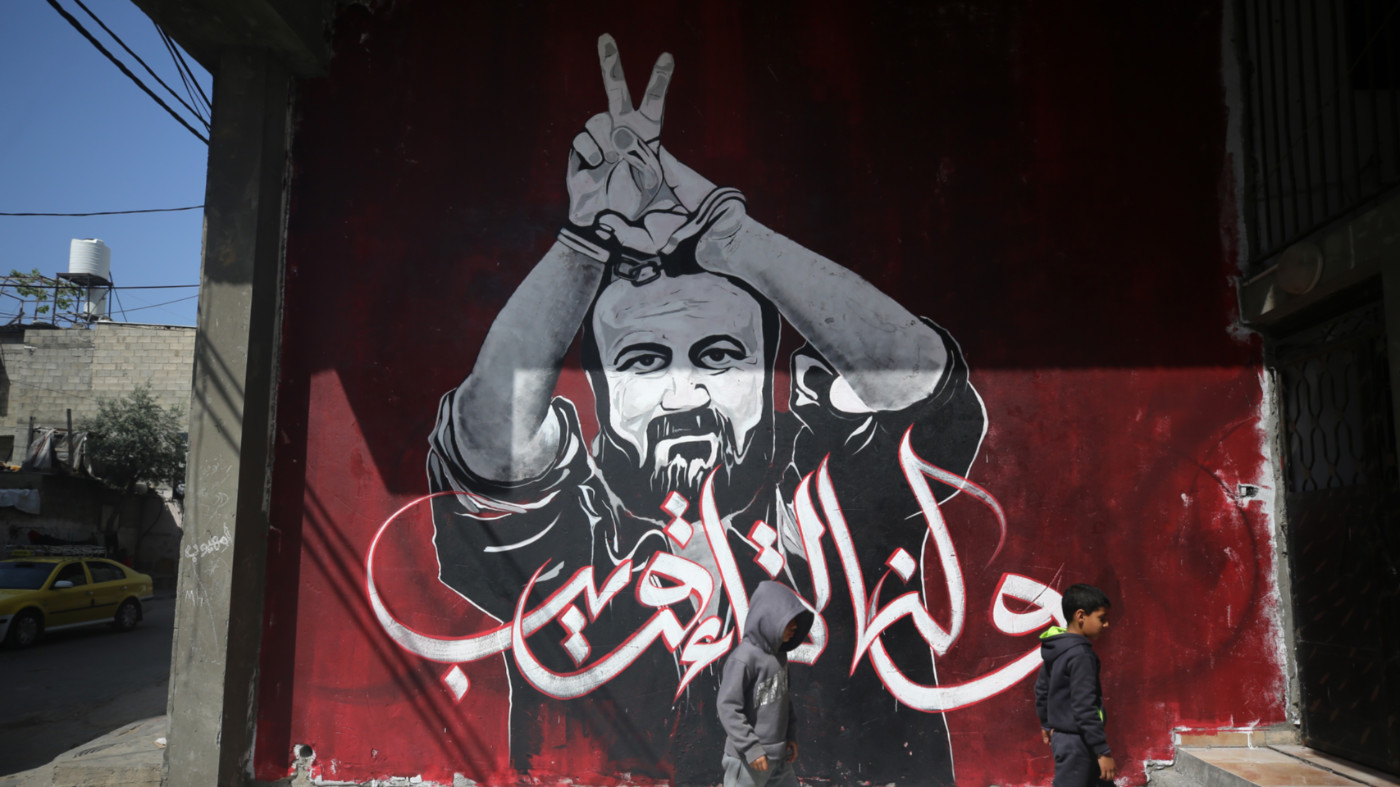
Who is Marwan Barghouti and why won’t Israel release him?
The recent ceasefire negotiations between Israel and Palestinian factions have resulted in the release of nearly 2,000 Palestinian prisoners in exchange for 20 Israeli hostages. However, one name was conspicuously absent from the prisoner list: Marwan Barghouti, a prominent Fatah leader and Israel’s most high-profile Palestinian detainee. Barghouti, often regarded as a unifying figure in Palestinian society, has been imprisoned since 2002, serving five life sentences for his alleged involvement in attacks during the Second Intifada. His absence from the deal underscores his symbolic importance and the complexities surrounding his potential release. Born in 1959 in the West Bank village of Kobar, Barghouti’s political consciousness was shaped by the Israeli occupation and his early experiences with Israeli forces. Joining Fatah in his teens, he quickly rose through the ranks, becoming a key figure in the Palestinian resistance. Despite his imprisonment, Barghouti remains a potent symbol of Palestinian unity and resistance, with many viewing him as a potential leader capable of bridging divides within Palestinian society. His continued incarceration, marked by harsh conditions and alleged abuses, has drawn international condemnation and calls for his release. Barghouti’s case highlights the broader struggle for Palestinian rights and the ongoing tensions in the Israeli-Palestinian conflict. As the region grapples with the aftermath of the recent ceasefire, Barghouti’s fate remains a contentious issue, emblematic of the deeper political and humanitarian challenges at play.
-
Bogota to present Shanghai Award, a first for South America
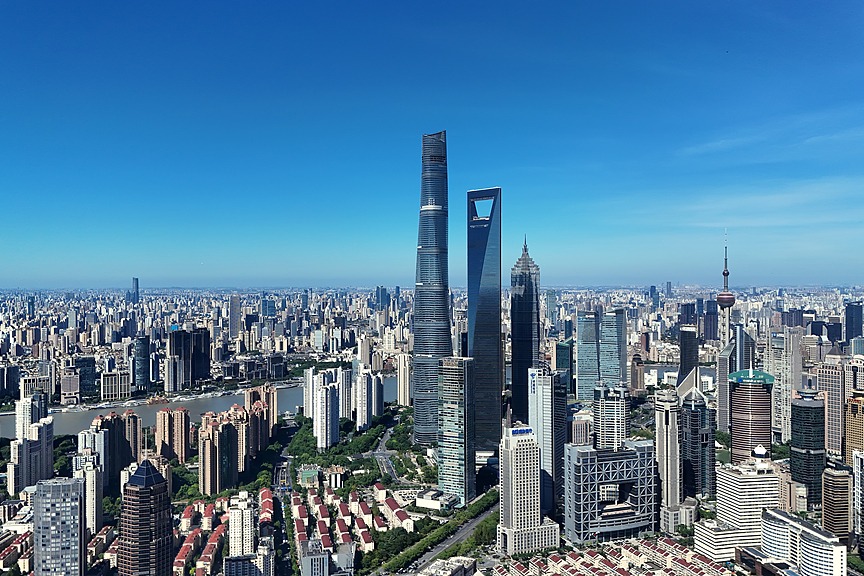
In a historic first for South America, Bogota, Colombia, has been chosen as the host city for the third Global Award for Sustainable Development in Cities, also known as the Shanghai Award. The ceremony will take place on October 31, coinciding with World Cities Day. This prestigious award, jointly presented by the UN Human Settlements Programme (UN-Habitat) and the Shanghai government, honors cities worldwide for their innovative efforts and achievements in advancing the United Nations 2030 Agenda for Sustainable Development and the New Urban Agenda. Liu Qianwei, Chief Engineer of the Shanghai Municipal Commission of Housing, Urban-rural Development and Management, highlighted the significance of this year’s event during a recent press briefing. He noted that the award evaluates cities based on a comprehensive set of criteria, including economic vitality, urban prosperity, ecological construction, green development, urban safety, resilience development, and capacity building for sustainable development. Last year’s winners included Agadir in Morocco, Thiruvananthapuram in India, Doha in Qatar, Iztapalapa in Mexico, and Melbourne in Australia. The inaugural award in 2023 recognized Brisbane in Australia, Fuzhou in China, George Town in Malaysia, Kampala in Uganda, and Salvador in Brazil. Liu emphasized that the Shanghai Award’s global reach continues to expand, with last year’s ceremony held in Egypt, marking its first presentation outside of China. This year’s event in Bogota further underscores the growing international influence of China’s urban sustainable development practices and highlights the ongoing collaboration between China and the UN in this critical field.
-
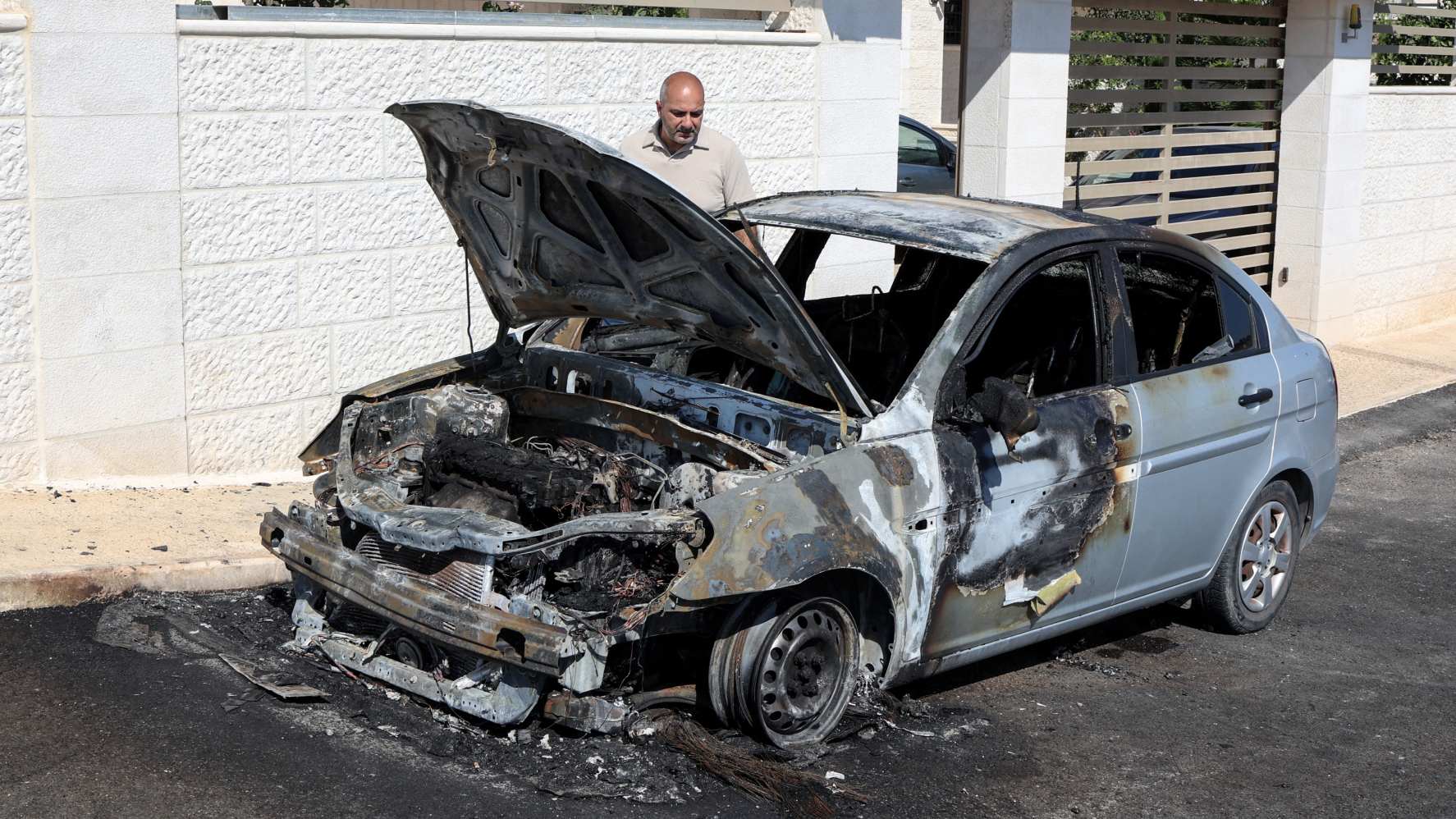
How the war in Gaza fuelled a wave of settler violence against West Bank Palestinians
As Israeli and Hamas negotiators continue to deliberate over the final details of US President Donald Trump’s peace plan, the predominantly Christian village of Taybeh in the West Bank faces escalating violence and forced displacement. Villagers, while relieved by the progress in peace talks, are grappling with more immediate and dire concerns. October, traditionally the olive harvesting season, has become a time of terror for residents who risk settler assaults when venturing onto their lands. Gates installed at the village entrance allow the Israeli army to cut off access instantly, further isolating the community. Youssef Moussa, a 64-year-old Bedouin man, recounted a harrowing attack by a settler militia that left him unconscious with two broken ribs and his wife beaten. The settlers ransacked his home, stealing 7,000 dinars ($9,870) and 85 sheep, which represent his livelihood. The violence extends beyond Taybeh, with armed settlers, often accompanied by soldiers, attacking Palestinian farmers across the West Bank. In Turmus Ayya, northeast of Ramallah, masked men assaulted an elderly woman and a foreign volunteer, set vehicles on fire, and stole the harvest. Similar incidents have been reported near Nablus, Ramallah, and Bethlehem. Jamal Juma, a peace activist based in Ramallah, describes the perpetrators as “fascist militias” funded and armed by the state, operating with impunity under the Netanyahu government. Bezalel Smotrich, Netanyahu’s finance minister and a key figure in the coalition government, is a self-proclaimed fascist and the de facto governor of the West Bank. His relentless land seizure program aims to eradicate Palestinian communities, a goal that has already seen significant progress. Smotrich’s plan to annex 82 percent of the West Bank, referred to as Judea and Samaria, would render the two-state solution impossible. The international community, including the US and European nations, has expressed concern over these developments, but on the ground, the violence continues unabated. Taybeh, one of the few Christian-majority villages in the West Bank, has attracted international attention, including visits from US Ambassador Mike Huckabee and US senators Chris Van Hollen and Jeff Merkley. However, these visits have done little to deter the ongoing attacks. The plight of Taybeh is emblematic of a broader Israeli policy of forced displacement, which human rights groups like Balasan and B’Tselem argue constitutes a war crime under international law. Despite the humanitarian and cultural destruction, the international community’s response has been insufficient, and the omission of these issues from Trump’s peace plan raises questions about the feasibility of long-term peace in the region.
-
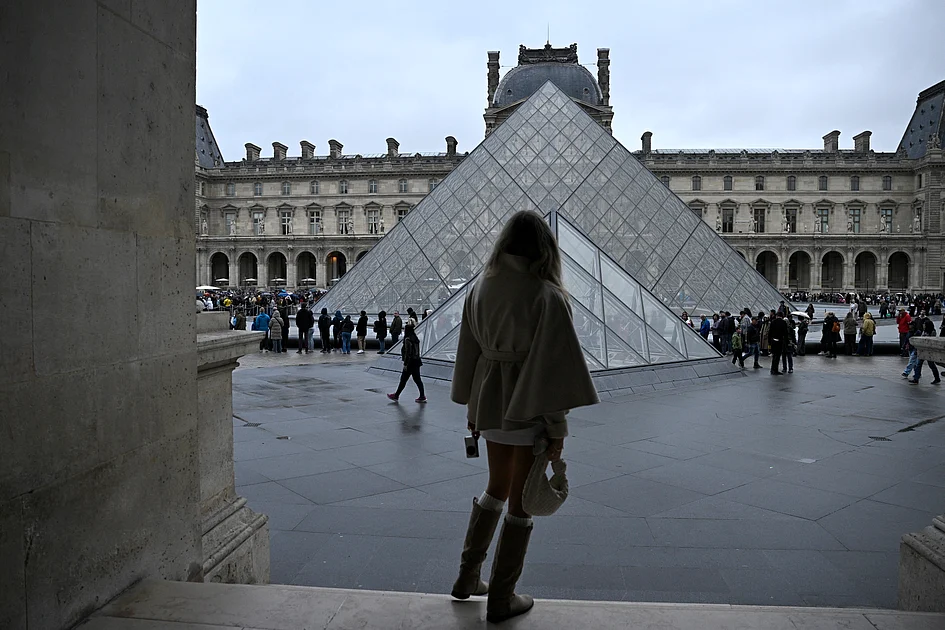
France: Louvre shut for second day; police hunt thieves after daylight heist
The Louvre Museum in Paris remained closed for a second consecutive day on Monday as authorities intensified their search for masked thieves responsible for a brazen daylight heist. The audacious robbery, which took place on Sunday, saw the thieves steal nine pieces of priceless jewelry, including the crown of Empress Eugenie, adorned with 1,354 diamonds and 56 emeralds. The crown was dropped and damaged during the escape, highlighting the chaotic nature of the crime. According to officials, the thieves executed the robbery in just seven minutes, using a truck equipped with an extendable ladder to access the museum’s Apollo Gallery through a window. The stolen items, which include a diamond-and-emerald necklace gifted by Napoleon I to his wife, Empress Marie-Louise, and a diadem belonging to Empress Eugenie, are considered irreplaceable. The heist has reignited concerns over the security of France’s cultural institutions, with Interior Minister Laurent Nunez calling for enhanced protection measures. Justice Minister Gerald Darmanin admitted to significant lapses in security, describing the incident as a national embarrassment. This marks the first theft from the Louvre since 1998, when a painting by Camille Corot was stolen and never recovered. The museum, home to iconic works like the Mona Lisa, may remain closed until Wednesday, disrupting the plans of thousands of visitors. The robbery underscores a troubling trend of museum thefts in France, with several high-profile incidents reported in recent months.
-
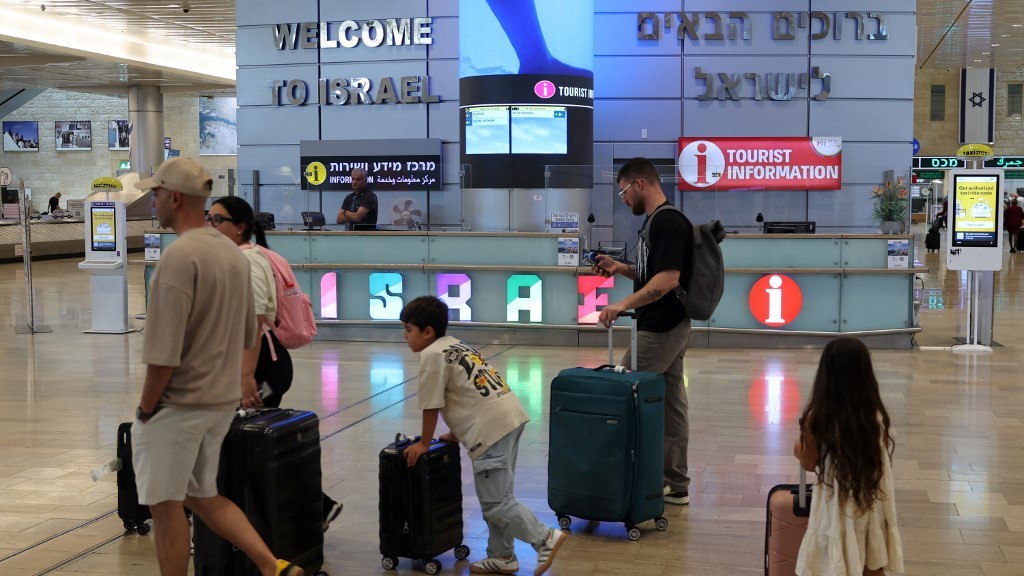
Record number of Israelis leaving and not returning since 2020, Knesset report says
Israel is facing an unprecedented wave of emigration, with record numbers of citizens leaving the country since 2020. A report by the Knesset’s Research and Information Center (RIC) reveals that between 2020 and 2024, approximately 145,900 more Israelis departed for the long term than returned. This alarming trend has sparked concern among policymakers, who fear the implications of a declining Jewish population in the state. The exodus has been particularly pronounced in recent years, with 59,400 Israelis leaving in 2022 and 82,800 in 2023—a surge partly attributed to the onset of the Gaza war in October 2023. Cities like Tel Aviv, Haifa, Netanya, and Jerusalem have seen significant numbers of residents departing. The report was prepared for a session of the Knesset Committee for Immigration, Absorption and Diaspora Affairs, where MP Gilad Kariv described the situation as a ‘tsunami.’ Kariv emphasized that the trend threatens the resilience of Israeli society and is a direct result of government actions that have fractured society and neglected civilian concerns. He called for urgent intervention from Prime Minister Benjamin Netanyahu to address the issue, warning that the current government’s priorities are exacerbating the problem and undermining Zionist values.
-
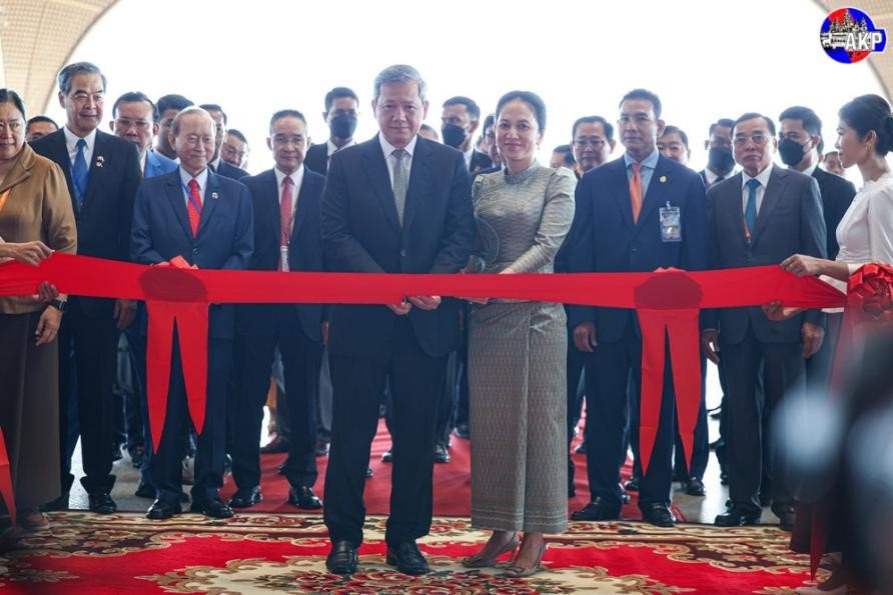
Cambodian PM opens kingdom’s biggest international airport
Cambodia has taken a monumental leap in its aviation and economic development with the inauguration of the Techo International Airport on October 20, 2025. Prime Minister Hun Manet, accompanied by First Lady Lok Chumteav Dr. Pich Chanmony Hun Manet, officially opened the kingdom’s largest and most advanced airport, marking a significant milestone in the nation’s history. The $2.3 billion world-class facility, spanning 2,600 hectares in southern Kandal and Takeo provinces, is strategically located more than 20 kilometers from the capital, Phnom Penh. The Techo International Airport, classified as a 4F-level facility, is designed to enhance air travel and cargo transport, positioning Cambodia as a key hub in Southeast Asia. Prime Minister Hun Manet emphasized that the airport reflects Cambodia’s long-term development vision and will serve as a catalyst for attracting tourists, investors, and fostering economic growth. Mao Havannall, Minister of the State Secretariat of Civil Aviation, highlighted the airport’s role as a critical bridge connecting Cambodia to the global stage, driving tourism, logistics, and economic expansion. The new airport replaces the aging Phnom Penh International Airport, which ceased operations on September 8, 2025. The former airport will be preserved as a reserve runway or transformed into a public park and aviation museum, offering benefits to Phnom Penh residents. The Techo International Airport is poised to redefine Cambodia’s aviation landscape and bolster its position in the global economy.
-
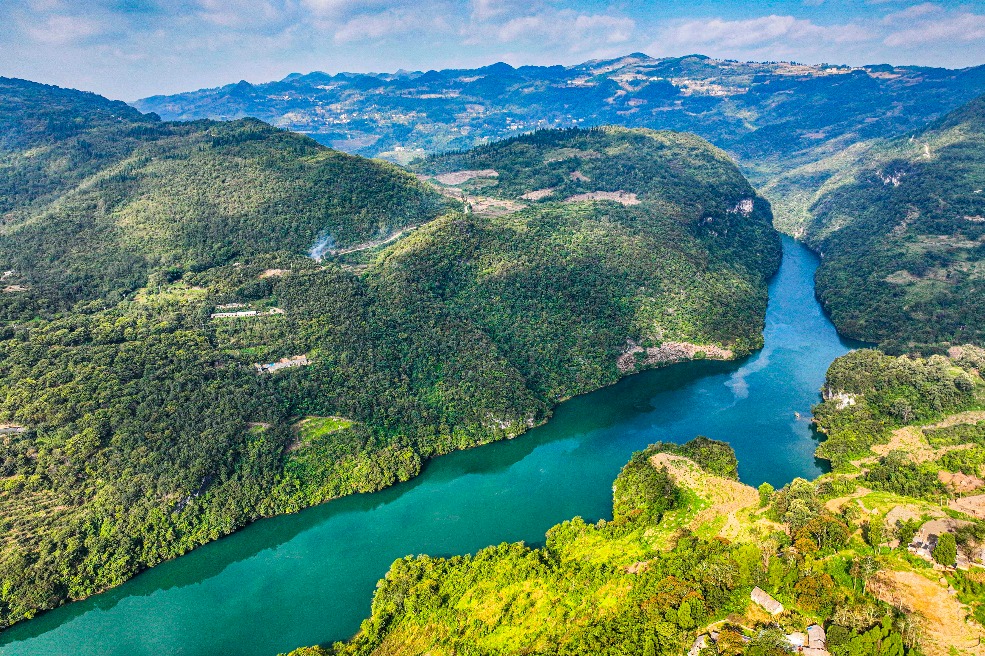
Aerial photos reveal Guizhou’s dramatic karst landscape
Recent aerial photographs have unveiled the breathtaking karst landscapes of Guizhou province, showcasing its dramatic gorges and serpentine rivers that sculpt the region’s natural beauty. The images, captured near Qianxi city along the upper reaches of the Wujiang River, highlight the crystal-clear waters meandering between towering cliffs. This area exemplifies quintessential karst topography, with jagged mountain peaks of diverse shapes rising abruptly from the canyon’s edges, creating a rugged and awe-inspiring vista. The photographs not only underscore the geological uniqueness of Guizhou but also serve as a testament to the province’s natural wonders, drawing attention to its potential as a destination for eco-tourism and geological studies. The striking visuals provide a rare perspective on one of China’s most distinctive landscapes, emphasizing the interplay of water and rock that has shaped this region over millennia.
-
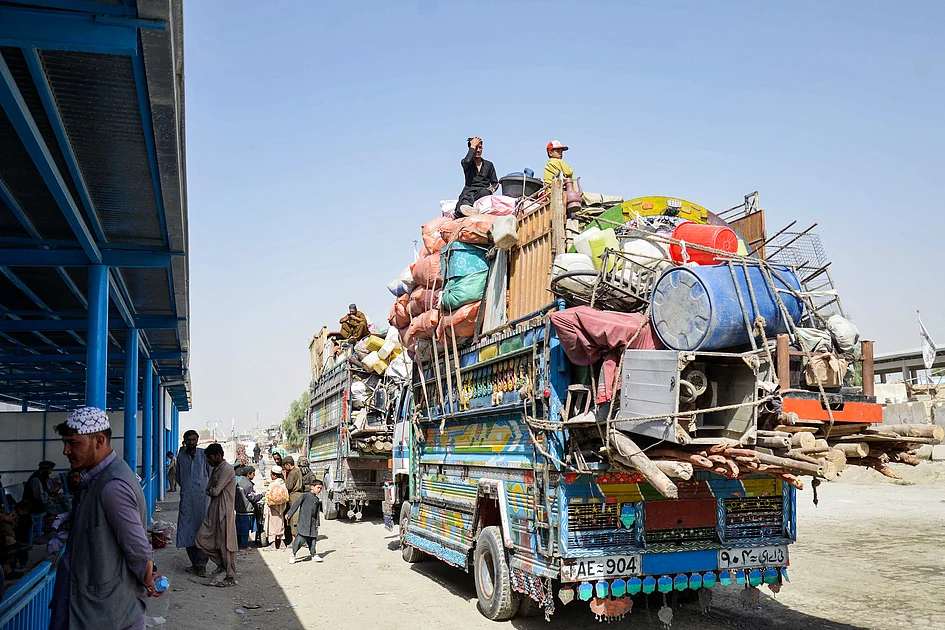
‘People can breathe’: Hope for peace on Afghan-Pakistan border
After a week of intense violence, a new ceasefire agreement between Afghanistan and Pakistan has sparked hope for peace and the revival of vital cross-border trade. The clashes, which erupted following explosions in Kabul on October 9, led to retaliatory strikes and significant casualties on both sides. The Taliban government accused Pakistan of orchestrating the blasts, prompting Islamabad to vow a robust response. After initial 48-hour truce on Wednesday, further Pakistani strikes on Friday targeted armed groups allegedly harbored by the Taliban. However, a second ceasefire was approved on Sunday, bringing relief to border communities. Residents in Torkham, a key crossing point, have begun to resume daily activities, with bakers, vendors, and shopkeepers returning to work. Over 1,500 trucks laden with essential goods remain stranded, highlighting the economic toll of the conflict. Abdul Rahman Habib, a Taliban economy ministry spokesman, warned of rising prices, unemployment, and market instability if trade disruptions persist. Both sides have emphasized the need to separate trade from political disputes. Peace talks in Doha, Qatar, have laid the groundwork for lasting peace mechanisms, though details remain undisclosed. Locals on both sides of the border, heavily reliant on cross-border trade, expressed optimism for a durable resolution to the conflict.
-
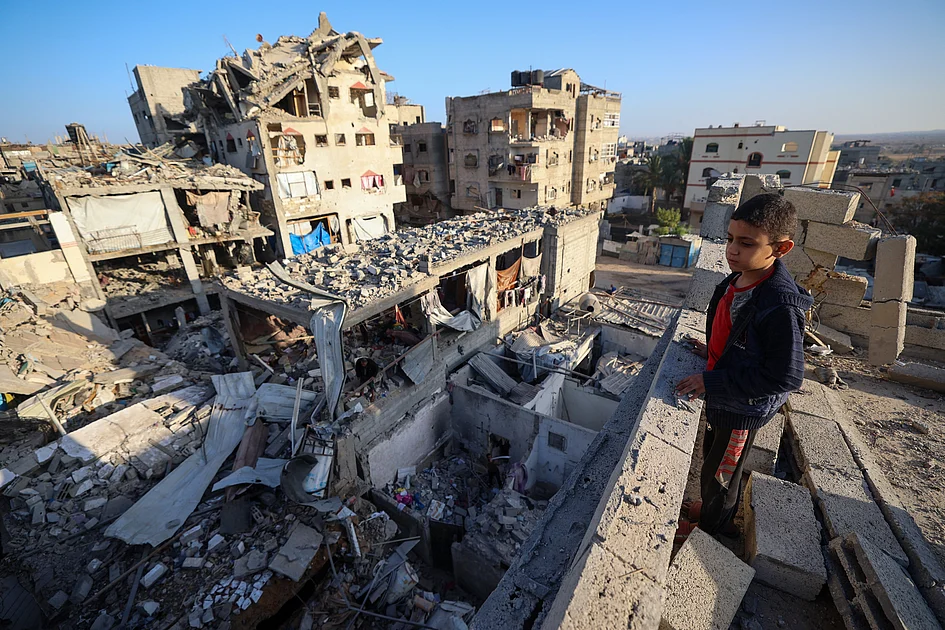
Cash-strapped Gazans left disappointed as first banks reopen
In the war-torn Gaza Strip, the reopening of two bank branches on Sunday brought a glimmer of hope to cash-strapped residents, only to leave them disillusioned once again. Despite the long-awaited resumption of banking services, the branches lacked the necessary liquidity to meet the demands of eager customers. Ahmad Abu Foul, a 38-year-old resident of Khan Yunis, expressed his frustration after failing to withdraw his salary, a situation emblematic of the broader financial crisis gripping the region. The Bank of Palestine’s reopening marked the first such event since March, when a truce collapsed, but the absence of usable currency has rendered the move largely symbolic. Over the past two years, since Hamas’s cross-border attack on Israel and the subsequent military response, Gaza’s financial system has been in disarray. Israeli shekels, the primary currency, have become trapped in a closed loop of small-scale commerce, with many notes deteriorating to the point of being unusable. UN experts have criticized Israel’s ‘financial stranglehold’ on Gaza, citing the destruction of banks and ATMs, the blockade on new currency inflows, and the disruption of digital payments due to frequent power and communication outages. While a recent ceasefire brokered under U.S. pressure has provided a temporary reprieve, the lack of liquidity continues to exacerbate the humanitarian crisis. Residents like Taysir Abu Shabak and Mahmud Nassar lament the exorbitant fees charged by merchants for cash withdrawals, further draining their already meager resources. Nada Abu Amra, a 33-year-old from Deir al-Balah, voiced the collective exhaustion of Gazans, who simply seek access to enough funds to purchase basic necessities. The discovery of large sums of cash in tunnels beneath Gaza, allegedly linked to Iran’s support for Hamas, has done little to alleviate the plight of ordinary citizens. As the region grapples with rampant inflation and a crumbling financial infrastructure, the reopening of banks without liquidity underscores the enduring challenges faced by Gaza’s population.