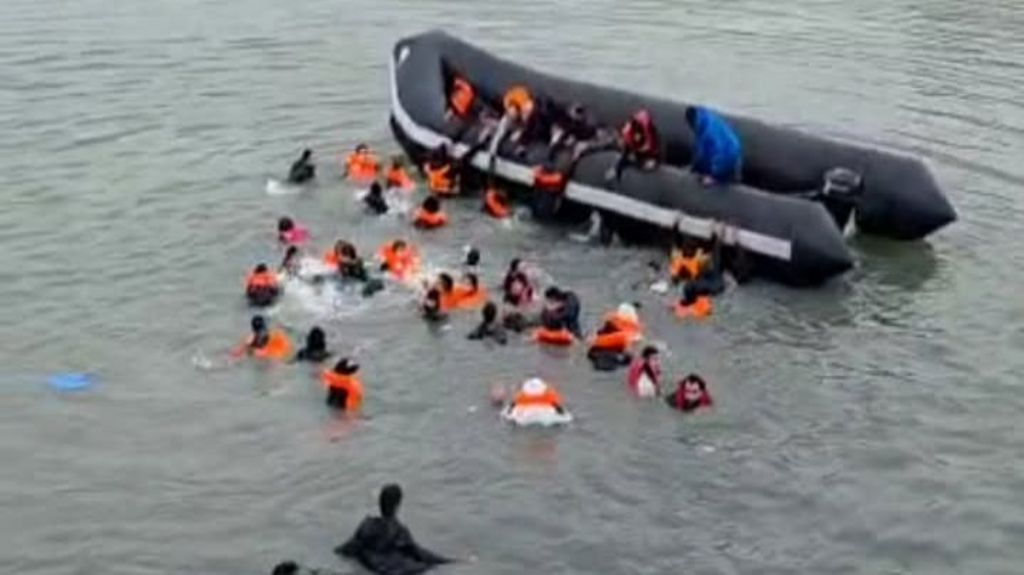
Recent developments indicate that France is stepping back from its earlier pledge to intensify maritime interventions aimed at curbing the influx of small boats crossing the English Channel. This shift comes amid ongoing political instability in France, which has reportedly hindered the implementation of a new ‘maritime doctrine’ designed to intercept and redirect these vessels. The UK government, which has long sought stronger French cooperation on this issue, views this as a significant setback.
分类: world
-
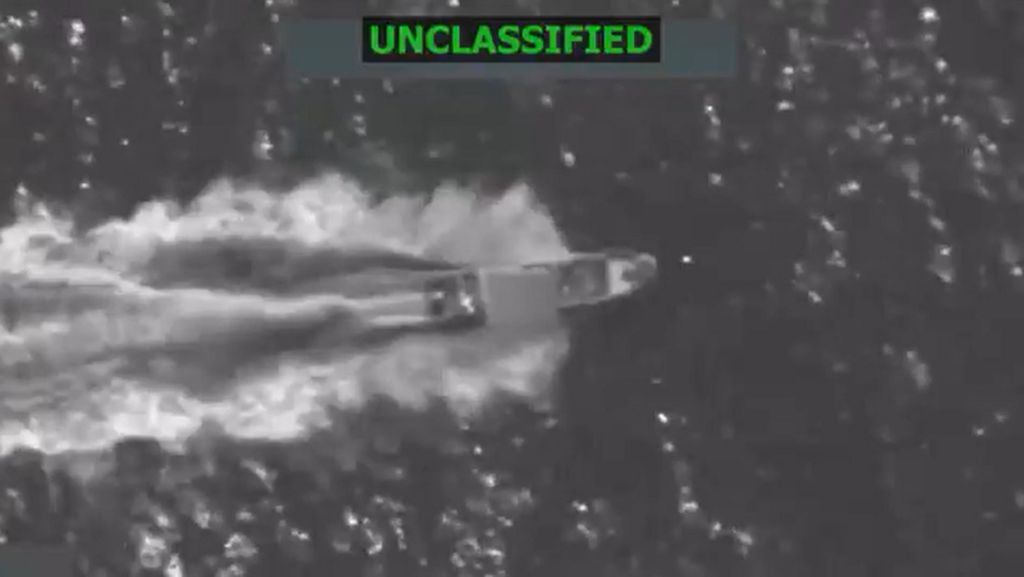
US kills three in second strike on alleged drug boat in the Pacific
In a significant escalation of its anti-drug operations, US forces have conducted a second strike in the Pacific Ocean targeting a vessel allegedly involved in drug smuggling. The strike, carried out on Wednesday, resulted in the deaths of three individuals, with no US casualties reported. This follows another strike in the Pacific a day earlier, which killed two people. Both vessels were suspected of transporting drugs along international trafficking routes, according to US Defense Secretary Pete Hegseth. These strikes mark the eighth and ninth such operations since September 2, with most previous actions concentrated in the Caribbean Sea. Hegseth emphasized the US commitment to combating narco-terrorism, stating, ‘These strikes will continue, day after day. These are not simply drug runners—these are narco-terrorists bringing death and destruction to our cities.’ A video accompanying Hegseth’s social media post appears to show a boat engulfed in flames after being struck by a US bomb, followed by a second airstrike targeting debris in the water. President Donald Trump asserted his legal authority to continue such operations in international waters, though he hinted at seeking congressional approval if the campaign expands to land targets. ‘We’re allowed to do that, and if we do (it) by land, we may go back to Congress,’ Trump stated. The administration is reportedly prepared for a broader anti-drug effort on land, which would mark a significant escalation. The strikes have already claimed at least 37 lives, including a recent attack on a semi-submersible vessel in the Caribbean. Two survivors from a strike last week were repatriated to Colombia and Ecuador, with Ecuador releasing one man due to lack of evidence. Meanwhile, tensions between the Trump administration and Colombian President Gustavo Petro have intensified, with Trump accusing Petro of being an ‘illegal drug leader’ and threatening to cut US subsidies to Colombia. Experts note that Colombia and Ecuador’s Pacific coastlines are key routes for drug trafficking to the US. While most US strikes have occurred in the Caribbean, DEA estimates suggest the Pacific is the primary conduit for cocaine bound for the US. The operation has deployed 10,000 US troops, along with numerous military assets, to the Caribbean, though details on the identities of those killed remain scarce.
-

Strong winds in New Zealand leave tens of thousands without power
New Zealand is grappling with a severe weather crisis as powerful winds reaching speeds of up to 155 km/h (96 mph) wreak havoc across the nation. The tempest has left approximately 90,000 homes without electricity and forced the cancellation of over 100 flights, according to local media reports. The meteorological service has confirmed that the entire South Island and southern regions of the North Island are bearing the brunt of the gales. Authorities have escalated the situation by issuing rare red wind warnings—the highest alert level—in central areas, including Canterbury and Wellington. Additionally, heavy rainfall warnings have been issued for the South Island. Residents have been strongly advised to remain indoors, avoid unnecessary travel, and prepare for potential power and communication disruptions. While power restoration efforts are underway, the South Island remains the most affected. Reports from local media highlight the destruction caused by the winds, with roofs torn off houses, trees uprooted, and electricity poles toppled. Tragically, a man in Wellington lost his life after being struck by a falling tree branch at a popular walking trail. In another incident, a woman was blown into oncoming traffic by a sudden gust of wind, though she survived the ordeal. The capital has seen widespread disruptions, with flights canceled, roads closed, and libraries shut down. In Canterbury, officials have declared a state of emergency to bolster disaster response efforts. The severe weather coincides with a ‘mega strike’ involving tens of thousands of teachers, doctors, and public workers demanding better pay and working conditions. However, the extreme conditions have forced some strike activities to be moved indoors or canceled. Meanwhile, Australia is also experiencing similar weather patterns, with strong winds and a heatwave sweeping through the outback, prompting authorities to implement fire bans to prevent bushfires.
-
Saudi Arabia announces new Grand Mufti, appointed by royal decree
In a significant development within Saudi Arabia’s religious leadership, Sheikh Dr. Saleh bin Fawzan bin Abdullah Al-Fawzan has been appointed as the new Grand Mufti of the Kingdom. The announcement was made by the Saudi Press Agency on Thursday, October 23, 2025, following a royal decree issued by the Saudi monarchy. Sheikh Al-Fawzan will also assume the roles of Chairman of the Council of Senior Scholars and General President of the General Presidency for Scholarly Research and Fatwa, holding the rank of Minister. This appointment marks a pivotal moment in the Kingdom’s religious governance, as the Grand Mufti plays a crucial role in issuing religious edicts (fatwas) and guiding Islamic jurisprudence in the country. The decision underscores the Saudi government’s commitment to maintaining a robust and authoritative religious framework. Sheikh Al-Fawzan, a renowned Islamic scholar, brings extensive expertise and influence to the position, which is expected to shape the Kingdom’s religious discourse in the years to come.
-
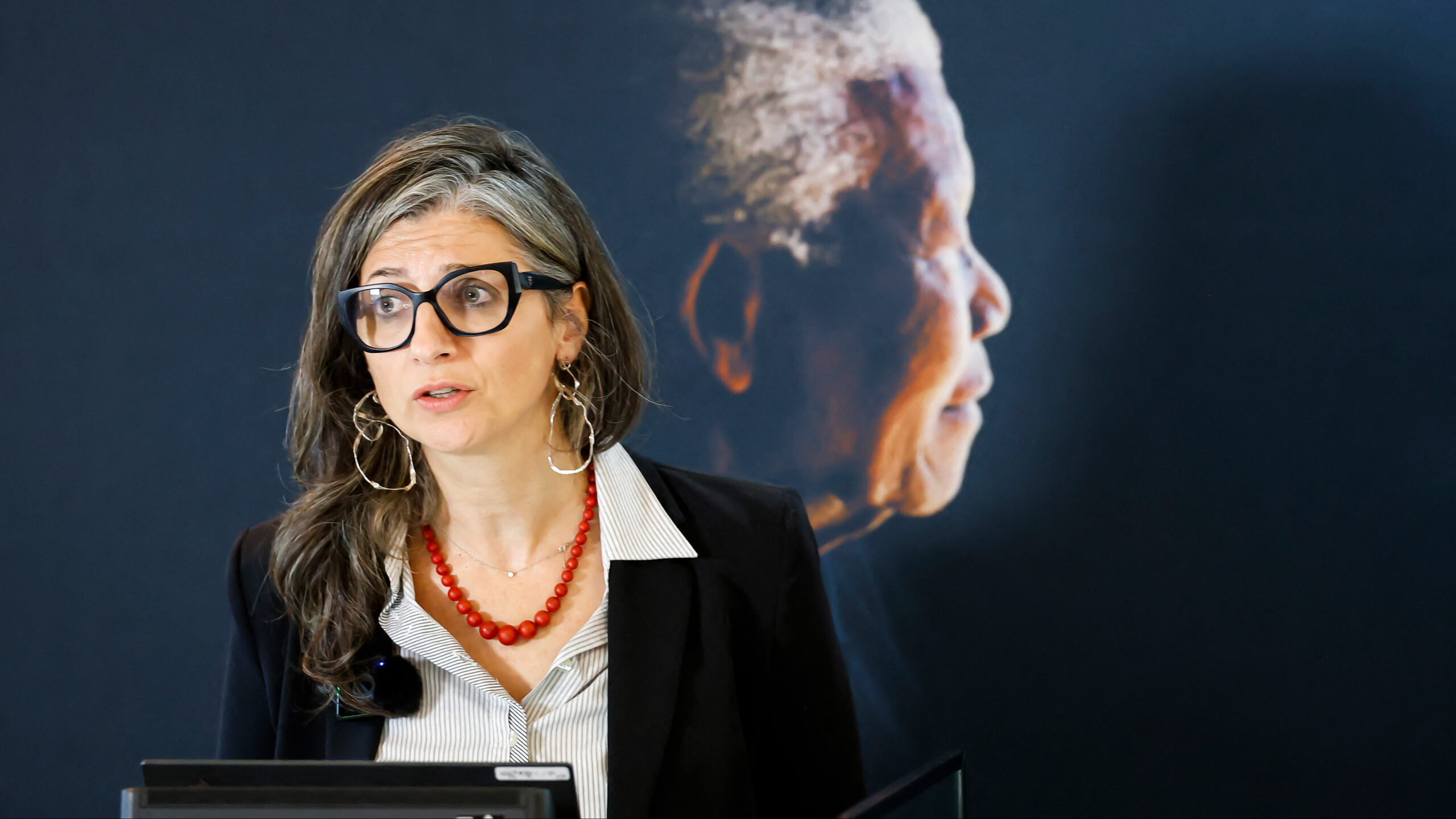
Israel’s genocide in Gaza impossible without global complicity, UN report says
A groundbreaking United Nations report has unveiled that over 60 nations are implicated in what it describes as a ‘collective crime’ enabling Israel’s genocide against Palestinians in Gaza. Authored by Francesca Albanese, the UN Special Rapporteur on the Occupied Palestinian Territories, the report was released on Monday and marks her second such analysis this year. Albanese asserts that the genocide is sustained by the complicity of influential third-party states, which have facilitated Israel’s systemic violations of international law through diplomatic, military, economic, and humanitarian support. The report highlights that without the backing of predominantly European countries, Israel would struggle to maintain its comprehensive assault on Gaza. Albanese categorizes the support into four main areas: diplomatic, military, economic, and humanitarian. She criticizes the diplomatic immunity granted to Israel and the failure to hold it accountable for international law violations, particularly in Western nations. The report also points out that Western media and political discourse have perpetuated Israeli narratives, failing to distinguish between Hamas and Palestinian civilians, and drawing on colonial tropes of Israel’s right to defend itself as a ‘civilized’ nation against ‘savages’. Albanese notes that the US has used its UN Security Council veto power seven times to control ceasefire negotiations and provide diplomatic cover for the genocide. She also highlights that the US was aided by abstentions and delays, as well as watered-down draft resolutions from countries like the UK, Australia, New Zealand, Canada, Germany, and the Netherlands. These actions have created an ‘illusion of progress’ while stymieing concrete measures. The report further criticizes Arab and Muslim states for their failure to take decisive action, with some regional players facilitating land routes to Israel, bypassing the Red Sea. Egypt, for instance, maintained relations with Israel, including energy cooperation and closing the Rafah crossing. Albanese also underscores the failures of international courts, noting that most Western countries did not support South Africa or Nicaragua before the International Court of Justice (ICJ) and continue to deny that Israel has committed genocide. Additionally, she points out that most Western countries have undermined the arrest warrants issued by the International Criminal Court (ICC) against Israeli Prime Minister Benjamin Netanyahu and other government members. The US has imposed sanctions on the ICC, and the UK has threatened to pull its funding. Despite UN resolutions calling for arms embargoes on Israel since 1976, the report notes that many countries have supplied it with military support and arms transfers throughout its genocide, with the US, Germany, and Italy being among the largest suppliers. The US currently guarantees $3.3 billion per year in Foreign Military Financing (FMF) and, until 2028, an additional $500 million per year for missile defense. Albanese also highlights the UK’s role in military cooperation with Israel, reporting on over 600 surveillance flights over Israel and intelligence-sharing with its government, suggesting ‘cooperation in the destruction of Gaza’. She notes that 26 states sent at least 10 consignments of ‘arms and ammunition’, with the most frequent being China (including Taiwan), India, Italy, Austria, Spain, Czechia, Romania, and France. Additionally, 19 countries, 17 of which have ratified the Arms Trade Treaty, were complicit in supplying components and parts for the ‘F-35 stealth strike fighter programme’ that was key to the military assault in Gaza. These include Australia, Belgium, Canada, the Czech Republic, Denmark, Finland, Germany, Greece, Italy, Japan, the Netherlands, Norway, Poland, South Korea, Romania, Singapore, Switzerland, the UK, and the US. Some of these countries continue to supply parts. While the Arms Trade Treaty does not recognize a distinction between ‘defensive’ or ‘non-lethal’ arms sales, some countries used these terms to justify arms trade to Israel. Some countries, such as Italy, the Netherlands, Ireland, France, and Morocco, permitted the transfer of weapons through their ports and airports. Albanese notes that Spain and Slovenia had canceled contracts and imposed embargoes. Other states continued to buy weapons and military technology produced by Israel, which the report says has been tested on Palestinians under occupation. Exports to the EU more than doubled during Israel’s war on Gaza and accounted for 54 percent of Israeli military exports in 2024. Under the Abraham Accords, exports to Asia and the Pacific, and Arab countries, made up 23 and 12 percent of exports, respectively. The report also states that thousands of US, Russian, French, Ukrainian, and British citizens who have served in the Israeli military have enjoyed immunity and have failed to be investigated or prosecuted for war crimes in Gaza. Albanese concludes that the maintenance of normal trade relations with Israel by various states ‘legitimizes and sustains the Israeli apartheid regime’. While Israel’s international trade in goods and services decreased from 61 percent of its GDP in 2022 to 54 percent in 2024, Albanese noted the European Union (Israel’s largest trading partner) continued to provide almost a third of total trade to Israel for the last two years. Some European countries increased their trade with Israel during the genocide against the Palestinians, such as Germany, Poland, Greece, Italy, Denmark, France, and Serbia. Arab countries, such as the UAE, Egypt, Jordan, and Morocco, also increased their trade. Only Turkey suspended trade with Israel in May 2024, although Albanese reported some trade continued indirectly. Albanese also pointed out that before the 7 October 2023 Hamas-led attacks on southern Israel, most Palestinians were dependent on aid, with the United Nations Relief and Works Agency for Palestine Refugees (UNRWA) providing the bedrock of that aid. She highlighted that when Israel alleged UNRWA staff were involved in the Hamas-led attacks without citing evidence, 18 states immediately suspended funding without investigating Israel’s claims. Despite inconclusive investigations, most donors took months to resume contributions to UNRWA. The US, its largest donor, passed a law prohibiting US funding to UNRWA. When the Israeli Knesset outlawed UNRWA, only a few states took action by seeking an ICJ Advisory Opinion. The report accuses countries like Canada, the UK, Belgium, Denmark, and Jordan of being distracted from the key issue by parachuting aid in, a move she says was both dangerous and ineffective. Albanese, who has been one of the most vocal and forceful critics of Israel’s conduct in Gaza throughout its two-year genocide, said that complicit states perpetuate ‘colonial and racial-capitalist practices that should have long been consigned to history’. ‘Even as the genocidal violence became visible, States, mostly Western ones, have provided, and continue to provide, Israel with military, diplomatic, economic and ideological support, even as it weaponized famine and humanitarian aid,’ she said. ‘The horrors of the past two years are not an aberration, but the culmination of a long history of complicity.’
-
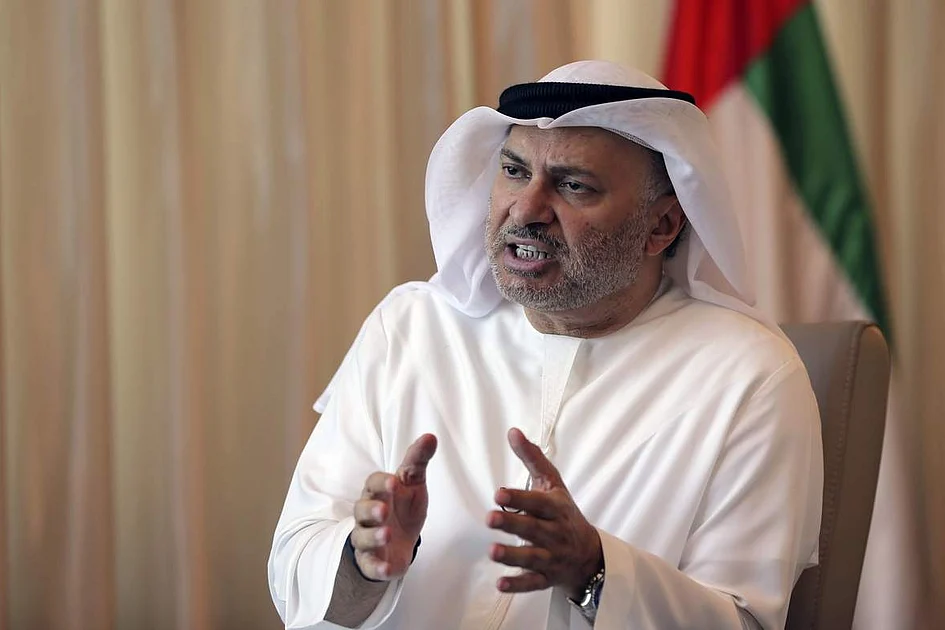
UAE calls for ceasefire in Sudan, says ready to bring aid into the country
The United Arab Emirates (UAE) has issued a strong call for an immediate ceasefire in Sudan, emphasizing the need for a civilian-led transition to secure the nation’s future. Speaking at the Reuters NEXT Gulf Summit in Abu Dhabi, Anwar Gargash, the diplomatic adviser to the UAE’s president, outlined the country’s stance on the ongoing crisis in Sudan. Gargash highlighted the UAE’s commitment to scaling up humanitarian support and its opposition to a military junta ruling Sudan. He acknowledged that the UAE’s position has drawn criticism, particularly from factions favoring military control. Gargash referenced the quartet statement, a significant diplomatic agreement in which the UAE played a pivotal role, as a testament to its dedication to peace and stability in Sudan. Despite facing obstacles in delivering humanitarian aid due to restrictive conditions in Sudan, the UAE expressed readiness to intensify its efforts once granted access. The UAE has a long history of engagement in Sudan, including supporting economic development and aiding the country’s transition during the civilian period. Gargash’s remarks underscored the UAE’s proactive role in addressing global crises and its unwavering commitment to fostering sustainable peace and development in conflict-ridden regions.
-

North Korea says latest missile tests demonstrate new hypersonic systems
North Korea announced on Thursday that it had successfully tested new hypersonic missile systems, aimed at enhancing its nuclear deterrent capabilities. The tests, conducted under the supervision of leader Kim Jong Un, are part of an ongoing effort to develop advanced weapons capable of penetrating South Korea’s missile defenses. According to the Korean Central News Agency (KCNA), the launches involved two hypersonic projectiles that precisely struck a land target in the country’s northern region. The agency described the system as ‘strategic,’ suggesting its potential for nuclear armament. The tests occurred just days before global leaders, including U.S. President Donald Trump and Chinese President Xi Jinping, are set to convene in South Korea for the Asia-Pacific Economic Cooperation (APEC) meetings. This timing has led analysts to speculate that North Korea may be seeking to assert its military prowess on the international stage. The latest tests follow a massive military parade in Pyongyang earlier this month, where Kim showcased new weaponry, including a short-range ballistic missile system equipped with hypersonic glide vehicles. Experts have noted that hypersonic weapons, which travel at speeds exceeding five times the speed of sound, are designed to evade missile defense systems. However, questions remain about the consistency of their performance in real-world scenarios. Pak Jong Chon, a senior military official, praised the ‘new cutting-edge weapon system’ and emphasized North Korea’s commitment to bolstering its defense capabilities. The tests also come amid stalled diplomatic efforts between North Korea and the United States, with Kim demanding the lifting of economic sanctions as a precondition for talks. South Korean President Lee Jae Myung, who took office in June, has called for dialogue to restore peace on the Korean Peninsula, but Kim has so far rejected these overtures. Analysts suggest that North Korea’s recent missile tests may be a strategic move to reinforce its position as a nuclear power ahead of key international gatherings.
-
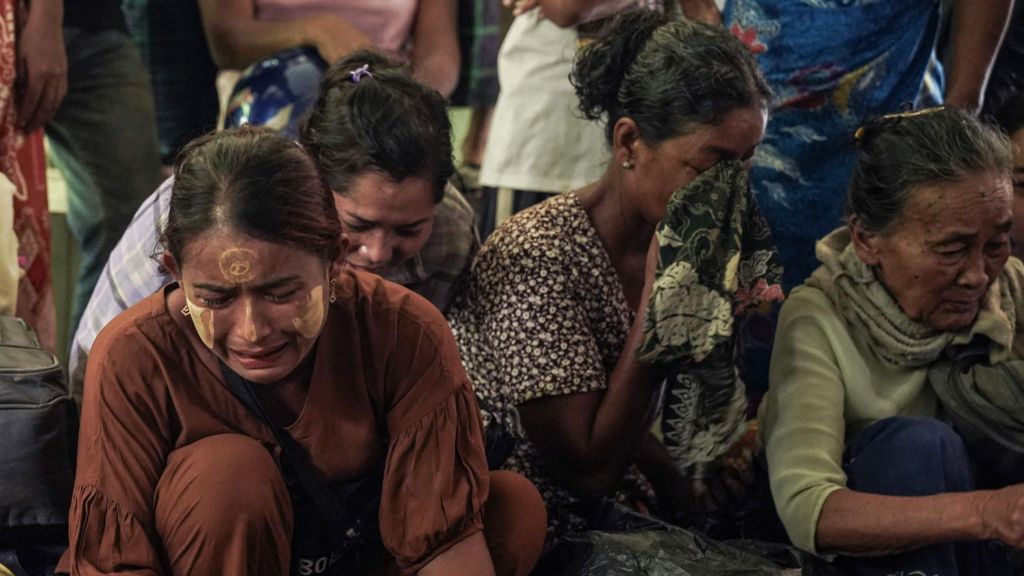
Myanmar’s army is taking back territory with relentless air strikes – and China’s help
The strategic town of Kyaukme, a vital trade route linking the Chinese border to Myanmar’s interior, has become a microcosm of the nation’s protracted civil war. After months of intense fighting, the Ta’ang National Liberation Army (TNLA) seized control of Kyaukme in late 2023, marking a significant victory for the opposition. However, the junta’s swift recapture of the town in just three weeks this month underscores a dramatic shift in the military balance, favoring the regime. Kyaukme’s devastation, with large areas flattened by relentless air strikes, highlights the heavy toll of the conflict. The junta’s use of advanced drones, motorized paragliders, and Chinese-supplied aircraft has intensified its offensive, causing significant civilian casualties and forcing many to flee. The TNLA’s retreat from Kyaukme and Hsipaw, another key town, signals the junta’s growing dominance, bolstered by China’s support for its plan to hold elections in December. This election, widely criticized for excluding Aung San Suu Kyi’s National League for Democracy, is seen as a bid to legitimize the regime. China’s backing, including technical and financial aid, has been pivotal in the junta’s resurgence. Meanwhile, the fragmented opposition, comprising poorly-armed local militias and ethnic insurgent groups, struggles with internal divisions and lack of central leadership. Despite initial successes, such as Operation 1027 in 2023, the opposition’s momentum has waned. The junta’s forced conscription drive has replenished its ranks, while China’s tightening of border controls and export bans on dual-use products have crippled the resistance’s access to drones and other critical supplies. As the junta regains control of strategic areas, the prospects for a political resolution remain bleak, with the legacy of violence and destruction casting a long shadow over Myanmar’s future.
-
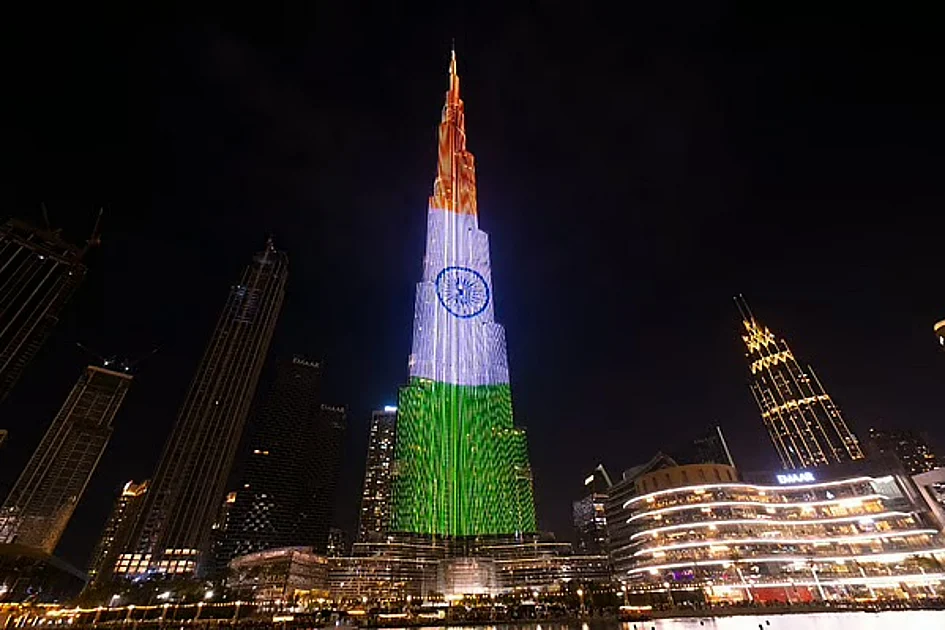
Inclusive India: The world’s largest laboratory of harmony
In a world often divided by identity, India emerges as a beacon of unity, demonstrating that diversity, when embraced with confidence, can be a source of strength rather than conflict. With a population exceeding 1.4 billion, India is a mosaic of over 19,000 dialects, multiple religions, and thousands of festivals, all unified under a single Constitution that guarantees liberty, equality, and fraternity. This is not merely a political slogan but a lived reality, evident in the daily interactions across its streets, classrooms, and places of worship. India’s secular ethos, deeply embedded in its civilizational DNA, predates modern concepts of multiculturalism. From the teachings of Buddha at Sarnath to Emperor Ashoka’s edicts, and from Akbar’s Din-i-Ilahi to Mahatma Gandhi’s pluralism, India’s inclusive spirit has thrived through the ages. Today, as societies worldwide grapple with polarization, India’s example, alongside that of the United Arab Emirates, illustrates how faith, identity, and modern statehood can coexist harmoniously. India’s secularism is not the rejection of religion but the equal respect for all faiths, encapsulated in the principle of Sarva Dharma Sambhava. This approach has ensured that India remains a sanctuary for every religion, from Hinduism and Islam to Christianity, Sikhism, Buddhism, Jainism, Judaism, and Zoroastrianism. The country’s history of sheltering persecuted communities, such as Jews fleeing Roman oppression and Zoroastrians escaping Iran, underscores its enduring commitment to inclusivity. In contemporary India, this tradition persists through initiatives like the Prime Minister’s visits to interfaith sites and joint celebrations of festivals across religions. India’s inclusivity is most visible in everyday life, from Muslim artisans crafting Hindu idols in Kerala to gurdwaras serving langars to people of all faiths in Punjab. Even in the digital age, Indian pluralism adapts creatively, with social media campaigns promoting unity and civic pride. Recent institutional initiatives, such as the Kashi-Tamil Sangamam and the Bharat Mandapam for the G20, further reinforce India’s commitment to diversity. The peaceful coexistence of the new Ram Temple in Ayodhya and adjacent Muslim cultural centers exemplifies India’s ongoing pursuit of harmony. India’s multicultural harmony resonates with the United Arab Emirates, another modern state that has successfully integrated faith, progress, and inclusivity. Both nations, rooted in ancient civilizations, demonstrate that progress need not erase identity. The UAE’s Abrahamic Family House in Abu Dhabi, housing a mosque, church, and synagogue, mirrors India’s inclusive vision. The strong cultural and diplomatic ties between India and the UAE, driven by shared values, highlight the potential of pluralism in fostering global harmony. As nations worldwide confront social divisions, India’s inclusive experiment offers a template for coexistence, proving that true strength lies in the symphony of differences harmonized by respect.
-

With eyes toward shared development, Mayor’s forum kicks off in Zhengzhou
The Global Mayors Dialogue Zhengzhou & 2025 International Mayor’s Forum on Tourism commenced in Zhengzhou, the capital of Henan province, on Wednesday. This four-day event, running until Saturday, has gathered approximately 300 participants, including mayors from sister cities and tourist destinations, diplomats, scholars, and travel industry representatives. The forum aims to establish a platform for high-level dialogue and shared development, attracting mayors and experts from across China and abroad to analyze urban challenges, discuss viable solutions, and promote the sustainable growth of global tourism. This year’s theme, ‘Preserving the Cultural Legacy of Ancient Capitals and Driving Urban Renewal,’ seeks to harmonize cultural preservation with urban development. The event features an opening ceremony, thematic dialogues, and site visits. The Global Mayors Dialogue has previously been hosted in cities like Hangzhou, Shanghai, and Dunhuang. By facilitating the exchange of best practices among city leaders, the forum fosters international trust and mutual understanding between countries and cities.