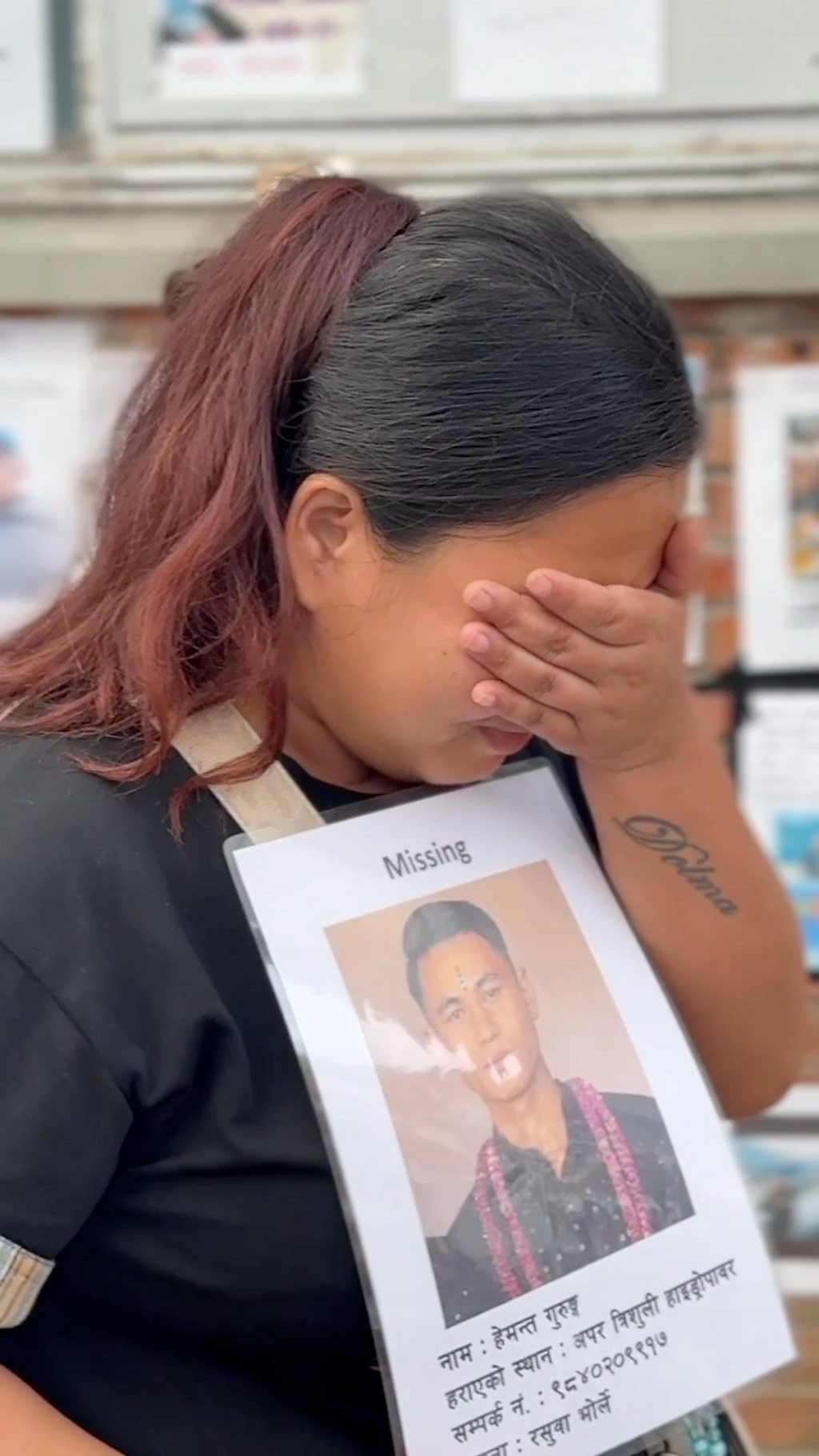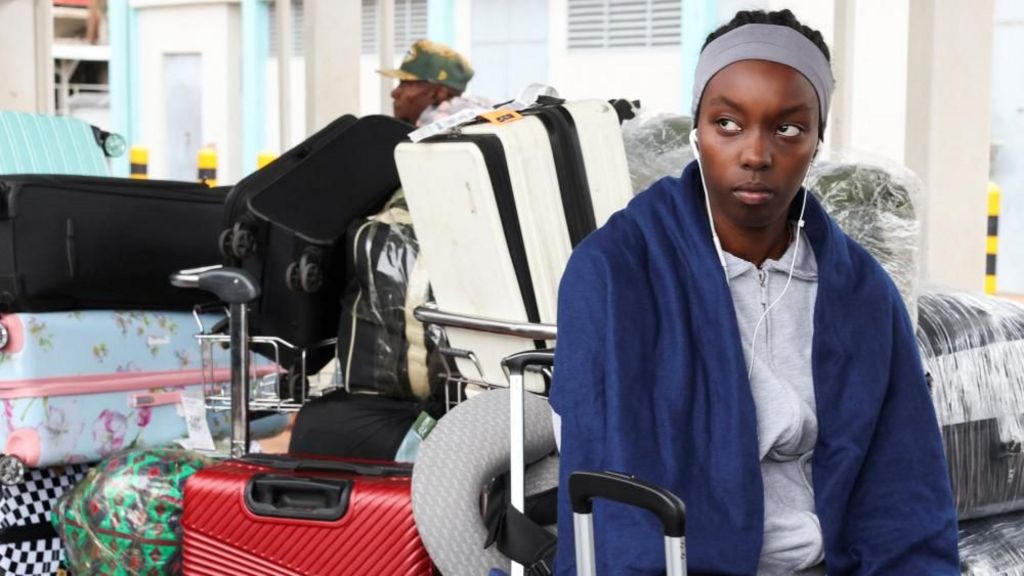
At the Torkham border crossing, dubbed “Zero Point” between Pakistan and Afghanistan, the air shimmers with 41-degree Celsius heat that hangs heavy over a sprawling makeshift transit camp of tattered tarpaulin and plastic shelters. Here, one chapter of displacement closes for millions of Afghans, and another, far more uncertain, begins. Among the first to step across the frontier this week was 35-year-old Nazia, who had lived her entire life in Pakistan, where she was born to a displaced Afghan family. Minutes after crossing into a country she had never seen, she carried a faint sense of bittersweet relief: “It feels good to be in my own country,” she said, her two young children clinging to her hands as she walked toward Taliban-run registration counters draped in the movement’s black and white flag. But the relief quickly faded. “Many people here don’t even have enough bread to eat,” she sighed. Nazia is far from alone. Nearly her entire extended family—eight sisters and all their children—have been deported to Afghanistan from Pakistan and Iran this year alone, part of the largest cross-border population movement on the planet today.
For decades, millions of Afghans fled decades of conflict, invasion, and political upheaval to seek refuge and work in neighboring Pakistan and Iran. After the Taliban seized control of Kabul in August 2021, that outflow accelerated, swelling the population of Afghan migrants in the two neighboring states to more than 8 million combined. But in recent years, both countries have launched sweeping crackdowns targeting undocumented Afghan migrants, and those operations have expanded far beyond unregistered people to include even Afghans with official refugee documentation, the United Nations and human rights organizations confirm. Pakistan has publicly acknowledged that even holders of longstanding Proof of Registration cards are not exempt from deportation, and there is no sign the expulsions will slow.
By the end of August this year, more than 1 million Afghans had already been forcibly repatriated from Pakistan and Iran, according to the Office of the United Nations High Commissioner for Refugees (UNHCR). “In a little under three years, we’ve seen six million people return to Afghanistan—That is the size of an entire small country,” said Charlie Goodlake, UNHCR’s Afghanistan spokesperson, speaking from the baking heat of the border transit camp. “We have never documented a return movement of this scale in recent modern history,” he emphasized.
Many returnees have not set foot on Afghan soil for generations. 60-something Sarwar, who crossed the border just days earlier in a convoy of 40 family members packed into a rickety Pakistani lorry along with all their worldly possessions, left Afghanistan during the 1979 Soviet invasion, and all seven of his brothers were born and raised in Pakistan. “We built a life there over 45 years. It’s heartbreaking to be forced out of the home you knew,” he said. Still, like nearly every other returnee the BBC spoke with at the crossing, he shared a small silver lining: “I’m happy to be free of constant harassment by Pakistan’s police.” Every family interviewed by the BBC reported systemic prejudice and arbitrary harassment at the hands of Pakistani authorities. Pakistan’s government has not responded to formal requests for comment from the BBC, but a foreign ministry spokesperson told a recent Islamabad briefing that the government “undertakes necessary measures to prevent any instance of harassment or maltreatment of Afghan nationals. If such incidents occur, they are sporadic and dealt with fully in accordance with the law.”
The crackdown gained new momentum after a major escalation in cross-border fighting between Pakistan and the Taliban-led Afghan government in October 2024. In February 2025, Human Rights Watch documented widespread human rights abuses including door-to-door raids, late-night warrantless home searches, and arbitrary mass arrests. In Iran, which has hosted more than 4 million undocumented Afghans in recent years, mass deportations accelerated sharply after the 12-day 2025 war between Iran, Israel, and the United States. The New York-based Centre for Human Rights in Iran has accused Iranian authorities of leveraging post-war national security tensions to target Afghan migrants, branding many as potential Israeli spies and detaining hundreds on baseless espionage charges.
Both Pakistan and Iran have defended their deportation campaigns, arguing that it is long past time for Afghans to return to their home country. They claim that a portion of Afghan migrants pose domestic security risks, and that the large migrant population places an unsustainable financial strain on national infrastructure and social services. The UN has long maintained that any repatriation of refugees must follow core humanitarian principles: it must be voluntary, safe, and dignified. For the tens of thousands of Afghans now arriving at the border every month, none of those conditions hold.
Inside the sweltering transit tent at Torkham, 40-year-old Zarina—who crossed with her family just days earlier as part of this year’s 1 million returnees—sits huddled with a group of other anxious women and children. She summed up the precarious future that waits for most arrivals: “We have no money to start a business, no way to earn a living, and we don’t even have a tent to put up to call our own.” When asked if she fears for the future of her daughters, who will be barred from secondary school and university under Taliban edicts, she gestured to the cluster of young girls beside her: “Look at them. Of course I’m worried.”
For some returnees, that worry curdles into outright terror. A former Afghan government security guard, who was first deported from Iran then pushed across the border from Pakistan, spoke to the BBC from a safe house hundreds of kilometers from the border, asking to remain anonymous for his protection. “None of us leave the house anymore. My wife and children are too afraid to even go outside,” he said. He rejected the amnesty the Taliban announced immediately after seizing power in 2021, which promised no retaliation against former government officials, security personnel, and civil servants. “I do not trust their amnesty. So many of my former colleagues have been killed,” he said. He had registered his case with the UN for resettlement to a third safe country, but was deported before his application could be processed.
Widespread systemic financial collapse amplifies every other crisis. Deep global cuts to foreign aid have hit Afghanistan particularly hard, as the Taliban government remains locked out of the global financial system by sweeping US and European sanctions tied to terrorism and human rights abuses. While Pakistan recently announced a temporary 16,000-person exemption from deportation for vulnerable Afghans on humanitarian grounds—a move the UN has welcomed—UN and independent sources estimate that as many as 250,000 Afghans currently living in Pakistan remain at severe risk of harm if deported, including thousands of women and girls who face systematic exclusion from education and public life under Taliban rule.
In Kabul, at the walled, tree-lined foreign ministry compound, Taliban Foreign Minister Amir Khan Muttaqi struck a defiant, optimistic tone when asked about the crisis. “There is no doubt we need international support,” he admitted. “The mass return does create pressure right now, but in the long run, this will benefit both the returnees and Afghanistan.” This marks a shift from the early days of Taliban rule, when some officials downplayed the unfolding humanitarian crisis and claimed divine provision would meet the population’s needs. Today, the UN estimates that 21.9 million Afghans—nearly half the country’s entire population—require life-saving humanitarian assistance this year just to survive. UNICEF warned last week that 1 million Afghan children face life-threatening severe acute malnutrition.
“No country in the world could handle a crisis of this scale on its own,” Goodlake said, while acknowledging that the Taliban government has taken limited steps to accommodate arriving returnees. But he added a key caveat: “We also know that many of the restrictions and edicts the Taliban has put in place, particularly those limiting the rights of women and girls, make it far harder for us to mobilize the international support this crisis demands.”
Muttaqi has repeatedly defended the Taliban’s restrictive gender policies as internal Afghan affairs that do not require international interference. Those policies have left the Taliban diplomatically isolated: five years after seizing power, only Russia has formally recognized the Taliban government. Muttaqi pushed back on that isolation, pointing to deepening economic and diplomatic ties with neighboring powers including China, India, and Central Asian states. When asked about the lack of formal relations with Western nations, he answered with a blunt question of his own: “What have those who refused to engage with us over the past five years achieved?” He answered immediately: “Nothing.”
That same word “nothing” echoes across the Torkham crossing, but in a far grimmer context. Every family arriving at Zero Point carries with them only the few possessions they could pack onto a lorry, and they leave behind the lives they built over decades. For millions, the long-awaited “homecoming” is actually the start of rebuilding everything from scratch—with almost nothing.