分类: world

  • Ethiopia and Sudan accuse each other of attacks

    Ethiopia and Sudan accuse each other of attacks

    Fresh cross-border accusations have sent already strained relations between Ethiopia and Sudan into a dangerous new phase, with Khartoum leveling claims of direct military aggression involving the United Arab Emirates that Addis Ababa has roundly rejected. On Tuesday, the neighboring nations traded blistering allegations of territorial incursions and support for hostile insurgent groups, a escalation that analysts warn is deepening the overlap between the two countries’ ongoing internal conflicts and drawing outside powers into an increasingly volatile regional crisis. Sudan, which has been gripped by a brutal civil war between the national army and the Rapid Support Forces (RSF) paramilitary since 2023, has faced expanding conflict that has pushed against its border with Ethiopia, which itself grapples with multiple active insurgencies across its territory. Experts warn these parallel conflicts are merging, creating risks of a wider regional confrontation.

    The latest exchange of accusations opened with a public statement from Ethiopia’s foreign ministry, released via the social platform X from its Addis Ababa headquarters. The ministry claimed that Sudan’s regular army has become a logistics and training hub for anti-Ethiopia factions, specifically providing weapons and funding to mercenary fighters aligned with the Tigray People’s Liberation Front (TPLF). The TPLF waged a two-year civil war against Ethiopia’s federal government that ended in 2022, but tensions between the group and national authorities remain unresolved. The Ethiopian statement also accused TPLF fighters of operating as mercenaries inside Sudan in exchange for Sudanese backing for cross-border raids into Ethiopia’s western frontier.

    Senior TPLF official Amanuel Assefa quickly dismissed the federal government’s claims in comments to AFP, denying any official connection to Sudanese authorities and arguing that the Addis Ababa government is scapegoating external actors to distract from its own policy failures.

    Hours before Ethiopia released its accusations, Sudan had already announced it would recall its ambassador to Addis Ababa for urgent consultations following a series of alleged drone strikes. At a Khartoum press conference, Sudanese army spokesperson Assim Awad made the unprecedented allegation that drone attacks targeting Sudanese army positions were launched from Ethiopian territory in direct collaboration with the United Arab Emirates, a claim that adds a new international dimension to the ongoing Sudanese conflict.

    The UAE is widely perceived as the primary foreign backer of the RSF, the paramilitary group fighting to overthrow Sudan’s civilian-military government, though it has repeatedly denied all allegations of military support. Awad told reporters that Khartoum holds conclusive evidence linking UAE-manufactured drones launched from Ethiopia’s northeastern Bahir Dar airport region to strikes on Sudanese army positions across multiple states on March 1 and March 17. He added that drone attacks originating from the same base have targeted sites in Khartoum since last Friday, including Khartoum International Airport on Monday. To back the claims, Awad said data recovered from a drone shot down over El-Obeid, capital of North Kordofan state, confirms the aircraft belonged to the UAE and took off from Bahir Dar.

    “Based on this documented evidence, we affirm that what the two states of Ethiopia and the United Arab Emirates have carried out constitutes direct aggression against Sudan and will not be met with silence,” Awad stated, adding that Sudanese armed forces have been placed on the highest level of operational readiness. At the same press conference, Sudan’s army-aligned foreign minister Mohieddin Salem went further, saying Khartoum is fully prepared to enter into an open military confrontation with Ethiopia if the situation requires it.

    Ethiopia’s foreign ministry immediately dismissed Sudan’s allegations as completely baseless, marking the second time in recent months it has denied claims of facilitating attacks from its territory. Back in March, the Sudanese military first made public claims that drone attacks were launched from inside Ethiopian territory, a charge Addis Ababa rejected at that time, along with repeated claims that it hosts RSF or UAE military personnel on its soil. The UAE has also yet to respond to AFP’s request for comment on the latest round of accusations.

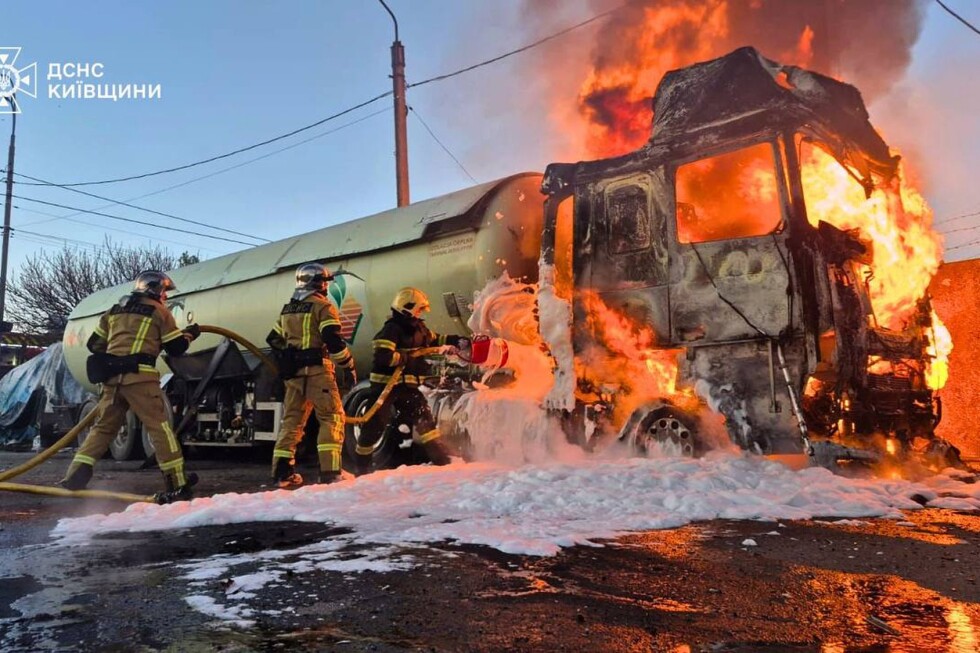
    Beyond the high diplomatic standoff, drone attacks across Sudan have intensified in recent months, carried out by both the Sudanese army and the RSF. On Tuesday, a drone strike hit a civilian fuel station in Kosti, White Nile state, around 300 kilometers south of Khartoum, killing three civilians and wounding two more, according to security and medical sources speaking to AFP. Last year, the RSF launched a wave of drone strikes across Khartoum that mostly targeted military infrastructure, power grids and water facilities. After a period of relative calm in the capital over recent months, attacks resumed last week: five civilians were killed in southern Omdurman, across the Nile from central Khartoum, and a hospital in the southern Jebel Awliya district was damaged.

    According to militia sources speaking to AFP, a Sunday RSF drone strike targeted the home of Abu Aqla Kaykal, commander of the army-aligned Sudan Shield Forces in central Sudan, killing nine of his relatives. Kaykal, a former RSF commander who defected to the Sudanese army in October 2024, has led recent government offensives that recaptured large swathes of central Sudan, including parts of Al-Jazirah state and sections of Khartoum. Just last week, another senior RSF commander, al-Nour al-Guba, also defected and was received in Khartoum by army chief Abdel Fattah al-Burhan, in what is seen as a major boost for government forces. Despite these small gains, active fighting continues across most of Sudan, including the war-torn western region of Darfur and southern Kordofan. The conflict has recently spread into southeastern Blue Nile state, which borders both Ethiopia and South Sudan, stoking international fears of a prolonged, fragmented conflict that could destabilize the entire Horn of Africa region.
  • Zambia blasts the US over a $2 billion health deal in exchange for critical minerals

    Zambia blasts the US over a $2 billion health deal in exchange for critical minerals

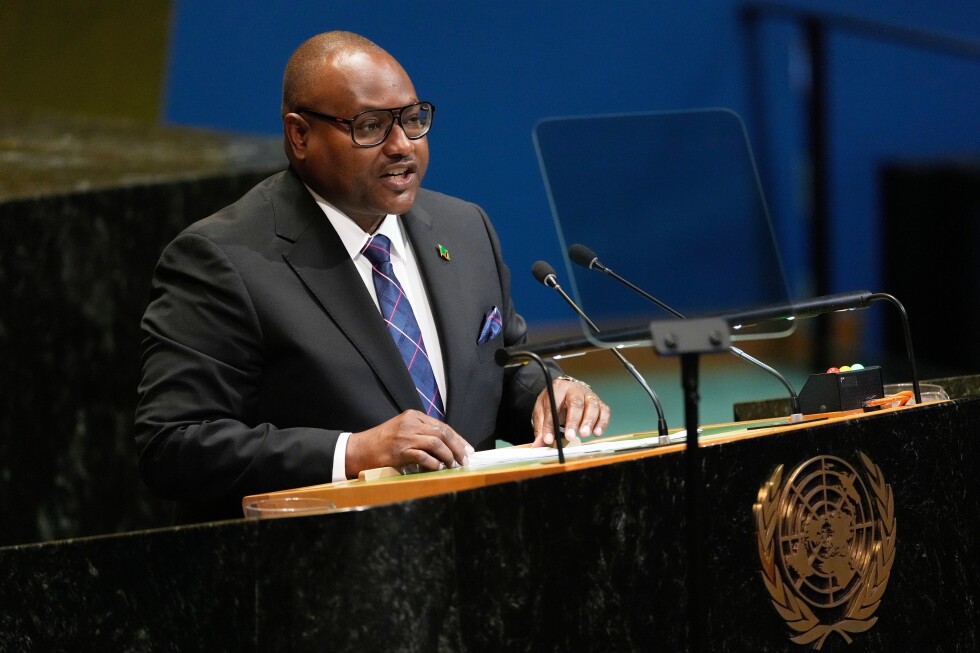
    Diplomatic tensions between Zambia and the United States have boiled over into public view, as Lusaka accuses Washington of linking a $2 billion critical health assistance package to preferential access to Zambia’s strategic mineral reserves — reserves that are central to the global green energy transition. The escalating row also exposes growing pushback across Africa against the Trump administration’s new “America First” aid framework, which has redefined traditional development support as transactional deals weighted toward U.S. commercial and geopolitical interests.

    In a sharply worded statement released Monday, Zambian Foreign Affairs Minister Mulambo Haimbe pushed back against outgoing U.S. Ambassador Michael Gonzales, who had publicly accused Zambian leaders of rampant corruption and negotiation gridlock that had derailed the aid talks. Haimbe dismissed Gonzales’ claims as “mischievous, deeply regrettable and undiplomatic,” saying the allegations violate longstanding norms of mutual respect between sovereign nations. He clarified that negotiations have been stalled for months not because of Zambian intransigence or graft, but because of two non-negotiable U.S. demands Zambia finds unacceptable: intrusive data-sharing requirements that violate Zambian citizens’ right to privacy, and an insistence that U.S. companies receive preferential treatment for access to Zambia’s critical mineral reserves.

    Zambia’s position is clear, Haimbe added: the southern African nation retains full sovereignty over its natural resources, and no single strategic partner will receive preferential treatment over others. The U.S. has rejected Zambia’s accusations, with Gonzales calling the claims of a mineral-for-aid link “absolutely and patently false” and “disgusting.” The U.S. Embassy in Zambia has not yet issued an official response to Haimbe’s latest remarks.

    The dispute is not an isolated incident: it is the most high-profile example of growing pushback against the Trump administration’s complete overhaul of U.S. foreign aid policy. The administration has dismantled longstanding aid architectures including the United States Agency for International Development and the global AIDS relief program PEPFAR, replacing them with bilateral country-by-country agreements that frame aid as a reciprocal transaction. Under the new model, U.S. health funding is tied to a series of strict conditions, including commercial concessions, mandatory domestic spending commitments, broad disease surveillance access, pathogen sharing, and even religious provisions. As of mid-2000s, Washington has secured agreements with roughly 30 countries, most of them in aid-dependent African nations.

    U.S. officials defend the framework as a pragmatic shift that reduces long-term donor dependency, empowers local governments to take ownership of their health systems, and protects core U.S. interests — most notably countering China’s growing economic and political influence across the African continent. China is already a dominant infrastructure and trade partner in Zambia and many other African countries, and Washington has made it a priority to secure alternative access to African minerals critical for manufacturing solar panels, electric vehicle batteries, and grid energy storage systems, key components of the global transition to clean energy.

    But African governments and global health experts have raised widespread alarm about the new model, with multiple nations already rejecting or pausing proposed deals over unacceptable terms. Last week, Ghana turned down a drafted agreement over the lack of safeguards for sensitive public health data. Zimbabwe previously walked away from a $367 million aid package over identical concerns. In Kenya, a $2.5 billion agreement signed last December remains frozen after a court challenge argued it violates national data protection legislation. In Lesotho, local negotiators only managed to reduce a U.S. demand for 25 years of unrestricted access to health data and biological samples down to a five-year term.

    Critics warn that the data-sharing provisions disproportionately benefit U.S. interests, with information flowing almost exclusively one-way to Washington. Following the U.S. withdrawal from the World Health Organization in January, the country abandoned multilateral global pathogen-sharing and vaccine access negotiations currently led by the WHO, and is instead pursuing direct bilateral access to disease surveillance data and biological samples from African nations. Health advocates warn this approach risks creating a fragmented parallel global health system that undermines multilateral coordination. In Zimbabwe’s earlier rejected deal, government officials noted the U.S. offered no guarantee that Zimbabwe would gain access to future medical innovations such as vaccines, diagnostics, or treatments developed using the shared data and samples. This echoes the inequitable experience of the COVID-19 pandemic, when many African nations contributed critical data and viral samples but were last in line to access life-saving vaccines.

    The closed-door negotiation process for the new deals has also drawn fire for a lack of transparency and public accountability. “Secrecy is at the center of this. That puts accountability for results at risk,” said Asia Russell, executive director of global health advocacy group Health GAP. “It’s impossible to evaluate these deals properly without seeing the full terms. Part of what made PEPFAR successful was transparency. Now that’s been taken away.”

    Beyond data and transparency concerns, the new agreements carry stricter financial terms: most offer lower overall funding than previous U.S. assistance programs, while requiring recipient nations to increase domestic health spending, with total funding at risk if domestic targets are not met. “These are going to be very heavy lifts,” said Jen Kates, senior vice president at U.S.-based non-profit health policy organization KFF. “Countries are already under strain.”

    Critics ultimately warn that tying life-saving health support to commercial and geopolitical goals erodes global health security for all nations. “When health becomes a bargaining chip, everyone becomes less safe,” Russell warned.

  • Zelensky condemns Russian ‘utter cynicism’ as it strikes ahead of truce

    Zelensky condemns Russian ‘utter cynicism’ as it strikes ahead of truce

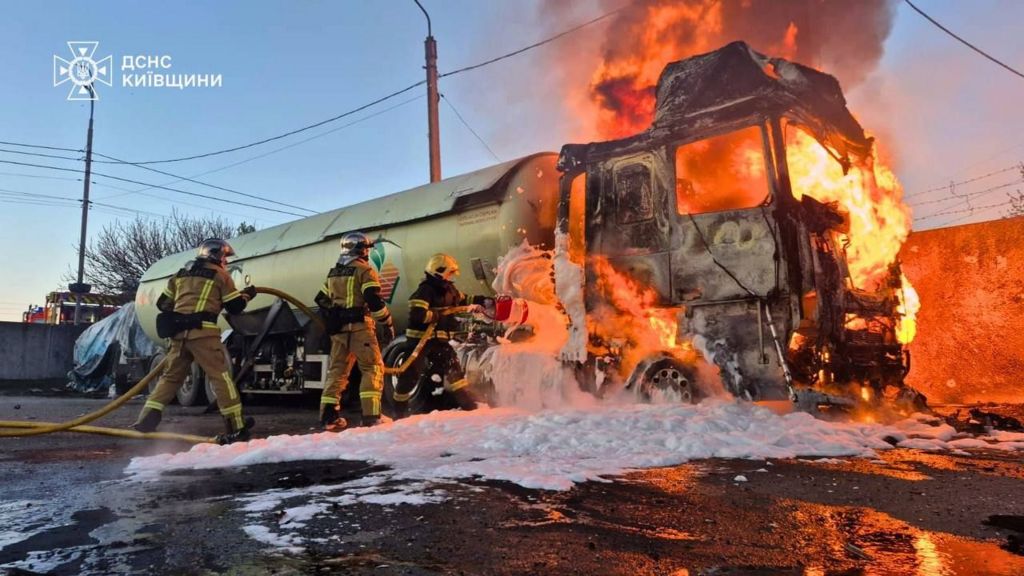
    In a dramatic escalation of hostilities just days before competing unilateral ceasefires are set to take effect, overnight combined Russian missile and drone attacks across Ukraine have left five civilians dead and dozens more injured, drawing sharp condemnation from Ukrainian President Volodymyr Zelensky, who blasted Moscow’s actions as brazen political cynicism.

    The violence erupted as both sides moved to announce unilateral truce plans tied to Russia’s upcoming May 9 Victory Day celebrations, which mark the Soviet Union’s defeat of Nazi Germany in World War II. Russia first announced a 36-hour ceasefire to run May 8-9, threatening a devastating massive missile strike on central Kyiv if Ukraine violated the pause. Kyiv responded by announcing its own open-ended ceasefire set to begin at midnight May 6, stating it would match Moscow’s actions symmetrically and urging Russia to embrace genuine diplomatic negotiations to end the conflict.

    Zelensky condemned the timing of the latest deadly strikes, arguing that Russia’s request for a wartime lull to host its state propaganda celebrations is made hollow by daily attacks in the lead-up to the holiday. “It’s utter cynicism to ask for silence to hold propaganda celebrations and to launch such missile-drone attacks every day beforehand,” Zelensky said in remarks following the attacks. In a post on his Telegram channel, he added, “We believe that human life is of incomparably greater value than the ‘celebration’ of any anniversary,” and called on Russia to lay down its arms and enter good-faith peace talks.

    Analysts view Ukraine’s open-ended truce offer as a strategic move to frame Kyiv as willing to pursue an immediate, lasting end to hostilities, shifting all blame for any future truce violations to Russia. Unlike a mutually negotiated ceasefire, both plans announced this week are unilateral, with no agreement reached between the warring parties on terms, duration, or international monitoring of the pause.

    Even as the ceasefire plans were announced, Ukraine carried out its own wave of deep-strike aerial attacks on Russian territory ahead of its truce taking effect. The strikes targeted an industrial zone in Kirishi, located in Russia’s Leningrad region, and a military component manufacturing factory in Cheboksary, in the Chuvash Republic roughly 1,500 kilometers from the front lines of the war. Zelensky confirmed that Ukraine used domestically produced Flamingo cruise missiles for the Cheboksary strike, and an unverified nighttime video circulating online shows a fast-moving aerial object followed by a large explosion at the site.

    Russia’s defense ministry quickly issued a statement claiming it had downed six Ukrainian Flamingo missiles alongside 601 Ukrainian drones across Russian territory. On Tuesday morning, all three of Moscow’s major commercial airports were forced to temporarily suspend operations amid drone threats, and Moscow Mayor Sergei Sobyanin later confirmed that four Ukrainian drones had been intercepted and downed near the capital.

    The latest exchange of strikes comes amid clear signs of rising nervousness in the Kremlin ahead of this year’s Victory Day celebrations. Since Vladimir Putin rose to power in the early 2000s, the May 9 parades have grown increasingly large and elaborate, serving as a major showcase of Russian national pride and military power. This year, however, the Kremlin announced that the iconic Red Square central parade would be significantly scaled back, with all heavy military hardware pulled from display, citing what it calls a “terrorist threat” from Ukraine. Russian officials have also warned Moscow residents that mobile internet access will be limited or fully cut off across parts of the capital in the days leading up to May 9.

    Zelensky seized on the scaled-back celebrations to argue that Russia’s need for a Ukrainian ceasefire to hold its holiday event exposes the weakness of the Kremlin’s position. “The fact Russia felt it couldn’t hold a parade in Moscow without the goodwill of Ukraine [to observe a ceasefire] meant that it was time for Russian leaders to take steps to end their war,” he said.

    Ukraine has ramped up its long-range deep-strike drone campaign against Russian targets in recent weeks, with repeated successful attacks on Russian energy infrastructure and oil refineries that have disrupted portions of Russia’s key oil export trade. Modern Ukrainian drones are now capable of flying hundreds of kilometers deep into Russian territory, often bypassing Russian air defense systems: just on Monday, one Ukrainian drone struck a high-rise residential building in central Moscow, causing damage and raising alarm among Russian urban residents.

    For its part, Russia has continued its steady campaign of strikes against Ukrainian civilian infrastructure and population centers, which have killed and maimed thousands of Ukrainian civilians since the full-scale invasion began in February 2022, with civilian casualties reported across the country on an almost daily basis.

  • Sudan accuses Ethiopia and UAE of orchestrating drone attacks on airport

    Sudan accuses Ethiopia and UAE of orchestrating drone attacks on airport

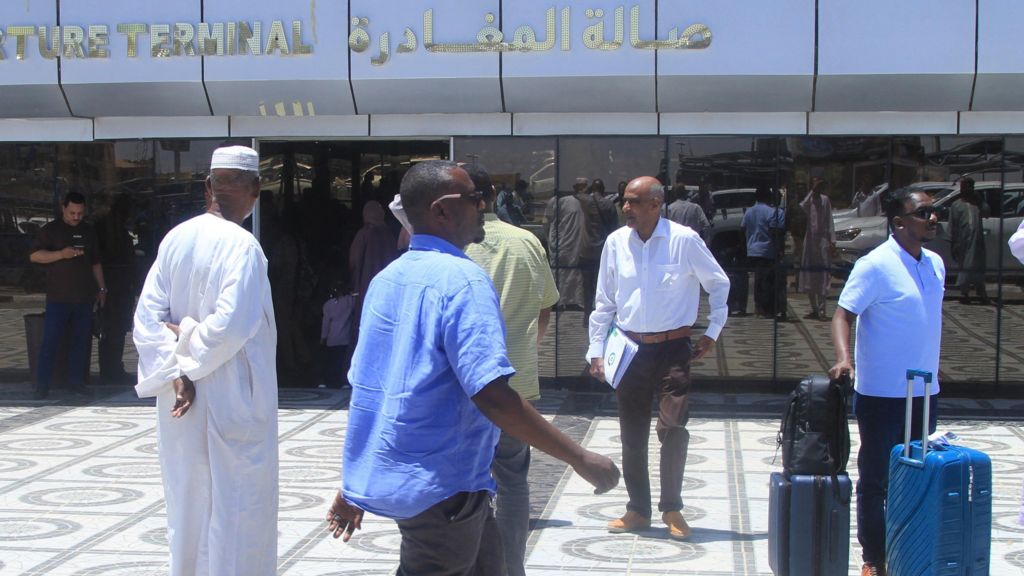
    A brazen drone strike on Sudan’s primary international gateway in Khartoum has ignited a sharp diplomatic row, with the Sudanese government formally accusing neighboring Ethiopia and the United Arab Emirates of orchestrating the attack that it labels an open act of direct aggression against Sudanese sovereignty.

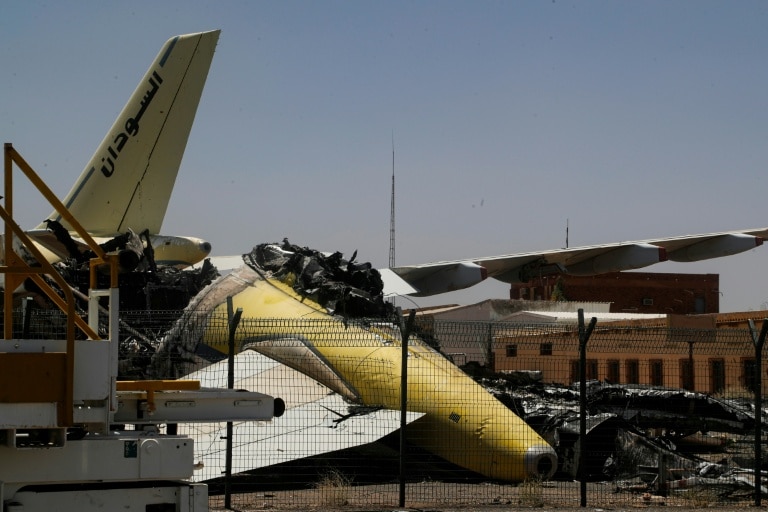
    The assault, carried out on Monday, targeted not only Khartoum International Airport but also multiple military sites across the wider Khartoum metropolitan region. This attack breaks a months-long stretch of relative calm in the capital, a period of stability that followed the Sudanese Armed Forces’ successful ousting of the paramilitary Rapid Support Forces (RSF) from Khartoum last year.

    Sudan’s state-run Sudan News Agency (Suna) quoted military officials as saying the country holds conclusive proof that the drones used in Monday’s assault were launched from Bahir Dar Airport located in northern Ethiopia. This accusation builds on prior claims made by Sudan’s military back in March, when it said the RSF had launched air attacks from Ethiopian soil. On that earlier occasion, Sudanese forces tracked and shot down a drone they confirmed was owned by the United Arab Emirates after it crossed into Sudanese airspace from Ethiopian territory. Military spokesmen now confirm that the drone used in Monday’s strike traces back to the same origin point.

    Ethiopia has swiftly rejected the Sudanese accusations, labeling them completely baseless. The United Arab Emirates, which has repeatedly and forcefully denied allegations of providing military support to the RSF throughout Sudan’s ongoing civil conflict, has not yet issued an official statement on the latest accusation. Following the attack, Sudan’s Foreign Minister Mohieddin Salem announced that the country has recalled its ambassador to Ethiopia for urgent consultations in response to the incident.

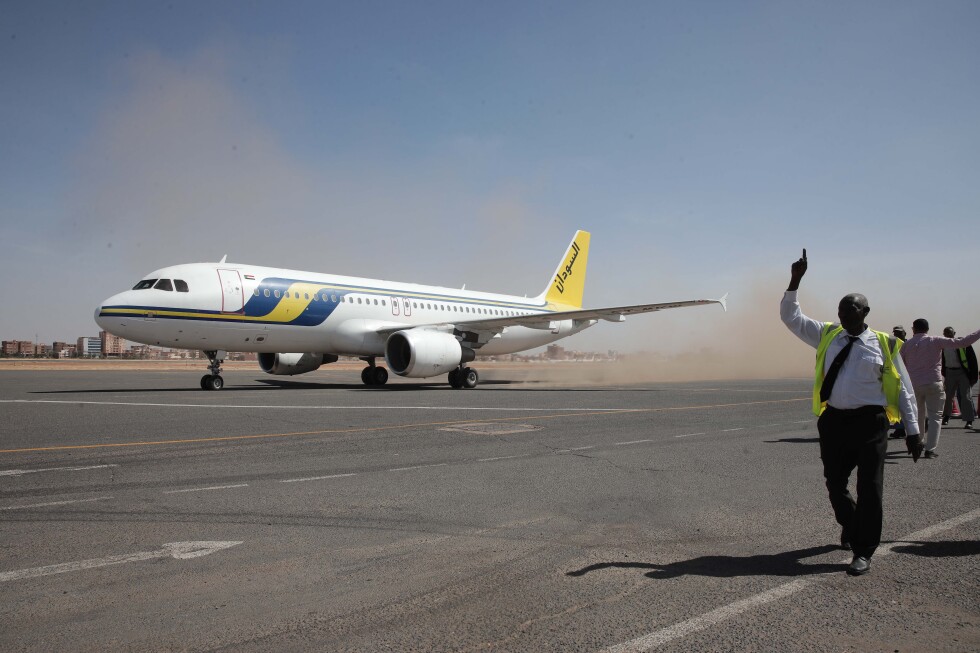
    Officially, no casualties were reported in the strike, Sudan’s Information Minister confirmed to Reuters. Minor damage was however sustained by an administrative building near the airport tarmac. The timing of the attack is particularly sensitive: it comes just one week after the first direct international commercial flight landed at Khartoum International Airport in three years, a milestone that was meant to mark the capital’s gradual return to normalcy after years of war. In the wake of the strike, airport authorities immediately ordered a 72-hour full suspension of all operations, with plans to resume activity once mandatory security inspections are completed.

    Back in February, Reuters reporting exposed that Ethiopia had hosted a training camp for RSF fighters and upgraded military infrastructure at the nearby Asosa Airport to support drone operations, moves that the report claimed were backed by the UAE, a close Ethiopian ally. Both Ethiopia and the UAE denied those allegations at the time, just as they have denied involvement in the latest strike. Eyewitnesses contacted by AFP on Monday confirmed hearing multiple powerful explosions and seeing plumes of smoke rise from areas adjacent to the airport, matching official accounts of the attack.

    In comments following the strike, Sudan’s Foreign Minister emphasized that even though Ethiopia has long been considered a brotherly neighbor to Sudan, the two nations have chosen the wrong path in their alleged involvement and will ultimately come to regret their actions. For its part, Ethiopia’s Foreign Ministry struck a measured but firm tone in its Tuesday response, noting that Sudan and Ethiopia share centuries of historic, enduring friendship. The ministry added that Ethiopia has so far refrained from publicizing grave violations of its own territorial integrity and national security committed by belligerent parties in Sudan’s civil war, and called for constructive dialogue between all warring factions in Sudan to end the ongoing conflict.

    The conflict between Sudan’s regular armed forces and the RSF erupted in April 2023, and has since spiraled into one of the world’s worst humanitarian catastrophes. United Nations officials estimate that more than 150,000 people have been killed since fighting began, while over 12 million have been forced to flee their homes. The conflict has triggered widespread famine across large swathes of the country, and credible reports of systematic genocide in the western Darfur region have drawn international condemnation.

  • Bowen: Strait of Hormuz standoff raises risk of sliding back into all out war

    Bowen: Strait of Hormuz standoff raises risk of sliding back into all out war

    Four weeks after a fragile ceasefire took hold across the Persian Gulf, the truce is rapidly crumbling, with escalating tensions between the United States and Iran pushing the region to the brink of renewed full-scale conflict. At the heart of the standoff is control over the Strait of Hormuz, the world’s most critical energy chokepoint that has become an existential strategic and economic flashpoint for both global powers.

    When the ceasefire was first announced, it opened a narrow window for diplomatic de-escalation. Negotiators from Washington and Tehran met face-to-face in Islamabad, the capital of Pakistan, which stepped in as a neutral mediator. But the talks concluded without any breakthrough, leaving the fragile truce hanging by a thread. Pakistani officials have continued efforts to restart dialogue, but so far their outreach has failed to bridge the deep divides between the two sides.

    Both Washington and Tehran have publicly expressed willingness to reach a negotiated settlement, but their competing demands and non-negotiable red lines have blocked any path to compromise. Neither side has shown willingness to make the concessions needed to break the impasse, leaving the region just one miscalculated incident away from a return to all-out war. This standoff has created an exceptionally high risk of misperceiving each other’s intentions, a common trigger that has historically pushed unintended crises into full-blown armed conflict.

    The strategic significance of the Strait of Hormusz cannot be overstated. Before the U.S.-Israeli strike on Iran in February 2025, the waterway remained open to unrestricted, toll-free navigation for all commercial vessels. Since the attack, Iran has effectively demonstrated its ability to restrict access to the strait, using control over the chokepoint as a leverage tool: it acts as an offensive weapon, a source of potential revenue through tolls, and a deterrent against further attacks. In remarks to Iranian lawmakers this week, Iranian Foreign Minister Abbas Araghchi made clear Tehran’s position that the pre-war status quo will not be restored.

    For the United States, allowing Iran to exert full control over the Strait of Hormuz and charge commercial shippers millions in passage tolls would amount to an unacceptable strategic defeat. But any escalation to enforce free navigation carries enormous risks, not just for the region but for the entire global economy.

    The economic ripple effects of even partial closure of the strait are already being felt far beyond the Gulf. Already, global supplies of oil, natural gas, helium critical to advanced technology manufacturing, and fertilizer feedstocks are facing growing disruptions. The fertilizer shortage in particular has sparked urgent fears of widespread hunger in low-income nations that lack robust food security systems, putting millions of vulnerable people at risk the longer the closure persists.

    U.S. President Donald Trump’s approach to the crisis has been marked by inconsistency and conflicting priorities, rooted in a rash initial decision to go to war that has left the U.S. trapped in a strategic bind. Trump, who has long framed himself as a champion of low energy prices for American consumers, has taken to social media to pressure oil traders against raising gasoline prices for U.S. motorists. But he remains frustrated by the resilience of the Iranian regime, which has refused to buckle under pressure from U.S. and Israeli military strikes and economic sanctions. The Islamic Republic’s security apparatus, which cracked down violently on domestic anti-government protests in January, has shown it is willing to prioritize holding onto power over the well-being of its citizens, giving it little incentive to back down under pressure.

    Trump’s recent order for the U.S. Navy to escort two commercial vessels through the strait was intended as a show of force to defend freedom of navigation, but the move did little to restore pre-war traffic levels. Before the outbreak of war, 40 to 60 vessels transited the strait daily; that flow remains severely restricted, and the provocative escort mission was always guaranteed to draw a harsh response from Tehran.

    Tehran’s new leadership, which has replaced the former supreme leader and multiple senior officials killed in U.S.-Israeli strikes, has signaled it is willing to escalate to set the terms of the conflict. For the regime, the gamble of renewed war is seen as a calculated risk worth taking to secure its strategic goals.

    Regional tensions have spread beyond the U.S.-Iran standoff, with the United Arab Emirates emerging as a key Iranian target among Gulf Arab states. The UAE has deepened its security alliances with the U.S. and Israel in response, receiving an Iron Dome anti-missile defense system from Israel along with Israeli Defense Forces personnel to operate it – a step Israel refused to take for Ukraine amid its ongoing war with Russia.

    Iran’s targeting of the UAE’s key Port of Fujairah carries particular strategic weight. Located on the UAE’s Gulf of Oman coastline, outside the boundaries of the Strait of Hormuz, Fujairah is the terminus of a major oil pipeline that allows the UAE to export crude without passing through Hormuz, and it hosts one of the region’s largest commercial oil storage facilities. While the UAE has issued public warnings to Tehran and maintains capable armed forces, it has sought to avoid direct conflict with Iran. That policy could become unsustainable if the ceasefire collapses entirely, and the UAE has already committed billions of additional dollars to purchasing advanced U.S. military hardware to bolster its defenses.

    Looking ahead, Trump continues to bet that increasing pressure will force the Iranian regime to collapse and accept a deal on U.S. terms. However, he has refused to accept any agreement that would be seen as weaker than the 2015 Joint Comprehensive Plan of Action (JCPOA), the landmark nuclear deal brokered by former President Barack Obama that Trump withdrew from during his first term in office, at the strong urging of Israeli Prime Minister Benjamin Netanyahu. Trump replaced the JCPOA with a policy of “maximum pressure” that failed to halt Iran’s uranium enrichment program, and ultimately set the U.S. and Iran on the current path to a war with no clear off-ramp.

  • Thailand scraps 2001 maritime territory deal with Cambodia after years of deadlock

    Thailand scraps 2001 maritime territory deal with Cambodia after years of deadlock

    BANGKOK – In a significant shift to decades-long bilateral dispute resolution mechanisms, Thailand’s cabinet announced Tuesday it is terminating a 2001 Memorandum of Understanding (MoU) with neighboring Cambodia that established a bilateral framework for negotiating overlapping maritime territorial claims. The development comes 22 years after the agreement was signed, following a years-long deadlock in talks and a sharp deterioration in cross-border relations that erupted into deadly armed clashes last year.

    The original 2001 MoU was designed to create a collaborative foundation for the two Southeast Asian nations to peacefully delimit their shared maritime boundaries and jointly manage overlapping claimed marine resources in line with international law. However, despite five rounds of negotiations held over more than two decades, the two sides failed to make any tangible progress toward a settlement.

    The termination will not enter into legal force until Thailand formally delivers an official notification letter to Phnom Penh. Its end dashes long-held hopes in both countries that resolving the competing claims would unlock development of untapped offshore oil and gas reserves located in the disputed waters – resources that could deliver major economic gains to both nations.

    Thailand’s decision to scrap the bilateral agreement follows a dramatic escalation of border tensions that spilled into open armed conflict last year. Clashes over competing land border claims broke out in both July and December 2023, leaving dozens of civilian and military casualties on both sides and forcing hundreds of thousands of residents to evacuate their homes near the border. A fragile ceasefire was reached in late December, but low-level sporadic incidents continue to be reported, and both sides have maintained large-scale military deployments along the contested border.

    The 2023 fighting reignited domestic political pressure in Thailand over border sovereignty, pushing nationalist sentiment to the forefront of national politics ahead of 2024 general elections. Prime Minister Anutin Charnvirakul’s ruling Bhumjaithai Party included terminating the 2001 MoU as a key campaign pledge to address public concerns over territorial integrity.

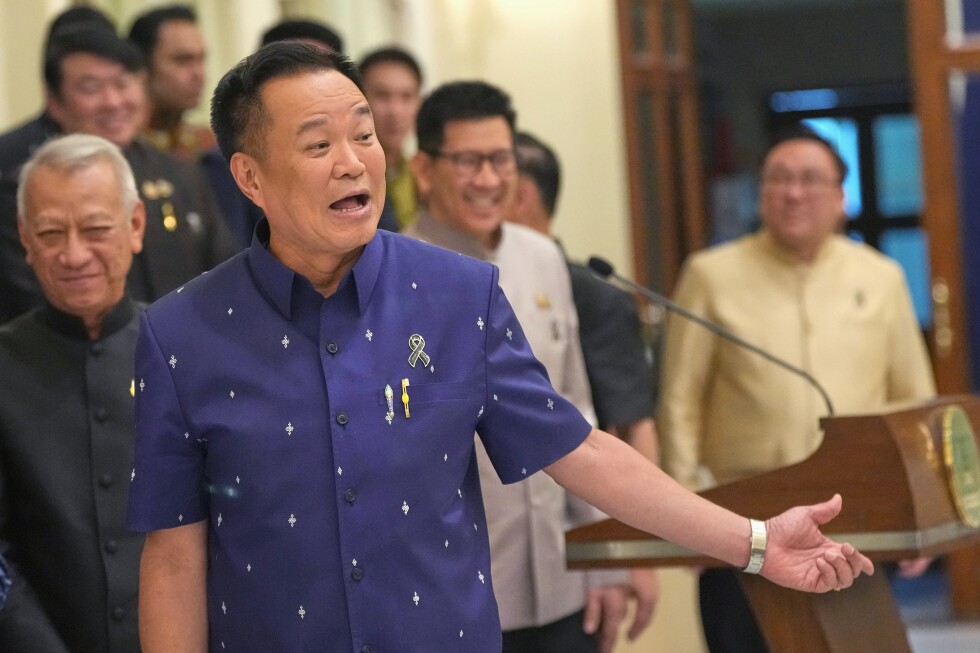
    Speaking after Tuesday’s cabinet meeting, Anutin sought to downplay concerns over the impact of the decision on the current fragile border calm. He emphasized the termination is unrelated to ongoing land border tensions and will not alter the existing ceasefire arrangements. He added that negotiations over the maritime dispute will continue under alternative frameworks, specifically citing the United Nations Convention on the Law of the Sea (UNCLOS) as a preferred platform moving forward.

    Thai government spokesperson Rachada Dhnadirek echoed the prime minister’s framing, stressing that the move is a strategic adjustment to the dispute resolution framework, not a break in bilateral relations or an end to negotiations. “Thailand will continue discussions with Cambodia, but we propose shifting to mechanisms under UNCLOS, which is clearer, more comprehensive and more systematic to allow maritime disputes to be resolved effectively,” she explained.

    In Phnom Penh, Cambodian officials reacted with measured regret to the Thai decision. Foreign Minister Prak Sokhonn called the move “a departure from the spirit and political will that enabled our two countries to establish a framework for peacefully resolving these issues in accordance with international law.”

    Despite the disappointment, Cambodia reaffirmed its commitment to peaceful resolution of the dispute under international law. Prak Sokhonn announced Cambodia will proceed with compulsory conciliation under UNCLOS mechanisms, a step that reaffirms Phnom Penh’s commitment to a peaceful, rules-based settlement.

    Cambodia’s newly installed Prime Minister Hun Manet emphasized his country’s commitment to peaceful coexistence in a social media statement. “Cambodia’s approach reflects our sincere hope that both countries can reach a just and lasting solution in line with international law, allowing our peoples to live together in peace, stability, and harmony,” he wrote.

    Sopheng Cheang, reporting from Phnom Penh, contributed to this report.

  • China’s top envoy meets with Iran’s in Beijing as Trump pauses US effort in the Strait

    China’s top envoy meets with Iran’s in Beijing as Trump pauses US effort in the Strait

    In a sudden Tuesday evening announcement from Dubai, United Arab Emirates, former U.S. President Donald Trump said he is halting the U.S. military mission to escort stranded commercial vessels through the blockaded Strait of Hormuz, pausing operations to give diplomatic negotiations time to finalize a deal to end the ongoing Iran war. The U.S. naval blockade of Iranian ports, however, will stay firmly in place.

    The pause comes just one day after U.S. forces launched the operation to open a secure shipping corridor through the strategic waterway, which has been choked off by Iran since the conflict began. In his social media statement, Trump cited three key factors driving the decision: requests from Pakistan and other regional nations, the military gains the U.S. has made during the campaign against Iran, and what he called “Great Progress” toward a full, final agreement with Iranian negotiators. The White House has declined to offer additional context or confirm the details of the negotiation progress Trump referenced.

    The current conflict kicked off on February 28, when the United States and Israel launched joint military strikes against Iranian targets. A ceasefire has been in place for nearly a month, but the truce has remained deeply fragile as tensions over control of the strait continue to escalate.

    In a parallel diplomatic development, official Chinese state news agency Xinhua confirmed Wednesday that Iranian Foreign Minister Abbas Araghchi met with his Chinese counterpart Wang Yi in Beijing. This trip marks Araghchi’s first visit to China since the war began, a meeting that carries significant weight given China’s deep economic and political ties to Tehran that grant Beijing unique leverage over the Iranian government. Ahead of the meeting, U.S. Secretary of State Marco Rubio publicly urged China to pressure Iran to lift its control of the strait, a critical global energy chokepoint.

    Before Trump’s announcement, Rubio told reporters at a White House press briefing that any lasting peace agreement would require Iran to meet two core U.S. demands: rolling back Tehran’s disputed nuclear program, and reopening the Strait of Hormuz to unimpeded global commercial traffic. “We would prefer the path of peace,” Rubio said, framing the U.S. push to open the strait as a strictly defensive mission focused on rescuing thousands of stranded civilian mariners. Rubio described the trapped sailors as “sitting ducks, they’re isolated, they’re starving, they’re vulnerable,” noting that at least 10 sailors have already died since the strait was closed.

    During the first day of the U.S. operation Monday, American military forces said they sank six small Iranian boats that threatened commercial shipping. To date, only two commercial vessels have successfully traversed the new U.S.-guarded corridor, while hundreds of ships remain bottled up in the Persian Gulf. Iranian officials have disputed the U.S. account of the clash, with Iranian state media reporting that two small civilian cargo vessels were hit in the strikes, killing five civilian crew members. Iran has also decried the U.S. corridor effort as a direct violation of the existing ceasefire.

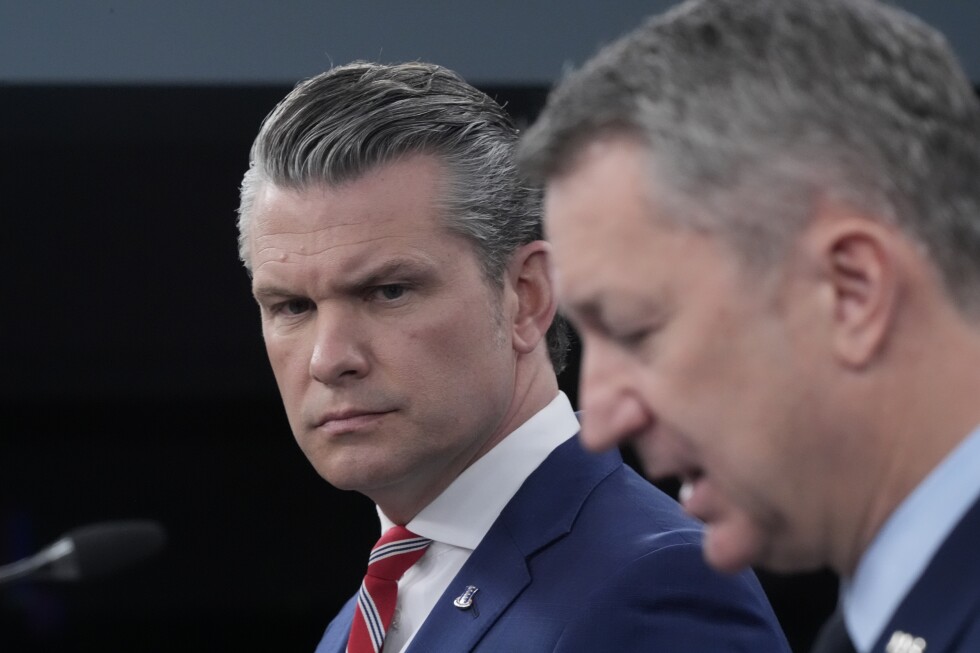
    Top U.S. military leaders have downplayed the escalation, however. Speaking at a Pentagon press briefing Tuesday, Defense Secretary Pete Hegseth and Chairman of the Joint Chiefs of Staff Gen. Dan Caine said Iran’s retaliatory attacks had not crossed the threshold into “major combat operations.” Caine called Tuesday “a quieter day” in the strait, adding that more than 100 U.S. military aircraft are now patrolling the airspace above the waterway to secure the corridor. The U.S. blockade of Iranian ports, implemented April 13, has already cut off most of Tehran’s oil export revenue, severely straining Iran’s already ailing economy. Caine also emphasized that U.S. forces would not open fire unless fired upon first. “There’s no shooting unless we’re shot at first, OK? We’re not attacking them,” Rubio echoed to reporters at the White House.

    Iran’s top parliamentary speaker and chief nuclear negotiator Mohammad Bagher Qalibaf offered a muted response to the U.S. mission, signaling that Tehran has not yet committed to a full response. In a post on X, Qalibaf said, “We know full well that the continuation of the status quo is intolerable for America; while we have not even begun yet.” He did not directly reference the backchannel negotiations between the U.S. and Iran, which are currently being mediated through Pakistan.

    The closure of the strait has already sent shockwaves through the global economy: before the war, the waterway carried the vast majority of global oil and natural gas exports, as well as fertilizers and other key petroleum products, and its closure has caused global fuel prices to surge dramatically. Breaking Iran’s control of the strait would also eliminate Tehran’s most powerful geopolitical leverage, a key goal for the Trump administration as it pushes for deep cuts to Iran’s nuclear program.

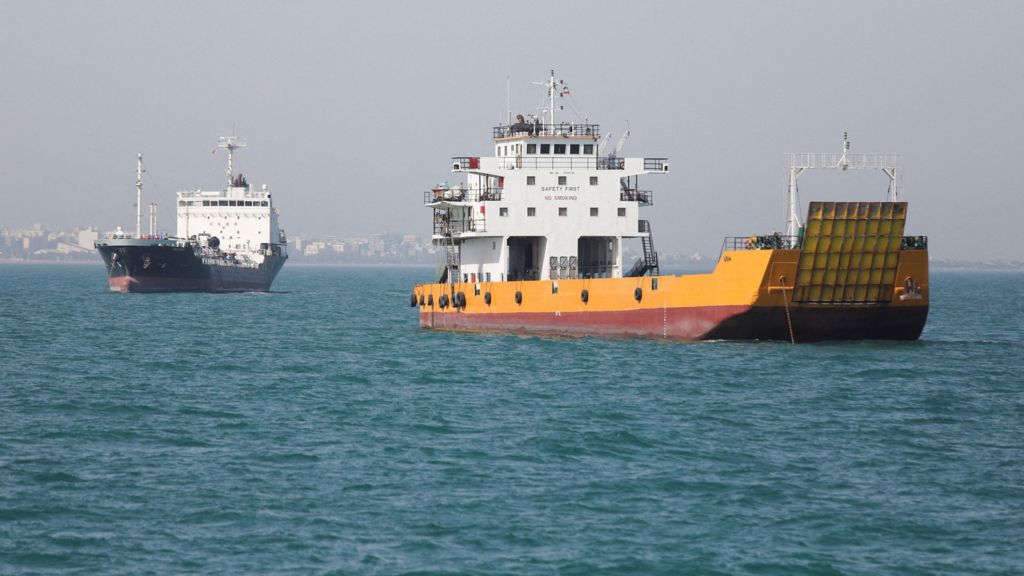
    Major global shipping companies remain deeply wary of the new U.S. corridor, even after the pause. Danish shipping giant Maersk confirmed one of its operated vehicle carriers successfully exited the strait Monday with U.S. military assistance, but leading container line Hapag-Lloyd AG said its risk assessment “remains unchanged” and that transits through the strait “are for the moment not possible for our ships.” Former military officers with experience in the region have also warned that opening the 34-kilometer wide strait is an extremely dangerous and challenging operation, even with military escorts— a security measure the U.S. is not currently providing for most commercial vessels. Currently, Iran requires all transiting vessels to use a northern corridor along the Iranian coastline, where ships must undergo vetting by the Islamic Revolutionary Guard Corps and in many cases pay fees to the Iranian government. The U.S.-backed corridor runs through Omani territorial waters to the south, outside of Iran’s control.

    Iran’s retaliatory strikes have fallen heaviest on the United Arab Emirates, a key U.S. Gulf ally. The UAE Defense Ministry confirmed it faced a second consecutive day of Iranian drone and missile attacks Tuesday, though no damage or casualties were reported. On Monday, Emirati air defense systems intercepted 15 missiles and four Iranian drones, with one wayward projectile sparking a fire at a major UAE oil facility that wounded three Indian nationals. The British military also reported two cargo ships were set ablaze off the UAE coast Monday, and a second cargo vessel was hit by an “unknown projectile” in the strait Tuesday. Iran has officially denied launching any attacks on the UAE “in recent days,” per a statement read by joint military command spokesman Ebrahim Zolfaghari on Iranian state TV.

    The Trump administration has also drawn scrutiny for its handling of congressional war oversight, citing the April 8 ceasefire to argue the president is not required to submit a formal update to Congress under the War Powers Resolution. The 1973 law requires presidents to secure formal congressional approval for military action within 60 days of launching operations.

  • Zelenskyy slams Russia’s ‘utter cynicism’ as strikes kill 5 in Ukraine before brief truce takes hold

    Zelenskyy slams Russia’s ‘utter cynicism’ as strikes kill 5 in Ukraine before brief truce takes hold

    Fresh waves of coordinated Russian missile and drone attacks targeting Ukraine’s critical energy infrastructure killed at least five civilians and left 39 others injured in overnight strikes between Monday and Tuesday, Ukrainian officials confirmed this week.

    The assault came only days after Russia announced a two-day unilateral ceasefire set to begin Friday, timed to align with Moscow’s annual May 9 celebrations marking the 1945 defeat of Nazi Germany in World War II. Ukrainian President Volodymyr Zelenskyy condemned the simultaneous attacks and upcoming truce announcement as a demonstration of Moscow’s “utter cynicism,” pointing out the brazen contradiction between launching deadly strikes days before a self-declared pause in fighting.

    “Russia could cease fire at any moment, and this would stop the war and our responses,” Zelenskyy wrote in a post on social platform X. “Peace is needed, and real steps are needed to achieve it. Ukraine will act in kind.”

    Shortly after Russia made its truce declaration, Zelenskyy announced that Ukraine would implement its own reciprocal ceasefire starting at 12 a.m. Wednesday, without specifying an end date for the Kyiv-proposed pause. This latest exchange of ceasefire proposals fits a long-established pattern throughout the more than two-year full-scale invasion: Russia has repeatedly announced short, unilateral holiday ceasefires — most recently for Orthodox Easter — that have failed to deliver any lasting de-escalation, amid pervasive, deep-rooted mistrust between the two governments.

    The Russian Defense Ministry’s truce statement included a warning that Russian forces would respond with immediate force if Ukrainian troops attempted to disrupt Victory Day events during the planned pause.

    According to Ukraine’s Air Force, Russian forces launched 11 Iskander-M ballistic missiles and 164 attack drones in the overnight strikes, including an upgraded jet-powered variant of the Iranian-made Shahed drone widely used by Russian forces. Air defense crews successfully intercepted 149 drones and one incoming missile, while two additional ballistic missiles malfunctioned and failed to hit their intended targets. Nonetheless, many projectiles penetrated Ukrainian defenses to strike critical infrastructure.

    For months, Russian forces have systematically targeted Ukraine’s energy network as part of a sustained campaign to disrupt civilian life and energy supplies ahead of seasonal peak demand. Tuesday’s strikes hit natural gas production facilities in Ukraine’s central Poltava region and northeastern Kharkiv region, according to Naftogaz Group, Ukraine’s state-owned national energy company. The company confirmed that its infrastructure has been targeted 107 times by Russian strikes since the start of 2024 alone.

    Zelenskyy called the strike on the Poltava facility “especially vile,” revealing that Russian forces launched a second missile at the same site while first responders were already on the ground conducting rescue operations after the initial attack. Ukrainian Prime Minister Yulia Svyrydenko noted that while energy facilities, oil and gas infrastructure, railways, and industrial sites were the primary intended targets of the overnight assault, the strikes also damaged civilian residential buildings, commercial businesses, and public transportation networks. “Russia’s ceasefire proposals remain only statements,” Svyrydenko added, dismissing Moscow’s announcement as empty rhetoric.

    Alongside defensive efforts to repel the Russian strikes, Ukraine has maintained its own campaign of long-range drone attacks targeting Russian rear-area infrastructure, with a growing focus on Russian oil and energy facilities. In overnight attacks on Russian territory, the Russian Defense Ministry reported that its air defense systems destroyed 289 Ukrainian drones across 18 different Russian regions. Drones were also intercepted over the Azov Sea and the Crimean Peninsula, which Russia illegally annexed from Ukraine in 2014.

    Regional officials confirmed that a Ukrainian drone attack wounded three people in Cheboksary, a city located more than 900 kilometers (560 miles) east of Moscow far from the front lines of the war. Another wave of drones targeted the Kirishi oil refinery in Russia’s Leningrad region, near St. Petersburg, igniting a large fire in the facility’s industrial zone. Regional Governor Alexander Drozdenko reported that 29 incoming drones were shot down during the attack, and no casualties were recorded at the refinery site.

    The escalation of cross-border strikes comes amid heightened global attention on the trajectory of the war, as both sides adjust their military strategies ahead of potential upcoming peace negotiations and seasonal battlefield shifts. The Associated Press continues to provide ongoing coverage of the Russia-Ukraine conflict at its dedicated hub.

  • Iran warns ‘not even started’ in Hormuz

    Iran warns ‘not even started’ in Hormuz

    Tensions in the strategically vital Strait of Hormuz have reignited sharply in recent days, bringing the Middle East back to the brink of broader conflict just weeks after a ceasefire paused a two-month-old war sparked by U.S.-Israeli strikes on Iran. The fresh wave of clashes has sent shockwaves through global energy markets and drawn urgent calls for de-escalation from world powers.

    After U.S. forces engaged with Iranian vessels near the strait — a chokepoint through which roughly 20% of the world’s daily oil supplies pass — a top Iranian official issued a stark warning to Washington that Tehran has not yet unleashed its full force in the ongoing standoff. Mohammad Bagher Ghalibaf, Iran’s parliament speaker and chief nuclear negotiator, wrote in a post on X that the current status quo is already untenable for the United States, emphasizing that “we have not even started yet.” Ghalibaf added that the U.S. and its allies have undermined shipping security in the region, and that Tehran will never cede control of the strait, predicting that Washington’s “malign presence will diminish.”

    The latest clashes unfolded on Monday, when the U.S. military announced that its Apache attack and Seahawk helicopters had struck six Iranian boats that it said posed a threat to commercial shipping in the area. U.S. forces also intercepted and repelled incoming Iranian missiles and drones, the Pentagon confirmed. Separately, the United Arab Emirates (UAE) reported fresh Iranian attacks on its territory, including a strike on an energy facility in the emirate of Fujairah and a drone attack on a tanker owned by the UAE’s state oil giant ADNOC. UAE authorities said four cruise missiles were launched in the attack: three were shot down by air defenses, while the fourth fell into the Persian Gulf. The UAE condemned the strikes as “a dangerous escalation and an unacceptable transgression” of international law.

    Iran has pushed back on the U.S. account of the sea clashes, denying that any of its military vessels were damaged in the U.S. airstrikes. Tehran did, however, accuse Washington of killing five civilian passengers on boats operating near the strait. For the attacks on the UAE, an Iranian military spokesperson told state media that Tehran had no pre-planned agenda to target Emirati energy infrastructure, placing full blame on the U.S. for provoking the strikes. “What happened was the product of the U.S. military’s adventurism to create a passage for ships to illegally pass through the forbidden passages of the Strait of Hormuz, and the U.S. military must be held accountable for it,” the spokesperson said.

    The renewed tensions follow an announcement from U.S. President Donald Trump, who unveiled a plan to escort neutral countries’ ships through the Gulf in a bid to break Tehran’s de facto blockade of the strait. Trump’s initiative, dubbed “Project Freedom,” has already seen its first successful transit: Danish shipping giant Maersk confirmed on Tuesday that one of its commercial vessels had passed through the strait under U.S. military escort. Despite this small milestone, the latest clashes have upended a weeks-long ceasefire that paused the broader war that began more than two months ago when U.S.-Israeli forces launched strikes on Iran.

    That ceasefire had already failed to stop low-level clashes along other fronts, including the Israel-Lebanon border where Israel continues exchanges of fire with the Iran-backed militant group Hezbollah. An Israeli military official confirmed on Monday that the Israel Defense Forces remains on high alert, closely monitoring developments around the strait after the U.S. downed Iranian missiles and drones. Lebanese President Joseph Aoun also reaffirmed this week that a security agreement and full halt to Israeli strikes are required before any planned meeting with Israeli Prime Minister Benjamin Netanyahu, a meeting Washington has pushed for to de-escalate the Lebanese front. Israeli and Lebanese officials held two landmark direct talks in Washington last month, the first such negotiations in decades, after Hezbollah opened a new front in the war on March 2, triggering heavy Israeli strikes and a limited ground invasion of southern Lebanon.

    The sharp escalation in the Strait of Hormuz has already delivered a major blow to the global economy, which has been reeling from the impact of months of conflict. Crude oil prices surged on Monday in response to the tensions, driven by fears that the strait could remain closed to large-scale commercial traffic, dragging global energy costs even higher. Global stock markets sank on Tuesday as investor confidence eroded, extending losses driven by months of volatility tied to the Middle East conflict. Soaring consumer energy prices triggered by the war have already caused widespread economic hardship across the world, and the fresh crisis has created significant political challenges for Trump just months ahead of U.S. midterm elections.

    U.S. European allies have also sounded the alarm over the crisis, warning that prolonged closure of the strait will cause deep economic damage to their own economies. European Commission President Ursula von der Leyen wrote on X that “these attacks are unacceptable,” noting that “security in the Gulf region has direct consequences for Europe.” German Chancellor Friedrich Merz joined French President Emmanuel Macron and British Prime Minister Keir Starmer in calling on Iran to return to diplomatic negotiations, saying Tehran must “stop holding the region and the world hostage.” Saudi Arabia, a key U.S. ally in the Middle East, also issued a statement on Tuesday calling for intensive diplomatic efforts “to reach a political solution” to the standoff.

    Despite widespread international calls for dialogue, negotiations between Washington and Tehran remain completely deadlocked. To date, only one round of direct peace talks has been held, with no breakthroughs on core issues including the future of the Strait of Hormuz and Iran’s broader regional security demands. With both sides digging in and exchanging deadly fire, the international community is bracing for a further escalation that could drag the entire Middle East back into full-scale war, with cascading consequences for the global economy and millions of people around the world.

  • Sudan’s military accuses Ethiopia of drone attacks, recalls its ambassador

    Sudan’s military accuses Ethiopia of drone attacks, recalls its ambassador

    In a sharp escalation of cross-border tensions between two neighboring East African nations, Sudan has formally recalled its ambassador to Ethiopia and publicly accused Addis Ababa of orchestrating a series of recent drone strikes targeting key Sudanese sites, including the capital Khartoum’s international airport. The announcement, made during a press conference on Tuesday, marks one of the most serious diplomatic rifts between the two countries in years, unfolding against the backdrop of Sudan’s 13-month civil conflict between the national military and the Rapid Support Forces (RSF) paramilitary group.