分类: world

  • Iran keeps up pressure on oil infrastructure as concerns of global energy crisis grow

    Iran keeps up pressure on oil infrastructure as concerns of global energy crisis grow

    The strategic Strait of Hormuz became a focal point of escalating Middle East tensions as Iran and Israel engaged in renewed hostilities early Wednesday. Iranian forces reportedly struck a commercial vessel transiting the critical waterway, igniting significant fires and forcing crew evacuation. This attack represents the latest in a series of Iranian actions effectively disrupting cargo traffic through the strait, which facilitates approximately 20% of global oil shipments from the Persian Gulf to international markets.

    Regional defense systems were activated across the Gulf as Kuwaiti forces intercepted eight Iranian drones while Saudi Arabia neutralized five drones targeting its Shaybah oil field. Saudi defense systems additionally destroyed six ballistic missiles launched toward Prince Sultan Air Base, a crucial joint U.S.-Saudi military installation. The United Arab Emirates reported its air defenses actively engaged incoming Iranian projectiles, with officials confirming six fatalities and 122 injuries from sustained attacks.

    The international community moved toward diplomatic action with the U.N. Security Council preparing to vote on a Gulf Cooperation Council-sponsored resolution demanding Iran cease attacks against Arab neighbors. The draft resolution specifically condemns Iranian aggression against Bahrain, Kuwait, Oman, Qatar, Saudi Arabia, the United Arab Emirates, and Jordan.

    Concurrently, Israel launched renewed strikes against Tehran and Hezbollah-linked targets in Lebanon, where nearly 500 people have died since hostilities began. Israeli attacks in Beirut’s densely populated Aicha Bakkar district ignited multistory buildings, while strikes in southern Lebanon resulted in multiple casualties including emergency responders.

    The economic ramifications continued to intensify as Brent crude prices maintained a 20% increase since conflict initiation. Saudi Aramco CEO Amin Nasser warned that prolonged disruption to Strait of Hormuz shipping would seriously impact the global economy, reflecting growing concerns about potential long-term energy market instability.

  • Kharg Island: Iran’s vital oil hub in the crosshairs?

    Kharg Island: Iran’s vital oil hub in the crosshairs?

    Amid escalating Middle East conflicts, Iran’s Kharg Island has emerged as a critical strategic vulnerability. This scrub-covered landmass situated approximately 30 kilometers off Iran’s coast processes approximately 90% of the nation’s crude oil exports through its terminal facilities. Recent reports indicate U.S. officials have contemplated seizing this vital infrastructure as regional hostilities persist.

    Analysts from JP Morgan emphasize that any military action against Kharg Island would immediately halt the majority of Iran’s petroleum exports, potentially triggering severe retaliatory measures. Such escalation could significantly impact maritime traffic through the Strait of Hormuz, where approximately one-fifth of global crude oil and liquefied natural gas typically transit.

    Despite Iran’s development of alternative export capabilities, including the 2021 inauguration of the Jask terminal outside the Strait of Hormuz chokepoint, Kharg remains economically indispensable. The facility represents a cornerstone of Iran’s economy and generates substantial revenue for the Iranian Revolutionary Guard.

    Military experts caution that operations against the island would present extraordinary challenges. Farzin Nadimi, senior fellow at the Washington Institute for Near East Policy, characterizes potential seizure attempts as “very risky,” noting Iran’s extensive wartime experience with alternative distribution methods and capacity for rapid counter-escalation against regional energy infrastructure.

    The historical context reveals Kharg Island’s strategic significance has been discussed in Washington since the 1979 hostage crisis. While some political figures advocate for targeting Iran’s energy sector to cripple its economy, most analysts consider large-scale military operations against the island’s extensive network of pipelines, storage tanks, and loading facilities as logistically formidable and strategically perilous.

  • War in the Middle East: latest developments

    War in the Middle East: latest developments

    The Middle East conflict entered a dangerous new phase on March 10, 2026, with multiple fronts witnessing significant military escalation and consequential global economic repercussions.

    Maritime security agencies reported an unidentified projectile striking a commercial container vessel near the United Arab Emirates coastline. While crew safety was confirmed, the incident raised alarms about shipping security in critical Gulf waters. This development coincided with Iran’s Revolutionary Guards launching what state media described as “the most intense and heaviest” missile barrage since the conflict’s inception, targeting multiple Israeli population centers including Tel Aviv, Haifa, and areas referred to as “West Jerusalem.”

    Regional defenses were simultaneously activated as Saudi Arabian forces intercepted six ballistic missiles directed toward Prince Sultan Air Base, plus additional projectiles and fifteen drones aimed at energy infrastructure. In a significant escalation, Iranian news agencies reported missile strikes targeting a United States military installation in Kuwait, though Kuwaiti authorities remained silent on these claims.

    The United States military responded with force, destroying sixteen Iranian mine-laying vessels near the strategically vital Strait of Hormuz. This action followed explicit warnings from President Donald Trump against Iranian attempts to mine the crucial shipping channel.

    Global energy markets reacted violently to the developments. Brent Crude and West Texas Intermediate both declined substantially following reports that the International Energy Agency proposed its largest-ever strategic petroleum reserve release to stabilize prices. Market volatility was further exacerbated when the U.S. Energy Secretary’s social media account posted and subsequently deleted claims about American tanker escorts through the Strait of Hormuz.

    Humanitarian dimensions expanded as Lebanese authorities reported nearly 760,000 displaced persons following fresh Israeli strikes on Beirut’s southern suburbs and southern Lebanon. The Pentagon disclosed approximately 140 U.S. military personnel have been wounded in attacks, supplementing previously reported casualties.

    Diplomatic tensions intensified with Iran accusing Israel of killing four diplomats in a Beirut hotel strike, labeling it a “terrorist attack.” Israel maintained it targeted “key commanders” of Iran’s Quds Force. Meanwhile, Iran’s parliamentary speaker explicitly rejected ceasefire possibilities, declaring that the United States and Israel must be “taught a lesson.”

    Additional developments included cybersecurity concerns as Israel reported Iranian breaches into security cameras, Iran announcing arrests of alleged spies, and the temporary shutdown of one of the world’s largest oil refineries in the UAE following drone attacks. The conflict also prompted Ukrainian drone experts to assist Gulf defenses and saw additional members of Iran’s women’s football team seek asylum abroad after political protests.

  • ‘Swinging into action:’ The Saudi Arabian pipeline designed to bypass Hormuz

    ‘Swinging into action:’ The Saudi Arabian pipeline designed to bypass Hormuz

    In a decisive response to Iran’s effective closure of the Strait of Hormuz, Saudi Arabia has initiated full operational deployment of its strategic East-West Pipeline, a critical infrastructure project originally conceived during 1980s Gulf tensions. Saudi Aramco CEO Amin Nasser confirmed the pipeline is achieving its maximum daily capacity of seven million barrels, providing crucial alternative routing for Gulf oil exports bypassing the blocked waterway.

    The 750-mile pipeline, stretching from Abqaiq oil field to Yanbu port on the Red Sea, represents Saudi Arabia’s transformation into the producer of last resort during the current crisis. While providing economic relief to Saudi coffers and buying tactical time for US President Trump’s campaign against Iran, experts emphasize the system’s limitations. The Yanbu terminal can only handle approximately 4.5 million barrels daily—insufficient to compensate for the 18 million barrels of oil and 4 million barrels of refined products normally traversing Hormuz.

    The market faces a compounded crisis: not merely a crude shortage but a critical deficit in refined products including diesel and jet fuel. Energy analyst Ellen Wald notes the pipeline cannot simultaneously fulfill crude export contracts and product demand, while Global Risk Management’s Arne Rasmussen identifies this as primarily a ‘distillate crisis’ particularly affecting European markets dependent on Middle Eastern refineries.

    New vulnerabilities emerge as exports shift to the Red Sea, bringing Houthi forces into strategic consideration. Despite maintaining a fragile truce with Saudi Arabia, these Iran-aligned militants control access through the Bab el-Mandeb strait—a potential chokepoint for redirected shipments. Iran’s calibrated escalation, avoiding permanent damage to Saudi infrastructure while inflicting broader economic pain, demonstrates sophisticated conflict management that could change dramatically should Saudi Arabia directly enter the conflict.

    With G7 nations debating strategic reserve releases and oil prices exhibiting extreme volatility, the East-West Pipeline provides temporary relief rather than comprehensive solution to a crisis threatening global economic stability.

  • 146 Australian graves damaged in Gaza, restoration remains doubtful, hearing told

    146 Australian graves damaged in Gaza, restoration remains doubtful, hearing told

    A recent Australian parliamentary inquiry has revealed extensive damage to Commonwealth war cemeteries in Gaza, with over 140 graves of Australian servicemen among those affected by the ongoing Israel-Hamas conflict. The Gaza War Cemetery, one of two sites in the territory containing remains of more than 3,000 Commonwealth soldiers from both World Wars, has sustained substantial destruction according to official reports.

    Official documentation from the Commonwealth War Graves Commission (CWGC) indicates that 146 of the 263 Australian headstones at the Gaza site showed damage as of September, with no additional deterioration reported by December. The comprehensive assessment revealed an overall total of 818 impacted graves across Commonwealth burial sites, representing a 22 percent increase in damaged monuments in the month preceding the second anniversary of the October 7 attacks.

    Australian War Graves Director Wade Stothart AO addressed the Senate Foreign Affairs, Defence and Trade Legislation Committee, acknowledging the challenges in conducting thorough assessments. While confirming no direct reports of exposed or damaged human remains, Stothart conceded that satellite imagery analysis suggests the potential disturbance of Australian servicemen’s resting places. ‘It’s quite possible that Australian servicemen in war graves have been affected by the damage that’s occurred,’ he stated during the Tuesday hearing.

    The cemeteries contain remains of military personnel from multiple nations including Australia, New Zealand, Poland, Canada, India, Greece, and Germany. The United Kingdom accounts for the majority of affected graves, with approximately 469 British headstones damaged. Stothart confirmed that the UK government is leading coordination efforts regarding the sites, with all member governments expressing significant concern about the desecration.

    Restoration plans remain on hold pending security improvements in the region. CWGC’s locally employed staff were evacuated at the conflict’s onset, forcing subsequent damage assessments to be conducted through third-party sources. Stothart noted that while the Israeli government has acknowledged the need for CWGC access, ongoing security concerns prevent immediate intervention. The issue gained diplomatic attention during Israeli President Isaac Herzog’s recent Australia visit, where Prime Minister Anthony Albanese raised concerns about the gravesites.

  • China and North Korea to resume passenger train service after six-year halt

    China and North Korea to resume passenger train service after six-year halt

    After a six-year suspension due to pandemic restrictions, passenger rail service between China and North Korea officially resumes operations on Thursday, marking a significant step in reviving cross-border connectivity. China Railway announced the restoration of services in an official notice released late Tuesday, characterizing the trains as “a moving link that strengthens the friendship between China and North Korea.”

    The revitalized rail network will feature four weekly departures between Beijing and Pyongyang, complemented by daily service connecting the Chinese border city of Dandong with the North Korean capital. While China has fully reopened its borders post-pandemic, North Korea has adopted a more gradual approach to international travel, only beginning to permit limited tourist entries starting in 2024.

    According to China Railway specifications, international travelers will have access to designated carriages on the Beijing-Pyongyang route. However, travel industry representatives indicate that tourist ticket sales remain restricted at present. One agency informed AFP that current ticket eligibility is limited to passengers with valid visas, including Chinese citizens working or studying in North Korea, and North Koreans with overseas work, study, or family visitation needs.

    Demand appears strong, with Reuters reporting that tickets for the inaugural Thursday departure have already sold out. The resumption of regular passenger service received diplomatic endorsement from Chinese foreign ministry spokesperson Guo Jiakun, who emphasized on Tuesday that maintaining these transportation links “is of great significance” for facilitating people-to-people exchanges between the two nations.

    Prior to the pandemic-driven border closure in early 2020, Chinese tourists constituted the largest demographic of international visitors to North Korea. The Hermit Kingdom has recently initiated tourism development projects, including new seaside resorts, as part of efforts to revitalize its tourism sector, though these initiatives have experienced intermittent suspensions during implementation.

  • Shots fired at US consulate in Canada’s Toronto, no injuries reported

    Shots fired at US consulate in Canada’s Toronto, no injuries reported

    Toronto law enforcement authorities have launched a comprehensive investigation into a shooting incident targeting the United States consulate in Canada’s largest metropolis. The attack occurred in the early hours of Tuesday morning, marking a significant security breach in the heart of downtown Toronto.

    According to official police reports, authorities received emergency calls at precisely 5:29 AM local time on March 10, 2026, alerting them to gunfire directed at the diplomatic facility. Responding units arriving at the scene documented clear evidence of firearm discharge, though no casualties or injuries were reported in connection with the incident. Investigators currently lack identifying information about potential suspects involved in the attack.

    The shooting has prompted strong condemnations from multiple levels of Canadian leadership. Federal Public Safety Minister Gary Anandasangaree characterized the incident as ‘absolutely unacceptable,’ emphasizing that Canada maintains zero tolerance for acts of intimidation or violence against diplomatic missions.

    Ontario Premier Doug Ford echoed these sentiments, denouncing what he described as an ‘absolutely unacceptable act of violence and intimidation.’ Premier Ford assured the public that provincial authorities would collaborate with law enforcement agencies to ensure those responsible face full legal consequences.

    Toronto Mayor Olivia Chow contextualized the consulate attack within broader security concerns, noting that this incident follows multiple shootings targeting Toronto-area synagogues earlier in March. Mayor Chow confirmed that security has been significantly enhanced around both US and Israeli diplomatic facilities throughout the city as precautionary measures.

    The investigation remains active with multiple law enforcement agencies coordinating to determine motives and identify potential suspects behind the attack on American diplomatic property.

  • ‘Put our faith in God’: Tehran residents adapt to wartime

    ‘Put our faith in God’: Tehran residents adapt to wartime

    Tehran’s metropolitan landscape has undergone a dramatic transformation as residents navigate an unprecedented state of wartime existence. The Iranian capital, alongside other urban centers, faces sustained aerial bombardments from Israeli-US forces in a conflict intensity not witnessed since the 1980s war with Saddam Hussein’s Iraq.

    The city’s rhythm has fundamentally altered: educational institutions remain shuttered, commercial activity has significantly diminished, and armored security vehicles now patrol streets once filled with ordinary traffic. Residents have adopted practical survival measures, taping windows to prevent shattering from explosion debris and largely confining themselves to their homes except for essential movements.

    A complex psychological adaptation is underway among Tehran’s populace. While many express remarkable calmness and resilience, the constant uncertainty of attacks creates underlying tension. Residents report no advance warning systems for incoming strikes, forcing them to interpret target patterns independently. Many find solace in believing strikes primarily target institutional structures like police stations, mosques, and military sites rather than residential buildings, though collateral damage remains widespread.

    The social fabric demonstrates remarkable strength with neighbors providing mutual support, including housing for those displaced by destruction. Infrastructure has adapted to crisis conditions: public transportation operates with minimal passengers, delivery services maintain essential goods circulation, and critical neighborhood establishments like bakeries remain operational despite widespread commercial closures.

    Communication networks face severe restrictions, with only domestic intranet services functioning, virtually isolating Iran from global digital connectivity. The visual landscape has changed with the emergence of billboards featuring Mojtaba Khamenei, the newly appointed successor to his father, the slain Supreme Leader, though his public absence since appointment fuels uncertainty.

    Despite the turmoil, religious faith provides comfort for many residents, who combine practical preparations with spiritual resolve. The approaching Iranian New Year (Nouruz) creates poignant contrast to the conflict, with traditional celebrations likely overshadowed by ongoing security concerns. International observers note significant refugee movement, particularly among Afghan migrant workers returning home amid the deteriorating conditions.

  • US targets Iran mine-laying as war causes oil market havoc

    US targets Iran mine-laying as war causes oil market havoc

    The United States military has launched targeted strikes against Iranian naval assets capable of mining the strategic Strait of Hormuz, as escalating Middle East hostilities continue to destabilize global energy markets. Defense officials confirmed the destruction of 16 Iranian minelaying vessels near the critical waterway, releasing combat footage showing missile engagements against the boats.

    President Donald Trump issued a stark warning to Tehran through social media, threatening unprecedented military consequences should Iran deploy mines in the vital shipping channel. This development comes amid soaring crude oil prices that have increased approximately five percent, briefly surpassing $100 per barrel earlier this week.

    The conflict intensified with Israel conducting simultaneous strikes against targets in Beirut and Tehran. Iranian authorities reported their capital experiencing ‘black rain’ from bombed fuel depots, while Lebanon documented at least 486 fatalities and 1,300 injuries from Israeli attacks between March 2-9.

    Iran’s leadership remains defiant, with Parliament Speaker Mohammad Bagher Ghalibaf, a former Revolutionary Guards commander, explicitly rejecting ceasefire possibilities. ‘We believe the aggressor must be punished and taught a lesson that will deter them from attacking Iran again,’ he stated on social media platform X.

    The conflict originated with Israel’s February 28 strike that killed Iran’s veteran leader Ayatollah Ali Khamenei, subsequently replaced by his son Mojtaba Khamenei. Despite U.S. claims of degrading Iran’s missile capabilities, Revolutionary Guards announced fresh salvos against Israeli cities and American targets regionally, with explosions reported in Bahrain near a major U.S. naval base.

    The economic ramifications continue expanding with attacks on Gulf infrastructure including the UAE’s Ruwais oil refinery closure following drone attacks and Qatar reporting new assaults on LNG facilities. Saudi Aramco CEO Amin H. Nasser warned of ‘catastrophic consequences for the world’s oil markets’ should Hormuz shipping disruptions continue.

    Proxy conflicts have emerged in Iraq and Lebanon, with Iranian-linked fighters casualties in suspected U.S. strikes. The United Nations warned that Hormuz closure could exacerbate fuel and food costs for vulnerable populations worldwide, with Egypt already implementing up to 30% fuel price increases that strain ordinary citizens.

  • 2 more members of the Iranian women’s soccer team have been granted asylum in Australia

    2 more members of the Iranian women’s soccer team have been granted asylum in Australia

    CANBERRA, Australia — Australia has granted humanitarian protection to seven members of Iran’s women’s football delegation, with two additional individuals receiving asylum just hours before their teammates departed for Tehran. The developments occurred amid emotional protests and safety concerns for the athletes returning to a nation in conflict.

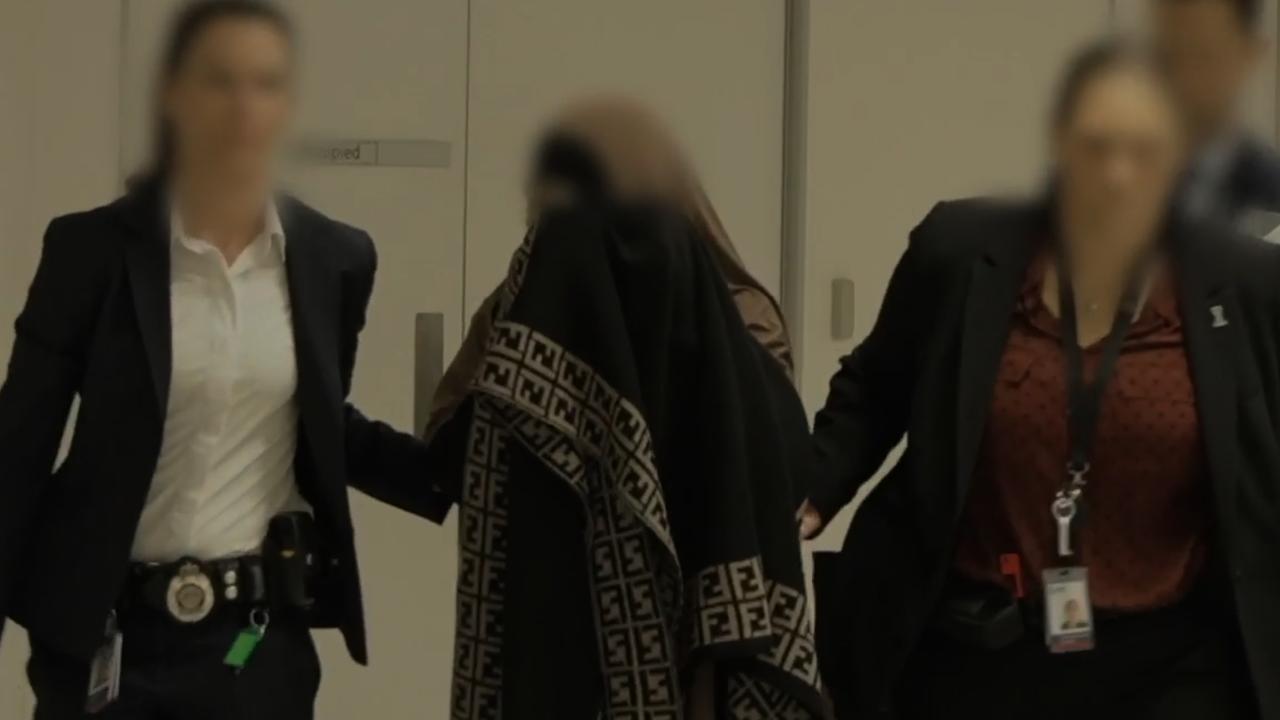
    Australian Home Affairs Minister Tony Burke confirmed Wednesday that a player and a staff member were granted protection after seeking asylum prior to the team’s airport transfer. They have since reunited with five teammates who received humanitarian visas the previous day.

    The departure from Sydney late Tuesday local time unfolded amidst tense demonstrations at both the team hotel and airport, where Iranian-Australian protesters attempted to prevent the women’s return, citing grave concerns about their safety in Iran.

    Minister Burke detailed the carefully orchestrated asylum process, explaining that each team member was individually interviewed by Australian officials with interpreter assistance at the border checkpoint, without minders present. During these private sessions, athletes were offered asylum and provided opportunity to consult family members in Iran before making their final decisions.

    “They were given a choice,” Burke emphasized. “In that situation what we made sure of was that there was no rushing, there was no pressure.”

    Those granted protection received temporary humanitarian visas with pathways to permanent residency. Burke noted that some delegation members were ineligible for asylum due to connections with Iran’s paramilitary Revolutionary Guard.

    The team had originally arrived in Australia for the Women’s Asian Cup last month, prior to the outbreak of conflict in Iran on February 28. Their elimination from the tournament over the weekend coincided with increasing concerns about returning to a nation under bombardment.

    The Iranian squad gained significant attention in Australia when players initially declined to sing the national anthem during their first match, though they later participated in anthem ceremonies during subsequent games. Iranian community groups in Australia had urged government intervention to prevent the team’s return.

    Burke defended Australia’s approach, stating: “Australia’s objective here was not to force people to make a particular decision. We’re not that sort of nation.” The minister acknowledged that local police would review footage appearing to show one athlete being escorted by teammates to the team bus.

    Despite the departure of most team members, those remaining in Australia have received warm welcomes, with Brisbane’s premier football club inviting the asylum-seeking players to train with their organization.