分类: world

  • Bangladeshi workers lured to Russia for jobs were forced to fight in the war in Ukraine

    Bangladeshi workers lured to Russia for jobs were forced to fight in the war in Ukraine

    An extensive investigation by The Associated Press has uncovered a systematic pattern of human trafficking wherein Russian military operatives and labor recruiters are deliberately deceiving Bangladeshi nationals into combat roles in Ukraine under false pretenses of civilian employment.

    The scheme begins with aggressive recruitment in Bangladesh’s impoverished regions, where brokers promise lucrative salaries of $1,000-$1,500 monthly for non-combat positions such as janitors, chefs, and laundry attendants in Russia. Desperate workers often take substantial loans—up to $9,800—to pay broker fees, viewing overseas employment as their only economic opportunity.

    Upon arrival in Moscow, victims are immediately coerced into signing Russian military contracts they cannot comprehend. Subsequently transported to military facilities, they receive abbreviated combat training—typically just three days—covering weapons handling, drone warfare, and medical evacuation procedures before being deployed to frontlines.

    Multiple eyewitness accounts describe brutal treatment: recruits face severe beatings, torture with shovels, confinement in basement cells, and threats of imprisonment or execution for non-compliance. They are systematically positioned ahead of Russian forces during advances, forced to transport supplies under fire, and retrieve casualties amid intense drone warfare.

    The scale of this trafficking operation remains unclear, though witnesses report observing hundreds of South Asian combatants alongside Russian units. Similar recruitment patterns have emerged targeting vulnerable populations in India, Nepal, and African nations.

    Bangladeshi authorities have initiated investigations, uncovering intermediary networks with connections to Russian government entities. At least 40 Bangladeshi nationals are believed to have perished in combat, though official confirmation remains elusive as both Russian and Bangladeshi governments have declined to respond to inquiries.

    Families of missing personnel cling to documents—military contracts, visa papers, and dog tags—as potential evidence for repatriation efforts. Meanwhile, advocacy organizations like BRAC have identified at least 10 confirmed cases and suspect many more unreported instances of coerced military service.

    This exploitation highlights broader systemic issues: Russia’s deliberate targeting of economically vulnerable populations to supplement its military manpower, and the inadequate protections for migrant workers caught in geopolitical conflicts beyond their comprehension or consent.

  • Japan’s beloved last pandas leave for China as ties fray

    Japan’s beloved last pandas leave for China as ties fray

    Tokyo’s Ueno Zoological Gardens bid an emotional farewell to its giant panda residents Lei Lei and Xiao Xiao on Tuesday, marking Japan’s first panda-free period in half a century. The four-year-old twins, born and raised at the prestigious zoo, commenced their journey to China via specialized transport vehicles, leaving behind devoted fans who gathered for final glimpses of the beloved bears.

    The departure coincides with escalating diplomatic strains between the Asian powers, triggered recently by Japanese Prime Minister Sanae Takaichi’s comments regarding potential military intervention concerning Taiwan. Beijing, considering Taiwan part of its sovereign territory, responded with visible diplomatic displeasure. Although the pandas’ repatriation occurs approximately one month before their official loan period concludes in February, the timing appears strategically significant within broader bilateral tensions.

    Since the normalization of Sino-Japanese relations in 1972, giant pandas have served as charismatic ambassadors under China’s distinctive ‘panda diplomacy’ program. These charismatic mammals have consistently drawn massive crowds, generating substantial revenue and cultural goodwill for hosting nations. Despite Japan’s expressed interest in securing a new panda pair, recent polling by Asahi Shimbun indicates 70% of Japanese citizens oppose further negotiations with China regarding additional panda leases.

    Final viewing sessions at Ueno Zoo were limited to lottery-selected visitors, though numerous dedicated admirers without tickets assembled outside the facility wearing panda-themed apparel and carrying memorabilia. Concurrently, China has issued travel advisories cautioning citizens against visiting Japan citing security concerns, while reportedly restricting exports of rare-earth minerals critical for Japanese manufacturing sectors.

    Academic perspectives suggest caution in interpreting the panda recall as purely political retaliation. Professor Masaki Ienaga, an East Asian relations specialist at Tokyo Woman’s Christian University, noted that China routinely rotates pandas internationally and their diplomatic value often manifests in deployment timing rather than removals. He emphasized that while multiple nations employ charismatic fauna in diplomatic engagements, pandas possess unique economic and soft power advantages due to their immense popularity and revenue-generating capabilities.

  • UN welcomes last Gaza hostage remains return, urges ceasefire implementation

    UN welcomes last Gaza hostage remains return, urges ceasefire implementation

    The United Nations has issued a renewed call for the complete implementation of ceasefire arrangements in Gaza following the recovery of remains belonging to the last Israeli hostage held in the territory. This development marks a significant milestone after more than two years of devastating conflict that has gripped the region.

    UN Secretary-General Antonio Guterres’ spokesman, Stephane Dujarric, addressed reporters on Monday, expressing both acknowledgment of the recovery and condolences to the affected family. ‘We welcome reports on that development and extend our condolences to his family,’ Dujarric stated during the briefing. He emphasized that ‘the full implementation of the ceasefire arrangements in Gaza is absolutely critical’ for establishing lasting peace and facilitating recovery efforts.

    The statement comes as diplomatic efforts intensify to solidify the fragile ceasefire that has been in place, with international observers monitoring the situation closely. The recovery of the final hostage’s remains represents a symbolic closure to one chapter of the conflict while highlighting the urgent need for comprehensive humanitarian assistance and reconstruction in the devastated territory.

    UN officials have stressed that without complete adherence to the agreed ceasefire terms, the risk of renewed hostilities remains substantial. The organization continues to advocate for sustained diplomatic engagement between all parties involved to ensure stability and address the underlying issues that have fueled the prolonged conflict.

  • Qatar launches joint military exercise with UAE, GCC countries, US special units

    Qatar launches joint military exercise with UAE, GCC countries, US special units

    Qatar has inaugurated a comprehensive multinational military exercise, ‘Arabian Gulf Security 4,’ bringing together security forces from Gulf Cooperation Council (GCC) member states alongside specialized units from the United States. The exercise, launched on January 26 under the patronage of Sheikh Khalifa bin Hamad bin Khalifa Al Thani, Qatar’s Minister of Interior and Commander of the Internal Security Force ‘Lekhwiya,’ represents a significant enhancement of regional security cooperation.

    The extensive training operation, scheduled to continue through February 4, features an ambitious program of over 70 field scenarios encompassing more than 260 training hours. These exercises are designed to simulate complex security challenges including counter-terrorism operations, organized crime response, emergency management, and critical facility protection. The program also emphasizes command and control operations with coordinated responses between specialized operations rooms.

    Senior security officials from across GCC nations attended the inauguration, including heads of the exercise’s higher committees and commanders of participating agencies. Brigadier Abdulaziz Ahmad Al Hajri, Commander of the UAE security force participating in the exercise, emphasized that the UAE’s involvement demonstrates its commitment to strengthening Gulf security cooperation frameworks and enhancing joint readiness against diverse threats.

    ‘The Arabian Gulf Security exercise provides a crucial platform to evaluate operational plans, improve the proficiency of participating forces, and facilitate expertise exchange among Gulf and partner security agencies,’ stated Brigadier Al Hajri. The exercise is recognized as one of the most prominent training initiatives within the Gulf security architecture, offering a realistic operational environment that promotes unified operational concepts and enhances coordinated response capabilities to emerging security challenges across the region.

  • Liberal MP Julian Leeser removes Israel pin after final remains returned

    Liberal MP Julian Leeser removes Israel pin after final remains returned

    In a deeply symbolic gesture marking the conclusion of a painful chapter, Australian Liberal MP Julian Leeser has removed the yellow ribbon pin that symbolized solidarity with Israeli hostages in Gaza. This act followed Israel’s recovery of police officer Ran Gvili’s remains on Monday, more than two years after he was killed during Hamas’ October 7, 2023 attack.

    The return of Gvili’s remains represents the final resolution of Israel’s hostage recovery efforts, closing a period of intense uncertainty for families and the global Jewish diaspora. The recovery operation occurred amid the devastating conflict that has left Gaza largely destroyed as Israel pursued its military objectives against Hamas.

    Leeser explained his gesture in a video statement: “With the return of the remains of the last hostage, the conflict has come to an end. It’s time for me to remove this badge, which has been a symbol of the fight to bring the hostages and their remains home.” The yellow ribbon pin bearing the words “bring them home” had become an enduring international symbol of support for the captives.

    This symbolic act was mirrored by Israeli President Isaac Herzog, who similarly removed his pin in a social media video. The Zionist Federation of Australia also documented supporters removing yellow ribbons from their vehicles in a coordinated expression of closure.

    The Executive Council of Australian Jewry described the development as a “solemn milestone” that would finally allow Gvili’s family to conduct proper burial ceremonies. According to official figures, approximately 20 living hostages and the remains of 27 others have been returned since the current ceasefire took effect in early December, with at least 30 additional individuals returned during earlier truce agreements.

    Hamas reportedly assisted in locating Gvili’s remains in a cemetery near the Yellow Line—the demarcation between Israeli-occupied Gaza and territory controlled by Hamas. While significant, this development occurs amid ongoing challenges in implementing the ceasefire agreement, which includes provisions for Hamas disarmament, increased aid delivery through the Rafah border, and deployment of an international stabilization force.

    The conflict’s human cost remains staggering, with estimates suggesting over 70,000 Palestinian casualties since October 2023. Meanwhile, former Australian Prime Minister Scott Morrison visited Israel for Holocaust Remembrance Day, condemning what he described as a “torrent of anti-Semitic hatred and violence” that has emerged globally since the conflict began.

  • US aircraft carrier arrives in Middle East amid Iran tensions

    US aircraft carrier arrives in Middle East amid Iran tensions

    The United States has significantly enhanced its military footprint in the Middle East with the arrival of the USS Abraham Lincoln carrier strike group. This deployment, confirmed by US Central Command on Monday, occurs against a complex backdrop of regional instability and ongoing tensions with Iran.

    While the official statement from CENTCOM characterizes the mission as one to ‘promote regional security and stability,’ the deployment was initially ordered during a period of intense internal crisis within Iran. The nation has been gripped by widespread protests that began in late December over economic discontent, evolving into a broader movement challenging the Islamic republic’s clerical leadership. International rights organizations have documented a severe governmental crackdown, including allegations of lethal force against demonstrators and widespread internet blackouts.

    President Donald Trump’s administration has sent mixed signals regarding its stance. The President had previously issued stark warnings to Tehran, threatening military intervention if protesters were killed and publicly encouraging Iranians to challenge state institutions. However, he has since refrained from authorizing strikes, claiming diplomatic pressure from Washington compelled Iran to halt hundreds of planned executions. Despite this pullback, the President maintains that ‘all options remain on the table,’ a statement underscoring the persistent state of uncertainty.

    Tehran has responded with defiance. Iranian foreign ministry spokesman Esmaeil Baghaei issued a warning against external intervention, asserting national confidence in Iran’s defensive capabilities. He explicitly dismissed the strategic significance of the carrier’s arrival, stating it would not influence Iran’s resolve to protect its sovereignty.

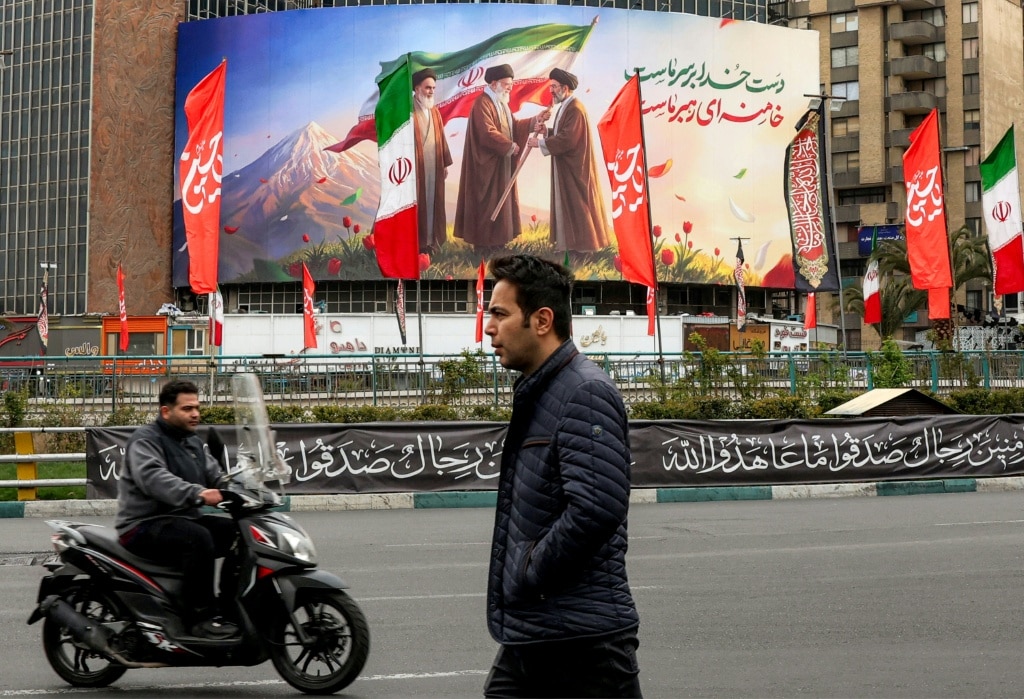
    The situation presents a precarious stalemate. The decades-old clerical regime continues to hold power, facing one of the most significant popular challenges since the 1979 revolution. Meanwhile, the visible bolstering of American naval power in the region signals continued Washington involvement, keeping the potential for escalation alive.

  • Japan court orders compensation for migrants lured to North Korea

    Japan court orders compensation for migrants lured to North Korea

    In a landmark judicial decision, the Tokyo District Court has mandated North Korea to provide 88 million Japanese yen (approximately $570,000) in compensation to four individuals deceived by Pyongyang’s propaganda campaign decades ago. The plaintiffs, including 83-year-old Eiko Kawasaki who spent over four decades in North Korea after relocating at age 17, were lured by promises of an earthly paradise featuring free healthcare, education, and employment opportunities.

    Instead of the promised utopia, the victims encountered severe living conditions involving forced labor in agricultural and industrial facilities, coupled with severe movement restrictions. Kawasaki, who eventually escaped in 2003, represents the thousands of ethnic Koreans who migrated to North Korea under the resettlement initiative between 1959 and 1984.

    The ruling culminates a protracted legal battle that previously saw setbacks. In 2022, a lower court dismissed the case citing jurisdictional issues and expiration of the statute of limitations. However, the Tokyo High Court overturned this decision in 2023, asserting Japan’s jurisdictional authority and recognizing North Korea’s violation of the plaintiffs’ fundamental rights.

    Presiding Judge Taiichi Kamino emphasized the profound impact on victims’ lives, stating that North Korea effectively ruined most of their existence. While the judgment carries significant symbolic weight, enforcement remains practically challenging given North Korea’s consistent disregard for the litigation process and refusal to acknowledge Japanese court summons.

    Legal representatives acknowledged the historic nature of the verdict while recognizing the difficulties in actual compensation collection. The case represents the first instance of Japanese judiciary exercising sovereignty over North Korea to condemn its malpractice in the controversial resettlement program.

  • UAE offers condolences to Philippines over victims of deadly ship sinking

    UAE offers condolences to Philippines over victims of deadly ship sinking

    The United Arab Emirates has formally expressed its profound condolences and solidarity with the Republic of the Philippines following a devastating maritime tragedy in the southern island province of Basilan. The diplomatic gesture comes in response to the sinking of a passenger ferry that resulted in significant casualties and missing persons.

    According to maritime authorities, the vessel carrying more than 350 passengers capsized approximately five kilometers east of Baluk-Baluk Island in the Zamboanga Peninsula region on Monday morning. Current reports indicate at least 18 fatalities with 24 individuals still unaccounted for in the ongoing search and rescue operations.

    The Philippine Coast Guard released dramatic footage showing rescue teams extracting survivors from dark waters and providing emergency medical treatment. Social media platforms circulated live recordings capturing desperate pleas for assistance as the disaster unfolded in early morning darkness.

    In an official statement released through its Ministry of Foreign Affairs, the UAE government conveyed heartfelt sympathies to the bereaved families and extended solidarity with both the Philippine government and citizens. The statement emphasized shared grief over the tragic loss of life in the maritime incident.

    Maritime safety experts note that such accidents occur with concerning frequency in the Philippine archipelago, where millions depend on affordable but often poorly regulated sea transportation to navigate between the nation’s 7,000-plus islands. This latest incident has renewed discussions about maritime safety standards and emergency response capabilities in the region’s vital ferry transportation network.

  • Deadly US winter storm leaves flights delayed and thousands without power

    Deadly US winter storm leaves flights delayed and thousands without power

    A catastrophic winter storm has unleashed chaos across a vast expanse of North America, resulting in a tragic death toll and widespread infrastructural paralysis. Meteorological authorities confirmed the system wreaked havoc from Texas through Maine and into southern Ontario, Canada, over the weekend, with the northeastern United States recording snowfall exceeding 20 inches (50.8 cm) within a 24-hour period.

    The human cost of the severe weather is mounting. Officials report at least a dozen storm-related fatalities across multiple states. In a somber announcement, New York City confirmed eight deaths occurred between Friday and Monday morning as temperatures plunged to extreme lows. Separate incidents claimed lives in other regions: a teenage girl died in a sledding accident in Frisco, Texas; a man was discovered deceased on a North Carolina highway, with authorities probing a potential weather link; and Louisiana’s health department attributed two deaths to hypothermia.

    Critical infrastructure buckled under the storm’s intensity. The National Weather Service (NWS) documented 11.4 inches of snow in New York City’s Central Park, while transportation networks faced monumental disruptions. FlightAware data revealed a staggering 19,000 flight delays and 5,900 cancellations across U.S. airlines on Monday alone, stranding thousands of travelers.

    Energy grids also failed catastrophically. Tennessee experienced a deep freeze that left over 200,000 residents without power by Monday afternoon. Joy Flores, vice president of Nashville Rescue Mission, described dire conditions: ‘There are many trees down and power lines blocking the roads.’ She added that her own home was without heating, internet, or coffee, emblematic of the hardships faced by many.

    The impacts extended northward, where Canadian officials reported serious disruption across southern Ontario. Toronto Pearson Airport set a new single-day record with 18.1 inches (46 cm) of snowfall on Sunday, according to CBC reports, with Ottawa and Quebec experiencing the heaviest impacts, including transportation halts and widespread school closures.

    With recovery efforts barely underway, forecasters are already warning of another potentially significant winter storm targeting the eastern U.S. this coming Friday. The NWS indicates this system could bring another round of very cold temperatures and widespread heavy precipitation, though its precise path and impact zones remain uncertain.

  • Israel retrieves remains of last Gaza hostage, military says

    Israel retrieves remains of last Gaza hostage, military says

    The Israeli military announced on Monday the successful recovery and identification of police officer Ran Gvili’s remains, marking the retrieval of the last hostage held in Gaza. This development represents a critical milestone in the initial phase of former US President Donald Trump’s proposed roadmap to conclude the prolonged Gaza conflict.

    Gvili had been held since October 7, 2023, when he was killed during Hamas’ assault on Kibbutz Alumim in southern Israel. His remains have been formally identified and will be returned to his family for burial, according to an official military statement.

    The resolution of this case triggers a significant diplomatic commitment: Israel has pledged to reopen Gaza’s Rafah border crossing with Egypt—the territory’s primary connection to the outside world—once Gvili’s remains are repatriated or the search operation concludes. This border reopening carries substantial humanitarian implications for Gaza’s civilian population.

    The ceasefire agreement between Hamas and Israel, brokered in October under concerted pressure from regional powers and the Trump administration, established the framework for this development. Trump previously characterized the arrangement as a foundational step toward achieving what he described as a “strong, durable and everlasting peace” in the region.