分类: world

  • Afghanistan accuses Pakistan of targeting homes in airstrikes that kill at least 6 civilians

    Afghanistan accuses Pakistan of targeting homes in airstrikes that kill at least 6 civilians

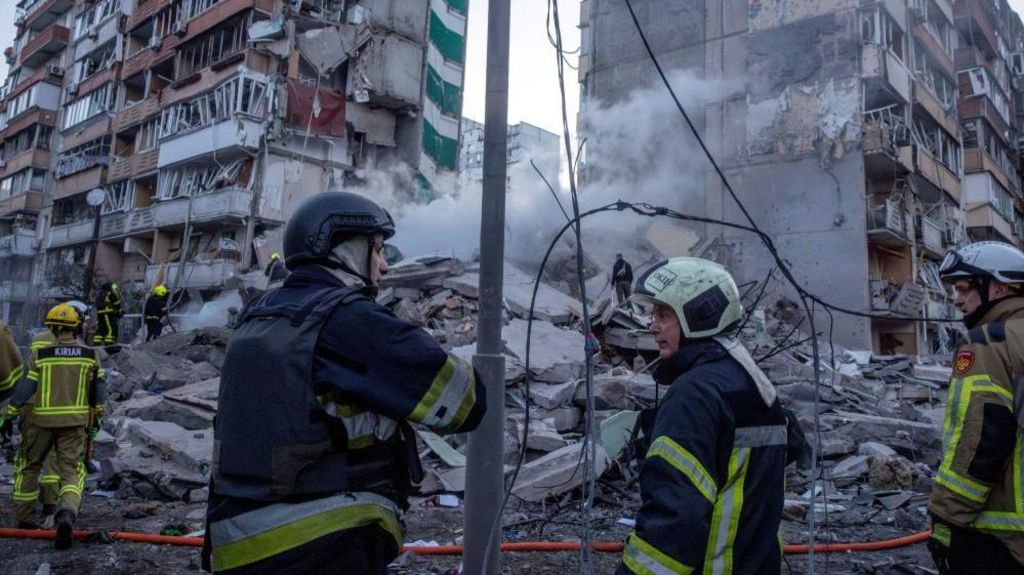
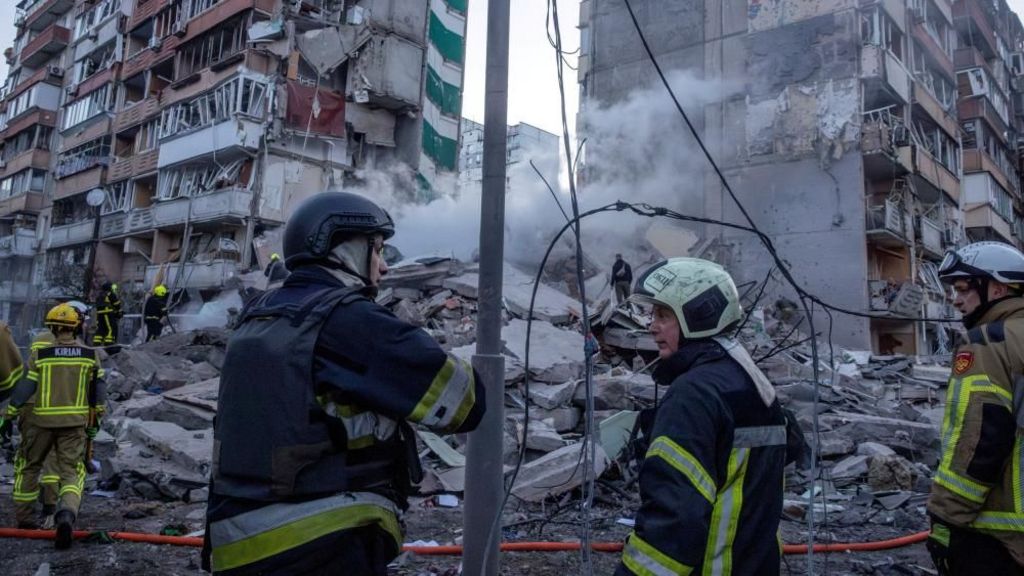
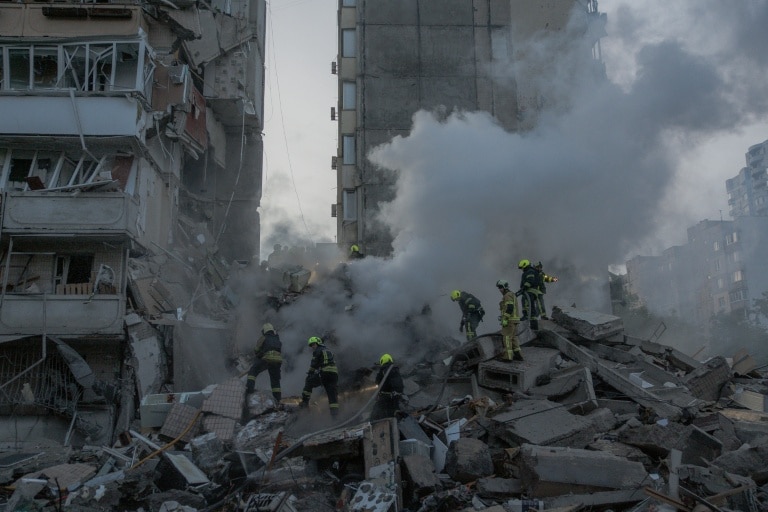
    KABUL, Afghanistan — Diplomatic tensions between Pakistan and Taliban-controlled Afghanistan have dramatically escalated into open military conflict, with both nations conducting airstrikes across their shared border. The Afghan government reported that Pakistani military operations on Friday resulted in at least six civilian fatalities and over a dozen injuries, targeting residential areas in Kabul and southern provinces.

    Afghan government spokesman Zabihullah Mujahid stated via social media platform X that Pakistani aircraft struck civilian infrastructure, including fuel depots belonging to private airline Kam Air near Kandahar airport. These facilities reportedly supply fuel to civilian airlines and United Nations aircraft operations. Meanwhile, Pakistan’s state media confirmed ‘successful airstrikes inside Afghanistan’ targeting what it described as four militant hideouts and support infrastructure.

    The conflict originated in late February when border skirmishes evolved into reciprocal attacks on military installations. Pakistan maintains that its operations specifically target the Pakistani Taliban (Tehrik-e-Taliban Pakistan or TTP) and their support networks, alleging that Afghanistan’s Taliban government provides sanctuary to militant groups conducting attacks against Pakistan. The Taliban government consistently denies these allegations.

    Afghanistan’s Defense Ministry claims its air force retaliated by striking Pakistani military installations in Kohat district, inflicting significant damage. Pakistan’s Ministry of Information dismissed these claims as baseless, instead reporting the interception of three rudimentary drones deployed by militants.

    Civilian casualties continue to mount across conflict zones. Kabul police reported four civilian deaths including children, with fifteen injured in the capital alone. Additional casualties were reported in Nangarhar province where mortar shelling killed a woman and child. The complete casualty count remains uncertain as attacks persist.

    International diplomatic efforts have thus far failed to de-escalate tensions. Chinese Special Envoy Yue Xiaoyong recently engaged in discussions with Pakistani officials regarding collective security measures, following similar consultations in Kabul. Despite global calls for restraint, Pakistan has vowed to continue military operations until verifiable actions are taken against TTP forces operating from Afghan territory.

    The current fighting represents the most severe bilateral conflict in years, raising regional stability concerns amid ongoing Middle Eastern tensions. Previous ceasefire agreements mediated by Qatar in October provided temporary relief, but subsequent peace talks in Turkey failed to establish lasting resolution.

  • Thousands of Chinese boats mass at sea, raising questions

    Thousands of Chinese boats mass at sea, raising questions

    Satellite imagery and maritime tracking data have revealed extraordinary coordinated movements by China’s fishing fleet in the East China Sea, raising alarms among international security experts. Between December 2023 and January 2024, approximately 2,000 vessels assembled in precise geometric patterns northeast of Taiwan, maintaining formations for extended periods despite adverse weather conditions.

    According to analysis by ingeniSPACE and verification from multiple maritime intelligence organizations, the vessels formed two parallel inverted L-shapes stretching approximately 400 kilometers during the December 25 event. Subsequent formations in early January included an uneven rectangular cluster of about 1,000 boats in the same strategic waters.

    Maritime experts unanimously agree these formations serve no commercial fishing purpose. Instead, they represent what analysts describe as a demonstration of China’s ability to mobilize civilian vessels for potential military operations. Gregory Poling of the Center for Strategic and International Studies noted the unprecedented scale of these gatherings, stating he had “never seen a massing of Chinese fishing boats in these numbers anywhere outside of port ever.”

    The vessels are believed to belong to China’s maritime militia – a civilian fleet trained to support military operations. Their coordinated movements suggest advanced preparation for potential regional contingencies, including scenarios involving Taiwan or Japan. Thomas Shugart, a former U.S. Navy submarine warfare officer, characterized the operation as clearly state-directed, noting that no commercial entity controls such a large number of vessels.

    This development occurs against the backdrop of China’s stated military modernization goals and increasing pressure on Taiwan. The U.S. Department of Defense has previously indicated that China expects to achieve capability to conduct a successful military operation against Taiwan by 2027. The fishing fleet’s unusual formations appear consistent with these preparations, demonstrating China’s ability to potentially use civilian vessels for blockades, harassment operations, or as decoys in conflict scenarios.

    Japan’s coast guard declined to comment on the developments, while China has not publicly addressed the unusual vessel formations. The incidents highlight growing concerns about China’s gray zone tactics – coercive actions that fall short of open warfare but significantly impact regional security dynamics.

  • Israel targets building in central Beirut in new wave of strikes

    Israel targets building in central Beirut in new wave of strikes

    BEIRUT – Israeli military forces conducted a new wave of airstrikes in central Beirut on Thursday, specifically targeting locations allegedly associated with Hezbollah operations. The bombardment represents a significant escalation in the ongoing conflict between Israel and the Lebanese militant group.

    The Israeli military issued pre-strike warnings urging residents to evacuate specific buildings in the Bachoura and Zkak al-Blat districts. One of the targeted structures housed a branch of Al-Qard Al-Hassan, an institution Israel identifies as Hezbollah’s financial apparatus for weapons procurement and fighter compensation.

    The precision strikes triggered widespread panic among residents, including numerous families who had previously fled from other conflict zones and sought refuge in central Beirut. The attacks have exacerbated the humanitarian crisis unfolding in Lebanon.

    According to Lebanon’s Public Health Ministry, the death toll from Israeli operations has reached 687 since March 2, with 1,774 individuals sustaining injuries. The ministry further reported that 18 paramedics have been killed and 45 others wounded in the ongoing hostilities.

    Lebanese Prime Minister Nawaf Salam addressed the deteriorating situation, pledging government efforts to halt the conflict and facilitate the safe return of displaced citizens. “We will work around the clock to stop this war and enable you to return to your homes as soon as possible, to a safe and dignified return,” Salam stated in a public address.

    The current escalation began on March 2 when Hezbollah launched rockets toward Israel, breaking a ceasefire that had been in effect since November 27, 2024. Israel responded with what it described as an “offensive military campaign” involving extensive airstrikes on Beirut’s southern suburbs, southern and eastern Lebanon regions, and ground incursions along the border areas.

  • US eases Russia oil sanctions as Iran war pushes up energy prices

    US eases Russia oil sanctions as Iran war pushes up energy prices

    In a significant policy shift amid escalating Middle East tensions, the United States has granted authorization for countries to purchase sanctioned Russian oil and petroleum products currently aboard vessels at sea. U.S. Treasury Secretary Scott Bessent announced this as a temporary measure designed to mitigate the severe economic disruptions caused by the U.S.-Israel conflict with Iran, particularly focusing on promoting stability within global energy markets. The authorization is set to remain in effect until April 11th.

    Secretary Bessent emphasized the narrowly tailored nature of this decision, stating, ‘This short-term measure applies only to oil already in transit and will not provide significant financial benefit to the Russian government.’ The move comes as a direct response to the dramatic upheaval in energy supply chains. Recent attacks on commercial shipping and energy infrastructure in the Gulf, coupled with the effective closure of the critical Strait of Hormuz—a chokepoint for roughly one-fifth of the world’s oil supply—have sent shockwaves through markets.

    The impact was immediately felt as oil prices surged back above $100 per barrel, triggering a downturn in global stock markets. This spike followed reports of three additional cargo vessels being struck in the Gulf and a vow from Iran’s new supreme leader to continue blocking the vital waterway. While prices showed slight stabilization in early Asian trading on Friday, with Brent crude dipping 0.2% to $100.29, the week’s overall volatility prompted a coordinated international response.

    The International Energy Agency (IEA) announced plans to release a record 400 million barrels of oil from emergency reserves to calm markets. Simultaneously, major Asian oil-importing nations have implemented a series of emergency measures. The Philippines, which sources approximately 95% of its crude from the Middle East, has mandated a four-day workweek for public sector employees to conserve fuel. Japan, South Korea, and Thailand have all instituted price caps on petrol to shield consumers from soaring costs.

    Looking forward, Secretary Bessent framed the current price instability as a ‘short-term and temporary disruption,’ asserting that the long-term strategic benefits for the U.S. and its allies would be substantial. He also confirmed that the U.S. government is preparing to commence military escorts for commercial vessels through the Strait of Hormuz. ‘The possible need for a military escort was always in our planning,’ Bessent stated, adding that the operation would begin ‘as soon as it is militarily possible to ensure safe passage.’

  • French soldier killed in attack in Iraqi Kurdistan

    French soldier killed in attack in Iraqi Kurdistan

    A French military serviceman has been killed in a drone attack targeting an international coalition base in Iraq’s autonomous Kurdistan region, marking the first French combat fatality since the recent escalation of Middle East hostilities. President Emmanuel Macron confirmed the death occurred during an assault on a base in the Erbil region where French troops were conducting counter-terrorism training with Iraqi partners.

    The attack, which involved multiple drones according to local officials, struck the Mala Qara base approximately 40 kilometers from Erbil’s regional capital. Several other French soldiers sustained injuries in the assault, though specific numbers remain unconfirmed. The incident follows a pattern of increased attacks against international forces in the region since U.S.-Israeli strikes on Iran last month triggered broader regional conflict.

    President Macron characterized the attack as ‘unacceptable’ while emphasizing that France’s military presence in Iraq operates ‘within the strict framework of the fight against terrorism.’ He stated that the war in Iran does not justify such attacks against coalition forces. The French military maintains that their mission remains strictly defensive despite the escalating violence.

    This incident parallels a recent drone strike targeting an Italian military base in the same region, though no casualties were reported in that attack. Italy has subsequently announced the temporary withdrawal of its personnel from the base. The international coalition, led by Washington, continues to train Kurdish security forces in counter-terrorism operations despite the deteriorating security situation.

    The identity of the attackers remains officially unconfirmed, though regional analysts attribute the pattern of attacks to pro-Iranian factions operating in Iraq. The French government has vowed to continue its counter-terrorism mission while enhancing protective measures for its deployed personnel.

  • Fantastic Mr Stowaway: fox sails from Britain to New York port

    Fantastic Mr Stowaway: fox sails from Britain to New York port

    In an extraordinary case of animal migration, a red fox successfully completed a transatlantic journey as a stowaway aboard a cargo ship traveling from Southampton, England to the Port of New York and New Jersey. The remarkable discovery was confirmed by the Bronx Zoo, which reported that customs officials detected the unexpected passenger upon the vessel’s arrival.

    The approximately two-year-old male fox, weighing 11 pounds, managed to board the international vessel undetected and survived the lengthy ocean crossing. According to zoo representatives, the animal is currently in good condition despite its unauthorized adventure. Veterinary professionals are conducting comprehensive health assessments to ensure the fox hasn’t contracted any diseases during its journey.

    This incident highlights the ongoing collaboration between the Bronx Zoo and port authorities in rescuing wildlife that moves through New York’s transportation hubs. While the zoo confirmed the animal’s current well-being, officials are now seeking a permanent appropriate habitat for the transatlantic traveler once medical clearance is obtained.

    The red fox (Vulpes vulpes) represents one of the world’s most widespread carnivorous mammals, with native populations spanning Europe, Asia, North America, and parts of Africa. Britain specifically maintains one of the highest-density urban fox populations globally, with academic research estimating tens of thousands inhabiting British cities. These adaptable creatures have increasingly become part of urban landscapes since the 1930s, as expanding city boundaries encroached upon their traditional rural territories.

  • Iceland and Netherlands intervene in ICJ South Africa v Israel genocide case

    Iceland and Netherlands intervene in ICJ South Africa v Israel genocide case

    In a significant development at the International Court of Justice (ICJ), Iceland and the Netherlands formally submitted declarations to intervene in South Africa’s genocide case against Israel on Thursday. This brings the total number of nations seeking participation in these landmark proceedings to eighteen.

    The two European countries filed their interventions under Article 63 of the ICJ statute, a provision enabling state parties to a convention under legal scrutiny to present their interpretive perspectives on the treaty in question. The case centers on allegations that Israel’s military operations in Gaza since October 2023 violate the 1948 Genocide Convention.

    This legal action originated when South Africa initiated proceedings in December 2023, accusing Israel of genocidal acts through its Gaza campaign that has resulted in over 70,000 Palestinian casualties, predominantly women and children. South Africa’s submission contends that Israel’s military operations constitute genocide through systematic killing, infliction of severe physical and psychological harm, and the creation of conditions designed to physically destroy the Palestinian population—charges that Israel vehemently denies.

    The interventions coincide with Israel’s scheduled submission of its counter-memorial on Thursday, presenting its legal arguments responding to South Africa’s allegations after the court granted several deadline extensions. Judicial authorities have yet to confirm the filing’s receipt.

    The growing coalition of intervening states now includes Colombia, Libya, Mexico, Palestine, Spain, Turkey, Chile, the Maldives, Bolivia, Ireland, Cuba, Belize, Brazil, the Comoros, Belgium, and Paraguay. Palestine and Belize have additionally sought intervention under Article 62, which permits state participation when a nation believes its legal interests might be affected by the court’s determination.

    In their legal submissions, Iceland emphasized that the Genocide Convention must be interpreted to support its fundamental objective of preventing and punishing genocide. The Nordic nation argued that genocidal intent can be inferred from behavioral patterns rather than requiring direct evidence, noting that deprivation of essential resources like food, shelter, and medical care could constitute conditions intended to destroy protected groups, with particular vulnerability accorded to children.

    The Netherlands similarly advocated for the consideration of conduct patterns and circumstantial evidence in establishing genocidal intent, suggesting that forced displacement and obstruction of humanitarian assistance might constitute Convention violations depending on contextual circumstances.

    Both nations clarified that their interventions addressed strictly matters of treaty interpretation rather than factual allegations specific to the case. These proceedings have attracted unprecedented international attention, becoming one of the most closely monitored cases in ICJ history with an extraordinary number of third-state interventions.

    The World Court has previously issued binding provisional measures requiring Israel to implement preventive measures against potential Genocide Convention violations and facilitate humanitarian access to Gaza, though it stopped short of mandating a ceasefire. Israel stands accused of repeatedly disregarding these judicial orders.

    Legal experts project that a definitive ruling on whether Israel breached the Genocide Convention might not materialize until 2028, indicating a protracted legal battle ahead at The Hague.

  • Nation urges immediate ceasefire in Mideast

    Nation urges immediate ceasefire in Mideast

    The Middle East crisis has intensified dramatically with no resolution in sight, as global powers remain deeply divided on conflict resolution approaches. Chinese Foreign Minister Wang Yi has issued a forceful appeal for an immediate ceasefire during diplomatic communications with Egyptian counterpart Badr Abdelatty, emphasizing that prolonged hostilities would inflict severe humanitarian suffering and economic devastation across the region.

    Wang, representing China’s position as a responsible global actor, stressed that Beijing and Cairo share common ground in advocating peaceful dialogue over military confrontation. The Chinese diplomat confirmed China’s commitment to maintaining coordination with regional nations to facilitate constructive peacemaking efforts.

    The Egyptian leadership expressed appreciation for China’s balanced diplomatic stance while confirming Cairo’s readiness to collaborate closely in de-escalation initiatives. This diplomatic exchange occurs against a backdrop of escalating violence that has claimed approximately 2,000 lives since joint US-Israeli strikes targeted Iranian interests nearly two weeks ago.

    Iranian President Masoud Pezeshkian has established explicit conditions for conflict termination, demanding international recognition of Iran’s legitimate rights, substantial reparations, and ironclad security guarantees against future aggression. Conversely, US President Donald Trump has declared military victory and promised to complete operational objectives.

    The economic ramifications have reached critical levels, with Iran effectively closing the strategically vital Strait of Hormuz—a maritime passage handling twenty percent of global oil shipments. This blockade has triggered unprecedented market disruptions, driving crude prices above $100 per barrel despite the International Energy Agency’s historic release of 400 million barrels from emergency reserves.

    Regional security has deteriorated further with Iran threatening strikes against American and Israeli economic assets, including banking institutions and technology corporations, prompting multinational companies to evacuate personnel from the crisis zone.

  • Mission accomplished? The 2003 boast that haunts today’s Iran conflict

    Mission accomplished? The 2003 boast that haunts today’s Iran conflict

    The iconic toppling of Saddam Hussein’s statue in Baghdad’s Firdos Square on April 9, 2003, marked a symbolic endpoint to his regime, yet became the opening chapter of a conflict whose consequences continue to reverberate through global politics. What appeared as a swift victory—celebrated by President George W. Bush’s “Mission Accomplished” declaration just three weeks later—unfolded into a protracted engagement costing approximately 461,000 Iraqi lives and $3 trillion in U.S. expenditures.

    The Iraq War fundamentally altered Middle Eastern geopolitics while eroding public trust in Western governments. Today, as the United States engages in military action against Iran, analysts identify both haunting parallels and critical distinctions between these conflicts. Both represent American-led “wars of choice” with complex, overlapping motivations including regime change aspirations, weapons proliferation concerns, and regional power rebalancing.

    Whereas the Iraq invasion featured meticulous public persuasion campaigns emphasizing Saddam’s alleged WMD capabilities (later proven false), current operations against Iran have emerged with strikingly different diplomatic preparation. The Trump administration has bypassed United Nations legitimacy processes and made minimal efforts to build domestic consensus, reflecting both the collapse of traditional international frameworks and a more mercurial presidential approach.

    Alliance structures have similarly transformed. The 2003 invasion featured robust UK participation under Prime Minister Tony Blair’s “whatever” commitment to Washington. Today, Britain’s Labour government maintains deliberate distance, refusing base access for offensive operations—a caution born from Iraq’s painful legacy.

    Military strategy diverges significantly as well. Unlike the 150,000 ground troops deployed to Iraq, current operations emphasize aerial capabilities and proxy partnerships, particularly with Israel. Defense officials explicitly reject comparisons to Iraq’s “forever war,” though critics question whether limited engagement can achieve stated objectives like regime change or permanent degradation of Iranian capabilities.

    Perhaps the most sobering parallel lies in the apparent lack of post-conflict planning. Just as Iraq descended into insurgency and civil war despite initial military success, current operations risk empowering Iran’s regional influence while destabilizing neighboring states. The Iraq experience demonstrated that destroying regimes proves easier than building stable replacements—a lesson seemingly unabsorbed as conflict escalates without clear endgame objectives.

  • UK base in Iraq hit by Iranian drones

    UK base in Iraq hit by Iranian drones

    A British military installation in Erbil, northern Iraq, was successfully targeted by Iranian drone assaults on Wednesday night, resulting in injuries to several American personnel stationed at the base. This incident represents the third successful offensive against British forces in the ongoing regional conflict that commenced nearly two weeks ago.

    According to defense officials, British air-defense units successfully intercepted and destroyed two unmanned aerial vehicles (UAVs), but multiple one-way attack drones penetrated defensive systems and struck the air base. The attack caused minor injuries to an undetermined number of US troops stationed at the facility.

    Brigadier Guy Foden, assistant chief of staff for operations at Permanent Joint Headquarters, confirmed the coordinated nature of the assault: “Erbil and Baghdad were both struck a number of times last night with increasing coordination. Our personnel in Erbil shot down two UAVs coming at the camp, but a number did impact on the camp.”

    This latest attack follows previous incidents targeting British interests in the region. On March 1, the same Erbil base was hit, with British personnel located within 400 meters of the impact site. The following day, a drone struck RAF Akrotiri, the UK’s air base in Cyprus, though Cypriot authorities reported no casualties and “minimal damage.”

    The escalating situation has sparked political controversy in Britain. Jeremy Corbyn, British MP and leader of Your Party, criticized Prime Minister Keir Starmer’s approach: “Keir Starmer has dragged Britain into yet another illegal war. In doing so, he has jeopardised the safety of us all. The government must end its complicity in this illegal war and rescind permission for the foreign use of British bases.”

    Tensions are further complicated by the United States’ utilization of British military installations. Numerous US B-1 Lancer bombers have recently operated from RAF Fairford in Gloucestershire to conduct strikes against Iranian missile sites. Three such bombers returned to the base on Thursday following a mission.

    Prime Minister Starmer has thus far resisted calls from opposition politicians for direct RAF participation in strikes against Iran, while simultaneously refusing to condemn US-Israeli military actions. Diplomatic relations with the United States have been strained due to Britain’s initial refusal to permit US utilization of the joint UK-US base on Diego Garcia for launching strikes against Iran.

    Starmer’s Sunday phone conversation with US President Donald Trump addressed “the latest situation in the Middle East and military cooperation between the UK and US through the use of RAF bases in support of the collective self-defence of partners in the region,” according to Downing Street. The discussion occurred despite Trump’s previous criticisms of Starmer, whom he characterized as “unhelpful” and “no Winston Churchill,” while accusing the British leader of seeking to “join wars after we’ve already won.”

    This remains a developing situation with potential implications for regional stability and international relations.